Lusha Review 2026: Rated by Its Buyers, Contested by Its Contacts
Lusha holds 4.3 on G2 and 1.2 on Trustpilot, and both numbers are true. A fair Lusha review: what buyers praise, what the people in its database say, Italy's €2 million fine and the Rome court order that suspended it, prices checked today, and who should buy it.
This Lusha review grades Lusha, the Boston-based B2B contact-data company whose database and Chrome extension reveal work emails for 1 credit and phones for 5, on two questions: does the data work for the buyer, and is it lawfully held.
A restaurant can have two sets of reviews and deserve both. The diners write that the food is good and the bill is fair. The neighbors write that the kitchen fan runs all night and the delivery vans block their driveway. Read only one set and you will get the place wrong. Lusha’s reviews in 2026 have that shape: the buyers rate it 4.3 out of 5 on G2, the people inside its database rate it 1.2 on Trustpilot, and in July the city inspector, Italy’s data protection authority, closed part of the patio. The quick answer, checked October 2, 2026:
- Lusha itself. A good buy for one to five reps who reveal a handful of contacts a day from LinkedIn, want a posted price, and sell mostly outside the EU. Free to $3,599.10 a year.
- Supered Prospector. The pick for a team that already pays for Clay: reps run Clay’s waterfall across 200+ vendors from where they sell, and the GTM engineer decides which providers sit in it. $45 per rep per month, billed annually.
- Apollo or Kaspr. The non-Clay switches: Apollo when calls and sequences belong in one plan, Kaspr for email-first reps on LinkedIn.
This Lusha review grades Lusha, the Boston-based B2B contact-data company whose database and Chrome extension reveal work emails for 1 credit and phones for 5, on two questions: does the data work for the buyer, and is it lawfully held. The first has a clear answer. The second is in front of a judge in Rome.
Is Lusha legit?
Yes, in the sense most people mean when they type the question. Lusha is a real company with a working product, a posted price, a cancellable plan, and a large base of paying users who mostly like what they bought. Its Chrome extension showed 400,000 users and a 4.6 rating from 1.9K ratings on October 2, 2026 (Chrome Web Store). Its G2 page showed 4.3 out of 5 from 1,667 reviews (G2), and Capterra showed 4.0 from 398, with ease of use at 4.6 and customer service at 3.9 (Capterra). Lusha’s trust center states “SOC 2 Type II Certified” and “5 ISO Certifications” (Lusha trust center).
Then there is the other set of reviews. Lusha’s Trustpilot page showed a TrustScore of 1.2 from 776 reviews, 57% of them one-star, with the line “Hasn’t replied to negative reviews” (Trustpilot, October 2, 2026).
| Where | Who is reviewing | Rating | Reviews | Checked |
|---|---|---|---|---|
| Chrome Web Store | Installed users | 4.6 of 5 | 1.9K ratings (400,000 users) | October 2, 2026 |
| G2 | Verified buyers and users | 4.3 of 5 | 1,667 | October 2, 2026 |
| Capterra | Verified buyers and users | 4.0 of 5 | 398 | October 2, 2026 |
| Trustpilot | Anyone, mostly people in the database | 1.2 of 5 | 776 (57% one-star) | October 2, 2026 |
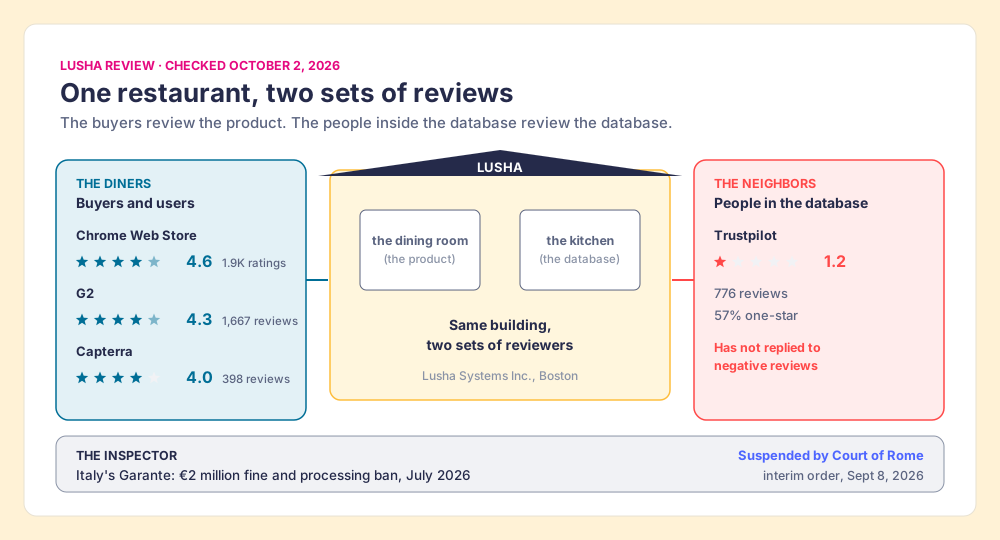
So “is Lusha legit” splits into two questions. Does it work for the person paying? Mostly yes, with a known blind spot and a meter that runs fast on phones. Is the data lawfully held? In California, Lusha is a registered data broker, like most of its competitors. In Italy, a regulator said no in July, and a court paused that ruling in September. Both answers belong in a buying decision, and the rest of this page takes them in turn.
Why are Lusha reviews 4.3 on G2 and 1.2 on Trustpilot?
Because the two sites hear from different people. G2 and Capterra collect reviews from verified users of the software; their reviewers are sitting at the dining table. Trustpilot lets anyone review a company, and the people with the strongest feelings about Lusha are the ones whose numbers it sells.
Read the recent Trustpilot reviews and the pattern is plain. One reviewer wrote on September 9, 2026 that Lusha had been “selling my personal phone number in connection with my business which I have never made public.” Another, on September 7, described “Sales call after sales call” and said a caller told him Lusha had provided the number. A third, on June 13, called Lusha “a ‘spam factory’” and disputed its GDPR claims. Several reviewers say they were never customers at all.
None of those people are reviewing the extension’s interface or the credit price. They are reviewing the fact that they are on the menu. That makes Trustpilot a poor guide to whether Lusha will help your reps and a good guide to something buyers tend to skip: the people your reps call have opinions about where you got their number, and the ones who found out did not like it.
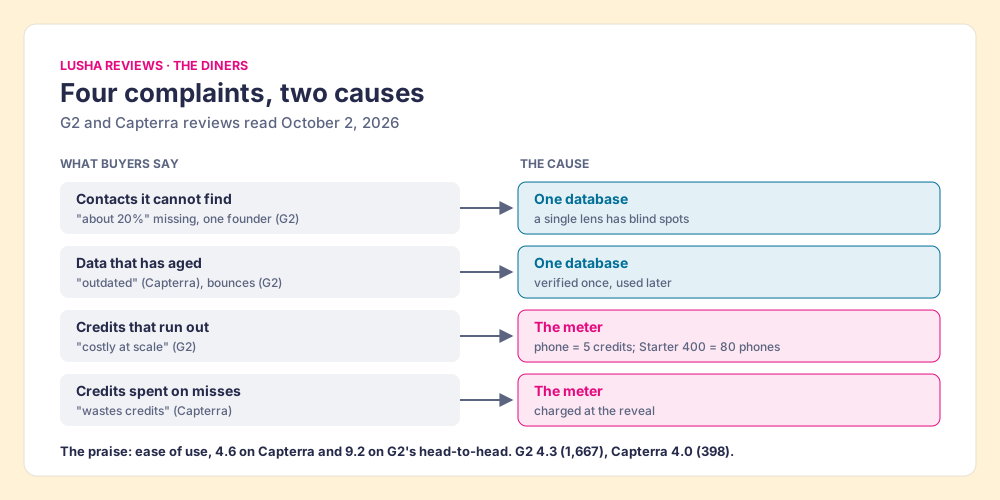
The buyer reviews have their own complaints, and they cluster.
- Contacts it cannot find. A founder wrote on G2 in May 2026, “Sometimes, I am not able to find contact details for about 20% of the contacts.” One database has a blind spot by construction.
- Credits that run out. “Credits can run out quickly, making it costly at scale,” a small-business reviewer wrote in April 2026. A mid-market growth consultant wrote in September 2026 that credit pricing “with add-ons and extra credits price is becoming really high, no discounts.”
- Data that has aged. “The data is not always accurate,” a June 2026 G2 reviewer wrote. On Capterra in March 2026: “Data is outdated, extracting the list is tedious at best.”
- Credits spent on misses. A Capterra reviewer in April 2026 wrote that the extension sometimes “returns incomplete results, which wastes credits and slows down the sales process.”
What did Italy’s privacy regulator decide about Lusha?
The case started with a news story. In April 2025, Italian outlets reported that phone numbers for the country’s president, prime minister, ministers, and thousands of police and ministry staff were for sale on lead-generation sites (Open, April 8, 2025). The Garante, Italy’s data protection authority, opened an inquiry into Lusha that grew out of those reports (PPC Land, August 6, 2026).
On July 14, 2026 the Garante adopted decision n. 542 and announced it on July 27: a €2 million fine on Lusha Systems Inc., a ban on processing personal data of people in Italy, and an order to delete the Italian data it held (ANSA, July 27, 2026). According to ANSA’s report of the decision, the authority found that Lusha collected data by “scraping from social networks and purchasing from other data brokers,” that its privacy notices were not clear or easy to reach, and that legitimate interest was not an adequate legal basis. The legal move that matters for the whole industry is jurisdiction: Lusha has no office in the EU, and the Garante held that GDPR applies anyway because keeping profiles of people updated over time is “monitoring” under Article 3(2) (GRC Report). PPC Land reported a 60-day deadline to prove the erasure.
Then the ruling stopped. On October 2, 2026, the Garante’s own pages for both the decision and the press release carry the same notice: decision n. 542 “è stato temporaneamente rimosso” from the authority’s website, in compliance with an interim order of the Court of Rome dated September 8, 2026, with the opposition proceedings pending (Garante, docweb 10275035). ZoomInfo’s Lusha review, on Google’s first page for the term on October 2, mentions neither the fine nor the court order.
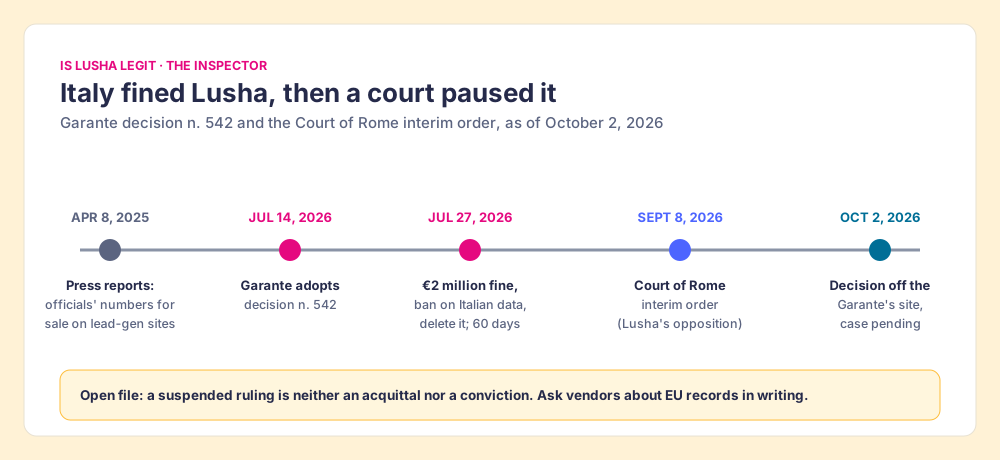
Here the restaurant picture needs its edge marked. A health inspector who closes a patio is usually right about the patio. A privacy regulator who fines a data broker is making a legal argument that a court may reject, and the Court of Rome annulled the Garante’s €15 million fine on OpenAI in March 2026 (ANSA, March 20, 2026). A suspended ruling is neither an acquittal nor a conviction. It is an open file.
What it means for a buyer is narrower than the headlines and wider than Lusha.
- Italy-heavy pipelines. If your reps sell into Italy, the order says Lusha may not process data about people there, and the court has paused that order. Ask Lusha in writing how it handles Italian records today and what happens to data you already exported if the ruling is restored.
- The rest of the EU. The Garante’s reasoning, that updating profiles over time is monitoring, does not depend on anything unique to Lusha. Any broker that keeps profiles of Europeans fresh sits under the same theory, so ask the same question of every vendor, ours included.
- The United States. Lusha Systems, Inc. is on California’s 2026 data broker registry, alongside Apollo’s parent, ZoomInfo, Cognism, RocketReach, and Clay Labs (CPPA registry, updated July 29, 2026). Registration is the norm in this category, and it gives Californians a way out (more below).
How did Lusha get my details?
Lusha answers the question on its own data sources page, and the answer has five parts (Lusha, data sources, checked October 2, 2026):
- The community program. “Community members share email headers and signature blocks from their business email with Lusha,” which Lusha describes as “information that would be found on a business card.”
- Contact sharing. “We receive contact details from End-Users of our affiliates,” pulled from email accounts “using Google’s or Microsoft’s APIs.”
- Business partners. Licensed directories that “collect data from public records, publicly available information, and business directories.”
- Public sources. A “proprietary algorithm scans publicly available sources.”
- Machine learning. Models that “auto-complete business information based on the data in Lusha’s database.”
The Garante’s account adds social network scraping and purchases from other brokers. Read the first two pipes closely. A mobile number can reach the database without its owner ever posting it: you email someone, their inbox is shared, and your signature block travels with it.
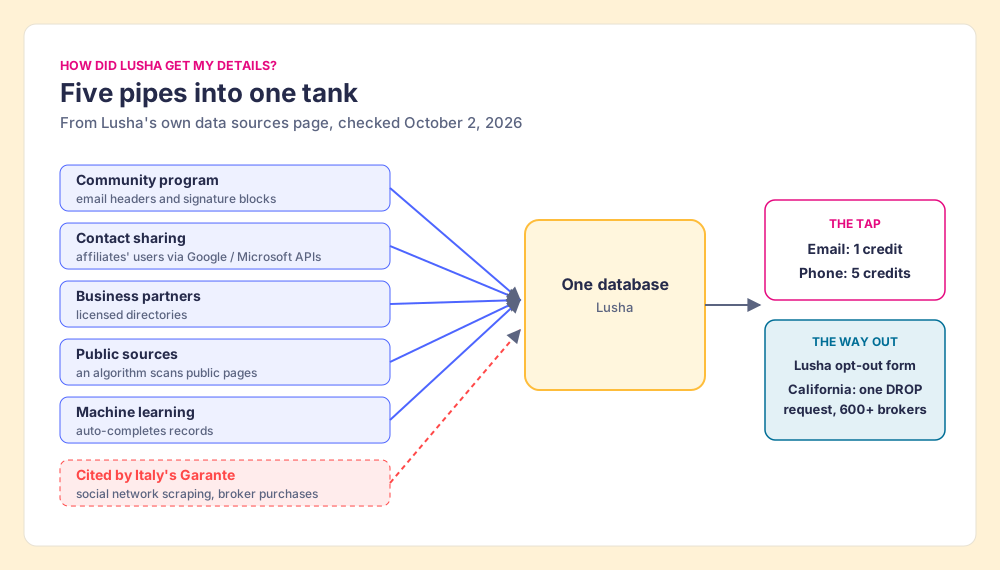
If you want out, Lusha’s footer links an “Opt Out” removal request in its privacy center (Lusha, request removal). Californians have a shorter road: since January 1, 2026, the state’s DROP system lets a resident “send one request to over 600 registered data brokers,” and from August 1, 2026 brokers must check it at least once every 45 days (CalPrivacy, DROP).
Is Lusha’s data accurate?
Accurate enough for most of its buyers, and no better than its peers on the measure that matters. On G2’s head-to-head page, Lusha scores 7.6 on contact data accuracy against ZoomInfo’s 7.7, and 9.2 on ease of use against ZoomInfo’s 8.8 (G2 compare, October 1, 2026). Lusha’s own extension listing advertises high email and phone accuracy; those figures are Lusha’s and unaudited, and the reviewers above describe something closer to one contact in five going missing for some teams.
Two product changes help. Lusha’s Data Waterfall, which falls back to third-party providers when Lusha’s own data cannot match a field, moved to every paid plan on September 23, 2026, after being limited to Pro and above (Lusha changelog, v2.16.0). And Lusha never charges twice for the same data point: “The same contact’s data point is only ever charged once” (Lusha, how credits are counted). Lusha does not name the providers behind its waterfall, so you cannot judge them yourself.
How much does Lusha cost per month?
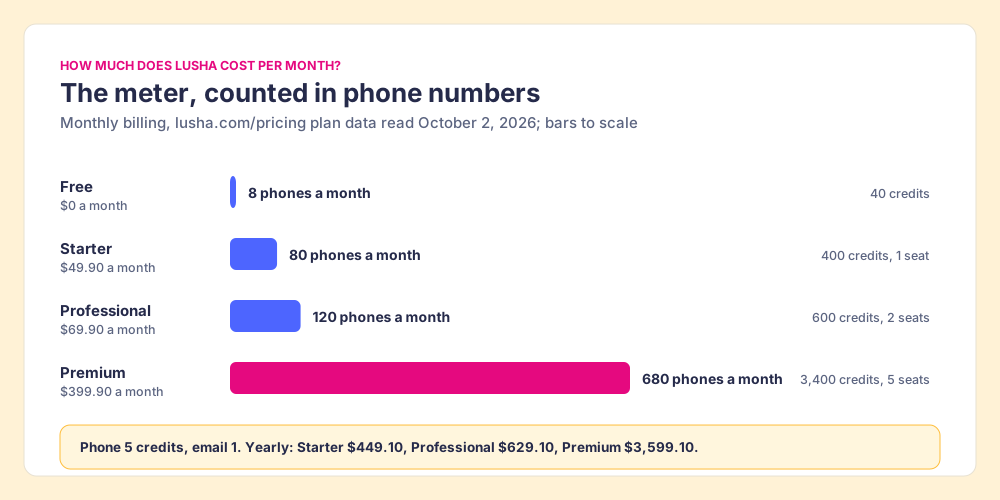
The prices below come from the plan data Lusha embeds in its pricing page, read on October 2, 2026 (lusha.com/pricing). Yearly billing is 25% under the monthly rate. An email costs 1 credit and a phone costs 5.
| Plan | Monthly billing | Yearly billing | Credits | Seats | Phones at most |
|---|---|---|---|---|---|
| Free | $0 | $0 | 40 a month | 1 | 8 a month |
| Starter | $49.90 a month | $449.10 a year | 400 a month, or 4,800 a year | 1 | 80 a month |
| Professional | $69.90 a month | $629.10 a year | 600 a month, or 7,200 a year | 2 | 120 a month |
| Premium | $399.90 a month | $3,599.10 a year | 3,400 a month, or 40,800 a year | 5 | 680 a month |
| Scale | Custom | Custom | Custom | Custom | n/a |
On monthly plans, unused credits roll over up to twice the allowance. On annual plans, credits arrive up front and reset at the end of the term. Vendr’s buyer data puts the median Lusha contract at $15,999 a year across 147 purchases, last updated February 2026 (Vendr), which puts the median buyer well above a single Premium plan. The Lusha pricing page walks the whole ladder.
Why trust this review?
I started RevPartners, a HubSpot partner that did only sales implementations, sold roughly twice as much Sales Hub as any other partner, and reached Elite tier in 13 months. Supered came out of that work and is the #1 sales enablement app on the HubSpot marketplace, rated 5.0 from 122 reviews there and 4.9 from 81 on G2 (both checked October 1, 2026). The disclosure that matters: we make Supered Prospector, which competes with Lusha for teams on Clay, and it ranks first below for that job only. The scores show their weights so you can flip them.
How does Lusha compare with the alternatives?
The lens is a team of ten to fifty reps that wants contact data reps will use where they already sell, and a leader who can see which lists turn into pipeline. Each tool is scored 1 to 5 on five criteria and weighted: coverage of the contact you need (x3), rep-side delivery (x2), price structure (x2), what the leader sees after the export (x2), and bundled outreach (x1), out of 50. The scores match the Lusha alternatives page and the Lusha Chrome extension page. They do not score legal risk, because no court has finished with it.
| Rank | Tool | Grade | Score | Best fit | CRM integration | Setup effort | Pricing | Reason to switch from Lusha |
|---|---|---|---|---|---|---|---|---|
| ref | Lusha | B+ | 29 | One to five reps revealing from LinkedIn on a posted price | Native (Salesforce, HubSpot, Pipedrive) | Minutes | Free to $3,599.10 a year | Stay if the blind spot and the 5-credit phone are tolerable |
| 1 | Supered Prospector | A | 44 | Teams that already pay for Clay | Native (HubSpot, Salesforce, Pipedrive) | Under a week on an existing Clay account | $45 per rep per month, billed annually, plus your Clay plan | 200+ vendors per lookup, you choose the providers, lists followed to closed |
| 2 | Apollo | A- | 36 | Small teams wanting data, dialer, and sequences in one plan | Native (HubSpot, Salesforce) | A day | $49 per seat per month, billed annually | Phones at 8 credits on a 30,000-credit seat, outreach included |
| 3 | Kaspr | B- | 25 | Email-first reps on LinkedIn | Native (HubSpot, Salesforce, Pipedrive, Zoho) | Minutes | $49 per seat per month, billed annually | Unlimited B2B emails under fair use |
Lusha’s 29 is coverage 2, rep-side delivery 5, price 5, what the leader sees 1, outreach 1. The rep-side 5 and the price 5 are earned. The coverage 2 is the single database. Prospector’s coverage score is Clay’s waterfall, credited to Clay, and its outreach score is low on purpose: it has no dialer and no sequencer.
Where does Supered Prospector fit?
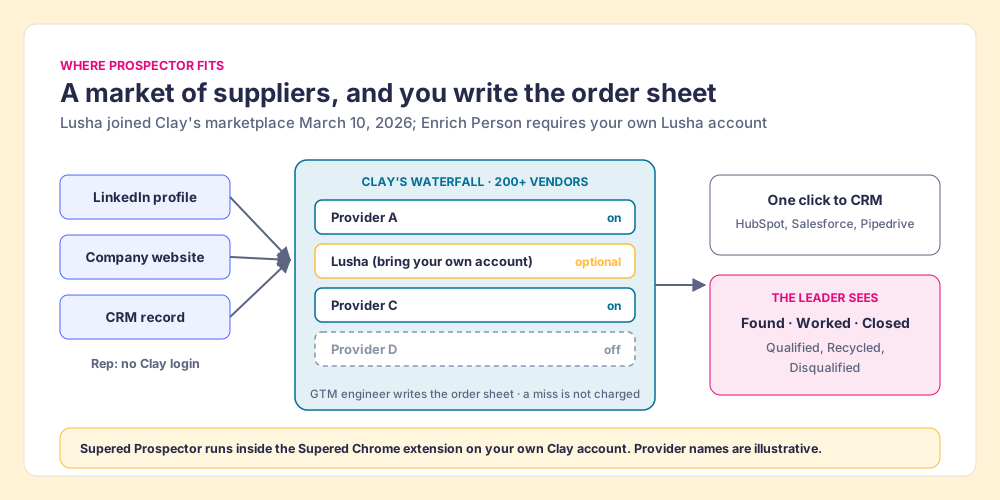
Clay plus Supered is the best way for a sales team to prospect: GTM engineers build in Clay, reps never open Clay. Prospector brings no database of its own. It runs inside the Supered Chrome extension, on the team’s own Clay account, and hands reps the tables the GTM engineer already built, as a button on the page where they sell. We chose Clay as our only data provider because Clay is the waterfall across 200+ data and AI vendors, asking provider after provider until one returns a verified email or phone (clay.com). Supered does not bring its own database. It brings Clay’s waterfall, which is every database, routed.
For a buyer reading this review, the waterfall has a second virtue. Back in the restaurant, a single database is one supplier for the whole kitchen; Clay’s waterfall is a market of 200+ suppliers, and the GTM engineer writes the order sheet. Lusha joined Clay’s marketplace on March 10, 2026, and Clay marks Lusha’s Enrich Person action “Bring Your Own Account Required” (Clay, Lusha integration). A team that wants Lusha’s EMEA coverage plugs in one Lusha account as one step. A team uneasy about any provider, Lusha or another, takes that step out and lets the next one answer. And Clay’s pricing page is explicit that “If an enrichment returns no result, you’re not charged Data Credits or Actions” (clay.com/pricing).
What the three people around the table get:
- The GTM engineer. No more acting as the list desk. Build flows once, each one a Clay table or function with a destination, and reps pick them from a Push menu. Your waterfalls, tiers, tags, and sequence variables stay yours. Start from the Supered Clay template or bring your own tables.
- The rep. The table as a button on a LinkedIn profile, a company website, or a HubSpot, Salesforce, or Pipedrive record. Sales Navigator leads go onto a prospect list, and the list goes to a Clay table. Before pushing, the rep sees who owns the record and whether it was prospected before, so there is no duplicate work across reps. Plays include research with the buying committee you defined, new logos, expansion, job changers, and stalled deals.
- The leader. Found, Worked, Closed: which lists reps found, who is working theirs, and how each lead ended the way your process says, Qualified, Recycled, or Disqualified. That view is how the Clay budget grows.
Prospector works within LinkedIn’s terms and does not copy search results in bulk; the contact data comes from Clay’s waterfall on the customer’s Clay account. Clay Labs is on California’s data broker registry too, so ask Clay the same provenance questions this page asks of Lusha.
The arithmetic: Clay Growth lists at $495 a month, or $5,940 a year (Clay pricing), and Prospector is $45 per rep per month billed annually, from one rep (Prospector). Ten reps come to $11,340 a year. Ten reps on Lusha would be two Premium plans at $7,198.20 a year, so on list price Lusha is cheaper for the same headcount. What the extra buys is every source behind each lookup, the choice of which sources, and lists you can follow to closed, without paying for extra seats in a second database.
Choose something else if you do not have Clay. Prospector runs on the customer’s Clay account and does nothing without one, and someone has to build the tables. If you want help with that, RevPartners, a Clay Elite Studio Partner that I founded, builds and tunes them. Choose something else, too, if you are one rep revealing a few contacts a week: Lusha’s Free plan and $449.10 Starter are hard to undercut for that job. The sourcing use case shows the setup, and the Clay Chrome extension page explains why reps rarely run Clay tables without one.
What are the non-Clay alternatives to Lusha?
- Apollo. The pick when the reps call at volume and want the dialer and sequences in the same seat. Apollo’s plan data on October 2, 2026 listed Basic at $49 per seat per month billed annually ($65 monthly) with 30,000 credits per seat per year, and Professional at $79; a phone costs 8 credits and an email 1 (apollo.io/pricing). That is about 16 cents a phone against Lusha’s 44 to 47 cents, which is the case Apollo vs Lusha makes in full.
- Kaspr. The like-for-like LinkedIn extension for email-first reps: Starter at $49 per user per month billed annually ($65 monthly) and Business at $79 (kaspr.io/pricing, October 2, 2026). Kaspr has been part of Cognism since 2022, and Kaspr vs Lusha prices the two per phone.
- Cognism. The UK-based database built around European pipelines, priced by quote with no self-serve tier; Lusha vs Cognism compares them for European pipelines.
For the wider field, the sales prospecting tools guide sorts the category by job, the direct dials guide explains why phones cost five times an email, and the RocketReach review applies the same two-question test to another database.
Which should you choose?
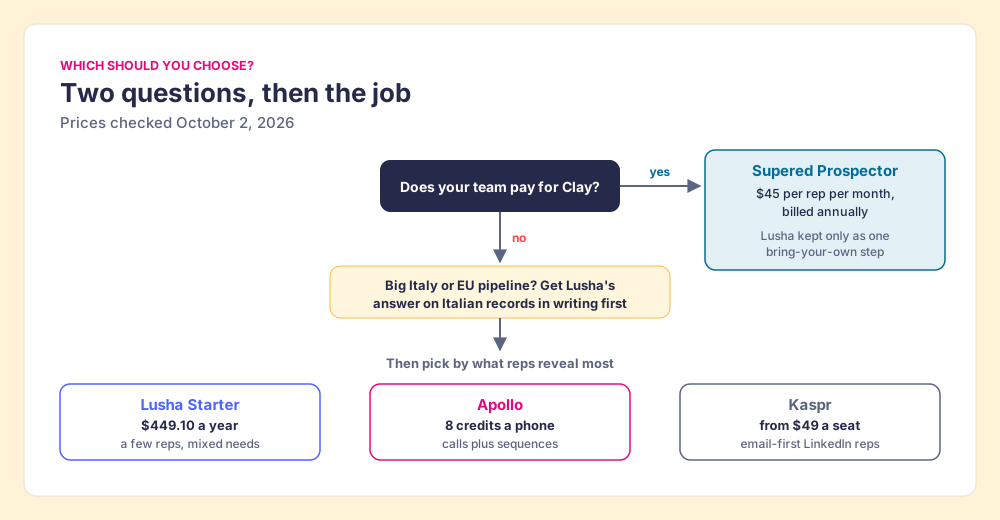
- Lusha, kept. The pick for one to five reps revealing a mix of emails and phones from LinkedIn, mostly outside the EU, who value a posted price and can live with the blind spot. Buy yearly only if you will spend the credits.
- Lusha, with a question first. If Italy or the wider EU is a large share of pipeline, get Lusha’s written answer on Italian records and on what happens to exported data if the Rome court restores the Garante’s order.
- Apollo. The pick when phones are most of the meter and sequences belong in the same seat.
- Kaspr. The pick for email-first reps on LinkedIn.
- Supered Prospector. The pick when the team already pays for Clay and wants every source behind each lookup, control over which sources, and a view of which lists got worked and closed.
My recommendation rests on what this review found. Lusha’s product earns its 4.3: it is easy, posted, and good enough for small teams, and the complaints are the ordinary ones of a single database with a 5-credit phone. The Trustpilot score and the Garante file are about something else, the provenance of the data, and that question does not go away by switching to another single database, because the same regulator’s theory reaches all of them. Without Clay, buy Lusha for a small team, count the phone reveals, and ask the EU question in writing. With Clay, stop buying one more database per rep. Let the GTM engineer choose the providers, let reps run the waterfall from where they sell, and see on one screen which lists became pipeline. A Prospector demo on your own Clay account shows that from a LinkedIn profile.
Frequently asked questions
Is Lusha legit?+
Why does Lusha have such a low Trustpilot score?+
How did Lusha get my details, and how do I remove them?+
Is Lusha an Israeli company?+
How much does Lusha cost per month?+
Can I get Lusha's data without a Lusha seat for every rep?+
Your process, running itself.