Apollo vs Lusha in 2026: Why the Eight-Ticket Phone Is the Cheaper Ride
Apollo charges 8 credits for a phone and Lusha charges 5, and the Apollo phone still costs about a third as much. Here is Apollo vs Lusha priced from both pages on October 1, 2026, graded for a mid-market team, with the branch where you need neither.
Apollo vs Lusha is a choice between Apollo.io, a per-seat prospecting platform bundling data, sequences, and a dialer, and Lusha, a credit-metered LinkedIn extension sold in small team bundles, and at October 1, 2026 list prices Apollo's phone costs about a third as much.
At a fairground, the ride that costs eight tickets can be cheaper than the ride that costs five, if the two booths sell their tickets at different prices. Apollo vs Lusha is a choice between Apollo.io, a per-seat prospecting platform bundling data, sequences, and a dialer, and Lusha, a credit-metered LinkedIn extension sold in small team bundles, and at October 1, 2026 list prices Apollo’s phone costs about a third as much. The short answer, by who it fits:
- Supered Prospector. Teams of any size whose RevOps already runs Clay. Clay’s waterfall across 200+ providers in every rep’s LinkedIn tab and CRM record (Clay’s Lusha step needs your own Lusha account). $45 per rep per month, billed annually.
- Apollo. Teams of ten to fifty reps without Clay that want data, sequences, and a dialer under one published price. From $49 a seat a month, annual.
- Lusha. One to five LinkedIn-first reps who want the easiest extension on a card. Premium is $3,599.10 a year for 5 seats.
How do Apollo and Lusha compare at a glance?
Prices are the plan that includes the job, opened on apollo.io/pricing and lusha.com/pricing on October 1, 2026. Grades come from the weighted scoring below, on a lens of a ten-to-fifty-rep team.
| Rank | Tool | Grade | Best fit | CRM integration | Setup effort | Price (plan with the feature) | Reason to switch |
|---|---|---|---|---|---|---|---|
| 1 | Supered Prospector (on your Clay) | A | Teams that already have Clay | Native in HubSpot and Salesforce; one-click sync | Admin connects Clay inside Supered; Ops builds or picks the tables | $45/rep/mo billed annually, from 1 rep, plus your Clay plan | 200+ providers behind one click, and each sourced list visible from worked to closed |
| 2 | Apollo | A- | 10 to 50 reps wanting data plus outreach | HubSpot, Salesforce, Outreach, Salesloft integrations | Self-serve in minutes | Basic $49, Professional $79, Organization $119/seat/mo annual (3-seat minimum on Organization) | The cheapest phone at list and the full outbound bundle |
| 3 | Lusha | B+ | 1 to 5 LinkedIn-first reps | CRM integrations from the Free plan | Self-serve in minutes; G2 ease of setup 9.0 | Starter $449.10/yr (1 seat), Pro $629.10/yr (2 seats), Premium $3,599.10/yr (5 seats) | The simplest extension, a posted price, cancel from settings |
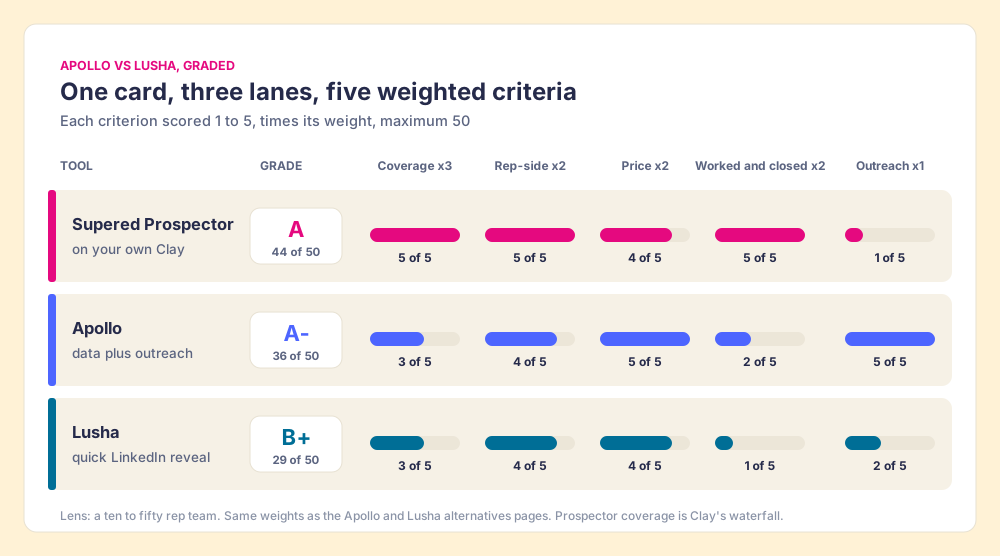
The scoring, so you can argue with it. Each criterion is scored 1 to 5 and multiplied by its weight, for a maximum of 50. The weights and the scores are the same ones used on the Apollo alternatives page and the Lusha alternatives page, so the three pages read together.
| Tool | Coverage (x3) | Rep-side delivery (x2) | Price for mid-market (x2) | Worked and closed visibility (x2) | Bundled outreach (x1) | Total |
|---|---|---|---|---|---|---|
| Supered Prospector | 5 | 5 | 4 | 5 | 1 | 44 |
| Apollo | 3 | 4 | 5 | 2 | 5 | 36 |
| Lusha | 3 | 4 | 4 | 1 | 2 | 29 |
Flip the weights toward bundled outreach and Apollo is first. Flip them toward a solo founder’s ease of purchase and Lusha climbs level with it. Prospector scores 1 on outreach on purpose: it has no sequencer, no dialer, and it drafts nothing. Its coverage score is Clay’s waterfall coverage, and the credit belongs to Clay.
Why trust this comparison?
You should not, unless the vendor shows its work, and I am the vendor. Supered is my company. Before it, I started RevPartners, a HubSpot partner that did only sales implementations, sold roughly twice as much Sales Hub as any other partner, and reached Elite tier in 13 months, so I have set up the prospecting stack inside a great many other companies’ CRMs and watched which tools reps kept using after week three. Supered is the #1 sales enablement app on the HubSpot marketplace with a 5.0 rating from 122 reviews there, and it holds 4.9 out of 5 from 81 reviews on G2 (October 1, 2026). The disclosure that matters: Prospector runs on Clay, and Clay is a waterfall that includes Lusha, so I have a reason to like both of the vendors on this page and a reason to sell you a third path. The grades state their weights so you can flip them, and the price section below favors Apollo because the arithmetic does.
Why do teams switch between Apollo and Lusha?
Buyers rarely land on a Lusha vs Apollo page from nowhere. They arrive from one of four situations, and each one is written into a vendor’s own pricing page.
- The Lusha credit wall. Lusha charges “Reveal verified email address, 1 credit. Reveal a phone number, 5 credits.” Starter’s 400 credits a month is 80 phones; the Free plan’s 40 credits is 8. A phone-first rep finds the wall mid-month, and the next rung up is a bundle of seats the team may not need.
- The Lusha seat ceiling. Pro includes 2 seats and Premium 5, and the FAQ says “For teams larger than 5 users, please reach out to our Sales team.” The posted price ends where the mid-market begins, which is when Apollo’s per-seat ladder starts to look tidy.
- The Apollo meter. Apollo’s FAQ, as of October 1, 2026, says credits “are pooled across your entire team and granted upfront,” “reset at the start of each new billing cycle and do not roll over if unused,” and that admins can set “per-user credit caps.” A team that blows through the pool in month eight learns what an annual allowance means. Apollo also does not let you mix tiers: “All seats on an Apollo account are on the same plan.”
- The miss. The European mobile Apollo did not have, or the US direct dial Lusha did not. One of the Reddit threads ranking for this search this week is titled “What is the point of Clay over say Apollo or Lusha,” which is the miss, asked out loud.
G2’s own head-to-head shows how close the two are on the experience and how far apart on who buys them. Apollo holds 4.7 out of 5 from 9,778 reviews and Lusha 4.3 from 1,665. Lusha edges Apollo on ease of use (9.2 to 9.0) and ease of setup (9.0 to 8.9); Apollo leads on quality of support (8.8 to 8.1). Apollo’s largest reviewer segment is small business, 67.0% of its reviews, and Lusha’s is mid-market, 46.8% (G2, Apollo.io vs Lusha, opened October 1, 2026). The tool with the lower rating sells further upmarket, to buyers who pay for the click more than for the phone.
Which is cheaper, Apollo or Lusha?
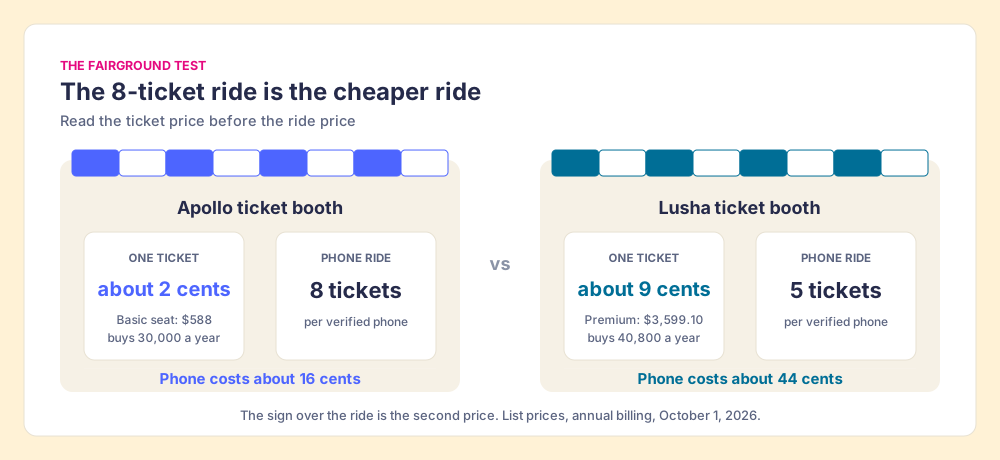
Back to the fairground. Two booths sell tickets for the same ride, a verified phone number. Apollo’s ride costs 8 tickets. Lusha’s costs 5. A visitor who reads only the sign over the ride picks Lusha, and pays nearly three times as much, because the sign over the ride is the second price. The first price is at the ticket booth.
Apollo’s booth: a Basic seat is $49 a month on annual billing, $588 a year, and comes with 30,000 credits per seat per year, granted upfront (apollo.io/pricing, October 1, 2026). That is about 2 cents a ticket. A phone at 8 tickets costs about 16 cents, and a Basic seat holds 3,750 of them a year. Professional, at $79, works out the same: 48,000 credits, 6,000 phones, about 16 cents each.
Lusha’s booth: Premium is $3,599.10 a year billed yearly for 40,800 credits shared across 5 seats (lusha.com/pricing, October 1, 2026). That is about 9 cents a ticket. A phone at 5 tickets costs about 44 cents, and the plan holds 8,160 of them. Starter, $449.10 a year for 4,800 credits, works out to about 47 cents a phone; Pro, $629.10 for 7,200 credits and 2 seats, about 44 cents.
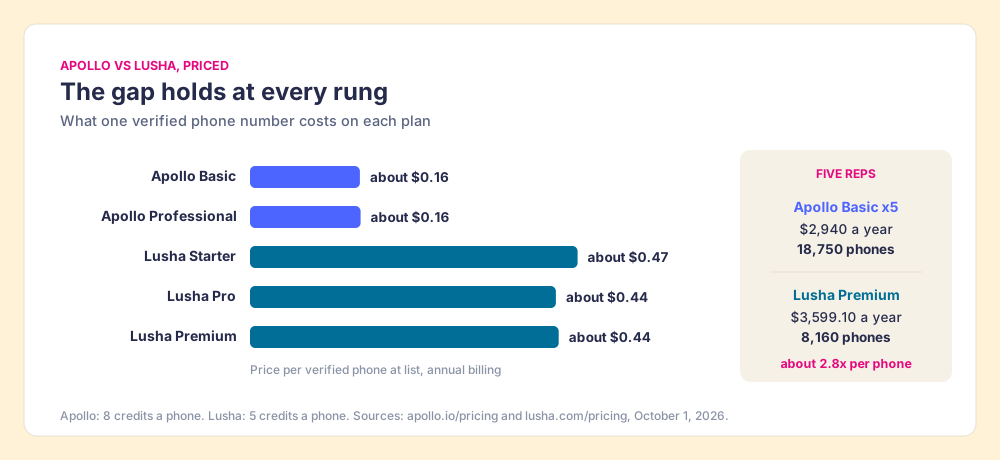
The gap holds at every rung.
| Plan (annual billing, Oct 1, 2026) | Price per year | Credits per year | Price per credit | Phones per year | Price per phone |
|---|---|---|---|---|---|
| Apollo Basic (per seat) | $588 | 30,000 | about $0.020 | 3,750 | about $0.16 |
| Apollo Professional (per seat) | $948 | 48,000 | about $0.020 | 6,000 | about $0.16 |
| Lusha Starter (1 seat) | $449.10 | 4,800 | about $0.094 | 960 | about $0.47 |
| Lusha Pro (2 seats) | $629.10 | 7,200 | about $0.087 | 1,440 | about $0.44 |
| Lusha Premium (5 seats) | $3,599.10 | 40,800 | about $0.088 | 8,160 | about $0.44 |
Run it for a five-rep team, the size Lusha’s Premium bundle is built for. Five Apollo Basic seats cost $2,940 a year and pool 150,000 credits, which is 18,750 phones. Lusha Premium costs $3,599.10 and holds 8,160. On list prices, a Lusha phone costs about 2.8 times an Apollo phone, and the Lusha bundle costs $659.10 more.
Three things keep this from being the whole answer, and a fair page says them. The first is that a revealed phone and a phone that connects are different purchases; neither vendor publishes an independent accuracy audit, and a cheap number that rings a switchboard is dear. The second is the miss: Apollo’s calculator says “Credits are only used when a phone number is found,” which is a generous rule, while the right number for your buyer is either on the shelf or it is not. The third is that contracts do not follow list prices. Vendr’s median Lusha buyer pays $15,999 a year across 147 purchases, saving 11% on average, in a range from $6,000 to $70,403 (Vendr, Lusha); the median Apollo buyer pays $19,000 across 101 purchases, saving 30%, in a range from $4,284 to $45,000 (Vendr, Apollo), both pages last updated February 2026. Lusha’s median is lower because its buyers tend to buy fewer phones, and its average discount is small because a posted price leaves little to negotiate. The fuller ladders, monthly billing included, are on the Apollo pricing page and the Lusha pricing page.
So on price alone, apollo or lusha resolves to Apollo for any team that needs phones at volume. Lusha wins on a different axis, and it is a real one.
What is each one best at?
Fair to both first, with proof.
- Apollo, the bundle. Data, sequences, a dialer, and Gmail and Salesforce extensions under one login, with a free tier and published seats. The pricing page claims 240 million contacts and 30 million companies and “over 600,000 companies using Apollo.” If your job is a ten-to-fifty-rep outbound team that wants the data and the outreach in one tool, Apollo is the best pick on this page and you can stop reading here.
- Lusha, the quick reveal. A LinkedIn extension a rep learns in an afternoon, a posted price from free, cancellation “at the end of your plan cycle” from settings, and monthly credits that “roll over and accumulate up to twice the credit limit.” G2 reviewers score its ease of use above Apollo’s. If your job is one to five reps revealing contacts from LinkedIn profiles, with no sequencer needed and a European mobile or two in the mix, Lusha is the best pick.
The difference is the sales motion each is built for: Apollo for the team that runs outbound from inside Apollo, Lusha for the rep who runs it from LinkedIn and the CRM and wants the number in one click.
What changed at Apollo and Lusha in 2026?
Both vendors spent the year building the same thing.
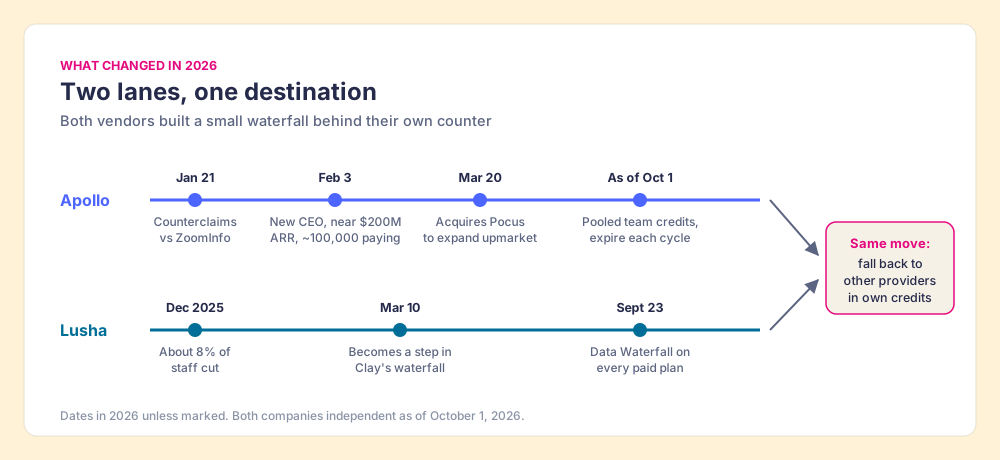
- Apollo. On January 21, 2026 Apollo filed counterclaims in its litigation with ZoomInfo, allegations rather than findings (Apollo). On February 3 it appointed Matt Curl, previously COO, as chief executive, with founder Tim Zheng as chairman, and said it was “approaching $200M in annual recurring revenue and nearly 100,000 paying customers” (PR Newswire). On March 20 it acquired Pocus, a revenue intelligence startup, saying the deal helps it “continue to expand upmarket” (TNW). The pricing FAQ now describes one pooled, expiring credit balance per team. Waterfall Enrichment, which falls back to partner providers inside Apollo’s credits, sits on every paid plan.
- Lusha. In December 2025 Lusha cut about 8% of its staff, roughly 24 people (Calcalist). On March 10, 2026 Clay’s changelog added Lusha as an enrichment step: “Add Lusha as a step in your existing contact enrichment waterfall for better EMEA match rates” (Clay changelog). On September 23, 2026 Lusha’s own changelog said “Data Waterfall was previously limited to Pro plans and above. It is now available on every paid plan” (Lusha changelog); the feature falls back to third-party providers when Lusha’s data cannot match a field.
Both companies are independent as of October 1, 2026. And both, inside a year, built a small waterfall behind their own counter: when the shelf is bare, ask a few neighbors, and bill it in your own tickets. A vendor does not build that unless its buyers keep hitting the miss. The two booths at the fair have each started sending a runner to other stalls. Lusha has gone one step further and rented a stall on someone else’s pier.
Do you need Apollo or Lusha if your reps can use Clay?
Walk out of the two booths and onto the pier. Clay is the pier pass: one contract, “Buy data from 200+ providers in one place,” and a waterfall that tries one provider after another until one returns the verified email or phone (clay.com, October 1, 2026). Clay’s own description: its “signature data waterfalls check multiple providers to return the most verified emails (lower bounce rate) and phone numbers (higher connect rate).” And Clay’s pricing page states the rule a booth cannot match across stalls: “If an enrichment returns no result, you’re not charged Data Credits or Actions” (clay.com/pricing). Lusha’s booth is one of the stalls on the pier.
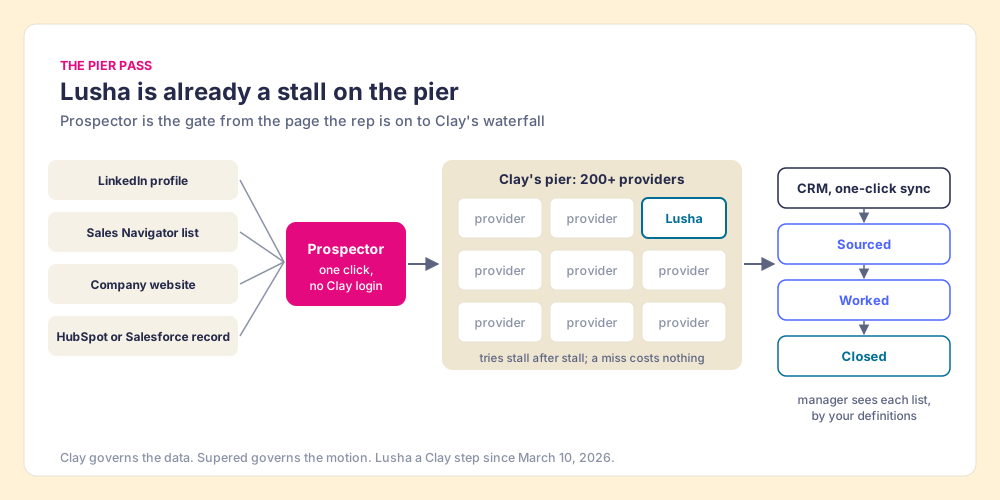
Prospector does not bring its own database. It brings Clay’s waterfall, which is every database, routed. We chose Clay as our only data provider for that reason, and it is why Clay is not a row in the table at the top: Clay is the row that contains the other rows. The pier has one problem, and Clay names it itself: “GTM engineers build on Clay.” The tables and the waterfall live in the GTM engineer’s workshop, and the rep lives in LinkedIn and the CRM. Supered puts the power of the GTM engineer in the rep’s hands, where they already are.
- A start from anywhere the rep is. A LinkedIn profile, a Sales Navigator list, a company’s website, or a HubSpot, Salesforce or Pipedrive record. One click runs the waterfall your Ops team built.
- A check before the add. On a LinkedIn profile the rep sees the matching CRM record and whether the prospect was already worked, before adding a duplicate or stepping on a teammate’s account.
- The rep’s own list. The rep builds the list, pushes it into any custom Clay workflow, and syncs it to the CRM in one click with field mapping set once. Reps never need a Clay login.
- Your process on the list. Supered applies your process to the prospects reps work, and the manager sees each sourced list move from sourced to worked to closed, with worked and closed defined by your team, so the coaching starts from what is converting. Clay governs the data. Supered governs the motion.
The price, done straight. Prospector is $45 per rep per month, billed annually, from one rep, on your own Clay account and your own Clay credits (Prospector). If RevOps already pays for Clay, the added cost for ten reps is $5,400 a year. If you are buying Clay for this, Clay Growth at its $495 monthly rate is $5,940 a year, so Clay plus Prospector is $11,340 for ten reps and $16,740 for twenty. Ten Apollo Professional seats at list cost $9,480, so on a cold start Apollo is cheaper by $1,860 at ten reps, and Apollo’s phone is cheaper than Clay’s: our reading of Clay’s calculator, explained on the Clay pricing page, is roughly six data credits for an email plus a phone, about 50 cents a contact on Growth, against about 18 cents for the same 9 credits on Apollo Basic. The case for the pier is coverage, the rep’s surface, and one contract, and it is strongest for the team that already owns the pass.
Choose something else if:
- No Clay, and no plan to buy it. Prospector runs only on Clay. Pick Apollo or Lusha from the branches below.
- Outreach in the same tool. Prospector has no sequencer and no dialer. Apollo bundles both.
- A solo rep on a card. Lusha Starter at $449.10 a year is a simpler purchase than a Clay plan plus a seat.
- A field or phone-first mobile team. Supered runs at the computer and has no mobile product.
Lusha vs Apollo: which should you choose?
Lusha, Apollo, or a third road, each earned by the numbers above.
- Apollo. Choose Apollo if you run ten to fifty reps without Clay, call at volume, and want sequences and a dialer in the same plan as the data. Its phone costs about 16 cents at list against Lusha’s 44, it holds 4.7 on G2 from 9,778 reviews, and its median contract is $19,000. Size the pool before the seats, because credits expire at the end of the cycle, and set the per-user caps on day one.
- Lusha. Choose Lusha if you are one to five LinkedIn-first reps who want the quickest reveal and a posted price, and phones are a small share of what you pull. Buy monthly if you cannot size the jar, since monthly credits roll over up to twice the allowance and yearly credits reset. Past five users the posted ladder ends and you are a sales-led buyer either way.
- Neither: Supered Prospector. Choose neither if your RevOps already runs Clay. The coverage question is answered by a waterfall across 200+ providers that includes Lusha’s own step, the rep enriches from the page they are on with no Clay login, and you see each sourced list become pipeline. $45 per rep per month, billed annually, on your own Clay account.
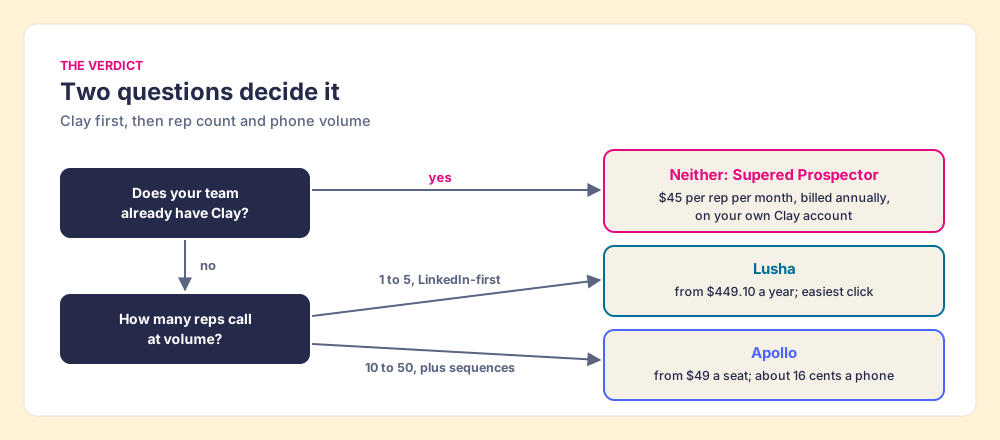
If you do not have Clay, read the ticket booth before the ride: Apollo for the team that calls, Lusha for the handful of reps who want the cleanest click on LinkedIn, and size the credits before you size the seats. If you do have Clay, buying a third booth is the one move the numbers never support. Lusha is already a stall on your pier, Apollo’s phone is cheap but it is one more meter, and the question worth paying for is whether your reps walk onto the pier at all. The sales prospecting guide shows how a rep-built list turns into pipeline, and a Prospector demo is where you can watch it run on your own Clay account.
Frequently asked questions
Is Apollo or Lusha better for a sales team?+
Which is cheaper, Apollo or Lusha?+
Does Lusha have better data than Apollo?+
Can you use Apollo and Lusha together?+
What changed at Apollo and Lusha in 2026?+
Do I need Apollo or Lusha if my team has Clay?+
Your process, running itself.