Supered for Pipedrive · New: Process Rules and Process Boards

Supered for Pipedrive: your sales rules, checked on your open deals. Write the rules once.
Pipedrive and Claude both follow them.

Supered for Pipedrive turns the expectations in your head into Process Rules, checks your open Pipedrive deals against them on a Process Board, and shows each rep and manager which deals break which rule. The same rules reach Claude through Supered's MCP server, so when a rep asks Claude to tidy their pipeline through Pipedrive's own MCP connector, Claude works to your standard instead of guessing at one.

35% of Pipedrive MCP use
Writes or updates CRM data, by Pipedrive's own count in August 2026.
One AI request in three changes your pipeline.
The rules it follows should be yours. Source: Pipedrive via MarTech Series, August 18, 2026
Same rules, any screen Pipedrive Supered Claude Any MCP client
8 min read What you'll learn: what Pipedrive's required fields catch and what they miss, what a rep and a manager see on a Process Board, how Claude fits in, and what it costs
Chapter 01 · The front door and the loading dock

What do Pipedrive required fields stop, and what gets past them? They stop the rep at the app screen. The API walks around.

A shop can put a good lock on its front door and still lose stock through the loading dock out back. Pipedrive's required fields are that lock. On the Premium plan and above (Pipedrive pricing, checked October 1, 2026), they stop a person from saving a deal, person or organization, or moving a deal to a new stage, until the right fields are filled. Pipedrive is plain about the dock: "the required fields feature won't stop deals from progressing if the fields are updated via import, bulk-editing, API, automations, or third-party integrations" (Pipedrive help center, updated September 3, 2026).

For years little came through the dock: an import once a month, a Zapier step or two. Then Pipedrive launched its own MCP server on June 30, 2026, on every plan, and AI assistants started writing to deals through it. Pipedrive's article does not say whether its own MCP server counts as an integration for this purpose, so test it on a sample deal before you rely on either answer.
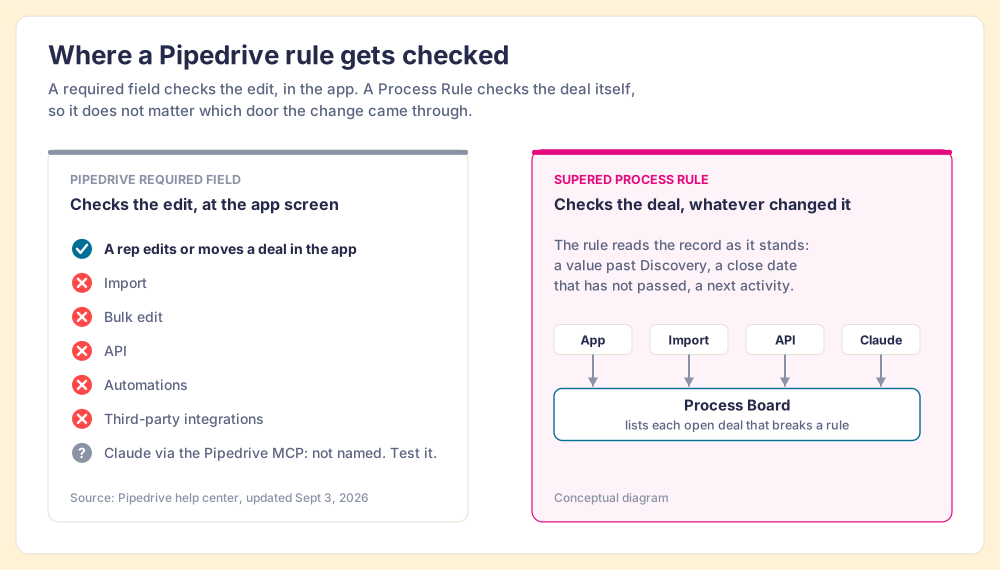
Pipedrive required fields versus Supered Process Rules: a required field checks an edit a rep makes in the Pipedrive app, and Pipedrive says it does not stop changes from import, bulk edit, API, automations or third-party integrations; a Supered Process Rule checks the deal itself, so changes from any route land on the same Process Board.
Two places to check a rule. Required fields check an edit made in the app; Pipedrive lists five routes they do not stop. A Process Rule checks the deal as it stands, so it does not care which door the change came through.
Pipedrive on its own
A lock on the edit, and the rest lives in your head.
Required fields guard the app screen. Important fields raise a flag in the deal view without stopping anyone. Everything else, the next activity, the close date that slipped past, the recap after a meeting, depends on someone noticing. On a small team that someone is usually the founder.
→
Pipedrive with Supered
The expectations are written down, and the board checks them.
Each expectation becomes a Process Rule. The Process Board lists the open deals that break one, whether the rep, an import or Claude made the change. Reps fix their own list. Managers see who followed the rules without opening deals one at a time.
Chapter 02 · Why written rules matter on Pipedrive

Why does a Pipedrive team need its rules written down?

Pipedrive calls itself "the easy and effective CRM for small and medium-sized companies," used by more than 100,000 companies (Pipedrive). On teams that size, the process lives in one person's habits, and habits do not scale past the person who has them. The State of Sales Enablement 2026 shows where it breaks.

36%
see reps follow the process they defined

89% of teams have a defined sales process. 36% see reps run it. The 53-point gap is the distance between what you expect and what the pipeline shows.

SOSE 2026
23%
adherence at 6 to 8 reps per manager

Against 47% at 1 to 5. The top reason reps skip the process is that managers do not enforce it (29%), and leaders cite capacity more often than indifference. A founder who sells and manages has no spare hours to inspect.

SOSE 2026
49%
quota attainment when guidance is embedded in the workflow

Against 24% when it lives in CRM fields or stages and 15% in docs or wikis. Required fields are the 24% row. When reps work in Claude, Claude is part of the workflow, and the guidance has to reach it there.

SOSE 2026
Today

The rules live in one head, and the pipeline drifts whenever that head is busy.

With Supered

The rules live in Supered and get checked against open deals. Teams that inspect deals against a defined process at the highest frequency hit quota at 6.3x the rate of the lowest band.

Why trust us with your pipeline
We have run this playbook before. Now it runs on Pipedrive.

Supered started inside RevPartners, the HubSpot partner our co-founder Matt Bolian built, which sold roughly twice as much Sales Hub as any other partner and reached Elite tier in 13 months. We wrote Supered because the clients we implemented kept the same problem after go-live: a well-built CRM, a defined process, and reps who drifted from it. Pipedrive teams have the same problem with a smaller staff to catch it.

PROOF 01
#1 on the HubSpot marketplace.
The #1 sales enablement app on the HubSpot App Marketplace, a HubSpot Premier Tech Partner, with a 5.0 rating from 122 reviews and 6,000 installs there.
PROOF 02
4.9 out of 5 on G2.
From 81 reviews on G2, checked October 1, 2026 (G2).
PROOF 03
SOC 2 Type II and GDPR.
Each person signs in with their own account, and Claude sees only what that person's Pipedrive user can see.
Chapter 04 · What each person sees

What does a Pipedrive rep see with Supered, and what does the manager see?

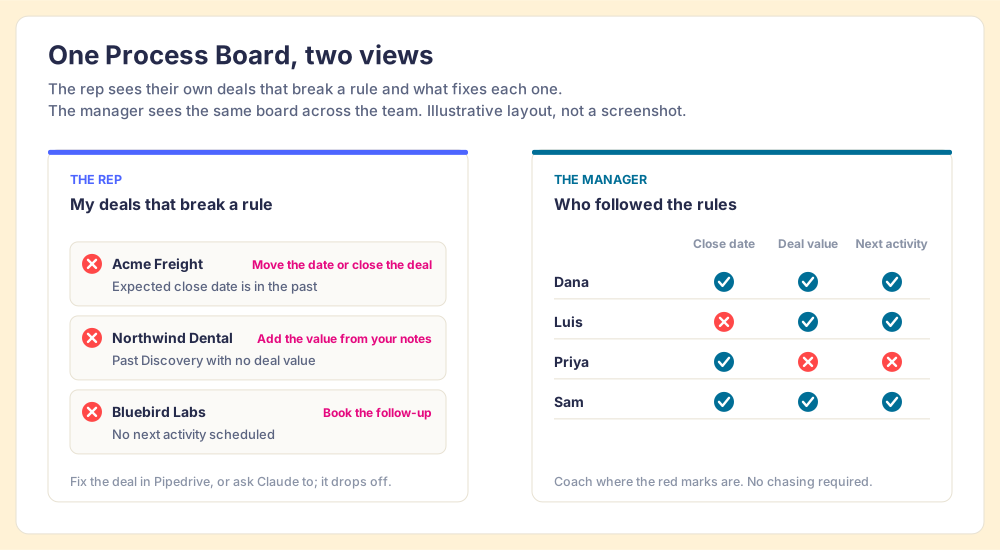
One Process Board, read two ways. The rep gets a short list of their own deals to fix. The manager gets the same list across the team, sorted by rule and by rep, so the one-on-one starts with what is open.

The rep
My deals that break a rule, and the fix for each.
An expected close date in the past. A deal past Discovery with no value. An open deal with no next activity booked. The rep fixes the deal in Pipedrive, or asks Claude to, and it drops off the board. The manager does not have to send a "can you update this" message.
The manager
Who followed the rules, rule by rule.
The same board across the team: which reps have deals breaking which rule. The manager stops opening deals one at a time to find what slipped and spends the hour on the opportunities where a rep needs help with the buyer.
Claude
The same rules, read before it writes.
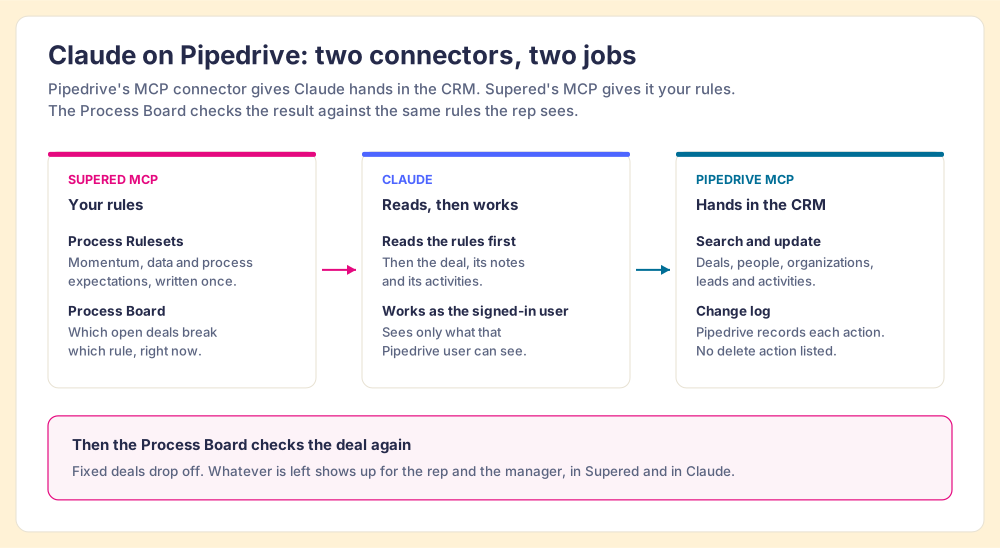
Through Supered's MCP, Claude reads your Process Rulesets and the board's open violations. Through Pipedrive's MCP connector, it updates the deal. Then the board checks the deal again, the same way it checks a change a rep made by hand.
Supered for Pipedrive Process Board, illustrative layout: the rep sees their own Pipedrive deals that break a rule, such as an expected close date in the past, no deal value past Discovery, or no next activity, with the fix for each; the manager sees which reps have deals breaking which rule.
Illustrative layout with made-up deals and reps, not a product screenshot. The rep clears their own list; the manager coaches where the red marks are.
Chapter 05 · Which tool does which job

When are Pipedrive's own fields enough, and when do you need Process Rules?

Pipedrive's built-in controls are good, and on a small team they may be all you need. The table sorts each option by the job it does. Pipedrive's plan names changed in 2026, and its help center still uses older names, so we cite the pricing page for plans.

Option Best at Stops or flags Checks changes from the API and AI? Price
Pipedrive required fields Making a rep fill a field before saving or moving a deal in the app Stops the edit No, per Pipedrive's help center Included on Premium and above
Pipedrive Important fields Reminding a rep that a field is empty Flags it in the deal view Shows the flag; blocks nothing Included on higher plans
Supered Process Rules on a Process Board Checking open deals against your written expectations and showing who followed them Lists each deal that breaks a rule, for the rep and the manager Yes: it checks the deal itself, whatever changed it $40/user/mo paid yearly, 5-user minimum

Choose Pipedrive's required fields alone if you have a handful of sellers, the founder still sees each deal, and your main worry is a blank field at the moment of a stage change. Choose Supered if more than one person needs to know whether the process ran, or if Claude and other integrations now write to your deals.

Chapter 06 · Claude on Pipedrive

How do Claude, Pipedrive's MCP connector and Supered's MCP work together?

Pipedrive's MCP server comes with every Pipedrive plan. It lets Claude search deals, people, organizations and leads, create and update records, and convert leads, acting only on what the connected user can already view or edit, with each action recorded in the change log (Pipedrive, checked October 1, 2026). It became available in Claude's connector directory on August 18, 2026, and Pipedrive reported that over 93% of its MCP usage happens on Anthropic surfaces. Joe Futty, Pipedrive's Chief Product and Technology Officer, said "Customers increasingly expect to work with their CRM data wherever their work happens."

The connector is a ring of keys. It opens the records. It says nothing about the house rules: which deals need a value, which close dates are wishful, which meetings still owe the buyer a recap. Supered's MCP server carries those rules. Claude reads them first, then uses Pipedrive's keys to do the work, and the Process Board checks the result. For the full setup, read the Pipedrive MCP guide; for what Claude reads and changes across CRMs, see the Claude integration page.

Claude and Pipedrive with Supered: the Supered MCP supplies Process Rulesets and the Process Board, Claude reads the rules and works as the signed-in Pipedrive user, Pipedrive's MCP connector searches and updates deals, people, organizations, leads and activities with each action in the change log, and the Process Board checks the deal again.
Two connectors, two jobs. In Pipedrive's August 2026 count, 65% of MCP interactions read data and 35% write or update it. The rules decide what those writes should be.

Pipedrive gives Claude the keys. Supered tells it which rooms need work.

Chapter 07 · The plan

How do you set up Supered for Pipedrive in under a week?

Customers go live in under a week, and some in a day. Four steps; the first three are one-time setup.

01.

Connect Pipedrive to Supered.

Your admin connects your Pipedrive account inside Supered. Process Rules run on your Pipedrive deals, so this comes first. Our team supports your admin directly; there is no implementation project to buy.

Who: your Pipedrive admin Support: the Supered team
02.

Write your expectations as Process Rules.

Start with the things that bother you when they slip. Momentum: no open deal without a next activity, no expected close date in the past. Data: a deal past Discovery carries a value. Process: a recap within a day of each meeting. Describe a rule in English and Supered's MCP creates the Process Rule for you to review. The sales expectations use case has a starter set.

Input: the expectations in your head Output: a Process Ruleset
03.

Turn on the Process Board.

The board checks your open Pipedrive deals against the Ruleset and lists each one that breaks a rule, rep by rep. If reps use Claude, connect Pipedrive's MCP connector and Supered's MCP server in Claude so both read from the same rules.

Claude: Pipedrive connector + Supered connector Output: a board per team
04.

Reps clear the board. Managers coach.

Reps fix their deals in Pipedrive or ask Claude to: "Check my open Pipedrive deals against my Supered rules and fix what the notes support." Managers open the one-on-one with what is still on the board.

Who: each rep, on their own deals Output: a shorter board
Pricing

What does Supered for Pipedrive cost?

Process Rules and Process Boards come with the Process Compliance plan, which includes everything in Digital Adoption. Prices from our pricing page, October 1, 2026.

$40
per user per month, paid yearly

$45 per user per month paid monthly. A 10-user team paying yearly comes to $4,800 a year.

5
user minimum

The smallest yearly plan is 5 users at $40, or $2,400 a year. Supered fits best at 10 or more users who work at a computer.

<1 week
to go live

Customers go live in under a week, some in a day. No implementation fee, because we do not sell implementation projects.

Choose something else if

Your sellers work from the Pipedrive mobile app in the field. Supered has no mobile product. Or you have three sellers and one founder who sees each deal: Pipedrive's required fields will carry you for now.

Choose Supered if

More than one person needs to know whether the process ran, and Claude or other tools now write to your deals.

Two versions of next year

A year from now, your process still lives in one person's head.
Or it lives where Pipedrive and Claude can read it.

Both teams pay for the same Pipedrive seats and the same Claude seats. The difference is whether the rules are written where software can check them.

Rules in a head
The pipeline follows whoever touched it last.

The founder fixes stale close dates when there is time. Claude fills blank values with a reasonable stranger's guess. New reps learn the standard by getting corrected, one deal at a time.

  • Required fields guarding the app screen only
  • AI edits with no standard to check them against
  • Inspection done by hand, when there is time
  • A different process for each rep
Rules in Supered
One standard, checked against open deals.

The expectations are Process Rules. The board shows each rep their list and each manager the team's. Claude reads the same rules before it writes, and the board checks its work.

  • Process Rules that check the deal, whatever changed it
  • Claude working to your standard
  • A board that shows who followed the rules
  • Managers coaching instead of chasing
The success state

Your Pipedrive pipeline matches
the process you wrote down.

Reps start the day with a short list or none. Claude does the admin to your standard. The manager walks into one-on-ones knowing which deals need judgment, because the fields are already done.

Written once
Your expectations as Process Rules
Checked
Open deals on a Process Board, whatever changed them
Same rules
In Pipedrive and in Claude
Coaching
Where the manager's hour goes
The questions

Supered for Pipedrive questions, answered directly.

What Pipedrive sales leaders and admins ask before they connect Supered.
Pipedrive facts cite Pipedrive.

What it is
What is Supered for Pipedrive?

Supered for Pipedrive holds your sales expectations as Process Rules, checks your open Pipedrive deals against them on a Process Board, and shows reps and managers which deals break which rule. The same rules reach Claude through Supered's MCP server, so a rep who works in Claude follows the standard they would follow in Pipedrive. We announced the Pipedrive launch at the Pipedrive Partner Summit in Orlando in October 2026.

Pipedrive already has required fields. Why add Supered?

Required fields do a good job at one moment: a person saving or moving a deal in the Pipedrive app. Pipedrive's help center says they will not stop deals from progressing when fields change through import, bulk editing, the API, automations or third-party integrations (Pipedrive, updated September 3, 2026). A Process Rule checks the deal as it stands, whatever changed it, and it can check things a field cannot, such as whether a deal has a next activity booked.

Does Supered for Pipedrive do everything Supered does on HubSpot and Salesforce?

Yes. Everything Supered does on HubSpot and Salesforce works on Pipedrive: Process Rules, Process Boards and process compliance, the cards, guides and action plans reps see in the Supered Chrome extension, and Prospector for building lists on Clay.

Who is Supered for Pipedrive a good fit for?

Sales teams of 10 or more users who work mostly at a computer. Supered has no mobile product, so a field team that lives in the Pipedrive mobile app will get less from it. Teams of three or four sellers where the founder still sees each deal can often get by on Pipedrive's own required fields for now.

Claude and AI
How do I connect Pipedrive to Claude?

In Claude, open Customize, then Connectors, and find Pipedrive in the directory, or add a custom connector with the URL https://mcp.pipedrive.ai/mcp as Pipedrive's help article describes. Sign in to Pipedrive, approve the permissions, and turn on the setting that loads all available tools. The Pipedrive MCP guide walks through each screen.

What does Supered's MCP add to Pipedrive's MCP connector?

Pipedrive's connector lets Claude search and update deals, people, organizations, leads and activities. It does not carry your expectations: that a deal past Discovery has a value, or that an open deal always has a next activity. Supered's MCP server gives Claude your Process Rulesets and the Process Board's list of deals that break them, so Claude knows which work to do before it writes anything.

Do Pipedrive required fields apply to changes Claude makes?

Do not count on it. Pipedrive's required-fields article lists API and third-party integrations among the routes required fields do not stop, and it does not name MCP either way. Test it on a sample deal. A Process Rule checks the deal afterward regardless of the route, so a change Claude makes still has to pass your rules on the Process Board.

Can Claude delete Pipedrive records or Supered rules?

Pipedrive's MCP server page lists searching, creating and updating records, with each action recorded in the change log, and lists no delete action (Pipedrive, checked October 1, 2026). The Supered MCP server cannot delete content, and it asks for confirmation before it creates or updates anything.

Pricing and setup
How much does Supered for Pipedrive cost?

Process Compliance, the plan that includes Process Rules and Process Boards, is $40 per user per month paid yearly or $45 paid monthly, with a 5-user minimum. It includes everything in our Digital Adoption plan. Full details are on the pricing page.

How long does setup take?

Customers go live in under a week, and some go live in a day. Most of that time goes into deciding which expectations to write down first. Connecting Pipedrive and turning a written expectation into a Process Rule is the quick part.

Who sets it up?

Your Pipedrive admin or sales ops lead, with our team supporting them directly. Supered does not sell implementation projects. A sales leader can write the first rules in plain sentences, and Supered's MCP turns each one into a Process Rule for review.

Is Supered secure enough to connect to our CRM?

Supered is SOC 2 Type II and GDPR compliant. Each person who connects Claude signs in with their own Supered account, and Pipedrive's MCP connector acts only on what that person's Pipedrive user can already view or edit.

Building lists
Does Supered help a Pipedrive team build prospect lists?

Building lists is a separate product. Prospector puts Clay's enrichment in front of every rep and is priced on its own: $45 per user per month billed annually, from one user, running on your own Clay account. Clay itself connects to Pipedrive to create, update and look up people and organizations. Book a Prospector demo to see how it fits your Pipedrive setup.

Write the rules once.
Let Pipedrive and Claude follow them.

A 30-minute demo: we write three of your expectations as Process Rules, run them against a Pipedrive pipeline, and show you the board a rep and a manager would see.