Sales prospecting, for teams that already have Clay · Powered by The Behavior Layer

Sales prospecting, sourcing to close, on the Clay account you already pay for. The power of the GTM engineer in the rep's hands.
And a standard from sourced to closed.

Sales prospecting on Clay works when the rep runs what the GTM engineer built, where the rep already is, and the team is held to one standard from the first enriched contact to the closed deal. Your GTM engineer built the tables and the waterfall. Your reps never open Clay. Supered puts Clay's output one click from the LinkedIn profile, the company site, or the CRM record the rep is already looking at, then guides and measures what happens next: sourced, worked, closed, by your definitions.

36% of revenue teams
See reps run the process as designed. 89% have one written down.
Sourcing is the first step of that process, and the one least inspected.
A contact enriched in Clay and pushed to the CRM is a step, not a result. The 53-point gap between written and run is where sourced contacts go to sit. Source: The State of Sales Enablement 2026 →
Lives wherever reps prospect Clay LinkedIn Sales Navigator HubSpot Salesforce Salesloft Gmail Outlook Any URL
6 min read What you'll learn: why the Clay investment is capped by rep adoption, the five-move rep loop, and how sourcing becomes a stage the manager can inspect
Chapter 01 · The common belief

Why do reps never open Clay? Because Clay is the GTM engineer's workshop, and the reps live somewhere else.

Clay's own framing is right: GTM engineers build on Clay, and the workflows they build are meant for any rep to run. The building happens. The running mostly does not. Reps spend the day in LinkedIn, the CRM, and email. A workflow that needs a Clay tab is a workflow that does not get run, the same way a playbook in a folder is a playbook that does not get run. So the Clay investment is capped by rep adoption, and rep adoption is a number no one on the team is measuring. RevOps sees credits consumed. No one sees whether the sourced contacts became pipeline.

The old way
Buy Clay. Build the tables. Hope the reps come.
One person learns Clay. They build the waterfall, the enrichment tables, the CRM write-back. They record a Loom for the reps. The reps watch it once, keep prospecting from whatever single database they had before, and ask Ops for a list when they run out. The credits get used. The pipeline question stays open.
→
The new way
Put what Clay built where the rep already is. Then inspect what happens next.
The rep is on a LinkedIn profile, a company site, or a CRM record. Clay's enrichment is one click away, no Clay login, nothing to learn. The contact lands in the CRM with the fields mapped. From there it is a process step with an expectation, a measure, and a manager who can coach off it. Clay governs the data. Supered governs the motion.
Chapter 02 · The problem, in three layers

The sourcing problem is not a data problem. It is a "did it happen" problem.

Knowledge is solved. Data is solved, or as solved as a waterfall across every vendor can make it. What is not solved is whether the rep ran the motion, and whether anyone can tell.

What you can see
Reps never open Clay.
The GTM engineer built it for them. The reps still prospect from a single database and a spreadsheet, because that is what sits in the tab they already have open. The Clay investment is capped by adoption, and adoption is not on any dashboard.
What it feels like
You cannot answer "is the prospecting engine working."
The board asks. You have a credits number and an exports number. Neither says whether a sourced contact was ever worked, advanced, or closed. You are guessing, and you know you are guessing.
Why it is wrong that this exists
Sourced is not pipeline.
A standard exists only to the degree it is inspected. Sourcing a contact is the first step of a process, and it is the one step almost no team inspects. The rep should not have to carry that gap. The system should close it.
The cost

A Clay account the reps never touch, and a CRM full of contacts no one works.

The fix

Clay in the rep's hands, where they already are. Then one standard, sourced to closed.

Chapter 03 · The data

What happens to a sales process that no one inspects?

Sourcing is a process step. The research on process steps applies to it. These three findings come from The State of Sales Enablement 2026, our own research with 198 sales leaders.

89% vs 36%
Have a defined process, versus see reps run it
The 53-point gap between written and run is the Sales Execution Gap. Sourcing sits at the front of that process, and the front is where the gap opens first: the contact exists, the next step is unclear, the record sits.
The State of Sales Enablement 2026→
6.3×
Quota attainment, most-inspected versus least-inspected teams
Inspection is the variable. A team that inspects whether the sourced contact was worked runs a different prospecting engine from a team that counts credits. Same Clay account. Different result.
The State of Sales Enablement 2026→
49% vs 15%
Quota attainment, process in flow versus process in docs
Where the guidance lives decides whether it gets run. A Clay workflow in a Clay tab is guidance in a doc. The same workflow, one click from the profile the rep is already on, is guidance in flow.
The State of Sales Enablement 2026→
The methodology Supered teaches
The Behavior Layer

You bought Clay for the team. Your GTM engineer built the tables. The credits get consumed and the CRM fills up, and you still cannot say whether any of it became pipeline. That is not a rep failure or an Ops failure. It is what happens when a workflow lives in one tab and the work lives in another. The Behavior Layer is the fix Supered runs on the rest of the sales process, applied to the first step: put the action where the rep is, set the expectation, measure the run. It is the framework behind The State of Sales Enablement, the research that put a number on the gap between the process teams write and the process reps run.

PRINCIPLE 01
Clay builds it.
The GTM engineer owns the waterfall, the tables, and the write-back rules. Clay governs the data. Supered never replaces that, and never brings its own database. It runs on the customer's own Clay account.
PRINCIPLE 02
The rep runs it, where they are.
On the profile, the Navigator list, the company site, or the CRM record. Nothing to learn, nothing to build, no Clay login required. The power of the GTM engineer, in the rep's hands.
PRINCIPLE 03
Supered inspects it.
The sourced contact enters a motion with an expectation and a measure. Supered governs the motion: sourced, worked, closed, by your definitions, per rep, per record. You can only expect what you inspect.
Chapter 05 · The plan

What does sales prospecting look like when Clay lives in the rep's tab?

Five moves. The first three are Clay in the rep's hands. The last two are the reason a Clay team picks Supered.
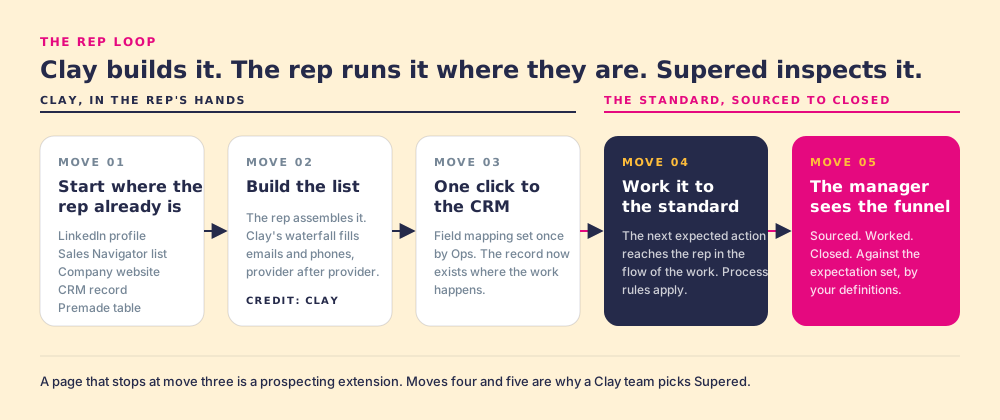
The five-move rep loop: start where the rep already is, build the list with Clay's waterfall, one click to the CRM, work it to the standard, and the manager sees sourced, worked, and closed against the expectation.
01.

Start anywhere the rep already is.

A LinkedIn profile. A Sales Navigator list. A company's website, when the rep is on acme.com and wants the buying committee. A CRM record, when an account or contact already in HubSpot or Salesforce needs the missing phone, the missing champion, the fresh title. A premade or custom enrichment table for the segment. The enrichment lives one click from wherever the rep is looking, never in another tab.

Where: the profile, the list, the site, the record Who: the rep
02.

Build their own list.

The rep, not Ops, assembles the list from those sources. Clay's waterfall fills emails and phones across 200+ data and AI vendors (Clay's own count on clay.com, September 2026): if one source misses, the next is tried, and the rep gets the best verified email and phone available. Any custom table the GTM engineer builds becomes a one-click action for reps. The power of the GTM engineer, in the rep's hands.

Data: Clay's waterfall, credited to Clay Output: a list the rep built
03.

One click to the CRM.

Field mapping is set once by Ops. Every sync after that is one click for the rep: into HubSpot or Salesforce, and into the sequencer if the team runs one. The record now exists where the work happens. Before the rep adds it, they see whether the person is already in the CRM, who owns them, and where the deal stands, so they never add a duplicate or step on a teammate.

Setup: field mapping, once, by Ops Output: the record, where the work happens
04.

Work it in the CRM, to the standard.

From here Supered is doing what it always does. The next expected action reaches the rep in the flow of the work. The process rules apply to the sourced contact the same way they apply to any record: the qualification questions, the stage gates, the must-do activities. Adherence is measured record by record, not reported by the rep.

Inputs: your process rules Output: the motion, run and measured
05.

The manager sees sourced, worked, closed, and sets the standard.

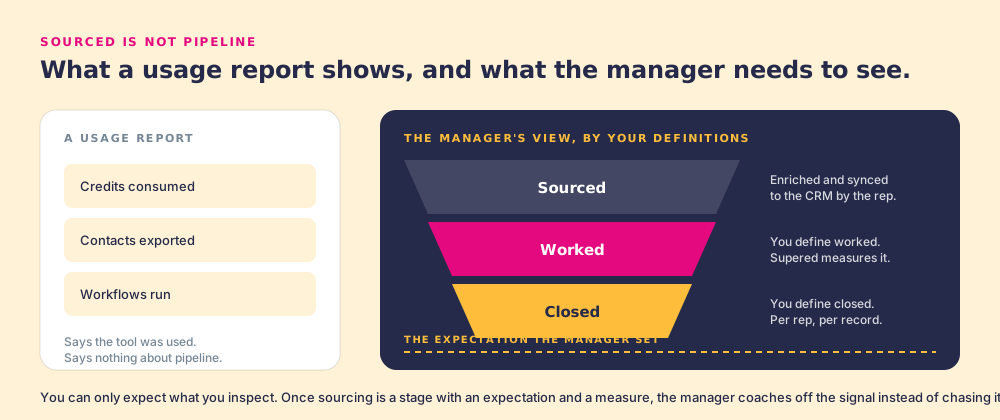
Not credits consumed or contacts exported. A funnel: how many were sourced, how many were actually worked (you define worked), how many closed (you define closed), against the expectation the manager set. You can only expect what you inspect, and now sourcing is inspectable. The manager's time goes to coaching off the signal, not chasing it.
Inputs: your definitions of worked and closed Output: a funnel the board can read
What it looks like

Clay's enrichment, on the profile the rep is already looking at.

This is move one through move three, running live. The rep is on a LinkedIn profile. Supered sits beside it. One click runs the waterfall the GTM engineer built in Clay, the email and phone come back verified, the rep sees the record is not yet in HubSpot, and one more click puts it there with the fields mapped. No Clay tab. No Clay login. No list request to Ops.

Starts on the profile. Or the company site, the Navigator list, or the CRM record. Never a search box.
Runs Clay's waterfall. Every vendor in Clay's marketplace, through the one contract you already have.
Checks the CRM first. Already in the CRM, owner, stage, before the rep adds a duplicate.
Owned by Ops. The GTM engineer builds the tables and the field mapping. The rep gets a curated set of actions.
See how Supered works →
linkedin.com / in / priya-natarajan-vp-ops
Priya Natarajan
VP Revenue Operations · Northwind Logistics
Not in HubSpot
Enrich
Sync
Work
Closed
Work email
Verified · via Clay waterfall
Mobile
Verified · via Clay waterfall
CRM status
No record · no owner
Table
Ops-leader buying committee
Enriched. Add to HubSpot and start the motion?
Field mapping is set. The first expected action for a new ops-leader contact is a discovery touch within your standard's window. Supered will guide it and measure it.
Add to HubSpot Add to sequencer
Chapter 07 · Every database, routed

Supered does not bring its own database. It brings Clay's waterfall, which is every database, routed.

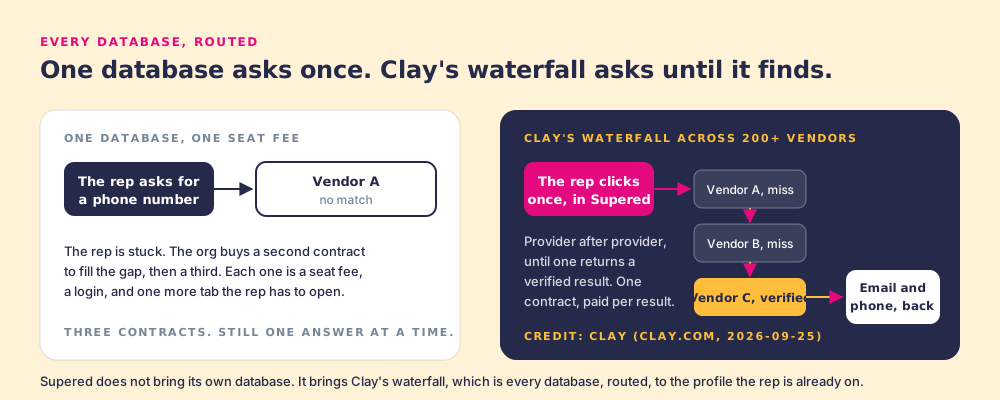
Apollo, ZoomInfo, Cognism, Lusha: each is one database. A rep who cannot find a phone in one of them is stuck, and the org pays for a second contract to fill the gap, then a third. Clay is an aggregation and routing layer across 200+ data and AI vendors (clay.com, September 2026). Its waterfall asks provider after provider until one returns a verified email or phone, and the org pays per result. That is the whole reason Clay is our only data provider.

One database asks once and misses, so the org buys a second and third contract. Clay's waterfall across 200+ vendors asks provider after provider until one returns a verified email or phone, through one contract. Supered brings that waterfall to the rep.
Clay's benefit, credited to Clay
One contract, every vendor.
Every vendor in Clay's marketplace, through the one contract you already have. Materially more coverage than any single-source extension, because the waterfall asks every source.
Clay's benefit, credited to Clay
Verified means Clay verified it.
Clay's waterfalls check multiple providers to return the most verified emails and phones, in Clay's words. Supered surfaces that result. It does not re-score it, and it does not claim it.
The half that is ours
Then, a standard.
A rep-side layer without a standard is a faster way to fill the CRM with contacts no one works. The enriched contact enters a motion Supered guides and measures. Clay governs the data. Supered governs the motion.
Chapter 08 · The standard

How does a manager know the prospecting engine is working?

Not from a usage report. Credits consumed and contacts exported say the tool was used. They say nothing about pipeline. The manager needs a funnel with the team's own definitions in it: how many contacts were sourced, how many were worked, how many closed, against the expectation the manager set.

A usage report shows credits consumed, contacts exported, and workflows run. The manager's view is a three-stage funnel, sourced, worked, and closed, with the team's own definitions of worked and closed, measured against the expectation the manager set.

You define worked. You define closed. Supered measures both, per rep, per record,
and the manager coaches off the signal instead of chasing it.

Chapter 09 · What doing nothing costs

Twelve months from now, the only thing that changed is the credits bill.
Or sourcing became a stage you can inspect.

Two versions of next year, same Clay account.

Do nothing · the cost
The workshop stays empty.

The GTM engineer keeps building. The reps keep prospecting from the single database they had before, and Ops keeps sending lists on request. The CRM fills with contacts no one works. The board asks whether the prospecting engine is working and the answer is a credits number.

  • Clay's value capped by rep adoption
  • Adoption measured by no one
  • A second data contract to fill the gaps
  • Sourced contacts that never become pipeline
Clay in the rep's hands · the asset
Sourcing becomes a stage with a number.

Reps run what the GTM engineer built, from the profile they are already on. Every sourced contact enters the motion. The manager sees sourced, worked, closed against the expectation, and spends the one-on-one coaching the gap instead of asking what happened to the list.

  • Same Clay account, more reps using it
  • One contract instead of three
  • Sourced, worked, closed, by your definitions
  • An answer to "is the prospecting engine working"
The success state

A quarter in, "is the prospecting engine working"
has an answer, and the answer is
a funnel, not a credits number.

Your reps prospect from the profile, the site, and the record, with Clay's waterfall behind every click and no Clay tab open. Your GTM engineer builds once and watches it get run. Your managers open the one-on-one with sourced, worked, closed, per rep, against the standard they set. The board gets a chart with your definitions in it.

Clay
In every rep's hands, no login, nothing to learn
One click
From the profile to the CRM, fields mapped once
One contract
Every vendor in Clay's marketplace, instead of three databases
One standard
Sourced, worked, closed, by your definitions, per rep
Chapter 12 · The questions

Sales prospecting on Clay, asked plainly.

The questions a sales leader with a Clay account asks before they add a rep-side layer.
Direct answers.

Clay and the data
What is sales prospecting with Clay and Supered?

Sales prospecting with Clay and Supered is the motion where the GTM engineer builds the enrichment tables and waterfall in Clay, the rep runs them from a LinkedIn profile, a Sales Navigator list, a company website, or a CRM record without opening Clay, the contact lands in HubSpot or Salesforce in one click, and Supered guides and measures what happens next: sourced, worked, closed, by the team's own definitions.

Clay governs the data. Supered governs the motion.

We are not a Clay customer. Does Supered's sourcing work for us?

Not yet. Supered's sourcing runs only on Clay as its data provider, on the customer's own Clay account, because a single-source tool is the problem it replaces. If you have Clay, you have Supered. If you do not, the rest of Supered (the process rules, the next expected action, the adherence measurement inside HubSpot and Salesforce) works without it.

Our reps already have Apollo. Why add this?

Apollo is one database and a seat fee. Clay is a waterfall across 200+ data and AI vendors (Clay's count, September 2026), and your reps probably already have access to it through RevOps; they just never use it. Supered is the reason they will, and the way you will know it worked. The arithmetic is one contract instead of three, and the proof is the funnel.

Does Supered have its own contact database?

No, on purpose. Supered brings Clay's waterfall, which asks provider after provider until one returns a verified email or phone, and the org pays per result. Every data benefit on this page is Clay's, and is credited to Clay. Supered's half is the standard: the sourced contact enters a motion that is guided and inspected.

The rep's day
Do reps need a Clay login or Clay training?

No Clay login required, and nothing to learn. Reps get what the GTM engineer built, where they already work: the profile, the list, the company site, the CRM record. The power of the GTM engineer, in the rep's hands.

Where can a rep start sourcing from?

A LinkedIn profile, a Sales Navigator list, a company's website (the rep is on the site and wants the buying committee), a CRM record that needs the missing phone or the fresh title, or a premade or custom enrichment table for the segment. The entry points are the rep's context, never a search box.

How does the sourced contact get into HubSpot or Salesforce?

One click. Ops sets the field mapping once; every sync after that is one click for the rep, into the CRM and into the sequencer if the team runs one. Before adding, the rep sees whether the person is already in the CRM, who owns them, and where the deal stands.

Does Supered use AI to write the outreach?

No. Knowledge is solved and drafting is cheap. Whether the rep runs the motion is the hard part, and that is what Supered guides and measures. Supered hands the contact to your sequencer; it does not draft for it.

The standard and the rollout
Isn't this just a Clay Chrome extension?

A prospecting extension stops at the export. Sourcing a contact is step one of a process; Supered guides and inspects steps two through close. The difference shows up in what the manager sees: a usage report versus sourced, worked, closed against the standard they set.

What do "sourced," "worked," and "closed" mean in the funnel?

Sourced is a contact the rep enriched and synced to the CRM. Worked and closed are defined by you: the activities that count as working a contact in your process, and the stage or outcome that counts as closed. Supered measures both per rep and per record, against the expectation the manager set, so sourcing becomes a stage you can inspect.

Can RevOps still control what reps can run?

Yes. RevOps builds the tables and the process rules in Clay and Supered, and reps get a curated set of next actions. The builder keeps the workshop; the rep gets the finished tool.

How is Supered's sourcing priced, and whose Clay credits does it use?

Supered runs on the customer's own Clay account, so the enrichment draws on the Clay plan you already pay for. For how sourcing is packaged in Supered plans, book a demo and we will walk through it against your team size.

If you have Clay,
you have Supered.

A 30-minute demo: we look at what your GTM engineer already built, map where your reps prospect today, and set the standard from sourced to closed.