Kaspr Alternatives in 2026: Bottomless Bread, Wine by the Glass, and One Kitchen
Kaspr gives a paying seat unlimited B2B emails and a measured pour of phone numbers. Here are the Kaspr alternatives graded for a mid-market team, Kaspr pricing worked out per phone, Kaspr vs Lusha in numbers, and why Cognism is the same kitchen.
Kaspr alternatives are the contact-data tools teams weigh against Kaspr, Cognism's LinkedIn extension with unlimited emails and 100 to 200 phones a month: single databases like Lusha and Apollo, or Clay's waterfall across 200+ vendors run from Supered Prospector.
Kaspr alternatives come up for one of two reasons: the reps ran out of phone numbers, or the team grew past what a LinkedIn extension was built to do. The short answer, graded in full below:
- Supered Prospector. For teams that already have Clay: Clay’s waterfall across 200+ vendors, run from a LinkedIn profile, a Sales Navigator list, a company website, or the CRM record, at $45 per rep per month billed annually.
- Lusha. The like-for-like LinkedIn extension with a posted price and no Cognism parent, from $37.45 a month billed yearly.
- Apollo. For a small team that wants data, sequences, and a dialer in one plan, from $49 a seat on annual billing.
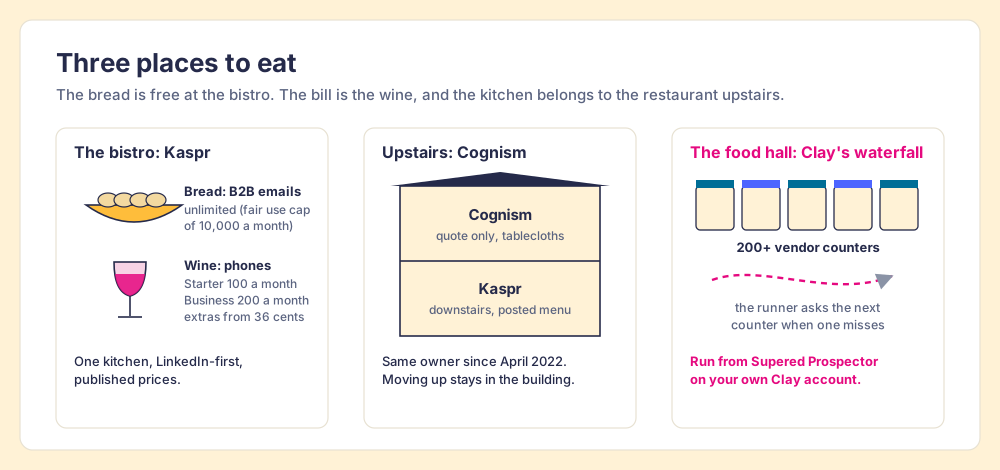
A good bistro puts the bread on the table before you order and refills the basket without being asked. The wine comes by the glass, priced on the card, and the bill at the end of the evening is mostly wine. Kaspr is that bistro. Its pricing page, opened on October 1, 2026, gives a paying seat unlimited B2B email credits and a measured pour of phone numbers, 100 a month on Starter and 200 on Business, with extra numbers at about 36 cents each in the smallest pack (kaspr.io/pricing). For an email-first rep working LinkedIn, the bread is the meal. For a rep whose day is the phone, the bill is the wine.
Kaspr alternatives are the contact-data tools teams weigh against Kaspr, the Cognism-owned LinkedIn extension. They are either other single databases sold by the seat or the credit (Lusha, Apollo, ZoomInfo, LeadIQ, RocketReach, Seamless.AI, and Cognism itself), or Clay’s waterfall across 200+ data and AI vendors (clay.com, September 25, 2026), which a rep can run from Supered Prospector on the team’s own Clay account. This page grades them on the same jobs as the Lusha alternatives page and the Cognism alternatives page, works Kaspr pricing out to the price of one phone number, and makes one point the other lists skip. Two of the most-recommended Kaspr alternatives are the same kitchen with a different dining room, and a third option is a food hall.
Why do teams look for Kaspr alternatives?
Kaspr’s G2 page held a 4.4 out of 5 from more than 830 reviews on October 1, 2026, and the complaints in its reviews repeat (G2, Kaspr reviews). Three causes, in the reviewers’ own words where they gave them.
- The pour of phones. “The credit system depletes rapidly when engaging in high volume sourcing,” a mid-market account manager wrote in December 2025. Starter’s 100 phone credits a month is 100 numbers. The Bridge Group’s 2025 SDR report, 351 companies, puts the median SDR at 44 dials a day (Bridge Group, 2025). Suppose, for the arithmetic only, that each dial needed a freshly revealed number. Starter’s month would run dry in under three working days and Business’s 200 in under five. Reps redial, so the real burn is slower.
- Gaps on the phone line. “Sometimes the phone number data isn’t available or only includes landlines, which can slow things down,” a small-business reviewer wrote in July 2025, and a sales director in April 2026: “It might be better if it had more phone numbers.” Kaspr’s own data page leads with “200 million + European B2B contacts” (kaspr.io/our-data), which is a strength in Paris and a question mark in Phoenix.
- The team outgrows the table for two. “The paid plans can start to feel pricey if you need unlimited access for a whole team,” a marketing-operations reviewer wrote in March 2026. Kaspr describes itself as “a prospecting tool for individual contributors and SMBs” (kaspr.io/about-us). That is a fair self-description, and it is where the search for an alternative usually starts.
Why trust this comparison?
I started RevPartners, a HubSpot partner that did only sales implementations, sold roughly twice as much Sales Hub as any other partner, and reached Elite tier in 13 months. Supered came out of that work and is the #1 sales enablement app on the HubSpot marketplace. That is also the disclosure. We make Supered Prospector, and it sits first on this page for teams that have Clay. Supered holds 4.9 out of 5 from 81 reviews on G2 (October 1, 2026). The grading below states its weights so you can flip them, and the flip for a solo founder puts Kaspr near the top.
The Kaspr alternatives, graded
A ranking that hides its math is an advertisement. The lens is a mid-market or SMB team, ten to fifty reps, that needs contact data reps will use where they already work and a leader who can see which lists turn into pipeline. Each criterion is scored 1 to 5 and multiplied by its weight, for a maximum of 50; the per-vendor scores are the ones used on the Lusha, Cognism, and Apollo pages, so the four read together.
| Criterion | Weight | What it rewards |
|---|---|---|
| Coverage of the contact you need | 30% (x3) | Verified emails and mobiles when the first source misses |
| Rep-side delivery | 20% (x2) | Works on the profile, the company site, the CRM record; no new tab or login |
| Price structure for mid-market | 20% (x2) | Published, per-result or per-seat without a platform fee, no auto-escalator |
| What the leader sees after the export | 20% (x2) | Which sourced lists were worked and which closed, by your definitions |
| Bundled outreach | 10% (x1) | Sequencing, dialer, drafting in the same plan |
| Rank | Tool | Grade | Score | Best fit | CRM integration | Setup effort | Pricing (plan with the feature) | Reason to switch from Kaspr |
|---|---|---|---|---|---|---|---|---|
| ref | Kaspr | B- | 25 | Individuals and small teams prospecting on LinkedIn, email-first | Native (HubSpot, Salesforce, Pipedrive, Zoho) | Minutes | $49 or $79 per user per month, billed annually | Stay if emails are the job and the phone pour is enough |
| 1 | Supered Prospector | A | 44 | Teams that already have Clay | Native (HubSpot, Salesforce) | Under a week on an existing Clay account | $45 per rep per month, billed annually, plus your Clay plan | 200+ vendors per lookup, any page the rep is on, lists you can follow to closed |
| 2 | Apollo | A- | 36 | Small teams wanting data plus outreach in one | Native (HubSpot, Salesforce) | A day | $49 / $79 per seat per month, billed annually | Sequencer and dialer in the plan |
| 3 | Lusha | B+ | 29 | Like-for-like LinkedIn extension, independent of Cognism | Native (HubSpot, Salesforce) | Minutes | $37.45 to $299.95 per month, billed yearly | Posted price, a second shelf outside the Cognism group |
| 4 | ZoomInfo | B | 28 | North American enterprise depth and intent | Native (HubSpot, Salesforce, Dynamics) | Weeks | Quote only; Vendr median $33,500 a year | US depth, for teams with the seats for a platform fee |
| 5 | LeadIQ | B | 27 | SDRs capturing straight into Outreach or Salesloft | Native | A day | Not opened for this page | Capture-to-sequencer workflow |
| 6 | Cognism | B | 26 | EMEA, phone-first, compliance-led outbound | Native (two-way HubSpot sync launched 2026) | Weeks | Quote only, 5 seats included; Vendr median $32,750 | Phone-verified mobiles; same owner as Kaspr |
| 7 | RocketReach | B- | 23 | Individuals and two-person teams | Native from Pro | Minutes | $33 to $142 per month, billed annually | Unlimited verified mobiles on Pro |
| 8 | Seamless.AI | C+ | 21 | High-volume real-time search | Integrations listed, tier not stated | Days | Quote only | Volume, if you accept a 60-day notice window |
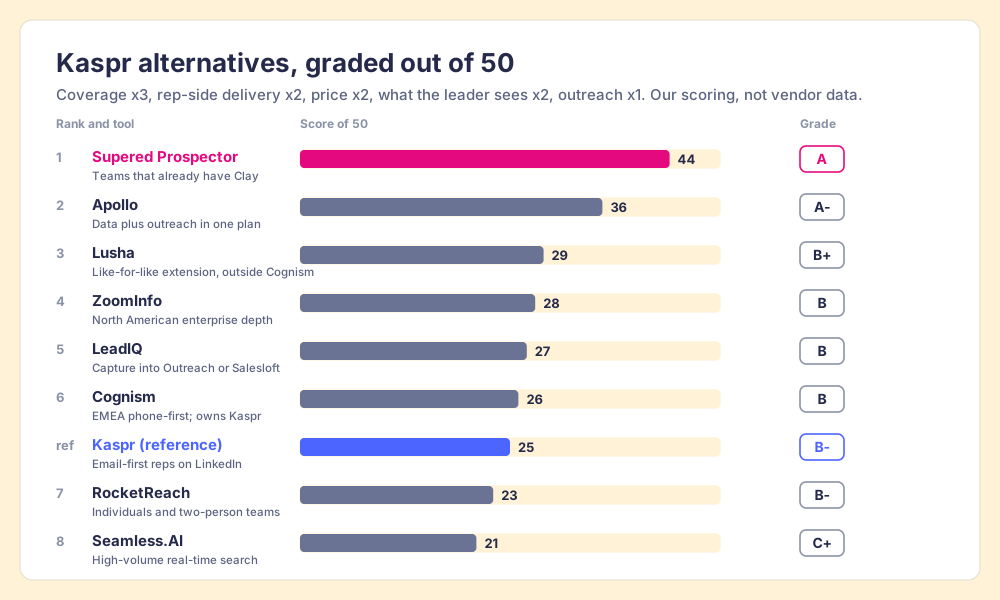
Kaspr’s 25 breaks down as coverage 2, rep-side delivery 4, price 4, what the leader sees 1, outreach 1. The rep-side 4 is earned, because the extension lives on the LinkedIn profile, Sales Navigator, Recruiter Lite, groups, and events, and pushes to HubSpot, Salesforce, Pipedrive, Zoho, Lemlist, Brevo, Aircall, and Ringover on every plan, Free included. The price 4 is earned too, with prices published, monthly or annual, and no platform fee. The coverage 2 is the phone pour and the reviewers’ reports of landlines and gaps. Prospector’s coverage score is Clay’s waterfall coverage, credited to Clay, and its bundled-outreach score is the lowest on the card on purpose, since it has no sequencer, dialer, or drafting. If outreach in the same plan decides it for you, Apollo wins this page.
Corporate status, checked October 1, 2026, because a comparison that does not say who owns whom is wrong the day a deal closes. Kaspr is part of Cognism, which acquired it in April 2022; Kaspr’s about page lists “50K+ Companies using Kaspr” and “35+ Employees,” and its registered office is in Paris. Cognism is private and London-based, with no 2026 acquisition or funding round found. Lusha is independent and cut about 8% of staff in December 2025 (Calcalist). ZoomInfo is public (Nasdaq: GTM) and in May 2026 approved a restructuring of about 600 roles, in the CEO’s words “accelerating our move upmarket, and reducing the resources we allocate downmarket” (SEC Form 8-K). Apollo, LeadIQ, RocketReach, and Seamless.AI are independent.
What does Kaspr cost in 2026?
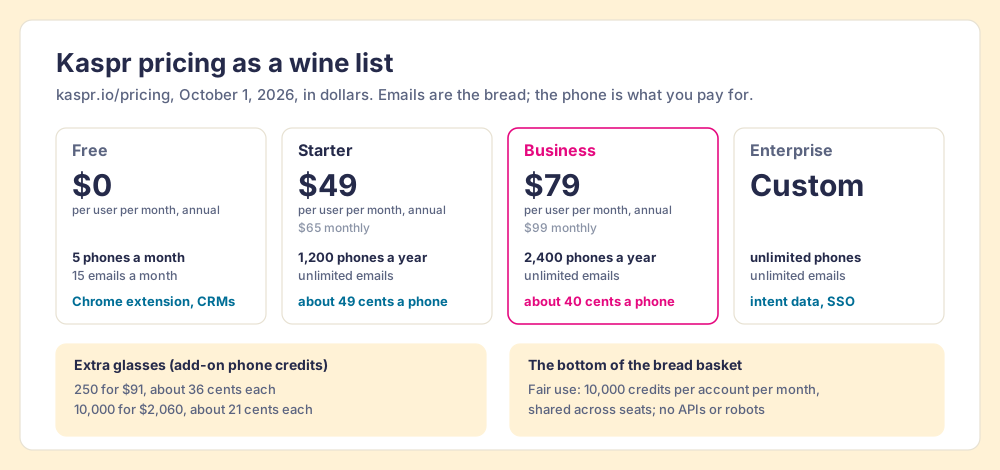
Kaspr pricing is one of the few in this category you can read without a call. The page shows euros, sterling, and dollars, and a toggle between annual and monthly billing. The dollar figures, captured October 1, 2026:
| Plan | Billed annually | Billed monthly | Phone credits | B2B emails | Notable |
|---|---|---|---|---|---|
| Free | $0 | $0 | 5 a month | 15 a month | Chrome extension, CSV enrichment, CRM integrations |
| Starter | $49 per user per month (EUR 45) | $65 (EUR 59) | 100 a month, 1,200 a year | Unlimited (fair use) | Sales Navigator, up to 12,000 exports a year, API on request |
| Business | $79 per user per month (EUR 79) | $99 (EUR 99) | 200 a month, 2,400 a year | Unlimited (fair use) | 200 direct emails a month, Recruiter Lite, 30,000 exports, API |
| Enterprise | Custom | Custom | Unlimited | Unlimited | Intent data, advanced Salesforce enrichment, SSO |
Three lines in the fine print change the arithmetic.
- The bread basket has a bottom. Kaspr’s terms, linked from the pricing FAQ as the fair-use policy, say unlimited credits “must be used reasonably by the User, and that a maximum limit of 10,000 credits per account per month applies,” and that use “through APIs or robots is considered as abusive” (kaspr.io/terms, last updated July 1, 2023). The cap is per account, and credits are shared across the team.
- The glass refills, then the bottle closes. The plan comparison says “Unused monthly credits roll over to the next month,” and the terms say subscription credits “expire at the end of the current Subscription period and cannot be carried over to the next Subscription.” On an annual plan, “12 months credits are added to your account” up front. Unused phones carry month to month and vanish at renewal.
- Extra glasses are priced by the pack. Add-on phone credits run from $91 for 250 (about 36 cents each) down to $2,060 for 10,000 (about 21 cents). Direct-email add-ons start at $41 for 250. Downgrades need 48 hours’ notice on a monthly plan and one month on an annual one.
So the annual toggle saves about a quarter on Starter ($49 against $65) and a fifth on Business ($79 against $99). Put a seat’s year over its phone allowance and Kaspr’s real unit price appears. Starter is $588 a year for 1,200 phones, about 49 cents a phone, and Business is $948 for 2,400, about 40 cents, with the emails thrown in. For an email-first rep, that is the cheapest unlimited bread on this page. The phone, priced by the glass, is what the bill is made of.
Is Cognism a Kaspr alternative?
On most lists it is. On Kaspr’s own about page, it is the landlord. “Kaspr is part of Cognism, and together we’re on a mission to drive predictable lead generation,” and “We joined Cognism in 2022.” The deal closed in April 2022, and the two share data infrastructure.
It is the restaurant upstairs. Same building, same owner, a kitchen that supplies both floors; upstairs has tablecloths, a sommelier, and no prices on the menu. Cognism sells two packages, Standard and Pro, each with 5 seats included and no dollar figure on the page; Pro adds “higher-quality, accurate mobile data” and on-demand verification (cognism.com/pricing, September 25, 2026). Vendr’s Cognism listing puts the median contract at $32,750 a year across 94 purchases, in a range from $16,585 to $88,449 (Vendr, Cognism). Downstairs, five Kaspr Business seats list at $4,740 a year.
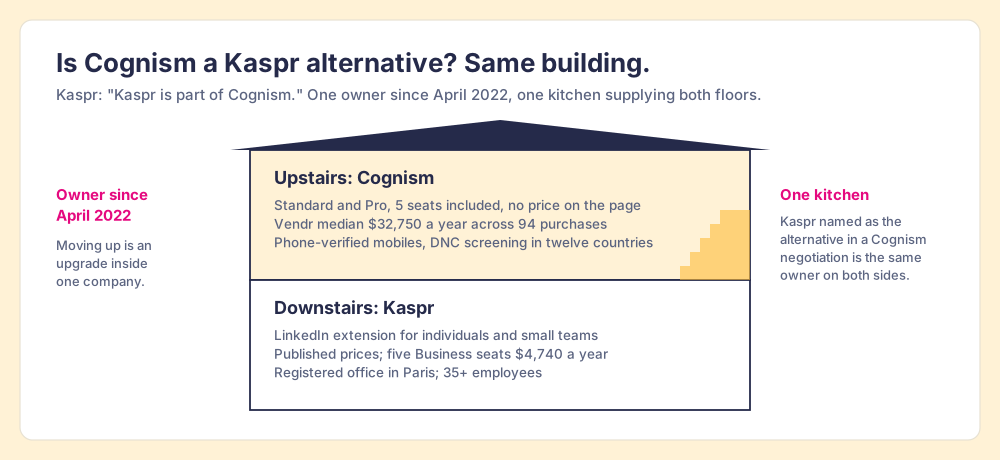
None of that makes Cognism a bad choice. For an EMEA team that dials for a living, phone-verified mobiles and screening against Do Not Call and TPS lists in twelve named countries (cognism.com/compliance) are worth paying for, and the Cognism alternatives page grades it in its own lane. It does mean two things for a buyer leaving Kaspr. Moving upstairs is an upgrade inside one company, so the phone coverage you are leaving and the phone coverage you are buying share a parent. And a negotiation that names Kaspr as the alternative to Cognism is a negotiation with one owner on both sides of the table. Vendr’s Cognism buyer notes record discounts won by naming Lusha, ZoomInfo, and Apollo as competition. They do not record one won by naming Kaspr.
Kaspr vs Lusha: which LinkedIn extension is the better buy?
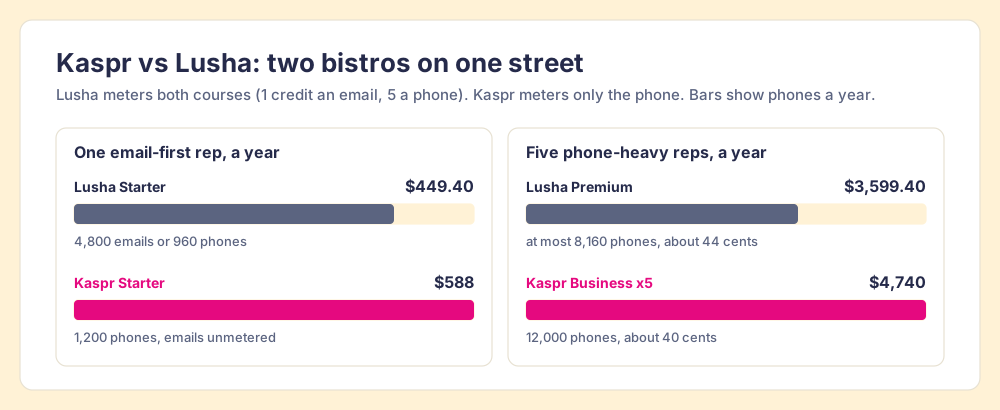
The head-to-head that brings many readers here is two bistros on the same street, and it resolves on what the rep reveals most.
Lusha meters both courses: “Reveal verified email address, 1 credit. Reveal a phone number, 5 credits” (lusha.com/pricing, checked October 1, 2026). Its plans, captured September 25, 2026 and billed yearly, run from Starter at $37.45 a month ($449.40 a year) with 4,800 credits, through Pro at $52.45 ($629.40) with 7,200 credits and 2 seats, to Premium at $299.95 ($3,599.40) with 40,800 credits and 5 seats. Kaspr meters only the phone.
- One email-first rep. Lusha Starter at $449.40 buys 4,800 emails or 960 phones, or a mix. Kaspr Starter at $588 buys 1,200 phones and leaves the emails unmetered. Kaspr costs $138.60 more a year and pulls ahead once the rep’s reveals pass Lusha Starter’s 4,800 credits a year.
- Five phone-heavy reps. Lusha Premium at $3,599.40 is 8,160 phones at most, about 44 cents a phone, fewer once emails draw on the same pool. Five Kaspr Business seats at $4,740 are 12,000 phones plus 12,000 direct emails, about 40 cents a phone.
- The free plans. Lusha Free is 40 credits a month, 8 phones. Kaspr Free is 5 phones and 15 emails.
Lusha’s G2 badge read 4.3 on its pricing page in September; Kaspr’s G2 page read 4.4 on October 1. On price per phone and on email volume, Kaspr is the better buy. Lusha’s case is the posted ladder up to Premium, a Scale tier with credit caps per user, and one more fact. Since March 10, 2026, Lusha has been an enrichment step inside Clay’s waterfall (Clay changelog). The Lusha pricing page walks the whole ladder.
The other Kaspr competitors, one at a time
- Apollo. The alternative teams graduate to when they want the outreach in the same plan, with seats from $49 a month on annual billing, a sequencer and dialer included, G2 4.7 from 9,690 reviews (apollo.io/pricing, September 25, 2026). Its meter runs the other way from Kaspr’s, with an email at 1 credit and a phone at 8. Vendr’s median Apollo contract is $19,000 a year across 101 purchases (Vendr, Apollo). One database.
- ZoomInfo. The warehouse club: “more than 100 million companies, 500 million contacts” by its own August 2026 filing, quote-only, a Vendr median of $33,500 across 1,573 purchases (Vendr, ZoomInfo), and a company that has told the SEC it is moving upmarket.
- LeadIQ. Built for the SDR who captures on LinkedIn and pushes straight into Outreach or Salesloft; it shipped a public MCP server in early 2026 so the capture runs inside an AI chat on existing credits (LeadIQ MCP).
- RocketReach. Published seats with unlimited verified emails, and unlimited verified mobile and direct numbers on Pro at $899 billed annually, capped by 3,600 exports a year (rocketreach.co/pricing, September 25, 2026).
- Seamless.AI. No published prices for paid tiers, and annual terms that renew for 12 months unless cancelled more than 60 days ahead (seamless.ai Terms).
Where does Supered Prospector fit?
Each option above is one kitchen. Kaspr’s says on its own data page that it draws on “120+ verified data sources and providers,” which is a good kitchen with a long supplier list, and the chef decides the menu. When the dish you ordered is not on it, the rep orders from a second restaurant, and the company signs a second contract.
Clay is a food hall. A waterfall is a list of instructions the GTM engineer writes down: ask this provider first, then that one, stop when a verified email or phone comes back. “Clay’s signature data waterfalls check multiple providers to return the most verified emails (lower bounce rate) and phone numbers (higher connect rate),” across 200+ data and AI vendors under one contract (Clay, rep prospecting, September 25, 2026). And the food hall has a rule the bistro never printed. “If an enrichment returns no result, you’re not charged Data Credits or Actions” (clay.com/pricing). The counter that comes back empty costs nothing, and the runner goes on to the next.
Prospector does not bring its own database. It brings Clay’s waterfall, which is every database, routed. We chose Clay as our only data provider for that reason, and it is why Clay is not a row in the tables above. Clay is the row that contains the other rows. Clay governs the data. Supered governs the motion.
What a rep gets from Prospector, on the team’s own Clay account and with no Clay login:
- Lookups from the page they are on. A LinkedIn profile, a Sales Navigator list, a company’s website with company research alongside, or a HubSpot, Salesforce or Pipedrive record. Kaspr starts on LinkedIn; Prospector starts wherever the prospect is.
- A list the rep builds. The rep assembles the list from those sources, Clay’s waterfall fills the emails and phones, and a buying-committee lookup returns the titles, departments, and seniority the team set.
- Context before the first touch. On a LinkedIn profile, the rep sees the matching CRM record and whether the prospect was already worked in the past, before adding a duplicate or stepping on a teammate.
- One click to the CRM, or into a workflow. Field mapping is set once; a single contact syncs to HubSpot, Salesforce or Pipedrive in one click, and a whole list can be pushed into any custom Clay workflow the GTM engineer built.
- Lists the leader can follow. The team’s process applies to worked prospects, so the manager sees which sourced lists were worked and which closed, and coaches from what is converting.
The arithmetic, since “one contract” is a slogan until it has numbers in it, and since Kaspr is cheaper than the slogan suggests. Clay’s Growth plan lists at $495 a month, or $5,940 a year, with 72,000 data credits a year and CRM sync built in (Clay pricing, September 25, 2026). Prospector is $45 per rep per month, billed annually, from one rep (Prospector). For ten reps that is $11,340 a year. Ten Kaspr Business seats are $9,480. Ten Kaspr Starter seats are $5,880. Kaspr is cheaper on list price, and per contact it is close. On our reading of Clay’s pricing calculator, a work email plus a phone costs roughly six data credits, so Growth’s 72,000 credits is roughly 12,000 fully enriched contacts at about 50 cents each, a supposition since Clay does not publish the calculator’s rates (the Clay pricing page shows the working), against about 40 cents a phone on Kaspr Business with the email free.
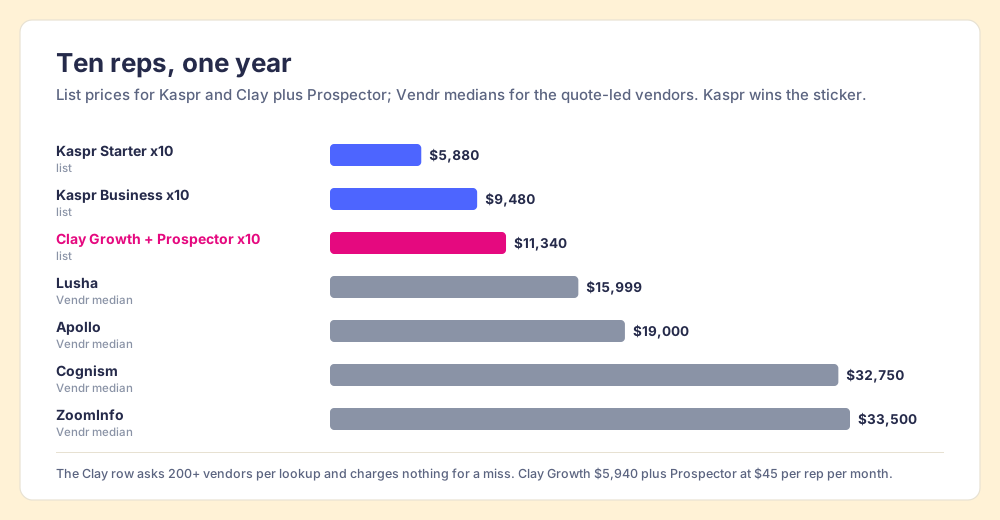
So the case for Prospector over Kaspr rests on three things a single kitchen cannot sell. The number Kaspr’s menu does not have, because the waterfall asks the next vendor when the first comes back with a landline or nothing. The prospect who is not on LinkedIn at that moment, found from the company site or the CRM record. And the list a leader can follow from sourced to closed, which no meter at the reveal ever records.
Choose something else if you do not have Clay. Prospector runs on the customer’s Clay account and does nothing without one, and a team that has never built a waterfall needs someone to build it; Clay itself says “GTM engineers build on Clay.” Choose something else, too, if your reps are email-first, under five, and live on LinkedIn, because Kaspr Starter is the cheapest unlimited bread in the category, and exporting LinkedIn contacts is a job it does well.
What happens to the contact after Kaspr finds it?
Look at where each vendor’s meter sits. Kaspr: one phone credit when the number appears. Lusha: five credits at the reveal. Apollo: eight at the reveal. Cognism: “one credit is used each time a contact record is revealed.” A G2 reviewer of Kaspr put the same fact plainly in January 2026: it “automatically draws a credit whenever you are looking at a lead.” All four meters sit at the reveal, and the bill in your hand is a list of things ordered, with no line for what got eaten.
That is fair to the vendors; their job ends when the number appears. A sales leader’s starts there. The Bridge Group’s 2025 report shows how much work follows a sourced contact: a median of 112 activities a day, 44 of them phone, and $3.78 million in raw pipeline sourced per SDR a year, which the report itself describes as “not forecast or closed-won revenue.” A list of 200 Kaspr phones bought in a month is a promise of work. Whether the work happened, and which lists produced the deals, is the question the renewal meeting asks and the extension cannot answer.
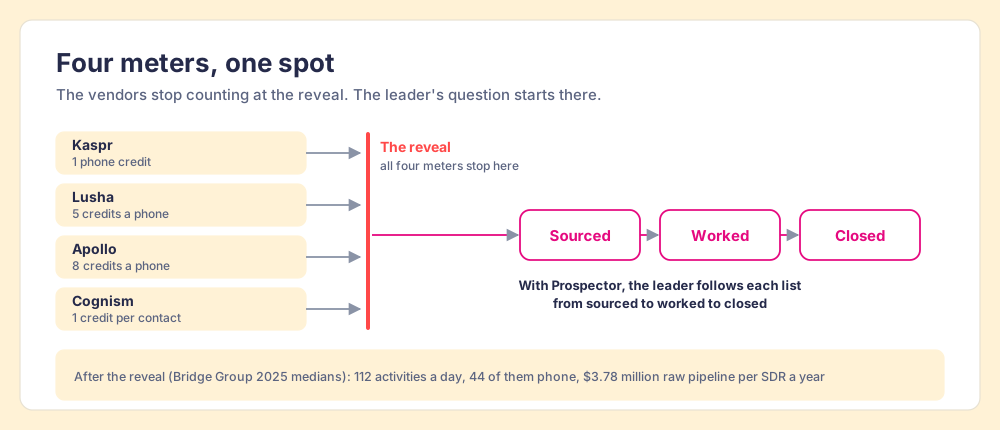
A rep-built list that lands in the CRM with the team’s process attached does more work than a CSV of revealed numbers. The rep gets the next step in the flow of the work, the way a sales cadence is meant to reach them, and the manager sees the list become pipeline and coaches from what is converting. The reasoning behind building lists where reps already work sits in the sales prospecting guide.
Which Kaspr alternative should you choose?
The choice resolves once you name the job. The ways forward:
- Kaspr itself. The pick when reps are email-first, prospect on LinkedIn and Sales Navigator, and the phone pour of 100 or 200 a month covers the dials. Buy annual: Starter at $49 is about a quarter cheaper than monthly.
- Lusha. The pick when you want the same LinkedIn workflow from a vendor outside the Cognism group, a posted ladder to five seats, and phones are a small share of reveals.
- Apollo. The pick when the job is data plus sequences and a dialer in one tool with a published price. Size the credits before the seats: a phone costs 8.
- Cognism. The pick for an EMEA team that dials for a living and needs phone-verified mobiles and named DNC screening, knowing it is the same owner one floor up.
- ZoomInfo. The pick for North American enterprise depth, if you have the seats to make a platform fee sensible and will cap the escalator.
- Supered Prospector. The pick when the team already has Clay and you want its waterfall in every rep’s hands on LinkedIn, the company site, and the CRM record, and want to see which lists get worked and closed.
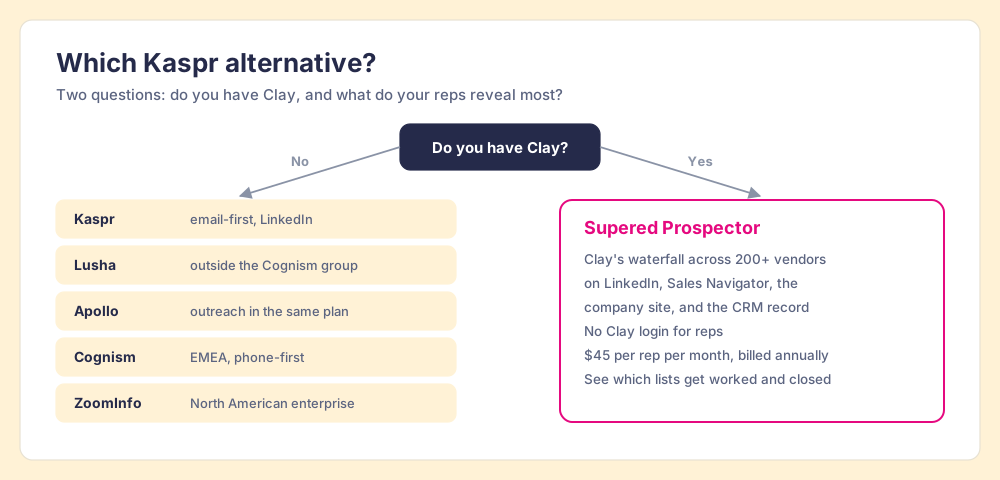
What we recommend depends on one fact about your stack. If you do not have Clay and your reps live on LinkedIn sending email, stay at the bistro: Kaspr’s unlimited bread at $49 a seat is the best deal in the category, and switching to its owner upstairs will not change the kitchen. If you do not have Clay and the phone bill is what hurts, read the Apollo and Lusha rows before you take a Cognism meeting. If you have Clay, do not buy another seat at a single kitchen. Put the waterfall in your reps’ hands where they already work, pay nothing for the counters that come back empty, and follow every list they build to closed. The bistro always told you the price of a glass. It could never tell you whether anyone drank it, and a Prospector demo on your own Clay account is where you can watch that count keep going. Pricing a different contact tool? We run the same math on UpLead pricing, Seamless.AI pricing and FullEnrich alternatives.
Frequently asked questions
What are the best Kaspr alternatives in 2026?+
How much does Kaspr cost in 2026?+
Kaspr vs Lusha: which is cheaper?+
Is Kaspr owned by Cognism?+
Does Kaspr have a free plan?+
Do I need a Clay account to use Supered Prospector?+
Your process, running itself.