FullEnrich Alternatives in 2026: A Waterfall Inside a Waterfall
FullEnrich is itself a waterfall across 25+ providers. The FullEnrich alternatives graded for a sales team, FullEnrich pricing worked out to the cost of one mobile, FullEnrich vs Clay, and why a Clay team can keep FullEnrich as one step.
FullEnrich alternatives are the contact-data tools teams weigh against FullEnrich, a waterfall across 25+ providers: other waterfalls like BetterContact, single finders like Findymail and Prospeo, or Clay's waterfall across 200+ vendors run from Supered Prospector.
FullEnrich alternatives come up for two kinds of team: the one whose phone credits run out before the month does, and the one that already pays for Clay and has started to wonder why it also pays for a second waterfall. The short answer, graded in full below:
- Supered Prospector. For teams that already have Clay: Clay’s waterfall across 200+ vendors, FullEnrich among them if you want it, run by reps from a LinkedIn profile, a Sales Navigator list, a company website, or the CRM record, at $45 per rep per month billed annually.
- BetterContact. The like-for-like waterfall without Clay: 20+ providers, from $15 a month, charged only for valid results.
- Findymail. A single finder with phones at the same 10 credits and a refund if bounces pass 5%, from $99 a month for the whole team.
FullEnrich alternatives are the contact-data tools teams weigh against FullEnrich, a waterfall that checks 25+ providers for verified emails and mobile numbers. They are other waterfalls sold as a service (BetterContact), single finders that sell from their own data (Findymail, Prospeo, Apollo, Lusha), or Clay’s waterfall across 200+ data and AI vendors (clay.com, checked October 2, 2026), which reps can run from Supered Prospector on the team’s own Clay account. This page works FullEnrich pricing out to the cost of one mobile, sets out FullEnrich vs Clay, and grades the field. One point the other lists skip: FullEnrich is a supplier inside Clay. For a Clay team, the best FullEnrich alternative can contain FullEnrich.
What is FullEnrich, and why is it already a waterfall?
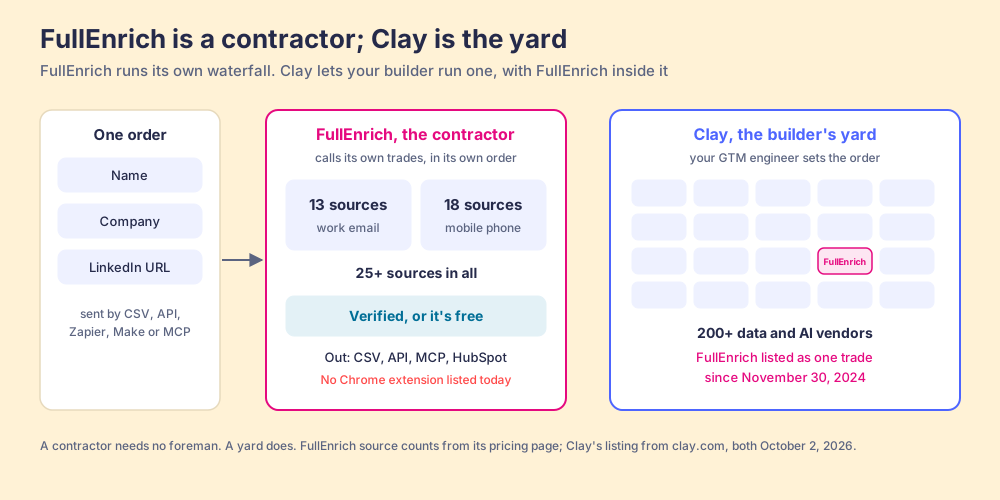
A general contractor is a sensible person to hire when you do not want to meet the plumber. You describe the job once. The contractor knows which electrician is good at old houses and which tiler is free this month, calls them in order, and sends one bill. If the first plumber cannot fix the leak, the second one comes, and you never see the first one’s invoice.
FullEnrich sells contact data the same way. “We build waterfalls for a living,” says its integrations page; you send a name and a company, and FullEnrich routes the request through its providers one at a time until one returns a verified match (fullenrich.com/integrations, October 2, 2026). Its pricing page counts 13 sources for work email and 18 for mobile phones, “25+ sources” in all, and its waterfall page says “20+ providers” in the headline and “25+ providers” in the line beneath it (fullenrich.com/waterfall-enrichment). The trades it names on that page include Clearbit, Wiza, ContactOut, Anymail Finder, Snov, and Hunter. The bill only arrives for finished work: “Only Pay For Data You Actually Find. Verified, Or It’s Free” (fullenrich.com/pricing).
Across the road is the builder’s yard. Clay is the yard: 200+ trades under one contract, and your own foreman, the GTM engineer, decides who gets called first. One of the trades on the board is FullEnrich, contractor and all. Clay’s FullEnrich integration page shows it joined on November 30, 2024, with two actions, “Find mobile phone with FullEnrich” and “Find Work Email with FullEnrich,” each paid with “Clay Credits or Bring Your Own Account” (Clay, FullEnrich integration, October 2, 2026).
So the question in “FullEnrich vs Clay” is often a smaller one: FullEnrich alone, or FullEnrich as one step. The comparison stops at one point. A contractor needs no foreman, and a yard does. A team with no one to set the order is better served by the contractor.
What does FullEnrich cost in 2026?
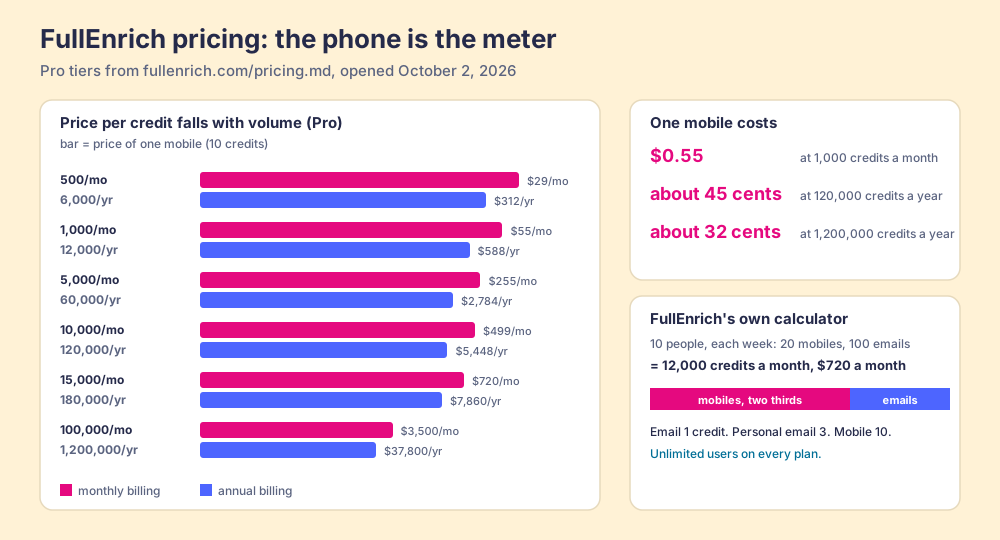
FullEnrich pricing is one plan priced by volume. The company publishes a plain-text copy of its price book for AI agents to read, last updated July 14, 2026, and the figures below come from that file, opened October 2, 2026 (fullenrich.com/pricing.md). It mirrors the pricing page, which shows Pro at $55 a month for 1,000 credits by default.
| Credits | Monthly billing | Per credit | Annual billing | Per credit |
|---|---|---|---|---|
| 500 a month / 6,000 a year | $29 a month | $0.058 | $312 a year | $0.052 |
| 1,000 a month / 12,000 a year | $55 a month | $0.055 | $588 a year | $0.049 |
| 5,000 a month / 60,000 a year | $255 a month | $0.051 | $2,784 a year | $0.046 |
| 10,000 a month / 120,000 a year | $499 a month | $0.050 | $5,448 a year | $0.045 |
| 15,000 a month / 180,000 a year | $720 a month | $0.048 | $7,860 a year | $0.044 |
| 100,000 a month / 1,200,000 a year | $3,500 a month | $0.035 | $37,800 a year | $0.032 |
The meter is simple. A work email costs 1 credit, a personal email 3, a mobile phone 10, a reverse email lookup 1, and a profile is free alongside any enrichment. A lookup that finds nothing costs nothing, and “a landline found instead of a mobile costs nothing.” Annual billing is “~10% cheaper” and stretches credit rollover from 3 months to 12. Every plan, the free trial included, carries unlimited users, and the free trial starts with 50 credits and no card. Enterprise is a quote, with bring-your-own-key, custom SSO as an add-on, and a dedicated account manager.
Four lines change the arithmetic.
- The phone multiplier. A mobile is ten times an email. At the 1,000-credit tier that is $0.55 a mobile; on annual billing at 120,000 credits a year, about 45 cents; at the 1.2 million tier, about 32 cents. An email runs from about 3 to 6 cents.
- The phone share of the bill. FullEnrich’s own calculator models 10 people each finding 20 mobiles and 100 work emails a week: 300 credits a person a week, 12,000 a month, and a recommended “Pro, 15K credits, $720/mo.” Mobiles are 200 of each 300 credits. Two thirds of that bill is phones.
- The annual equivalent. That same team needs 144,000 credits a year, so the 180,000-credit annual tier fits at $7,860, against $8,640 for twelve months of the $720 plan.
- The seat that never appears. Unlimited users means a team of ten pays the same as a team of one for the same volume. The cost follows lookups, so the cap is the credit balance; Pro adds per-user credit limits and alerts for that reason.
So the contractor’s day rate is fair, and the itemized bill is dominated by one trade: the phone.
Does FullEnrich have a Chrome extension for LinkedIn?
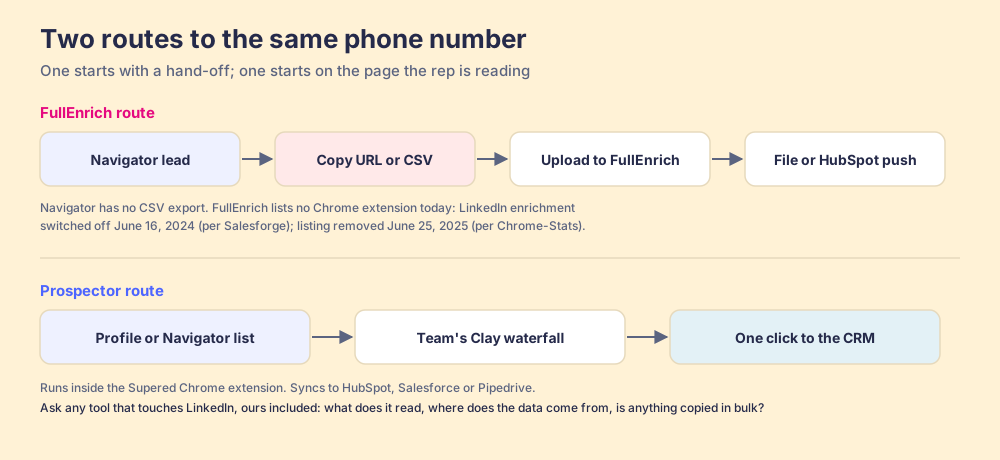
Not one it lists today, and this is the gap a sales leader feels first. FullEnrich’s integrations page, checked October 2, 2026, shows an MCP server, Claude, OpenAI, Manus, OpenClaw, Zapier, Make, n8n, Clay, and HubSpot. It shows no Chrome extension, and fullenrich.com/chrome-extension returns a 404.
There was one. Chrome-Stats keeps the old listing, now titled as discontinued and no longer supported, with 10,000 users, a 4.81 rating from 21 ratings, version 1.2.7, last updated May 15, 2025, and removed from the Chrome Web Store on June 25, 2025 (Chrome-Stats, checked October 2, 2026). Salesforge, which sells a competing product and says so on the same page, reports that “On June 16, 2024, FullEnrich discontinued the LinkedIn functionality of their Chrome extension,” to preserve the company’s standing with LinkedIn (Salesforge, March 1, 2026). A G2 reviewer, a sales engineer at a small business, had written the worry down in December 2024: “If LinkedIn detects it, you can potentially have your account blocked.”
The worry is grounded in LinkedIn’s own terms. Section 8.2 of the User Agreement, effective November 3, 2025, has members agree not to use “crawlers, browser plugins and add-ons or any other technology” to “scrape or copy the Services, including profiles and other data from the Services” (LinkedIn User Agreement). And Sales Navigator, where reps find their people, has no CSV export of its own; LinkedIn’s help center says so, and the Sales Navigator export page walks through what that leaves.
What it leaves a FullEnrich team is a hand-off. The rep finds the person in Navigator, then moves the name, company, or LinkedIn URL into FullEnrich by CSV, by Zapier or Make, or through a list someone else built, and the contractor gets to work. It works, and it leaves the rep two tools and a file away from the number at the moment they want to dial it.
This page does not rule on any vendor’s compliance. The fair test for any tool that touches a LinkedIn page, ours included, is three questions: what does it read from the page, where does the contact data come from, and is anything copied in bulk. Our answer for Prospector: it works within LinkedIn’s terms and does not copy search results in bulk, and the contact data comes from Clay’s waterfall on your own Clay account. Prospector runs inside the Supered Chrome extension, and its contact data comes from the providers in your Clay account, through Clay’s waterfall. The Sales Navigator alternatives page sets out the same test for the rest of the field.
Why do teams look for FullEnrich alternatives?
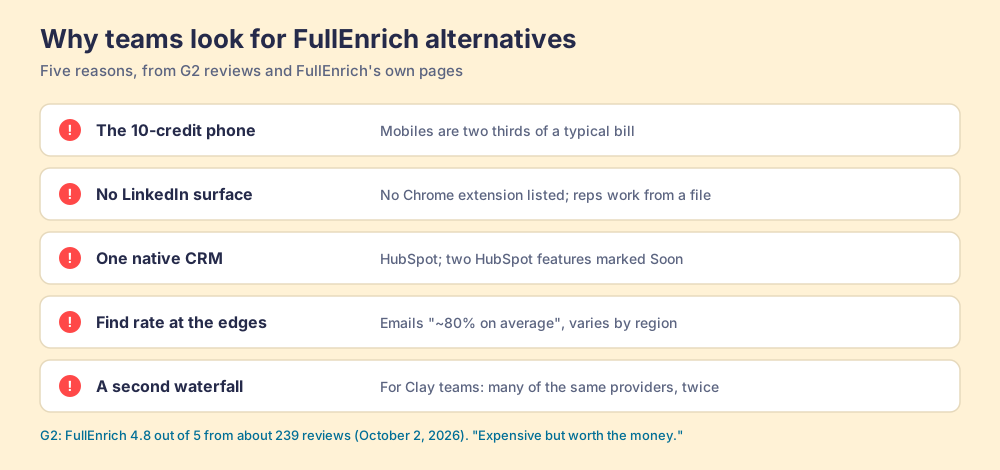
FullEnrich is well liked. It held 4.8 out of 5 on G2 on October 2, 2026, from roughly 239 reviews (G2, FullEnrich reviews), and a mid-market reviewer in January 2026 summed up the common view in five words: “Expensive but worth the money.” The complaints fall into five groups.
- The phone meter. A staffing-industry reviewer gave one star in January 2026: “Very expensive.” With a mobile at ten credits, a phone-led SDR team spends most of its balance on phones, as FullEnrich’s own calculator shows.
- No rep surface on LinkedIn. A small-business owner wrote in August 2026 that the one improvement they wanted was a Chrome extension. The rep who lives in Sales Navigator works through a file.
- One native CRM. FullEnrich’s integrations page lists HubSpot as its CRM. On the pricing page’s comparison table, “Enrich Contacts Already In HubSpot” and “FullEnrich Inside HubSpot” are marked “Soon.” Salesforce and Pipedrive teams go through Zapier, Make, n8n, or the API.
- Accuracy at the edges. A sales rep wrote in August 2025 that “Many of the leads email and phone numbers are either inaccurate or out of update,” and FullEnrich’s own FAQ puts the email find rate at “~80% on average,” varying by region and seniority.
- A second waterfall. For a team that already pays Clay, FullEnrich is a second contract for many of the same providers, run in an order the team did not choose.
Why trust this comparison?
I started RevPartners, a HubSpot partner that did only sales implementations, sold roughly twice as much Sales Hub as any other partner, and reached Elite tier in 13 months. Supered came out of that work and is the #1 sales enablement app on the HubSpot marketplace. That is also the disclosure. We make Supered Prospector, and it sits first on this page for teams that have Clay. Supered holds 4.9 out of 5 from 81 reviews on G2 and 5.0 from 122 on the HubSpot App Marketplace (both checked October 1, 2026). The grading below states its weights so you can flip them, and the flip for a team with no Clay and no one to build a waterfall puts FullEnrich near the top.
The FullEnrich alternatives, graded
The lens is a mid-market or SMB sales team, ten to fifty reps, that needs verified emails and mobiles reps will use where they already work, and a leader who can see which lists turn into pipeline. Each criterion is scored 1 to 5 and multiplied by its weight, for a maximum of 50. The per-vendor scores match the Hunter.io alternatives page and the ContactOut alternatives page, so the pages read together.
| Criterion | Weight | What it rewards |
|---|---|---|
| Coverage of the contact you need | 30% (x3) | Verified emails and mobiles when the first source misses |
| Rep-side delivery | 20% (x2) | Works on the profile, the company site, the CRM record; no new tab or file |
| Price structure for a team | 20% (x2) | Published, per-result, buyable for the whole team without a platform fee |
| What the leader sees after the export | 20% (x2) | Which sourced lists were worked and which closed, by your definitions |
| Bundled outreach | 10% (x1) | Sequencing, dialer, drafting in the same plan |
| Rank | Tool | Grade | Score | Best fit | CRM integration | Setup effort | Pricing (plan with the feature) | Reason to switch from FullEnrich |
|---|---|---|---|---|---|---|---|---|
| ref | FullEnrich | B | 27 | A ready-made waterfall for a team with no Clay | HubSpot native; others via Zapier, Make, API | Minutes | Pro from $29 a month, $55 for 1,000 credits; unlimited users | Stay if no one will build a waterfall |
| 1 | Supered Prospector | A | 44 | Teams that already have Clay | Native (HubSpot, Salesforce, Pipedrive) | Under a week on an existing Clay account | $45 per rep per month, billed annually, plus your Clay plan | 200+ vendors in an order you set, FullEnrich among them if you choose, run from LinkedIn and the CRM record |
| 2 | Apollo | A- | 36 | Teams wanting data, phones, and outreach in one tool | Native (HubSpot, Salesforce) | A day | $49 a seat a month billed annually, phone 8 credits | Sequencer and dialer in the plan, plus its own Waterfall Enrichment |
| 3 | Findymail | B+ | 29 | A finder that adds phones and refunds bounces | Native (HubSpot, Salesforce, Pipedrive, Clay) | Minutes | Starter $99 a month for the team | Cheaper phones per credit, Chrome extension, bounce refund |
| 4 | Prospeo | B+ | 29 | Email and mobile finder for outbound volume | HubSpot and Salesforce on Growth | Minutes | $37 a user a month billed yearly, CRM sync from $74 | Mobiles at 10 credits on cheaper credits, Chrome extension |
| 5 | Lusha | B+ | 29 | A LinkedIn extension with a built-in fallback | Native (HubSpot, Salesforce) | Minutes | Starter $449.10 a year, 1 seat | Data Waterfall on every paid plan, phone 5 credits |
| 6 | BetterContact | B | 27 | Like-for-like waterfall without Clay | HubSpot, Clay, Make, Zapier | Minutes | Starter $15 a month, Pro $49 for 1,000 credits | Charged only for valid results, phones scored by likelihood to connect |
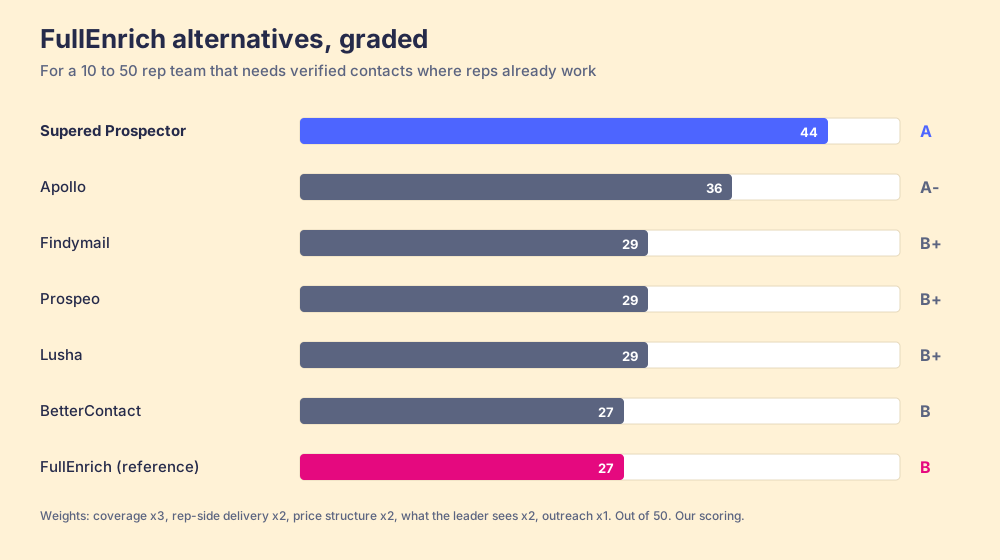
FullEnrich’s 27 breaks down as coverage 4, rep-side delivery 2, price structure 4, what the leader sees 1, outreach 1. The coverage 4 is earned: 18 mobile sources is more towers than any single database owns. The price 4 is earned too, since unlimited users and pay-on-find is the friendliest team structure on the page; it loses a point for the 10-credit phone. The rep-side 2 is the missing LinkedIn surface. BetterContact scores the same 27 for the same reasons. Prospector’s coverage score is Clay’s waterfall coverage, credited to Clay, and its outreach score is the lowest on the card on purpose: no sequencer, dialer, or drafting. If outreach in the same plan decides it for you, Apollo wins this page.
Corporate status, checked October 2, 2026, because a comparison is wrong the day one of its vendors is bought. FullEnrich is independent; it raised a €1.9 million seed round in February 2025 (EU-Startups), and a news search found no 2026 round or acquisition. BetterContact’s site now says it is “Now backed by the Landbase Applied AI Lab”; we found no announced acquisition, so we report the line as BetterContact’s own. Apollo acquired Pocus in March 2026 (TNW). Lusha is independent and cut about 8% of staff in December 2025. A search found no 2026 acquisition of Findymail or Prospeo.
FullEnrich vs Clay: who should set the order?
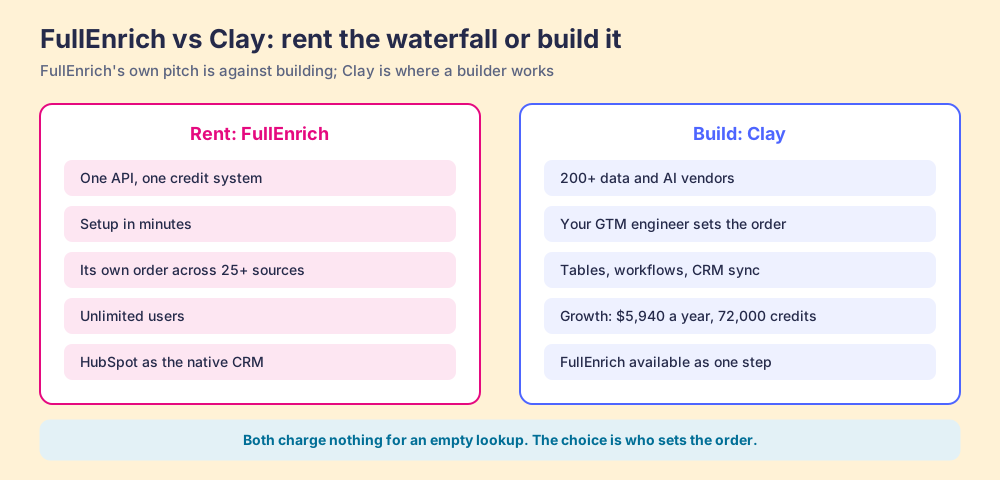
Grant FullEnrich its argument first, because it is a good one. Its integrations page sets the two routes side by side. “Building Your Own Waterfall”: multiple API documents, different credit systems, separate billing, “Setup in weeks,” “Daily maintenance hell.” “Using FullEnrich”: a single API, one credit system, central billing, “Setup in minutes.” For a team without a GTM engineer, that is a fair description, and FullEnrich is the sensible buy.
Clay answers a different need. It is where a builder sets the order across 200+ data and AI vendors, under one contract, and wires the result into tables, workflows, and CRM sync (clay.com). Clay’s waterfall page names work-email providers including Prospeo, Hunter, Snov, and Apollo, and mobile providers including ContactOut (clay.com/waterfall-enrichment). It also charges on a find: “If an enrichment returns no result, you’re not charged Data Credits or Actions” (clay.com/pricing). Clay’s Growth plan lists at $495 a month, or $5,940 a year, with 72,000 data credits a year and CRM sync.
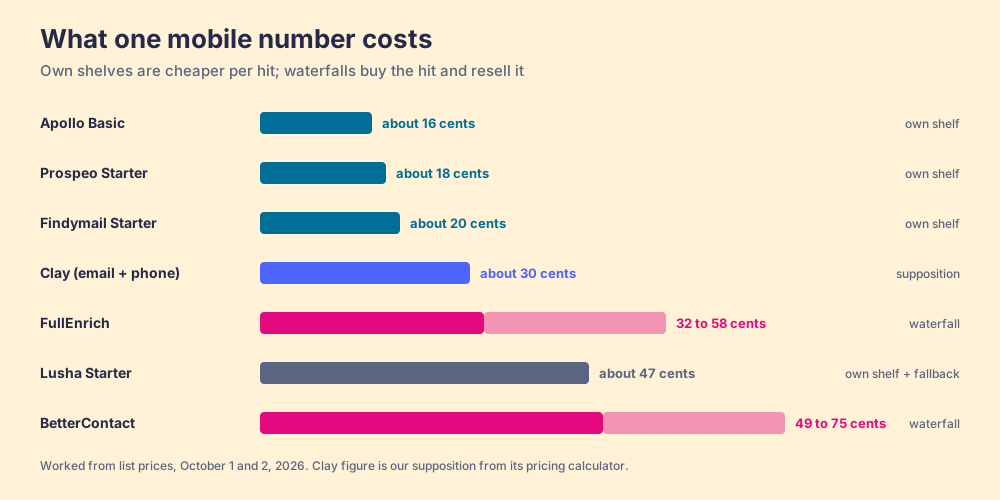
Who sets the order decides the unit cost, and the reason is a matter of shelves. A single database such as Apollo or Prospeo sells a phone from its own shelf. A waterfall service buys the hit from someone else’s shelf, verifies it, and resells it with a margin. So the per-phone prices on this page sort the way they do:
| Tool | Phone price, worked out | Basis |
|---|---|---|
| Apollo Basic | about 16 cents | $588 a year, phone 8 credits |
| Prospeo Starter | about 18 cents | $441 a year, 2,400 mobiles if every credit buys one |
| Findymail Starter | about 20 cents | $99 a month, 500 mobiles at 10 credits |
| Clay (email + phone together) | about 30 cents | roughly six credits at $0.05, our supposition |
| FullEnrich | 32 to 58 cents | 10 credits at $0.032 to $0.058 |
| Lusha Starter | about 47 cents | $449.10 a year, 960 phones |
| BetterContact | 49 to 75 cents | 10 credits on Pro ($49 for 1,000) or Starter ($15 for 200) |
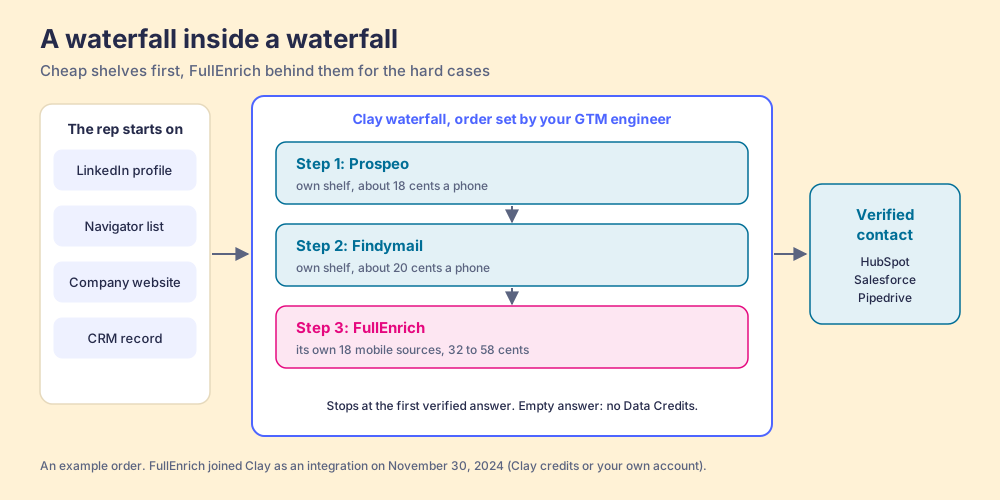
None of these is a rip-off. The aggregator’s higher price buys the contacts the cheap shelf does not stock. But it means the order matters. Ask the cheap shelf first, and pay the premium only on the misses. FullEnrich sets its own order, routing through “an optimized sequence” in which “Regional specialists are prioritized,” and its order is a good one. In Clay, your GTM engineer writes the order, and can put Prospeo or Findymail first and FullEnrich behind them for the hard cases.
The Clay figure is the softest number in that table, so here is the working. On our reading of Clay’s pricing calculator, a work email plus a phone costs roughly six data credits, and Clay’s entry rate is $0.05 a credit, which puts a fully enriched contact near 30 cents. Clay does not publish the calculator’s per-provider rates, so treat it as a supposition; the Clay pricing page shows the arithmetic.
Where does Supered Prospector fit?
Back to the yard. The foreman’s order is worth something only when a job gets called in, and in sales the job starts with a rep looking at a person: a LinkedIn profile, a Navigator list, a company’s website, a CRM record. FullEnrich’s job arrives as a file. Prospector’s arrives from the page.
Prospector does not bring its own database. It brings Clay’s waterfall, which is every database, routed. We chose Clay as our only data provider for that reason, and it is why Clay is not a row in the tables above. Clay is the row that contains the other rows. Clay governs the data. Supered governs the motion.
What a rep gets from Prospector, on the team’s own Clay account and with no Clay login:
- Lookups from the page they are on. A LinkedIn profile, a Sales Navigator list, a company’s website with company research alongside, or a HubSpot, Salesforce, or Pipedrive record. Prospector runs inside the Supered Chrome extension.
- A list the rep builds. The rep assembles the list, Clay’s waterfall fills the emails and phones in the order the GTM engineer set, FullEnrich included if it earns its place, and a buying-committee lookup returns the titles, departments, and seniority the team chose.
- Context before the first touch. On a LinkedIn profile, the rep sees the matching CRM record and whether the prospect was already worked in the past, before adding a duplicate or stepping on a teammate.
- One click to the CRM, or into a workflow. Field mapping is set once; a contact syncs to HubSpot, Salesforce, or Pipedrive in one click, and a whole list can be pushed into any custom Clay workflow the GTM engineer built.
- Lists the leader can follow. The team’s process applies to worked prospects, so the manager sees which sourced lists were worked and which closed, and coaches from what is converting.
The arithmetic, for a team of ten. FullEnrich prices volume and ignores seats, so its line moves with lookups: the 10-person example from its own calculator fits the $7,860 annual tier. Clay Growth is $5,940 a year with 72,000 data credits, and Prospector is $45 per rep per month billed annually, from one rep (Prospector), so ten reps on Clay Growth plus Prospector is $11,340 a year. If 72,000 credits buy roughly 12,000 fully enriched contacts at the supposition above, that covers about 100 email-and-phone contacts per rep per month. FullEnrich’s example team finds 80 mobiles and 400 emails per rep per month, so the two bills are not like for like; run the comparison on your own volume, order, and hit rates.
The Clay row is not the cheapest line, and its case rests on three things a contractor working from a CSV cannot sell: the order in your hands, so the cheap shelf is asked first; FullEnrich’s 18 mobile sources when it misses, if you keep FullEnrich in the order; and a list a leader can follow from the LinkedIn tab to closed.
Choose something else if you do not have Clay. Prospector runs on the customer’s Clay account and does nothing without one, and Clay itself says “GTM engineers build on Clay.” If no one on your team will build and maintain a waterfall, FullEnrich’s case against building your own is correct for you, and its unlimited users make it easy to roll out. The mechanics of the Clay side, from the rep’s chair, are on the Clay Chrome extension page, and the sourcing use case shows the loop from profile to closed.
How do the other FullEnrich competitors compare?
Each of these was priced and checked on October 1 or 2, 2026.
- BetterContact. The closest like-for-like FullEnrich alternative. Its pricing page lists Starter at $15 a month for 200 credits, Pro at $49 a month for 1,000 credits, and Enterprise from $799 a month above 20,000 credits, with “2 months free” on annual billing, a mobile at 10 credits and an email at 1, across “20+ premium data sources” including RocketReach, Apollo, ContactOut, Datagma, People Data Labs, Prospeo, and Hunter (bettercontact.rocks/pricing). It charges only for valid data and, for mobiles, only for the band it scores likely to connect. G2: 4.8 from 43 reviews. Integrations include HubSpot, Clay, Google Sheets, Make, and Zapier.
- Findymail. A single finder, not a waterfall, from $99 a month for 5,000 finder credits shared by the team, with an email at 1 credit and a phone at 10, a credit refund if bounces pass 5%, catch-all verification, a Chrome extension, and native HubSpot, Salesforce, Pipedrive, and Clay integrations (findymail.com/pricing). Its mobile finder is non-EU only. G2: 4.9 from 57 reviews.
- Prospeo. $37 a user a month billed yearly for 2,000 credits a month, with CRM sync to HubSpot and Salesforce from the $74 Growth plan; one credit buys a verified business email and a direct mobile costs 10, and credits do not roll over (prospeo.io/pricing). Clay names Prospeo among its work-email providers. G2: 4.6 from 849 reviews.
- Apollo. One database with its own waterfall attached: Waterfall Enrichment “fills each record with Apollo data first, then lets 20+ partners fill in the rest,” and you choose the sources and the order (apollo.io). Seats at $49 a month on annual billing, a phone at 8 credits, a sequencer and dialer included. G2: 4.7 from 9,778 reviews. Apollo alternatives covers the rest.
- Lusha. A LinkedIn extension whose Data Waterfall, which falls back to third-party providers when Lusha’s own data misses, has run on every paid plan since September 23, 2026. Starter is $449.10 a year for 4,800 credits, with a phone at 5 credits. G2: 4.3 from 1,665 reviews. Lusha alternatives grades it in full.
For the email-only job, the LinkedIn email finder extensions page goes deeper, and the Kaspr alternatives page covers the European phone question.
Which FullEnrich alternative should you choose?
The choice resolves once you answer two questions: who sets the order of your waterfall, and where your reps are when they need the number. The ways forward:
- FullEnrich itself. The pick for a team with no Clay and no builder that wants a ready-made waterfall, unlimited users, and pay-on-find. Buy annually, and size the plan by phones, since they are two thirds of a typical bill.
- BetterContact. The pick for the same team if phone connect rates decide it, since it charges only for numbers it scores likely to connect.
- Findymail or Prospeo. The pick when a single finder’s hit rate on your market is good enough and you want a cheaper phone and a Chrome extension.
- Apollo or Lusha. The pick when the job is a database with a fallback built in, plus outreach in Apollo’s case.
- Supered Prospector. The pick when the team already has Clay: Clay’s waterfall in the order your GTM engineer sets, FullEnrich as a step if it earns one, in every rep’s hands on LinkedIn, the company site, and the CRM record, and a view of which lists get worked and closed.
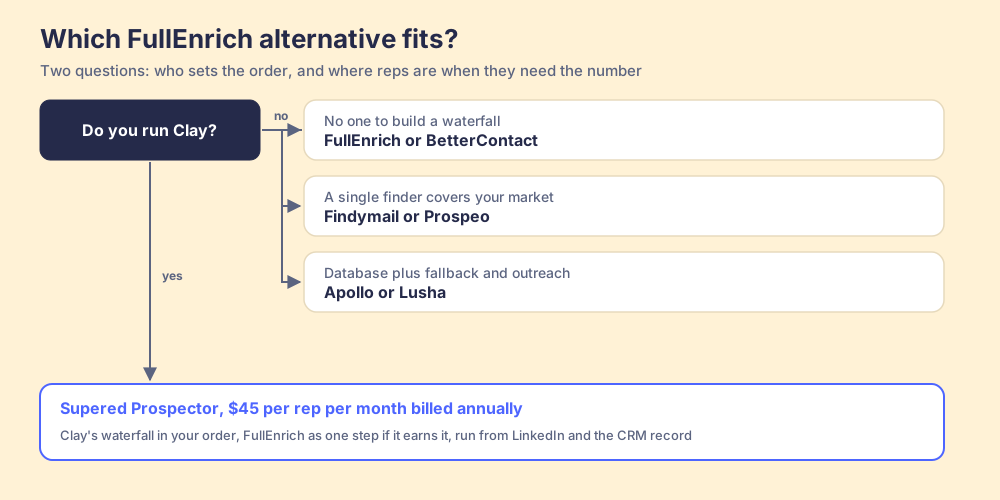
What we recommend depends on whether you have a foreman. If you do not, hire the contractor: FullEnrich is a well-run waterfall with a fair meter, and the main thing to manage is the phone share of the bill. If you have Clay and a GTM engineer, stop paying a second contractor to run an order you cannot see. Put FullEnrich in your own order, behind the cheaper shelves, and put that order in every rep’s hand on the LinkedIn profile and the CRM record, where the list starts and where it can be followed to closed. Exportly alternatives covers the other Clay-front-end option teams ask about, Clay prospecting shows how a rep-run list differs from an Ops-built one, and a Prospector demo on your own Clay account is where you can watch FullEnrich run as step three.
Frequently asked questions
What are the best FullEnrich alternatives in 2026?+
How much does FullEnrich cost in 2026?+
What is the difference between FullEnrich and Clay?+
Does FullEnrich have a Chrome extension?+
Can I use FullEnrich inside Clay?+
Do I need a Clay account to use Supered Prospector?+
Your process, running itself.