Kaspr vs Waalaxy in 2026: The Phone Book and the Postman
Kaspr finds the email and phone.
Waalaxy sends the LinkedIn invitations and follow-ups. Kaspr vs Waalaxy priced on October 2, 2026, with the job split in a rep's day, the math that sizes one to the other, and the Clay route.
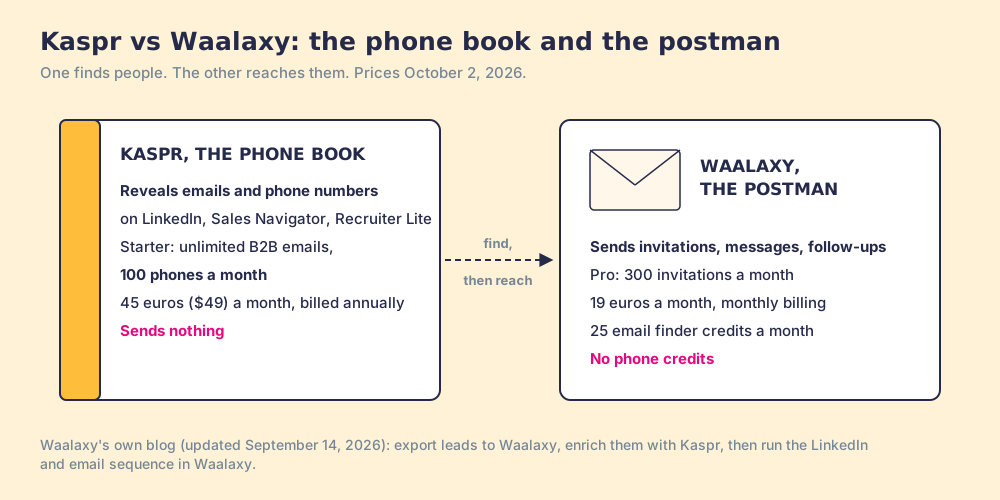
Kaspr vs Waalaxy is a comparison of two tools that do different jobs: Kaspr is a contact data extension that reveals emails and phone numbers from LinkedIn, and Waalaxy is a LinkedIn outreach tool that sends invitations, messages and follow-ups for you.
Kaspr vs Waalaxy is a comparison of two tools that do different jobs: Kaspr is a contact data extension that reveals emails and phone numbers from LinkedIn, and Waalaxy is a LinkedIn outreach tool that sends invitations, messages and follow-ups for you. Searched as kaspr vs waalaxy or waalaxy vs kaspr, it looks like a fight between two French LinkedIn extensions. It is closer to a fight between a phone book and a postman. The short answer, by who it fits:
- Supered Prospector. Teams whose RevOps already runs Clay and whose reps need emails and phones. The GTM engineer’s Clay tables, run from Sales Navigator, a company site or the CRM record. $45 per rep per month, billed annually. It replaces the Kaspr half; it sends no LinkedIn messages.
- Kaspr. Reps who call and email the people they find on LinkedIn. From $49 per user per month on annual billing (€45), with unlimited B2B emails and 100 phones a month.
- Waalaxy. Founders and small teams who sell through LinkedIn invitations and messages, with cold email on the top plan. From €19 per user per month on monthly billing, 300 invitations a month.
A phone book tells you where someone lives and how to ring them. It has never delivered a letter. A postman delivers letters, on a round, whether or not you know the address of each house on the street. Ask which is better and the only sensible answer is a question back: are you trying to find people, or reach them? Kaspr is the phone book. Waalaxy is the postman. Plenty of teams need both, and Waalaxy’s own blog says so.
How do Kaspr and Waalaxy compare at a glance?
Prices are the plan that includes the job, opened on kaspr.io/pricing and waalaxy.com/pricing on October 2, 2026. Waalaxy prices in euros, so Kaspr’s euro prices sit beside its dollar ones. Grades come from the same weighted scoring as our other contact data pages, which is a contact data lens; the outreach column says how each does the other job.
| Rank | Tool | Grade | Job it does | CRM integration | Setup effort | Price (plan with the feature) | Reason to pick it |
|---|---|---|---|---|---|---|---|
| 1 | Supered Prospector (on your Clay) | A | Contact data for teams on Clay | Native in HubSpot, Salesforce and Pipedrive; one-click sync | Live in under a week; admin connects Clay inside Supered | $45/rep/mo billed annually, from 1 rep, plus your Clay plan | 200+ providers behind one button, each list followed from found to closed |
| 2 | Kaspr | B- | Contact data from LinkedIn | HubSpot, Salesforce, Pipedrive, Zoho, Lemlist, Brevo; Aircall and Ringover dialers | Self-serve in minutes; G2 ease of setup 9.0 | Starter €45 / $49 annual (€59 / $65 monthly); Business €79 / $79 (€99 / $99) | Phones and unmetered B2B emails, Sales Navigator from Starter |
| 3 | Waalaxy | C+ (A on outreach) | LinkedIn and email outreach | HubSpot, Salesforce, Pipedrive; Zapier, Make, n8n | Self-serve, 14-day free trial; G2 ease of setup 8.8 | Pro €19, Advanced €49, Business €69 per user per month, monthly billing | Invitations, follow-ups and cold email on a schedule, from €19 |
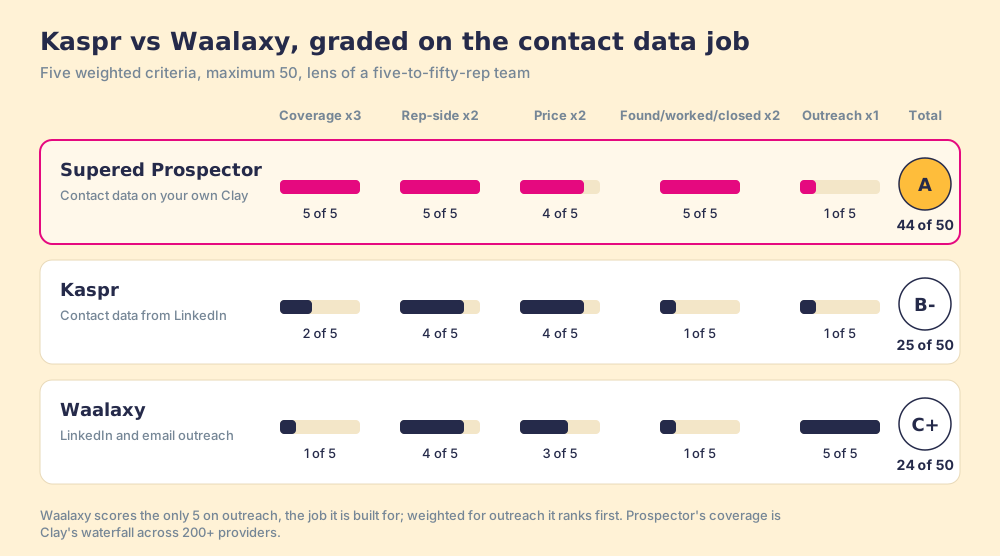
The scoring, so you can argue with it. Each criterion is scored 1 to 5 and multiplied by its weight, for a maximum of 50. The rows match the Kaspr alternatives page and Kaspr vs Lusha.
| Tool | Coverage (x3) | Rep-side delivery (x2) | Price for the job (x2) | Found, worked, closed visibility (x2) | Bundled outreach (x1) | Total |
|---|---|---|---|---|---|---|
| Supered Prospector | 5 | 5 | 4 | 5 | 1 | 44 |
| Kaspr | 2 | 4 | 4 | 1 | 1 | 25 |
| Waalaxy | 1 | 4 | 3 | 1 | 5 | 24 |
Waalaxy scores 1 on coverage because its pricing page sells 25 email finds a month on Pro and no phones. That says nothing about how well it sends; a table weighted for outreach would put it first and score Kaspr and Prospector 1 there, since neither sends a message. Prospector’s coverage score belongs to Clay, because Prospector has no database of its own.
Why trust this comparison?
Supered is my company, so weigh that first. Before it, I started RevPartners, a HubSpot partner that did only sales implementations, sold roughly twice as much Sales Hub as any other partner, and reached Elite tier in 13 months. I have watched reps buy an outreach tool to fix a data problem and a data tool to fix an outreach problem, and seen both purchases fail for the same reason. Supered holds 4.9 out of 5 from 81 reviews on G2 (October 1, 2026). Prospector competes with Kaspr for the contact data job and does not compete with Waalaxy at all, which is why the verdict below keeps Waalaxy for teams that use it to send.
What does each tool do, Kaspr or Waalaxy?
Kaspr finds. Its extension sits on a LinkedIn profile, a Sales Navigator list or a Recruiter Lite page and reveals the person’s email and phone number for a credit. Starter includes “Unlimited B2B email credits” (a fair-use limit of 10,000 credits per account per month sits in its terms) and 100 phone credits a month; Business includes 200 phones and 200 direct emails a month (kaspr.io/pricing, October 2, 2026). It syncs to HubSpot, Salesforce, Pipedrive and Zoho, and hands numbers to the Aircall and Ringover dialers. It sends nothing.
Waalaxy reaches. It describes itself as “a LinkedIn-first multichannel prospecting platform founded in 2019,” bootstrapped, with 18 employees and 200,000+ users (waalaxy.com/ai-info, October 2, 2026). You import prospects from LinkedIn search, Sales Navigator or Recruiter Lite, and Waalaxy sends connection requests, visits profiles, and runs message follow-ups that stop when someone replies. Pro allows 300 invitations a month; Advanced and Business allow 800; Business adds cold email sequences and 500 email finder credits a month (waalaxy.com/pricing, October 2, 2026). The company behind it is SAS Waapi of Montpellier, per its terms.
Each vendor describes the other plainly. Kaspr’s comparison page: “Waalaxy is an email finder and sequencing tool. It doesn’t provide company and phone number data” (kaspr.io/kaspr-vs-waalaxy). Waalaxy’s blog, updated September 14, 2026, recommends Kaspr as a partner: “Export leads from LinkedIn to Waalaxy CRM. Enrich these leads with Kaspr. Create cross-channel sequences (LinkedIn + emailing) with Waalaxy again” (Waalaxy blog). Two vendors agreeing that they do different jobs is rare enough to take seriously.
Now put both against a working day. The Bridge Group’s 2025 SDR report, 351 B2B companies, puts the median SDR at 112 activities a day: 44 phone, 41 email, 19 LinkedIn, and 8 text or other (Bridge Group, February 2025).
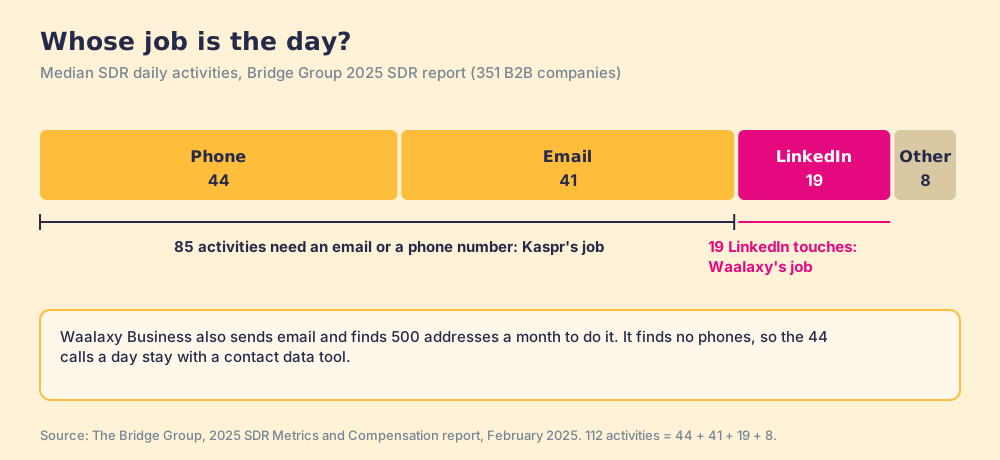
- The 85 calls and emails. These need an address or a number before they can happen. The phone book does this work; Waalaxy’s Pro plan covers 25 of them a month.
- The 19 LinkedIn touches. Invitations and messages, the postman’s round. Kaspr does none of them.
- The overlap. Waalaxy Business sends email too, and finds 500 addresses a month to do it. It still finds no phones, so the 44 calls stay with a data tool.
How do you size Kaspr to Waalaxy?
The two tools meet at one place: the moment a LinkedIn invitation is accepted and the rep wants to follow up off LinkedIn. So the useful sum is how many acceptances a Waalaxy plan produces, set against how many contacts the data plan can reveal.
Waalaxy publishes its own averages: a “33.5% avg. LinkedIn acceptance rate” and a “16.2% avg. reply rate” across its platform. Those are the vendor’s figures for its own users, and your list will differ. Take them as a starting estimate. Pro’s 300 invitations a month at 33.5% is about 100 accepted connections a month. Advanced or Business at 800 is about 268.
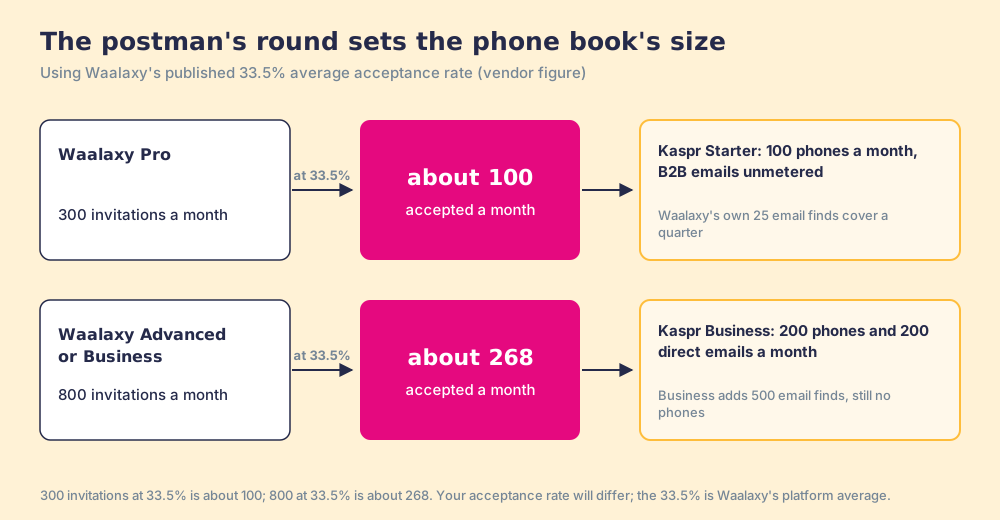
The fit is neat enough to look designed, and it is not. Kaspr Starter’s 100 phones a month match Pro’s 100 acceptances; Kaspr Business’s 200 phones cover most of the 268 that the 800-invitation plans produce. Waalaxy’s own 25 email finds on Pro and Advanced cover about a quarter of a Pro month’s acceptances. A rep who wants to call or email each person who said yes needs a data tool beside Waalaxy, or the Business plan’s 500 email finds and still no phones.
How much do Kaspr and Waalaxy cost?
Kaspr in euros: Starter €45 per user per month on annual billing or €59 monthly; Business €79 annual or €99 monthly. In dollars, Starter is $49 or $65 and Business $79 or $99. The free plan gives 5 phones and 15 B2B emails a month. The full ladder, export credits and add-ons included, is on the Kaspr pricing page.
Waalaxy shows €19, €49 and €69 per user per month for Pro, Advanced and Business on monthly billing, with a 14-day free trial, and toggles marked “Quarterly -20%” and “Yearly -50%.” The page does not print the discounted figures in its static HTML; if the 50% applies to the whole price, yearly billing works out to about €9.50, €24.50 and €34.50 a month. Treat those three as our arithmetic and confirm at checkout. Enterprise is custom, for 5+ seats.
| One rep, per month | Monthly billing | Annual or yearly billing |
|---|---|---|
| Kaspr Starter | €59 ($65) | €45 ($49) |
| Kaspr Business | €99 ($99) | €79 ($79) |
| Waalaxy Pro | €19 | about €9.50 (our reading of -50%) |
| Waalaxy Advanced | €49 | about €24.50 |
| Waalaxy Business | €69 | about €34.50 |
| Stack: Waalaxy Pro + Kaspr Starter | €78 | about €54.50 |
| Stack: Waalaxy Advanced + Kaspr Business | €148 | about €103.50 |
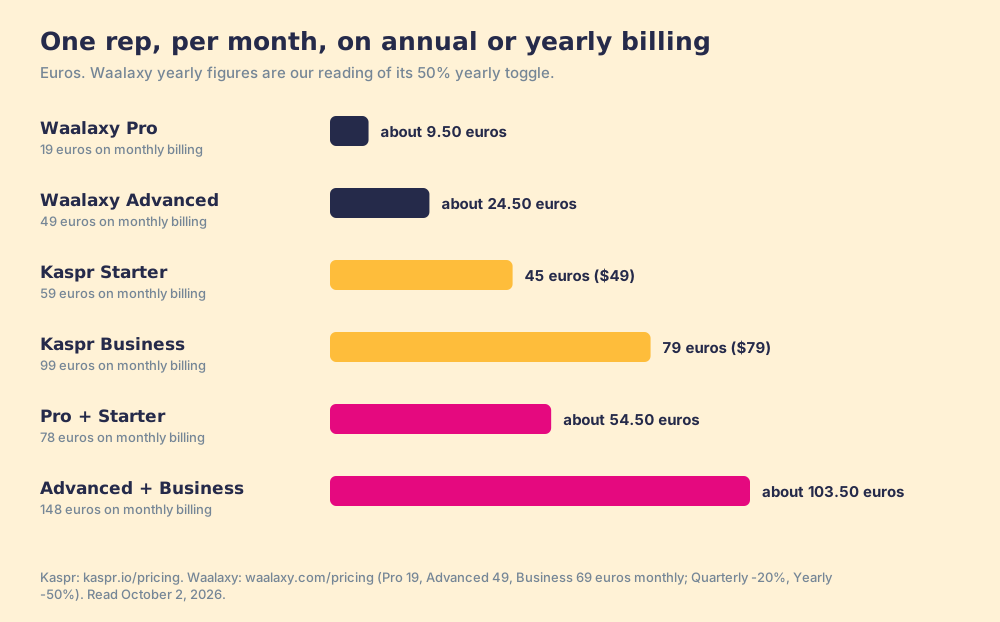
The phone book is the dearer half, by a distance. That matches what each sells: a phone number is a scarce, metered thing, and an invitation costs Waalaxy almost nothing to send. It also explains the one complaint G2 reviewers make about Waalaxy’s price. A founder, July 2026: “The price. It’s too expensive. Especially if you decide to pay monthly to stay flexible to your business needs.” On Waalaxy, the gap between monthly and yearly is half the bill.
What do reviewers and LinkedIn say about each?
G2’s head-to-head is close on the scores and far apart on the buyers. Kaspr holds 4.4 from 838 reviews, Waalaxy 4.5 from 1,593. Kaspr leads on ease of use, 9.2 to 8.9, and ease of setup, 9.0 to 8.8; quality of support and meets requirements tie at 8.6. 89.4% of Waalaxy’s reviewers are small businesses and 1.7% enterprise, against 69.1% and 7.2% for Kaspr (G2, Kaspr vs Waalaxy, read October 2, 2026). Waalaxy’s own pages add that “75% of our users had never done LinkedIn outreach before.”
The complaints follow the jobs.
- The Kaspr number that is a landline. A small-business reviewer, July 2025: “Sometimes the phone number data isn’t available or only includes landlines.” A mid-market account manager, December 2025: “the credit system depletes rapidly when engaging in high volume sourcing.”
- The Waalaxy round that drops. A senior account executive, September 2026: “The app sometimes feels a bit laggy and buggy…I’ve also had issues with Wallaxy disconnecting from my LinkedIn profile at times.”
(G2 review snippets read via a page summary, October 1 and 2, 2026.)
The disconnection complaint points at the question both tools share. LinkedIn’s help page on prohibited software says it does not permit “any third party software, including ‘crawlers’, bots, browser plug-ins, or browser extensions that scrape, modify the appearance of, or automate activity on LinkedIn’s website” (LinkedIn Help, read October 2, 2026). Read as written, that sentence reaches any extension that adds a button to a LinkedIn page, ours included. I make no compliance call on Kaspr, Waalaxy or anyone else. Ask every vendor what it reads from LinkedIn and what it does there on your behalf, ours included, and know whose account carries the risk. On a contact data tool the account mostly reads; on an outreach tool it sends.
The data side has its own record. In December 2024 France’s CNIL fined KASPR SAS €240,000 for collecting contact details of LinkedIn members who had limited their visibility, and ordered deletion (CNIL). Cognism vs Kaspr covers the decision and what Kaspr’s owner sells at the compliance end.
Kaspr vs Waalaxy for a team on Clay
For a team that already pays for Clay, the phone book half has a better answer, and the postman half stays where it is. Clay is closer to a telephone exchange than to one phone book: “200+ providers in one place,” a waterfall that asks one provider after another until a verified email or phone comes back, and a rule Kaspr does not offer. “If an enrichment returns no result, you’re not charged Data Credits or Actions” (clay.com/pricing, October 2, 2026). Kaspr has no page in Clay’s integrations directory; it returned a 404 on October 2, 2026.
Clay names the gap in its own copy: “GTM engineers build on Clay.” The tables live with the GTM engineer, and the reps live in Sales Navigator and the CRM, so they keep buying Kaspr seats to get a number in the browser. Clay plus Supered is the best way for a sales team to prospect: GTM engineers build in Clay, reps never open Clay. Supered Prospector runs inside the Supered Chrome extension on the team’s own Clay account.
- The GTM engineer’s table as a button. The GTM engineer builds named flows once, such as person enrichment or a buying committee, and reps pick one from a Push menu in Sales Navigator, on a company’s website, or in a HubSpot, Salesforce or Pipedrive record. Start from the Supered Clay template or bring your own tables.
- Sales Navigator lists into Clay. Reps add Navigator leads to a prospect list and push the list to a Clay table. Prospector works within LinkedIn’s terms and does not copy search results in bulk; the contact data comes from Clay’s waterfall on the customer’s Clay account.
- A check before the push. The rep sees the matching CRM record, who owns it, and a flag when the prospect was already worked, so two reps do not chase the same person.
- Found, worked, closed. The leader sees every list found from the team’s tables, who is working their list and who is not, and how each lead ended: Qualified, Recycled, or Disqualified, the way your process says.
The price, done straight. Prospector is $45 per rep per month, billed annually, from one rep, on your own Clay account and credits (Prospector). Ten Prospector seats cost $5,400 a year against $5,880 for ten Kaspr Starter seats. If you are buying Clay for this, Growth at its $495 monthly rate is $5,940 a year, so Clay plus ten seats is $11,340, about twice ten Kaspr seats; the case for it is coverage, a miss that costs nothing, and a leader who can follow the list. The phones come out of your Clay data credits, roughly six credits for an email plus a phone on our reading of Clay’s calculator, explained on the Clay pricing page. The head-to-head is on Prospector vs Kaspr.
Choose something else if:
- Your team sells through LinkedIn messages. Prospector sends no invitations and no messages. Keep Waalaxy, or whatever outreach tool you run, and point it at the contacts Prospector syncs to your CRM.
- No Clay, and no plan to buy it. Prospector runs only on Clay. Pick Kaspr for the data half. If you want Clay built for you, RevPartners, the company I founded, is a Clay Elite Studio Partner that builds and tunes the tables.
- A solo founder on a card. Waalaxy Pro and Kaspr Starter are simpler purchases than a Clay plan plus a seat.
- A field or mobile-first team. Supered runs at the computer and has no mobile product.
Kaspr or Waalaxy: which should you choose?
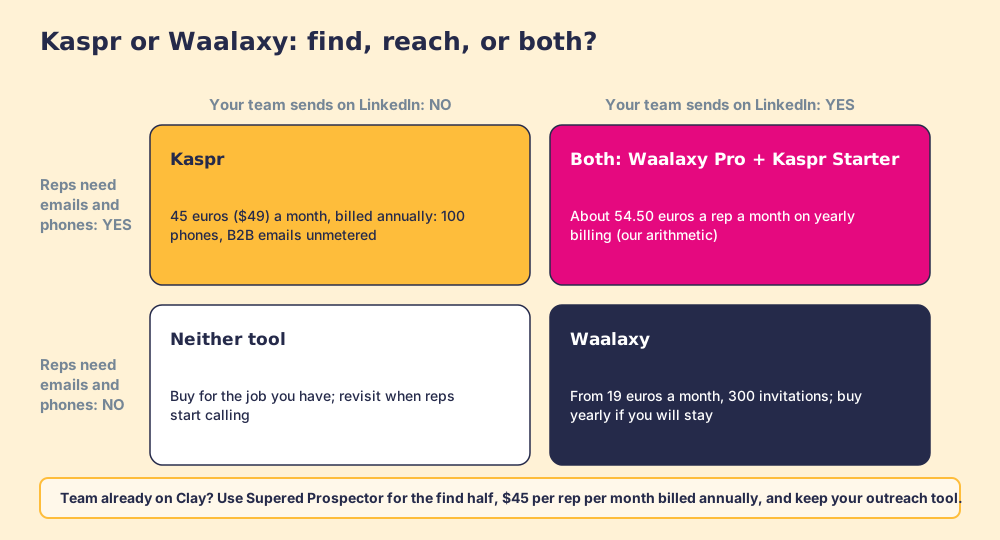
Back to the phone book and the postman. Decide whether your problem is finding people or reaching them, then buy for that.
- Kaspr. Choose Kaspr if your reps call and email the people they find on LinkedIn and need numbers today. Starter is €45 ($49) a month on annual billing for 100 phones a month and unmetered B2B emails. Ask whether the 10,000-credit fair-use limit is per user or per account.
- Waalaxy. Choose Waalaxy if your team sells through LinkedIn invitations and follow-ups and rarely picks up the phone. Pro is €19 a month on monthly billing for 300 invitations; buy yearly if you will stay, since the toggle halves the bill.
- Both. Choose both if reps send on LinkedIn and follow up by phone. Size Kaspr to Waalaxy: Starter beside Pro, Business beside Advanced. About €54.50 a rep a month on yearly billing for the first pair, on our arithmetic.
- Supered Prospector in place of Kaspr. Choose Prospector for the data half if your RevOps already runs Clay. Reps run the GTM engineer’s tables from the screen they are on with no Clay login, and you keep your outreach tool. $45 per rep per month, billed annually.
If the data half is the decision, Kaspr vs Lusha prices a phone on two LinkedIn extensions, and Apollo vs Kaspr sets Kaspr against a tool that bundles both jobs for the same $49. If you already have Clay, book a Prospector demo and bring the account.
Frequently asked questions
What is the difference between Kaspr and Waalaxy?+
Is Kaspr or Waalaxy cheaper?+
Can Waalaxy find phone numbers?+
Can I use Kaspr and Waalaxy together?+
Is LinkedIn automation allowed?+
Do I need Kaspr if my team already has Clay?+
Everything we have written on Kaspr
More on Kaspr
Supered Prospector vs Kaspr: the side-by-side- Kaspr Alternatives in 2026: Bottomless Bread, Wine by the Glass, and One Kitchen
- Kaspr Pricing in 2026: Four Meters on One House
- The Kaspr Chrome Extension in 2026: A Hotel Minibar With Three Price Tags
- Apollo vs Kaspr in 2026: The Same $49 at the Door, Two Very Different Clubs
- Cognism vs Kaspr in 2026: One Owner, a Flagship, and the Outlet Round the Corner
- Kaspr vs Lusha in 2026: Unlimited Texts or a Prepaid Card
Everything we have written on Waalaxy
More on Waalaxy
Looking past Waalaxy? See Supered Prospector on your own Clay accountYour Clay waterfall, where reps already work.