ContactOut Alternatives in 2026: An Unlimited Plan for One Line
ContactOut sells unlimited emails and phones to one user per company. Here are the ContactOut alternatives graded for a sales team, ContactOut pricing verified live, what the Chrome extension does and where it stops, and why a Clay team may keep ContactOut's data anyway.
ContactOut alternatives are the contact-data tools teams weigh against ContactOut, a LinkedIn email and phone finder sold one user per company: single databases like Lusha, Apollo, and RocketReach, or Clay's waterfall across 200+ vendors run from Supered Prospector.
ContactOut alternatives come up when one rep’s tool needs to become a team’s tool, or when the word “unlimited” meets the terms of service. The short answer, graded in full below:
- Supered Prospector. For teams that already have Clay: Clay’s waterfall across 200+ vendors, run from a LinkedIn profile, a Sales Navigator list, a company website, or the CRM record, at $45 per rep per month billed annually.
- Lusha. The like-for-like extension with a posted team ladder to 5 seats, from $449.10 a year.
- Apollo. For a small team that wants data, sequences, and a dialer in one plan, from $49 a seat on annual billing.
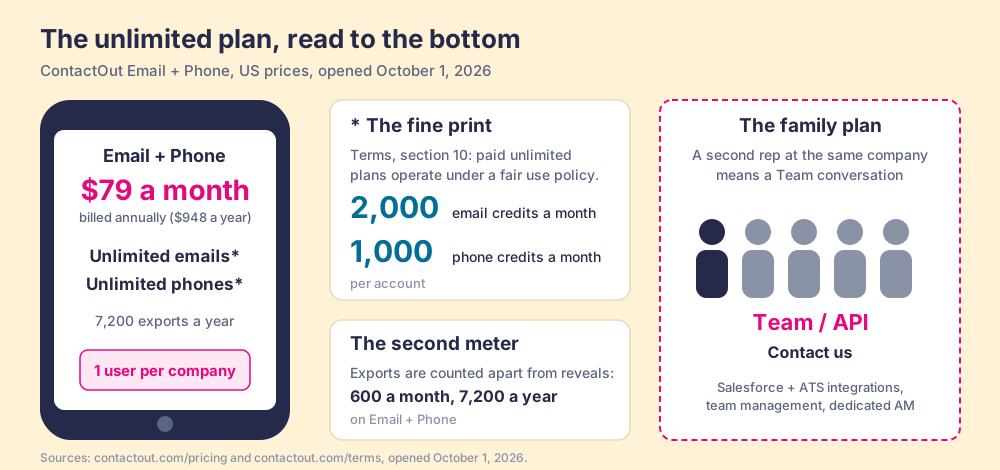
Anyone who has bought a mobile plan knows the shape of ContactOut pricing. The big word on the card is “unlimited.” Further down, in smaller type, sits the number at which the carrier starts treating you differently. And on the self-serve card there is one line, with the family plan behind a “talk to us” button. ContactOut’s top self-serve plan, opened on October 1, 2026, is $79 a month billed annually for unlimited emails and phones (contactout.com/pricing). Section 10 of its terms sets the fair-use cap at 2,000 email credits and 1,000 phone credits per account per month (contactout.com/terms). And the plan card says “1 user per company limit.”
ContactOut alternatives are the contact-data tools sales teams weigh against ContactOut, the LinkedIn email and phone finder built around a Chrome extension. They are either other single databases sold by the seat or the credit (Lusha, Apollo, RocketReach, Kaspr, ZoomInfo, Cognism), or Clay’s waterfall across 200+ data and AI vendors (clay.com, October 1, 2026), which a rep can run from Supered Prospector on the team’s own Clay account. This page works ContactOut pricing out to the cost of one export, lays out what the extension does, grades the field, and makes a point the other lists leave out. ContactOut is already a supplier inside Clay. For a Clay team, the best ContactOut alternative may contain ContactOut.
What does ContactOut cost in 2026?
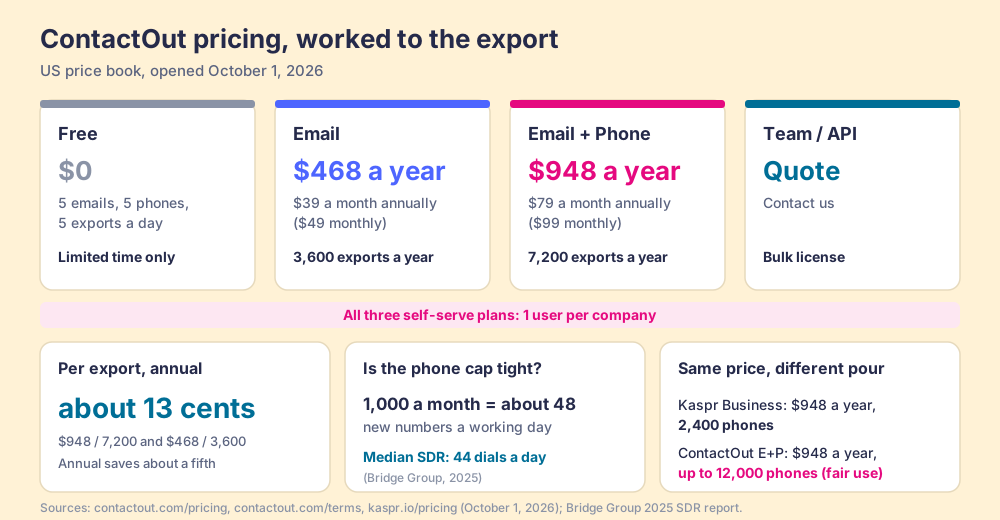
ContactOut pricing is published for one person and quoted for a team. The page carries the plans as data in its own HTML, so the figures below are the ones the page itself loads for a US visitor, captured October 1, 2026 (contactout.com/pricing):
| Plan | Billed monthly | Billed annually | Emails | Phones | Exports | Users |
|---|---|---|---|---|---|---|
| Free | $0 | $0 | 5 a day | 5 a day | 5 a day | 1 per company, “Limited time only” |
| $49 a month | $39 a month ($468 a year) | Unlimited (fair use) | None | 300 a month, 3,600 a year | 1 per company | |
| Email + Phone | $99 a month | $79 a month ($948 a year) | Unlimited (fair use) | Unlimited (fair use) | 600 a month, 7,200 a year | 1 per company |
| Team / API | Contact us | Contact us | ”20% more data coverage” | Bulk license | Custom | Team management, Salesforce + ATS integrations |
Each paid price sits beside a struck-through one: $99 crossed out above the $49 Email plan, $199 above the $99 Email + Phone plan. Visitors outside the US see a regional price book in the same page data, with Email + Phone at $49 a month or $39 billed annually. Four lines in the fine print change the arithmetic.
- The data cap. “ContactOut’s paid unlimited plans operate under a fair use policy. The credit limit is 2,000 email credits per account per month and 1,000 phone credits per account per month unless we enter into a separate agreement with you” (terms, section 10). The pricing page links each “unlimited” to that policy.
- The second meter. Exports are counted apart from reveals: 300 a month on Email, 600 on Email + Phone, or 3,600 and 7,200 a year on annual billing. A rep can see more contacts in a month than the plan lets them export.
- The single line. The Free, Email, and Email + Phone cards each list “1 user per company limit.” A second rep at the same company is a Team conversation.
- The family plan. ContactOut’s sales page offers to “Get your entire sales team on a prospecting tool for less than $299 monthly,” priced on the leads and credits used rather than seats, on a page that also carries the line “For work emails only. Conditions apply” (contactout.com/sales-users). The team price is a quote.
The plan is generous, too, and the arithmetic shows it. Annual billing takes a fifth off: $948 against $1,188 for twelve months of Email + Phone, and $468 against $588 for Email. Divide the annual price by the export allowance and both plans land at about 13 cents an export. And the phone cap is roomy for one person. A thousand phones over a 21-day month is about 48 new numbers a working day, and the Bridge Group’s 2025 SDR report, 351 companies, puts the median SDR at 44 dials a day (Bridge Group, 2025). Set it beside Kaspr, whose Business seat is also $948 a year and carries 2,400 phone credits (kaspr.io/pricing, October 1, 2026). ContactOut’s cap allows up to 12,000 phones a year at the same price.
So the cap rarely stops one rep; the single line stops a team of ten.
What does the ContactOut Chrome extension do, and where does it stop?
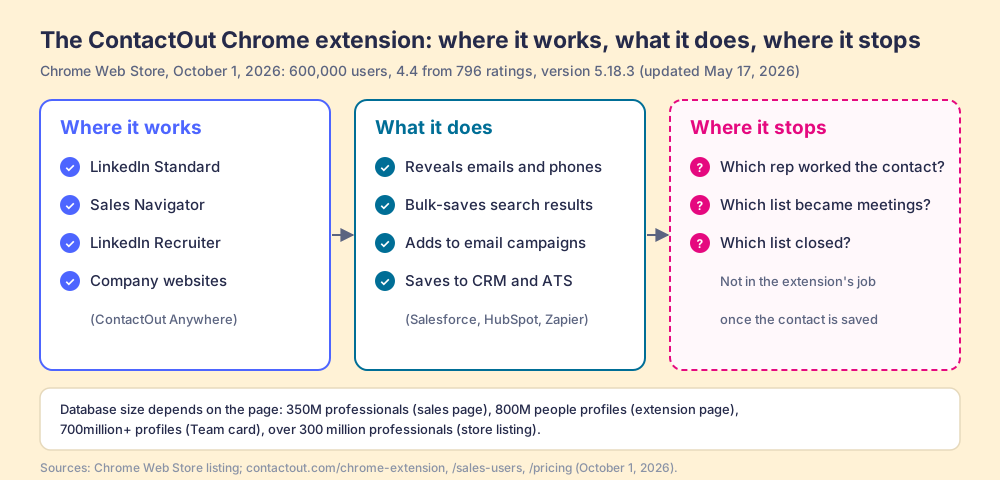
The ContactOut Chrome extension has a public scorecard. On the Chrome Web Store it is listed as “Email Finder by ContactOut,” with 600,000 users and a 4.4 rating from 796 ratings, version 5.18.3, updated May 17, 2026 (Chrome Web Store, checked October 1, 2026). What it does, from the listing and ContactOut’s extension page:
- Reveals on LinkedIn. Emails and phone numbers on LinkedIn Standard, Sales Navigator, and Recruiter, with a claim of “emails and phone numbers for 75% of people on LinkedIn” (contactout.com/chrome-extension).
- ContactOut Anywhere. Finds decision-makers on a company’s own website, from the page the rep is already reading.
- Lists and campaigns. Bulk reveal and save of LinkedIn results, then one click into ContactOut’s own multi-step email campaigns, with an AI email writer on the Email + Phone plan.
- CRM and ATS saves. The listing names Salesforce, HubSpot, Lever, Bullhorn, and Greenhouse, plus “over 5,000 other apps with Zapier.” The pricing page lists Salesforce + ATS integrations on the Team card.
Two cautions for a buyer. The store’s privacy panel says the extension handles “Web history” and “Website content,” which is what a page-reading extension needs and what a security review will ask about; ContactOut’s extension page says it is SOC 2 certified and GDPR and CCPA compliant. And the size of the database depends on which page you read: 350M professionals on the sales page, 800M people profiles on the extension page, “700million+ profiles” on the Team card, “over 300 million professionals” in the store listing. The extension page also splits the data into 150M personal emails, 200M work emails, and 100M direct dials. A personal address is what a recruiter needs to reach a passive candidate, and the testimonial wall on the same page is heavy with recruiters from Google, Robert Half, and executive search firms. ContactOut sells to sales teams; its data mix fits the recruiter’s job first.
Where it stops is where the next work starts. Once a contact is saved, the extension’s job is done. Which rep worked it, and which saved lists turned into meetings, lives somewhere else or nowhere.
Why do teams look for ContactOut alternatives?
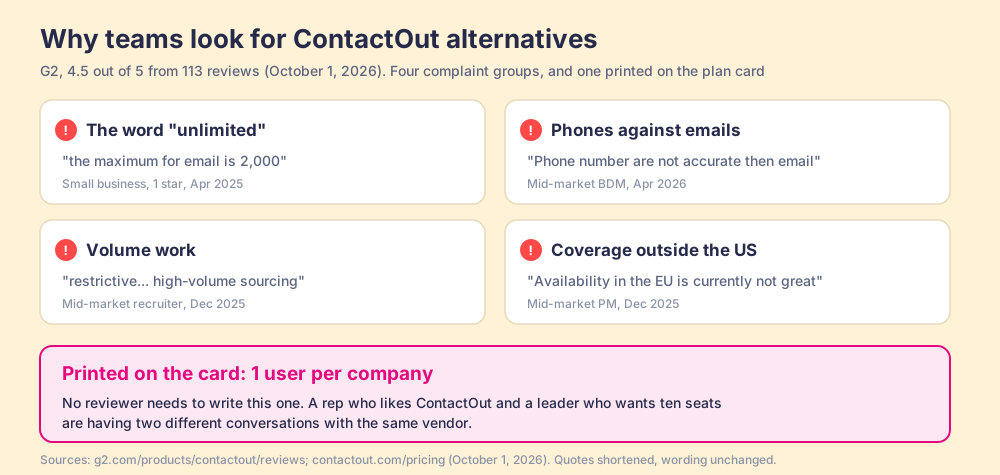
ContactOut held a 4.5 out of 5 from 113 reviews on G2 on October 1, 2026, and the complaints in those reviews fall into four groups (G2, ContactOut reviews).
- The word “unlimited.” A small-business reviewer gave one star in April 2025 after reading the terms: “They claim on their website that you receive unlimited phone and email credits with their $100/mo plan, but then under their fair limits restrictions on their t&cs, they claim that the maximum for email is 2,000.” A senior associate wrote in October 2025, “I’ve hit the usage limit a few times faster than I expected.”
- Phones against emails. “Phone number are not accurate then email,” a mid-market business development manager wrote in April 2026, and a recruiter in 2024: “sometimes some numbers are also wrong.”
- Volume work. A mid-market recruitment manager in December 2025: the “credit system can also be restrictive, particularly when handling high-volume sourcing.”
- Coverage outside the US. “Availability in the EU is currently not great,” a mid-market product manager wrote in December 2025.
And the one no reviewer needs to write, because it is printed on the card: one user per company. A rep who loves ContactOut and a sales leader who wants ten of them are having two different conversations with the same vendor.
Why trust this comparison?
I started RevPartners, a HubSpot partner that did only sales implementations, sold roughly twice as much Sales Hub as any other partner, and reached Elite tier in 13 months. Supered came out of that work and is the #1 sales enablement app on the HubSpot marketplace. That is also the disclosure. We make Supered Prospector, and it sits first on this page for teams that have Clay. Supered holds 4.9 out of 5 from 81 reviews on G2 and 5.0 from 122 on the HubSpot App Marketplace (both October 1, 2026). The grading below states its weights so you can flip them, and the flip for a solo recruiter puts ContactOut near the top.
The ContactOut alternatives, graded
A ranking that hides its math is an advertisement. The lens is a mid-market or SMB sales team, ten to fifty reps, that needs contact data reps will use where they already work and a leader who can see which lists turn into pipeline. Each criterion is scored 1 to 5 and multiplied by its weight, for a maximum of 50. The per-vendor scores are the ones used on the Kaspr alternatives page and the Lusha alternatives page, so the pages read together.
| Criterion | Weight | What it rewards |
|---|---|---|
| Coverage of the contact you need | 30% (x3) | Verified emails and mobiles when the first source misses |
| Rep-side delivery | 20% (x2) | Works on the profile, the company site, the CRM record; no new tab or login |
| Price structure for a team | 20% (x2) | Published, per-result or per-seat, buyable for the whole team without a platform fee |
| What the leader sees after the export | 20% (x2) | Which sourced lists were worked and which closed, by your definitions |
| Bundled outreach | 10% (x1) | Sequencing, dialer, drafting in the same plan |
| Rank | Tool | Grade | Score | Best fit | CRM integration | Setup effort | Pricing (plan with the feature) | Reason to switch from ContactOut |
|---|---|---|---|---|---|---|---|---|
| ref | ContactOut | B | 28 | One recruiter or rep on LinkedIn who wants personal emails and phones | Native (Salesforce, HubSpot, ATS), Zapier | Minutes | $79 per month billed annually, 1 user; Team quote | Stay if one seat is the job |
| 1 | Supered Prospector | A | 44 | Teams that already have Clay | Native (HubSpot, Salesforce, Pipedrive) | Under a week on an existing Clay account | $45 per rep per month, billed annually, plus your Clay plan | 200+ vendors per lookup, ContactOut among them if you choose, lists you can follow to closed |
| 2 | Apollo | A- | 36 | Small teams wanting data plus outreach in one | Native (HubSpot, Salesforce) | A day | $49 / $79 per seat per month, billed annually | Seats for the whole team, sequencer and dialer in the plan |
| 3 | Lusha | B+ | 29 | Like-for-like LinkedIn extension for a team of up to 5 | Native (HubSpot, Salesforce) | Minutes | Premium $3,599.10 a year, 5 seats | Posted team ladder; Data Waterfall on every paid plan |
| 4 | ZoomInfo | B | 28 | North American enterprise depth and intent | Native (HubSpot, Salesforce, Dynamics) | Weeks | Quote only; Vendr median $33,500 a year | US depth, for teams with the seats for a platform fee |
| 5 | Cognism | B | 26 | EMEA, phone-first, compliance-led outbound | Native | Weeks | Quote only; Vendr median $32,750 | Phone-verified mobiles and EU coverage |
| 6 | Kaspr | B- | 25 | Email-first reps on LinkedIn, European data | Native (HubSpot, Salesforce, Pipedrive, Zoho) | Minutes | $49 or $79 per user per month, billed annually | Seats a team can buy without a quote |
| 7 | RocketReach | B- | 23 | Individuals and small teams wanting published seats | Native from Pro | Minutes | Pro $899 a year; teams from $6K | Unlimited lookups on annual plans, multi-seat checkout |
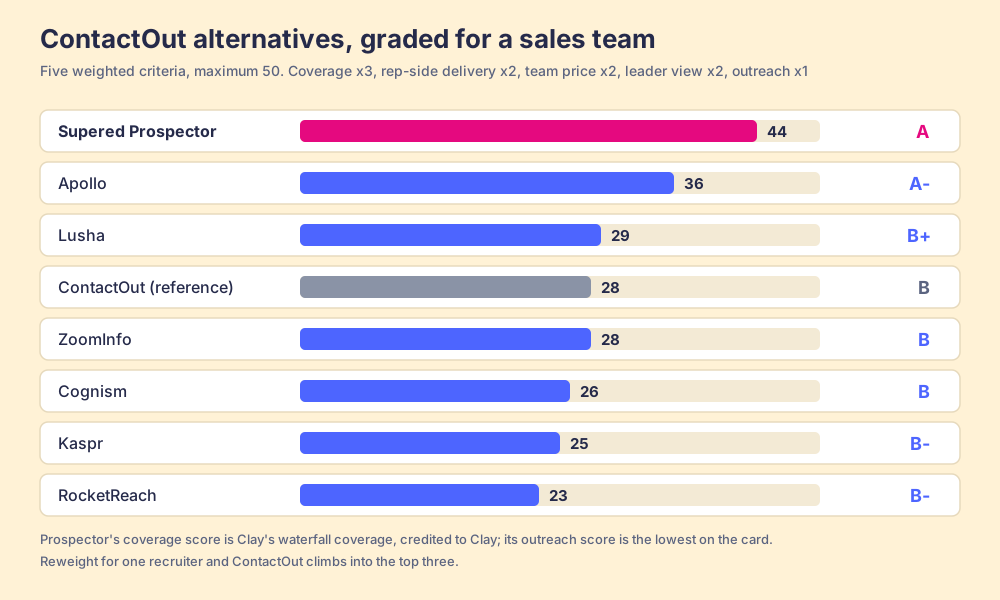
ContactOut’s 28 breaks down as coverage 3, rep-side delivery 4, price structure 3, what the leader sees 1, outreach 3. The rep-side 4 is earned: LinkedIn, Sales Navigator, Recruiter, and any company website, with saves to the CRM. The outreach 3 is earned too, since campaigns, an AI writer, and a cloud dialer sit in the product. The price score is the single line; a published $948 seat is good value, and a team cannot buy ten of them. The coverage 3 is the reviewers’ phone and EU reports set against a strong personal-email record. Prospector’s coverage score is Clay’s waterfall coverage, credited to Clay, and its outreach score is the lowest on the card on purpose: no sequencer, dialer, or drafting. If outreach in the same plan decides it for you, Apollo wins this page.
Corporate status, checked October 1, 2026, because a comparison is wrong the day one of its vendors is bought. ContactOut is independent and privately held, founded by Rob Liu, who describes on ContactOut’s own site how “we built ContactOut to 8 figures in revenue”; a news search found no 2026 acquisition or funding round. Apollo acquired Pocus in March 2026 (TNW). Lusha is independent and cut about 8% of staff in December 2025 (Calcalist). Kaspr is part of Cognism, which acquired it in April 2022. ZoomInfo is public (Nasdaq: GTM) and in May 2026 approved a restructuring of about 600 roles to move upmarket (SEC Form 8-K). RocketReach is independent.
Where does Supered Prospector fit?
Go back to the phone. A single-carrier plan is only as good as that carrier’s towers, and when you drive out of its coverage the bars drop to nothing while another carrier’s tower stands on the next hill. A roaming phone picks up whichever tower has signal.
Clay’s waterfall is the roaming phone. The GTM engineer writes down the order: ask this provider first, then that one, stop when a verified email or phone comes back. “Clay’s signature data waterfalls check multiple providers to return the most verified emails (lower bounce rate) and phone numbers (higher connect rate),” across 200+ data and AI vendors under one contract (Clay, rep prospecting). And one of the towers is ContactOut. Clay’s ContactOut integration page lists it as a Clay-built integration that joined on July 12, 2023, “Included in All Plans,” with actions to “Find Mobile Number from LinkedIn with ContactOut” and “Find Personal Email from LinkedIn with ContactOut,” paid with “Clay Credits or Bring Your Own Account” (Clay, ContactOut integration, October 1, 2026). Clay’s waterfall page names ContactOut among the mobile providers it checks (clay.com/waterfall-enrichment).
That changes what “leaving ContactOut” means for a Clay team. Keep the tower and drop the single-line plan: ContactOut’s mobiles and personal emails become one step in a waterfall the whole team runs, and when ContactOut comes back empty, the next provider is asked. “If an enrichment returns no result, you’re not charged Data Credits or Actions” (clay.com/pricing, October 1, 2026). Whether ContactOut sits in your waterfall, and in what order, is your GTM engineer’s call. The picture has a limit: a waterfall reaches only the providers someone put in it, and a team that has never built one needs that someone.
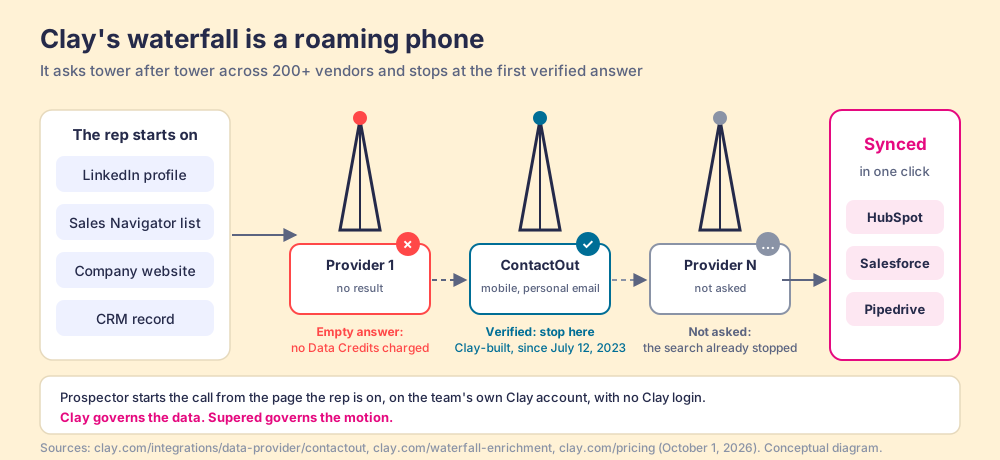
Prospector does not bring its own database. It brings Clay’s waterfall, which is every database, routed. We chose Clay as our only data provider for that reason, and it is why Clay is not a row in the tables above. Clay is the row that contains the other rows. Clay governs the data. Supered governs the motion.
What a rep gets from Prospector, on the team’s own Clay account and with no Clay login:
- Lookups from the page they are on. A LinkedIn profile, a Sales Navigator list, a company’s website with company research alongside, or a HubSpot, Salesforce or Pipedrive record. ContactOut Anywhere covers the website; Prospector adds the CRM record.
- A list the rep builds. The rep assembles the list, Clay’s waterfall fills the emails and phones, and a buying-committee lookup returns the titles, departments, and seniority the team set.
- Context before the first touch. On a LinkedIn profile, the rep sees the matching CRM record and whether the prospect was already worked in the past, before adding a duplicate or stepping on a teammate.
- One click to the CRM, or into a workflow. Field mapping is set once; a contact syncs to HubSpot, Salesforce, or Pipedrive in one click, and a whole list can be pushed into any custom Clay workflow the GTM engineer built.
- Lists the leader can follow. The team’s process applies to worked prospects, so the manager sees which sourced lists were worked and which closed, and coaches from what is converting.
The arithmetic, since a family plan needs a family-sized bill. ContactOut’s self-serve card cannot be bought for ten reps, so the comparison has to use list prices for tools that sell seats and Vendr’s median contracts for tools that quote. Clay’s Growth plan lists at $495 a month, or $5,940 a year, with 72,000 data credits a year and CRM sync (Clay pricing). Prospector is $45 per rep per month, billed annually, from one rep (Prospector). Ten reps: $11,340 a year. Ten RocketReach Pro seats are $8,990 at list (rocketreach.co/pricing) and ten Kaspr Business seats $9,480. Vendr’s medians: Lusha $15,999 across 147 purchases, Apollo $19,000 across 101, Cognism $32,750 across 94, ZoomInfo $33,500 across 1,573 (Vendr, ZoomInfo). ContactOut’s team price is a quote, with its sales page pointing at “less than $299 monthly.” On our reading of Clay’s pricing calculator, a work email plus a phone costs roughly six data credits, so Growth’s 72,000 credits is roughly 12,000 fully enriched contacts at about 50 cents each, a supposition since Clay does not publish the calculator’s rates (the Clay pricing page shows the working).
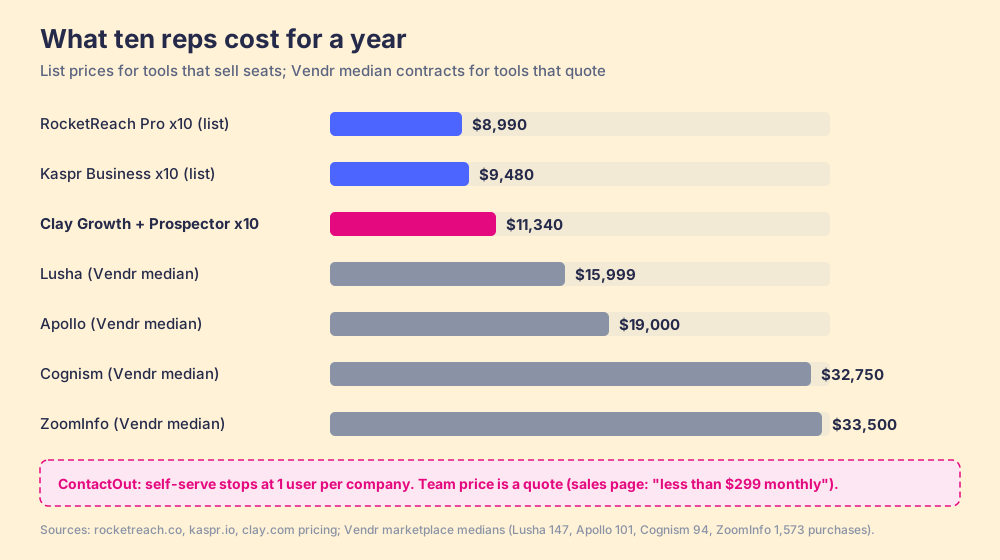
The Clay row is not the cheapest line on the card, and the case for it rests on three things a single carrier cannot sell. The number ContactOut does not have, because the waterfall asks the next tower. ContactOut’s own data when it does have it, if your GTM engineer keeps it in the order. And a list a leader can follow from sourced to closed, which no reveal counter records.
Choose something else if you do not have Clay. Prospector runs on the customer’s Clay account and does nothing without one; Clay itself says “GTM engineers build on Clay.” Choose something else, too, if you are one recruiter who needs personal emails on LinkedIn, because ContactOut’s $948 seat is one of the best single-seat deals on this page. The mechanics of the Clay side, from the rep’s chair, are on the Clay Chrome extension page, and the sourcing use case shows the whole loop from profile to closed.
How do the other ContactOut competitors compare?
Each of these is a carrier with its own towers, priced and checked on October 1, 2026 unless another date is given.
- Lusha. The closest like-for-like ContactOut alternative for a small team. Its pricing data shows Starter at $449.10 a year for 4,800 credits and Premium at $3,599.10 a year for 40,800 credits and 5 seats, with an email at 1 credit and a phone at 5 (lusha.com/pricing). Since September 23, 2026, Lusha’s Data Waterfall, which falls back to third-party providers when Lusha’s own data misses, runs on every paid plan (Lusha changelog). G2: 4.3 from 1,665 reviews. Past 5 users, its FAQ sends you to sales. Lusha’s Chrome extension gets its own page.
- Apollo. Seats for the whole team at $49 a month on annual billing with 30,000 credits per seat per year, a sequencer and dialer included, and a meter that charges 1 credit for an email and 8 for a phone (apollo.io/pricing). G2: 4.7 from 9,778 reviews. One database, with outreach attached; Apollo vs Lusha sets the two side by side.
- RocketReach. The nearest match to ContactOut’s published-seat model, with checkout for more than one seat: Pro at $899 a year for unlimited lookups (fair use, 10,000 a month) and 3,600 exports, team plans “start at $6K annually” (rocketreach.co/pricing). G2: 4.4 from 1,385 reviews. RocketReach pricing works it to the export.
- Kaspr. The same $948 a year as ContactOut’s Email + Phone seat on its Business plan, with unlimited B2B emails under a 10,000-credit fair-use cap and 2,400 phones a year, and seats a team can buy without a quote. Owned by Cognism, and its data page leads with “200 million + European B2B contacts” (kaspr.io/our-data), which answers the G2 reviewer who found ContactOut thin in the EU.
- ZoomInfo and Cognism. The quote-only platforms, at Vendr medians of $33,500 and $32,750 a year. ZoomInfo for North American depth and intent; Cognism for EMEA phone coverage and compliance screening.
For the email-only job, the Hunter.io alternatives page and the LinkedIn email finder extensions page go deeper, and how to find someone’s email on LinkedIn covers the free methods first.
Which ContactOut alternative should you choose?
The choice resolves once you name two things: how many people need the tool, and whether you already run Clay. The ways forward:
- ContactOut itself. The pick for one recruiter or one rep on LinkedIn who values personal emails, at $948 a year billed annually, with a fair-use cap one person rarely reaches.
- Lusha. The pick for a team of up to five that wants the same extension workflow with a posted price and a built-in fallback to third-party data.
- Apollo. The pick when the job is data plus sequences and a dialer in one tool, with a seat for every rep. Size the credits before the seats: a phone costs 8.
- RocketReach or Kaspr. The pick when you want published seats you can buy for the whole team, RocketReach for US exports, Kaspr for European emails.
- ZoomInfo or Cognism. The pick for enterprise depth or EMEA phone coverage, if you have the seats to make a platform fee sensible.
- Supered Prospector. The pick when the team already has Clay: Clay’s waterfall, ContactOut among the towers if you want it, in every rep’s hands on LinkedIn, the company site, and the CRM record, and a view of which lists get worked and closed.
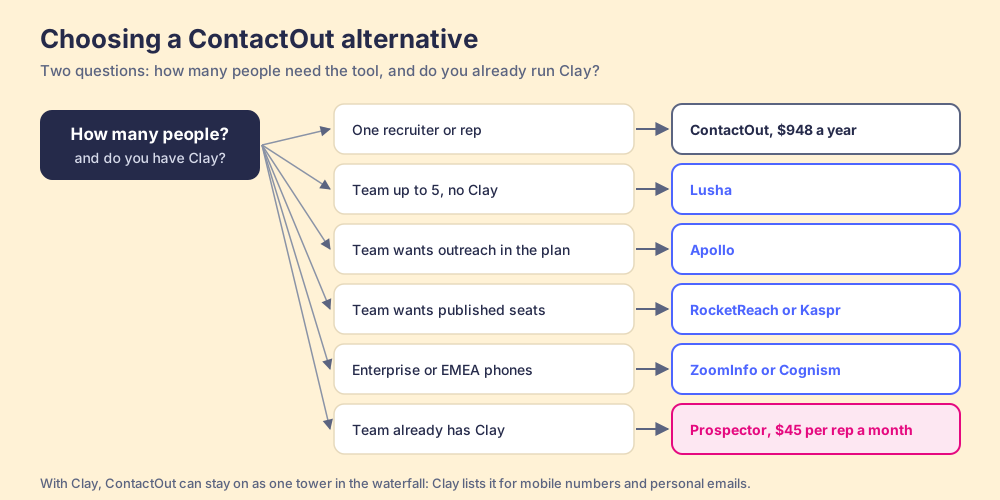
What we recommend depends on the size of the household. If you are one person on LinkedIn, keep ContactOut, buy it annually, and read section 10 of the terms once so the cap never surprises you. If you are a team without Clay, pick the carrier whose towers cover your buyers: Lusha or Apollo for most US mid-market teams, Kaspr or Cognism if your buyers are in Europe. If you are a team with Clay, stop shopping for a better single carrier. Put the roaming phone in every rep’s hand, keep ContactOut as a tower if its hit rate holds up in the order, and follow each list your reps build from the profile to closed. Exportly alternatives covers the other Clay-front-end option teams ask about, and a Prospector demo on your own Clay account is where you can watch the first list go from a LinkedIn tab to a closed deal.
Frequently asked questions
What are the best ContactOut alternatives in 2026?+
How much does ContactOut cost in 2026?+
Is ContactOut really unlimited?+
What does the ContactOut Chrome extension do?+
Can I use ContactOut data inside Clay?+
Do I need a Clay account to use Supered Prospector?+
Your process, running itself.