Findymail Alternatives in 2026: Keep the Email, Find the Phone
Clay's data tests rank Findymail first for North American work emails and 13th of 15 for mobiles. Findymail alternatives graded, Findymail pricing per email and phone, a fair Findymail review, and why Clay teams keep it as step one.
Findymail alternatives are the email and phone finders teams weigh against Findymail: Prospeo, Hunter and Snov.io, phone-strong waterfalls like BetterContact, Apollo, or Clay's waterfall across 200+ vendors run from Supered Prospector.
Findymail alternatives get searched for two reasons, and they rarely overlap. One team loves its emails and cannot get a mobile number out of the tool. The other runs Clay and has noticed it pays for Findymail twice. The short answer, graded in full below:
- Supered Prospector. For teams that already have Clay: Clay’s waterfall across 200+ vendors, Findymail kept as the email step, run by reps from a LinkedIn profile, a Sales Navigator list, a company website, or the CRM record, at $45 per rep per month billed annually.
- BetterContact. For the phone gap without Clay: a waterfall of 20+ providers that covered 97.15% of North American mobiles in Clay’s test, from $15 a month.
- Prospeo. For a cheaper single finder: mobiles at 10 credits on a $37-a-month yearly plan, and 74.96% North American mobile coverage in the same test.
Findymail alternatives are the email and phone finders teams weigh against Findymail: single finders like Prospeo, Hunter and Snov.io, phone-strong waterfalls like BetterContact and FullEnrich, Apollo’s all-in-one plan, or Clay’s waterfall across 200+ data and AI vendors (clay.com, checked October 2, 2026), which reps can run from Supered Prospector on the team’s own Clay account. This page works out Findymail pricing per email and per phone, gives a fair Findymail review, and grades the field. The central finding comes from Clay’s own benchmark tables. Findymail ranks first of 13 for North American work emails and 13th of 15 for North American mobiles, so a team shopping for a Findymail replacement is often shopping for a phone.
Findymail review: what does Clay’s data say it is good at?
A good bakery is known for one thing. People cross town for the bread. The same bakery also keeps a small shelf of cakes, and no one crosses town for those; they are fine, and they are there, and on a busy morning half the shelf is empty. A sensible customer does not stop buying the bread. They buy the cake next door.
Findymail is a bakery with excellent bread. Clay publishes provider benchmarks it calls data tests, and two of them grade Findymail directly. In the work-email test by region, last run October 22, 2025, Findymail led North America on coverage at 90.26%, with 96.26% quality, at 0.5 Clay credits per lookup; the next three were Zeliq at 85.56%, Wiza at 85.02%, and FullEnrich at 83.17% (Clay data test, work email by region, opened October 2, 2026). It also led Latin America at 82.98%, placed second in Europe at 83.73%, and fell to 65.97% in APAC and 65.19% in the Middle East and Africa. In Clay’s catch-all verifier test, last run August 31, 2025, Findymail returned a verdict on 100% of catch-all addresses in all three modes Clay ran, with quality from 86.56% to 94.99% (Clay data test, catch-all verifiers).
The cake shelf is the mobile test from the same series and the same date. In North America, Findymail found 45.84% of mobiles, 13th of 15 providers. BetterContact found 97.15%, Zeliq 96.15%, ContactOut 95.69%, and Prospeo 74.96% (Clay data test, mobile by region). In APAC Findymail found 19.53%, in the Middle East and Africa 12.98%, and Clay’s Europe and Latin America tables list no Findymail row, which fits Findymail’s own pricing page: its mobile finder is “Non-EU only.”
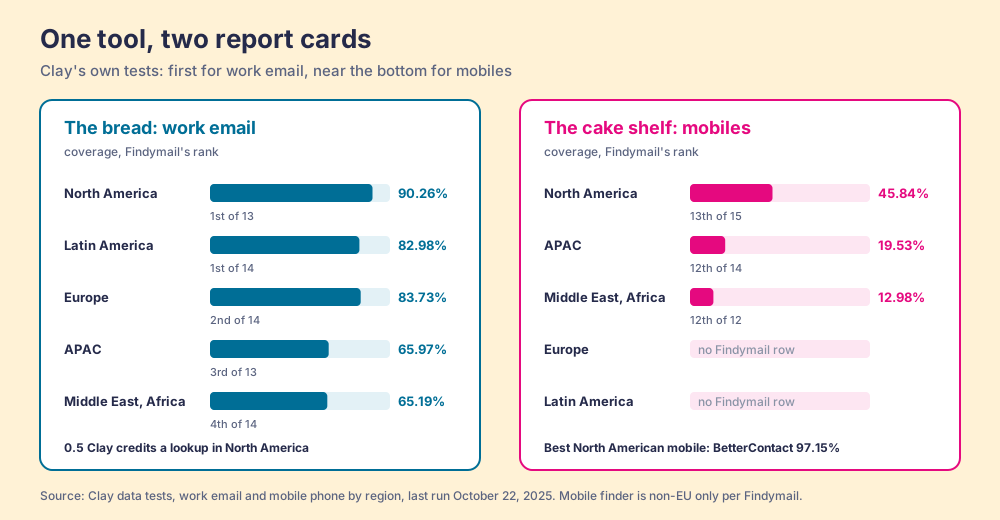
Clay’s tests deserve a caveat, and Clay supplies it. Its methodology page explains that a work email counts as valid when two or more of five verification services confirm it, and Findymail is one of the five (Clay methodology). The email sample in the European study was about 5,000 VP and C-suite contacts. So the email ranking leans toward senior buyers and has Findymail helping to mark the answer sheet. The mobile ranking does not rest on that email panel, and a gap of 45.84% against 97.15% is too wide to explain by grading alone. An anonymous review site’s own benchmark, published June 8, 2026, also ranked Findymail first on email accuracy, at 93.2% on 500 contacts, and found that “No single tool exceeded 89% coverage” (b2b-email-finder.com). Treat that second source as weaker; it names no authors.
The rest of the review is in the public record. Findymail holds 4.9 out of 5 from 57 reviews on G2, 4.9 from 7 on Capterra, and 4.6 from 63 ratings on its Chrome extension, which lists 20,000 users (Chrome Web Store, all checked October 2, 2026). The publisher on the store listing is Peanuts SaaS Studio, in Capinghem, France. A news search on October 2, 2026 found no 2026 acquisition or funding round. The verdict: buy Findymail for the bread.
What does Findymail cost in 2026?
Findymail pricing is one self-serve plan on a volume slider. The pricing page, opened October 2, 2026, shows Starter by default: $99 a month for 5,000 finder credits plus a bonus 5,000 verifier credits, “Pay Yearly 2 Months Free,” a free trial of 10 credits with no card, and Enterprise at a custom price (findymail.com/pricing). The slider steps through 1k, 5k, 15k, 30k, 50k, 100k and 100k+ credits; the page did not render the other tiers’ prices to us, so the other rows come from Emelia’s September 2026 capture, and Capterra lists the same $49, $99 and $249 figures.
| Plan | Monthly | Annual, per month | Credits a month | Per email | Per phone (10 credits) |
|---|---|---|---|---|---|
| Basic | $49 | $41 | 1,000 | 4.9 cents | 49 cents |
| Starter | $99 | $83 | 5,000 | about 2 cents | about 20 cents |
| Business | $249 | $208 | 15,000 | about 1.7 cents | about 17 cents |
| Business Plus | $399 | about $333 | 30,000 | about 1.3 cents | about 13 cents |
| Scale 50K | $549 | about $458 | 50,000 | about 1.1 cents | about 11 cents |
| Scale 100K | $849 | $708 | 100,000 | about 0.85 cents | about 8.5 cents |
Per-unit figures are our arithmetic on monthly billing. Five lines on the page change how the bill behaves.
- The phone multiplier. “1 email = 1 credit OR 1 phone = 10 credits.” On Starter, 5,000 credits buy 5,000 emails or 500 phones.
- The pay-on-find rule. Findymail charges for verified results only, so an empty lookup costs nothing.
- The bounce refund. “If your bounce rate exceeds 5%, we refund your credits.”
- The rollover cap. Unused credits roll over month to month, “up to 2× your monthly allowance.”
- The shared pool. Team accounts draw on one balance with no per-seat charge, so ten reps cost what one does at the same volume. Emelia’s capture puts it plainly: “the budget depends on volume, not on the number of people.”
Findymail also sells Datacare, CRM enrichment priced by CRM size, from $500 a month billed annually. Inside Clay the meter is different: Clay’s data tests list a Findymail work email at 0.5 Clay credits a lookup and a mobile at 4, and at Clay’s entry rate of $0.05 a data credit, that puts a Findymail email near 2.5 cents.
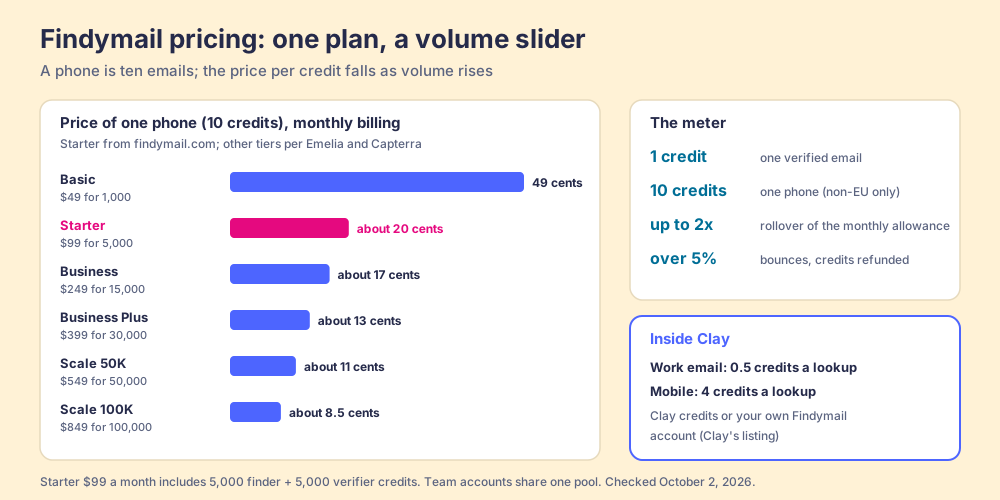
On price, Findymail is fair. A phone at about 20 cents on Starter sits beside Apollo at about 16 cents and Prospeo at about 18, and below FullEnrich at 32 to 58 cents. The problem with Findymail’s phones is not their price. In North America, more than half the lookups come back empty, and an empty lookup is free in dollars and expensive in dials: the rep has a name, a title, a verified email, and no number to call.
Why do teams look for Findymail alternatives?
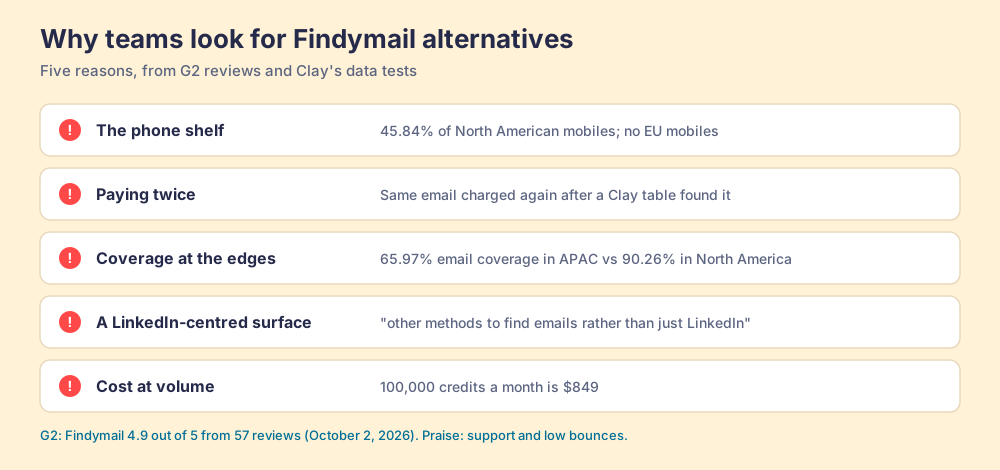
The praise on G2 is consistent: support that answers, emails that do not bounce. The complaints sort into five groups, and two of them are about phones.
- The phone shelf. Clay’s data has Findymail finding 45.84% of North American mobiles, and none in the EU by Findymail’s own terms. A team that dials needs a second source.
- Paying twice for the same contact. A small-business reviewer in December 2024 wrote that “If I used credits to find the same emails, I was still charged for finding them, even though I had previously updated the Clay table.” A Clay team that also holds a Findymail account can buy the same answer in both places.
- Coverage at the edges. A GTM engineer at a small business, November 2024: “Some times it won’t find the emails for a bunch of contacts.” Clay’s regional data agrees: 65.97% coverage in APAC against 90.26% in North America.
- A LinkedIn-shaped input. A partnerships associate in October 2024: “I feel that there should be other methods to find emails rather than just LinkedIn.” Findymail does take names and domains, by CSV and API, but its rep-facing surface is the extension on professional networks.
- Cost as volume grows. G2’s own summary of the reviews names expensive pricing at higher usage, which is the slider doing its job: 100,000 credits a month is $849.
Why trust this comparison?
I founded RevPartners, a HubSpot partner that did only sales implementations; it sold roughly twice as much Sales Hub as any other partner and reached Elite tier in 13 months. Supered grew out of that work and is the #1 sales enablement app on the HubSpot marketplace. The disclosure follows: we make Supered Prospector, and it ranks first on this page for teams that have Clay. Supered holds 4.9 out of 5 from 81 reviews on G2 and 5.0 from 122 on the HubSpot App Marketplace (both checked October 1, 2026). The weights below are printed so you can change them, and for a team with no Clay that only sends email, the reweighted card puts Findymail near the top.
The Findymail alternatives, graded
The lens is a mid-market or SMB sales team, ten to fifty reps, that needs verified emails and mobiles reps will use where they already work, and a leader who can see which lists turn into pipeline. Each criterion is scored 1 to 5 and multiplied by its weight, for a maximum of 50. The per-vendor scores match the Hunter.io alternatives page and the FullEnrich alternatives page, so the pages read together. Our scoring, not vendor data.
| Criterion | Weight | What it rewards |
|---|---|---|
| Coverage of the contact you need | 30% (x3) | Verified emails and mobiles when the first source misses |
| Rep-side delivery | 20% (x2) | Works on the profile, the company site, the CRM record; no new tab or file |
| Price structure for a team | 20% (x2) | Published, per-result, buyable for the whole team without a platform fee |
| What the leader sees after the export | 20% (x2) | Which sourced lists were found, worked and closed, by your definitions |
| Bundled outreach | 10% (x1) | Sequencing, dialer, drafting in the same plan |
| Rank | Tool | Grade | Score | Best fit | CRM integration | Setup effort | Pricing (plan with the feature) | Reason to switch from Findymail |
|---|---|---|---|---|---|---|---|---|
| ref | Findymail | B+ | 29 | Email-first outbound with a bounce guarantee | Native (HubSpot, Salesforce, Pipedrive, Clay) | Minutes | Starter $99 a month for the team | Stay if your team sends email and rarely dials |
| 1 | Supered Prospector | A | 44 | Teams that already have Clay | Native (HubSpot, Salesforce, Pipedrive) | Under a week on an existing Clay account | $45 per rep per month, billed annually, plus your Clay plan | Findymail first for email, phone specialists behind it, run from LinkedIn and the CRM record |
| 2 | Apollo | A- | 36 | Data, phones, and outreach in one tool | Native (HubSpot, Salesforce) | A day | $49 a seat a month billed annually, phone 8 credits | Sequencer and dialer in the plan |
| 3 | Snov.io | B+ | 30 | Small teams wanting finder plus sequences | HubSpot and Pipedrive two-way | Minutes | Starter $39 a month, unlimited seats | Outreach built in; phones on separate tokens |
| 4 | Prospeo | B+ | 29 | A cheaper finder with stronger mobiles | HubSpot and Salesforce on Growth | Minutes | $37 a user a month billed yearly | 74.96% North American mobiles in Clay’s test |
| 5 | Hunter | B+ | 28 | Email-only teams on a budget | Native (HubSpot, Salesforce, Pipedrive, Zoho) | Minutes | Starter $34 a month billed yearly, unlimited users | Cheaper emails, 97.15% quality; no phone product |
| 6 | BetterContact | B | 27 | The phone gap, without Clay | HubSpot, Clay, Make, Zapier | Minutes | Starter $15 a month, Pro $49 for 1,000 credits | 97.15% North American mobiles in Clay’s test |
| 7 | FullEnrich | B | 27 | A ready-made waterfall, unlimited users | HubSpot native; others via Zapier, Make, API | Minutes | Pro $55 a month for 1,000 credits | 18 mobile sources; no Chrome extension |
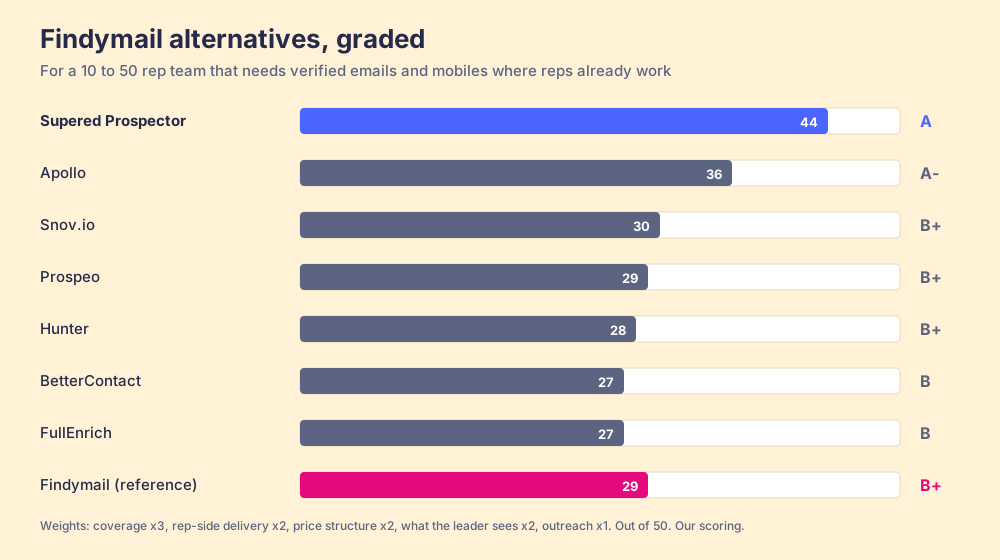
Findymail’s 29 breaks down as coverage 4, rep-side delivery 3, price structure 4, what the leader sees 1, outreach 1. The coverage 4 is an average of a 5 for email and a 2 for phones. The price 4 reflects a shared pool, pay-on-find, and the bounce refund; it is not a 5 because a phone costs ten emails. Prospector’s coverage score is Clay’s waterfall coverage, credited to Clay, and its outreach score is the lowest on the card by design: no sequencer, dialer, or drafting. If outreach in one plan decides it for you, Apollo wins this page.
Corporate status, checked October 2, 2026. Findymail: no 2026 acquisition or funding round found. Apollo acquired Pocus in March 2026 and remains independent. FullEnrich is independent. BetterContact’s site says it is “Now backed by the Landbase Applied AI Lab”; we found no announced acquisition. No 2026 acquisition of Prospeo, Snov.io or Hunter turned up in a news search on October 1 or 2.
Findymail vs a waterfall: why keep the bread and buy the cake?
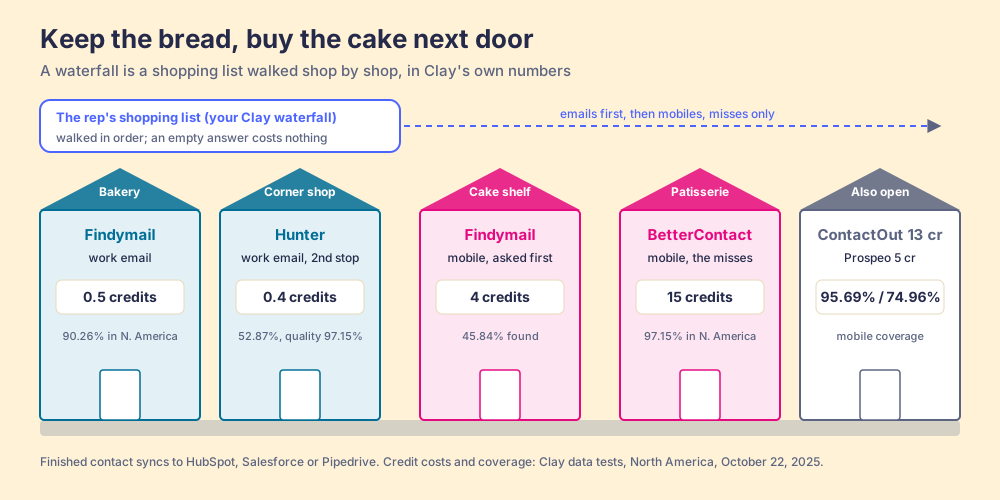
Back to the high street. The shopper with a list does not pick one shop. Bread from the bakery, cake from the patisserie, and if the patisserie is out, the café on the corner. A waterfall is that shopping list, written once and walked in order: ask the provider most likely to have the answer at the lowest price, and send only the misses to the next one. Clay’s waterfall page describes the same idea, and Clay’s pricing page adds the rule that makes it cheap: “If an enrichment returns no result, you’re not charged Data Credits or Actions.”
Clay’s own numbers write the list for you. For North American work emails, Findymail goes first: highest coverage, high quality, 0.5 credits. Hunter makes a good second stop at 0.4 credits, with the highest quality in the test (97.15%) on 52.87% coverage. For North American mobiles, the order changes: Findymail is still cheap at 4 credits, so it can go first, and BetterContact at 15 credits, ContactOut at 13, or Prospeo at 5 catches what it misses. Clay’s integration page lists Findymail’s work-email, profile-URL, mobile and verify actions, each “Clay Credits or Bring Your Own Account,” and shows Findymail joined on September 1, 2022 (Clay, Findymail integration).
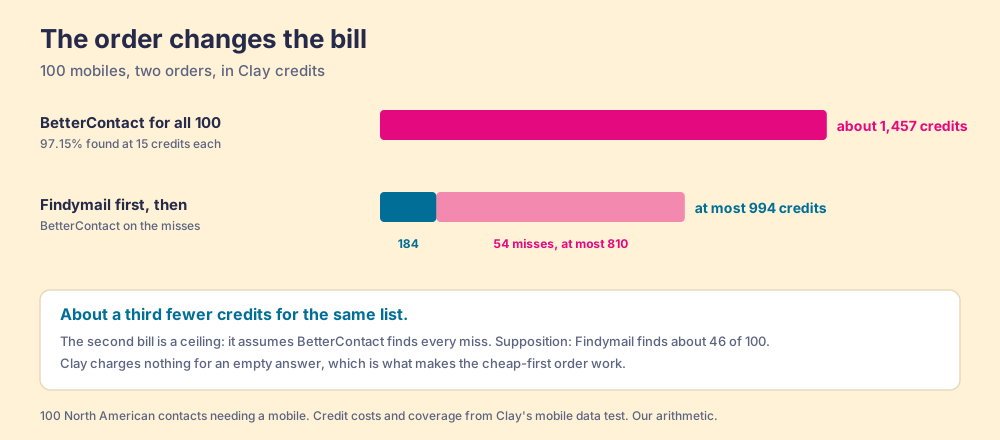
A worked example shows why the order matters, and it rests on one supposition. Take 100 North American contacts that need a mobile. Run them all through BetterContact in Clay and, at 97.15% coverage and 15 credits a find, you spend about 1,457 credits. Ask Findymail first, and about 46 finds at 4 credits is 184 credits, and the 54 misses go to BetterContact, which costs at most 810 credits if it finds every one. The total is at most 994 credits, about a third less, for the same list. The second bill is a ceiling, since it assumes BetterContact finds every miss. The one supposition is that Findymail finds about 46 of these 100, its rate in Clay’s test; a list of harder contacts would shift both numbers.
The analogy stops at one point. A shopping list needs someone to write it, and a waterfall needs a builder who sets the order and keeps it current. Clay says as much on its homepage: “GTM engineers build on Clay.” A two-person team with no builder is better served by Findymail plus one phone source bought direct.
Where does Supered Prospector fit?
A list is worth something only once a rep walks it, and reps start from a person: a LinkedIn profile, a Navigator list, a company website, a CRM record. Findymail’s extension gets them an email on the profile. Prospector gets them the team’s whole list, in the order the GTM engineer wrote.
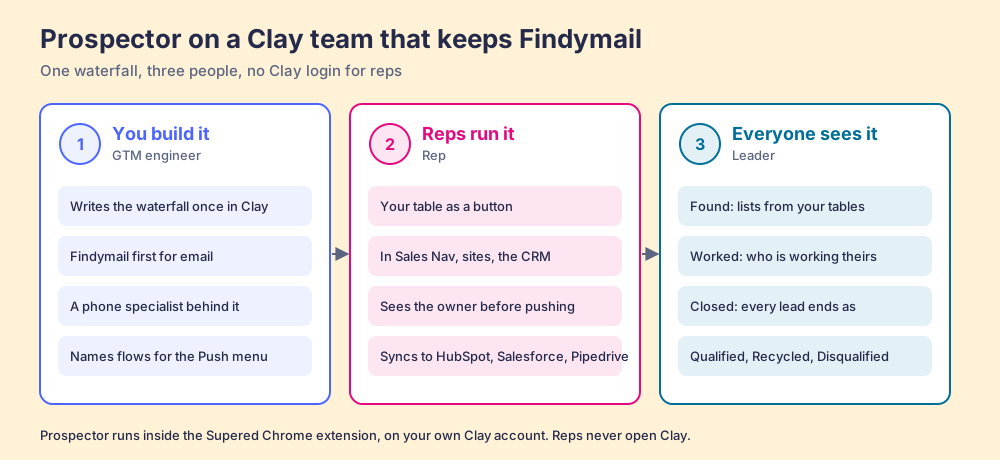
Prospector does not bring its own database. It brings Clay’s waterfall, which is every database, routed, and that is why we chose Clay as our only data provider and why Clay is not a row in the tables above. Clay plus Supered is the best way for a sales team to prospect: GTM engineers build in Clay, and reps never open Clay. Prospector runs inside the Supered Chrome extension, on the team’s own Clay account.
What changes for each person:
- The GTM engineer. You built the tables; Prospector stops you being the list desk. You build named flows once, each tied to a Clay table or function and a destination, and your logic stays yours: waterfalls, tiers, tags, and sequence variables. Start from the Supered Clay template or bring your own tables. Findymail stays step one for email if your data says it should.
- The rep. Your team’s table arrives as a button in Sales Navigator, on a company site, and in the CRM. Reps add Navigator leads to a prospect list and push the list to a Clay table, or pick a flow from the Push menu on the record they are on. Before pushing, they see who owns the record and whether it was prospected before, so there is no duplicate work.
- The plays. Research an account and pull the buying committee you defined; load a new-logo campaign from any lead; find the rest of the team at a customer for expansion; push a past champion who changed jobs, and their new team, into a sequence; add the economic buyer and two peers to a stalled deal before the forecast call.
- The leader. Found, Worked, Closed. You see which lists reps found, who is working theirs and who isn’t, and how every lead ended the way your process says: Qualified, Recycled, or Disqualified. Your VP sees it too, and that is how the Clay budget grows.
The fair test for any tool that touches a LinkedIn page, ours included, is three questions: what does it read from the page, where does the contact data come from, and is anything copied in bulk. LinkedIn’s User Agreement has members agree not to use “crawlers, browser plugins and add-ons or any other technology” to “scrape or copy the Services” (LinkedIn User Agreement, section 8.2). Our answer for Prospector: it works within LinkedIn’s terms and does not copy search results in bulk, and the contact data comes from Clay’s waterfall on your own Clay account. Put the same three questions to Findymail and every row in the table. The Sales Navigator alternatives page applies the test across the field.
The arithmetic for a team of ten. Findymail Starter is $1,188 a year on monthly billing for a shared pool of 5,000 credits a month, plus whatever phone source fills the gap. Clay Growth is $5,940 a year with 72,000 data credits, and Prospector is $45 per rep per month billed annually, from one rep (Prospector), so ten reps on Clay Growth plus Prospector is $11,340 a year. Prospector is the dearer line. It buys the order in your hands, Findymail’s email strength and a phone specialist’s coverage on one list, and a leader who can follow that list from the LinkedIn tab to closed. Skip the extra seats, and get more out of the Clay you already pay for.
Choose something else if you do not have Clay. Prospector runs on the customer’s Clay account and does nothing without one. If your team sends email and rarely dials, Findymail on its own is a good buy and the bounce refund protects your domains. The rep’s side of Clay is on the Clay Chrome extension page, and the sourcing use case shows the loop from profile to closed.
How do the other Findymail competitors compare?
Each was priced and checked on October 1 or 2, 2026; coverage figures are Clay’s North American data tests where the vendor was tested.
- BetterContact. The phone answer without Clay. Starter $15 a month for 200 credits, Pro $49 for 1,000, a mobile at 10 credits and an email at 1, across “20+ premium data sources,” charging only for valid data (bettercontact.rocks/pricing). 97.15% North American mobile coverage, 81.66% on work email. G2: 4.8 from 43 reviews.
- Prospeo. The closest like-for-like single finder with better phones. $37 a user a month billed yearly for 2,000 credits a month, CRM sync from the $74 Growth plan, a mobile at 10 credits, and credits that do not roll over (prospeo.io/pricing). 74.96% North American mobile coverage. G2: 4.6 from 849. Prospeo pricing has the full breakdown.
- Hunter. The cheaper email-only option: Starter $34 a month billed yearly for 2,000 credits, unlimited users, no phone product (hunter.io/pricing). In Clay’s North American email test it scored the highest quality, 97.15%, at 52.87% coverage, which makes it a good second step behind Findymail. G2: 4.4 from 657.
- Snov.io. A finder with sequences attached: Starter $39 a month with unlimited seats and 1,000 credits; phones run on enrichment tokens, “a separate subscription” (snov.io/pricing). G2: 4.5 from 501. Snov.io alternatives goes further.
- FullEnrich. A ready-made waterfall with 18 mobile sources and unlimited users, Pro $55 a month for 1,000 credits, a mobile at 10 credits; 83.17% North American email coverage in Clay’s test. No Chrome extension listed today. G2: 4.8 from roughly 239.
- Apollo. One database with Waterfall Enrichment attached, seats at $49 a month billed annually, a phone at 8 credits, a sequencer and dialer in the plan. G2: 4.7 from 9,778. Apollo alternatives covers the rest.
For the email-only question, the email finder tools guide and Clay email finder go deeper, and the waterfall enrichment explainer shows the order logic step by step.
Which Findymail alternative should you choose?
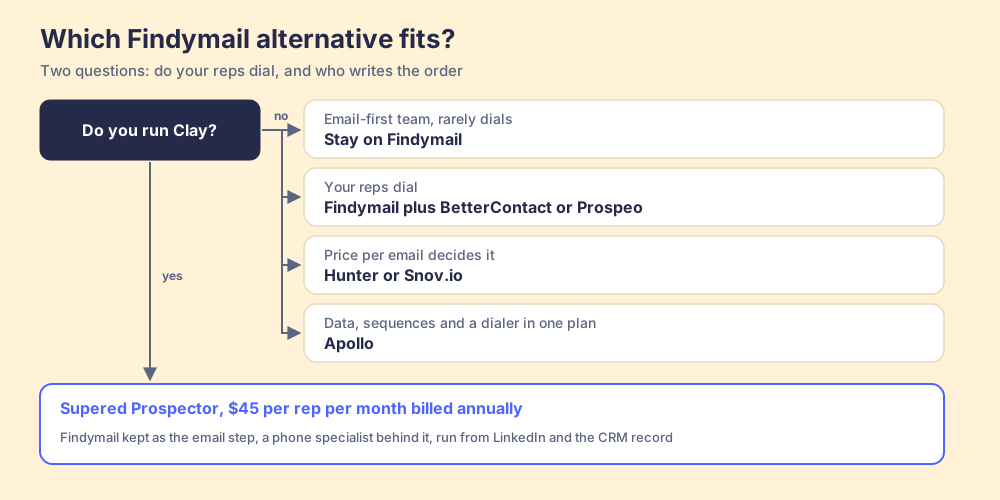
Two questions settle it: do your reps dial, and does anyone on your team write the shopping list. The ways forward:
- Findymail itself. The pick for an email-first team with no Clay. Buy annually and lean on the bounce refund.
- Findymail plus BetterContact or Prospeo. The pick for a team that dials, has no Clay, and wants to keep the emails it trusts.
- Hunter or Snov.io. The pick when price per email decides it, or when you want sequences in the same login.
- Apollo. The pick when data, sequencing, and a dialer in one plan matter more than the best email.
- Supered Prospector. The pick when the team already has Clay: Findymail first for email, a phone specialist behind it, the whole list in every rep’s hands on LinkedIn, the company site, and the CRM record, and a leader who sees it found, worked, and closed.
What we recommend: do not leave the bakery for the bread. Findymail’s work emails led Clay’s North American test, and the bounce refund puts its money where that number is. If your gap is phones, buy phones from a shop that stocks them. If you run Clay, stop paying Findymail twice: put it first in your own order, put a phone specialist behind it, and hand that order to every rep where they already work, so the list they build on a LinkedIn profile can be followed to Qualified, Recycled, or Disqualified. Clay workflows shows how a GTM engineer builds the order, Clay templates gives a head start, and a Prospector demo on your own Clay account is where you can watch Findymail run as step one.
Frequently asked questions
What are the best Findymail alternatives in 2026?+
How much does Findymail cost in 2026?+
Is Findymail accurate? A Findymail review in brief+
Does Findymail work inside Clay?+
Does Findymail have a Chrome extension?+
Do I need a Clay account to use Supered Prospector?+
Your process, running itself.