RocketReach vs Apollo in 2026: The On-Ramp Toll and the Off-Ramp Toll
Apollo charges when a rep reveals a contact; RocketReach charges when it leaves for the CRM.
RocketReach vs Apollo priced from both pages on October 2, 2026, the crossover that decides which costs less, RocketReach vs Lusha, and the Clay option.
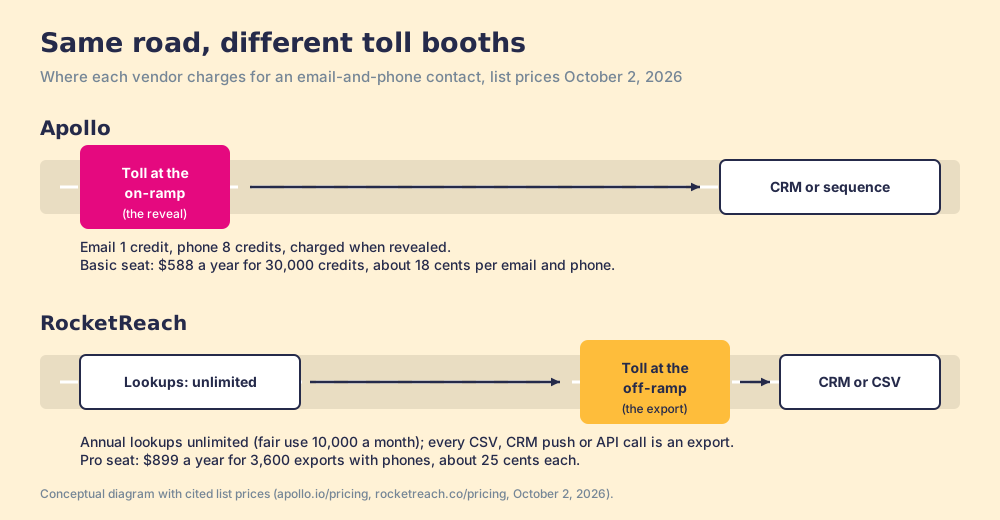
RocketReach vs Apollo is a choice between RocketReach, a contact database that charges when a contact leaves for your CRM, and Apollo.io, which charges when a rep reveals an email or phone; at list, an email-and-phone contact costs about 18 cents on Apollo, 25 on RocketReach.
A highway can charge you in two places. Some roads put the booth at the on-ramp: you pay the moment you enter, whether you drive one exit or forty. Others put it at the off-ramp: drive the whole road for free, and pay only where you leave it. The price board can show the same number on both roads, and two drivers will still pay different bills, because one of them takes a lot of short trips and the other takes a few long ones.
RocketReach vs Apollo is a choice between RocketReach, a contact database that charges when a contact leaves for your CRM, and Apollo.io, which charges when a rep reveals an email or phone; at list, an email-and-phone contact costs about 18 cents on Apollo, 25 on RocketReach. Apollo also bundles sequences and a dialer, prices checked October 2, 2026. The headline gap is smaller than it looks, and on some teams it reverses. The short answer, by who it fits:
- Supered Prospector, for teams that already run Clay. Clay’s waterfall across 200+ providers, your Apollo account as one step if you keep it, run from the rep’s LinkedIn tab and CRM record. $45 per rep per month, billed annually.
- Apollo, for ten to fifty reps who want one seat for data and outreach. Sequences, a dialer and a pooled credit balance from $49 a seat a month on annual billing.
- RocketReach, for reps who browse a lot and keep a few, or one person on a card. Unlimited annual lookups and a posted export count, Pro at $899 a seat a year.
RocketReach vs Apollo at a glance: the decision table
The grades use the same five weights as the Apollo alternatives page and RocketReach vs ZoomInfo, on a lens of ten to fifty reps: coverage of the contact you need (x3), delivery where reps already work (x2), price structure (x2), what happens to the list after the export (x2), and bundled outreach (x1). Prices come from apollo.io/pricing and rocketreach.co/pricing, both opened October 2, 2026.
| Rank | Option | Grade (score of 50) | Best fit | CRM integration | Setup effort | Pricing (plan with the job) | Reason to switch |
|---|---|---|---|---|---|---|---|
| 1 | Supered Prospector | A (44) | Teams that already run Clay | Native HubSpot, Salesforce and Pipedrive; one-click push | Admin connects Clay inside Supered; the GTM engineer builds flows or starts from the Supered Clay template; live in under a week | $45 per rep per month, billed annually, from 1 rep, plus your Clay plan | Clay’s waterfall across 200+ providers as a button where reps sell, and every list visible from found to closed |
| 2 | Apollo | A- (36) | Ten to fifty reps who want data and outreach in one seat | Salesforce, HubSpot, Outreach and Salesloft integrations | Self-serve in minutes | Basic $49, Professional $79, Organization $119 a seat a month on annual billing (3-seat minimum on Organization) | The cheapest phone at list when reps keep what they reveal, plus sequences and a dialer |
| 3 | RocketReach | B+ (29) | Reps who browse many profiles per keeper; one person on a card | Salesforce, HubSpot, Outreach, Salesloft and Bullhorn from Pro | Self-serve in minutes | Pro $899 a seat a year (phones, 3,600 exports); team plans from $6,000 a year | Lookups that cost nothing on annual billing, a posted price, misses refunded |
| Tool | Coverage (x3) | Rep-side (x2) | Price (x2) | After the export (x2) | Outreach (x1) | Weighted total |
|---|---|---|---|---|---|---|
| Supered Prospector | 5 | 5 | 4 | 5 | 1 | 44 |
| Apollo | 3 | 4 | 5 | 2 | 5 | 36 |
| RocketReach | 3 | 4 | 4 | 1 | 2 | 29 |
| Lusha | 3 | 4 | 4 | 1 | 2 | 29 |
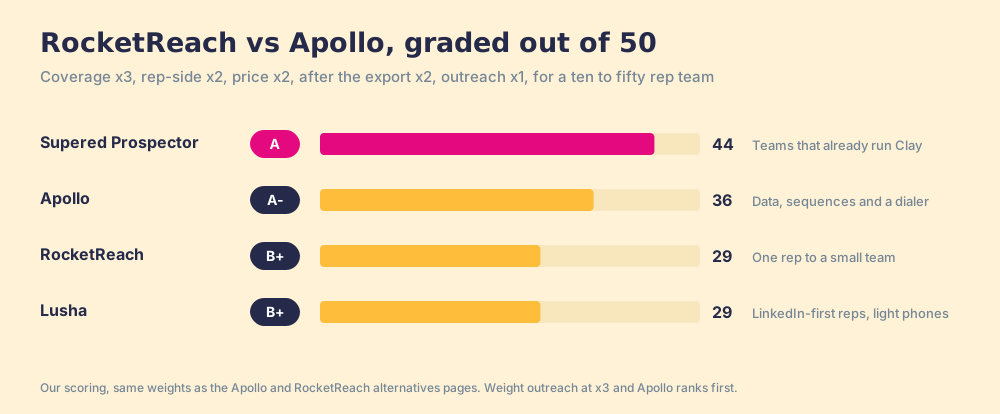
Apollo wins the database half of this page by seven points, and most of the gap is outreach and price. RocketReach scores 29 here, as it does on the ZoomInfo comparison, and 23 on the RocketReach alternatives page, where it faces the whole field without a head-to-head accuracy score to lean on. Prospector scores 1 on outreach because it drafts nothing and sends nothing. Its coverage score is Clay’s waterfall coverage, and the credit for it belongs to Clay.
Why do teams switch between RocketReach and Apollo?
The reasons run in both directions, and most of them are written on the vendors’ own pages.
- The RocketReach export wall. Pro’s 3,600 exports a year come to about fourteen a working day per seat across 250 working days, and the API, bulk lookups, CSV downloads, list uploads and CRM pushes all draw on that one count (RocketReach Unlimited Credits FAQ). A Capterra reviewer put it plainly in April 2025: “my company has a limit with the amount of contacts that we can export so I often reach my limit.”
- RocketReach’s misses. RocketReach’s G2 profile groups 115 reviews under “Inaccurate data” and 110 under “Outdated contacts,” against 273 under accurate contact information (G2, October 2, 2026).
- The Apollo pool that expires. Apollo’s pricing FAQ says credits “are pooled across your entire team and granted upfront,” reset each billing cycle, and “do not roll over if unused.” Add-on credits “are charged immediately” and “renew automatically each billing cycle until removed” (apollo.io/pricing, October 2, 2026). A team that buys a top-up in month nine has bought it for every cycle after unless someone drags the slider back.
- Apollo’s one-plan rule. “All seats on an Apollo account are on the same plan.” The admin who wants Professional for two power users pays Professional for the other twenty.
- Apollo’s phone price. Eight credits a phone is cheap at list, and expensive when reps reveal phones for people they never dial.
Turned into buying questions, those become three. How many contacts does a rep open for each one they keep? Do you want sequences and a dialer in the same seat? And what happens to a contact once it reaches the CRM? The first decides the price. The second decides the platform. The third decides whether you need either.
Why trust this comparison?
I started RevPartners, a HubSpot partner that did only sales implementations, sold roughly twice as much Sales Hub as any other partner, and reached Elite tier in 13 months. Supered grew out of that work and is the #1 sales enablement app on the HubSpot marketplace, with 6,000+ installs and 5.0 out of 5 from 122 reviews there, and 4.9 out of 5 from 81 reviews on G2 (checked October 1, 2026). I have set up Apollo and RocketReach inside a long list of other companies’ CRMs and watched which seats were still in use when the renewal came.
The disclosure: we sell a third option, and it has no database of its own. Prospector runs on Clay, and Clay carries Apollo as a step on your own account. So I have a reason to like both vendors on this page and a reason to sell you something else. The weights are printed so you can change them, and the price section below favors Apollo for the most common case because the arithmetic does.
How much does RocketReach cost compared with Apollo?
Both price boards are posted, and both vendors print each other’s numbers correctly. Apollo’s own comparison page, dated July 13, 2026, lists RocketReach at $399, $899 and $1,699 a year with team plans from $6,000 (Apollo vs RocketReach), which matches rocketreach.co. That is rarer in this category than it should be.
| Plan (annual billing, October 2, 2026) | Price per seat per year | What it meters | Allowance per year | Email-and-phone contacts per seat |
|---|---|---|---|---|
| Apollo Basic | $588 ($49 a month) | Reveals: 1 credit per email, 8 per phone | 30,000 credits | about 3,333 |
| Apollo Professional | $948 ($79 a month) | Reveals | 48,000 credits | about 5,333 |
| Apollo Organization | $1,428 ($119 a month, 3-seat minimum) | Reveals | 72,000 credits | 8,000 |
| RocketReach Essentials | $399 ($33 a month) | Exports, email only | 1,200 exports | 1,200 (no phones) |
| RocketReach Pro | $899 ($75 a month) | Exports | 3,600 exports | 3,600 |
| RocketReach Ultimate | $1,699 ($142 a month) | Exports | 20,000 exports | 20,000 |
Apollo’s numbers come from its pricing page: Basic is “30,000 credits per seat per year, granted upfront,” and the credit table charges “Email 1 credit” and “Phone number 8 credits.” Our October 1 capture of Apollo’s credit calculator, for Apollo vs Lusha, read “Credits are only used when a phone number is found”; the calculator did not render that line when we re-opened it today. RocketReach’s come from rocketreach.co/pricing: annual plans give unlimited lookups under a fair-use limit of 10,000 a month, the export count is the meter, and “A lookup is used if we find and verify email or phone, otherwise it is refunded.”
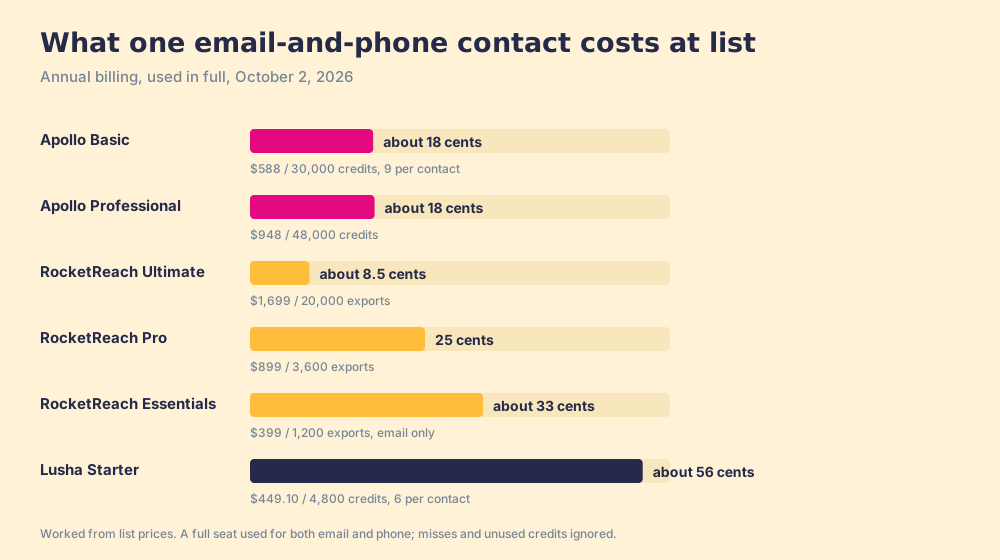
Work each seat down to one email-and-phone contact. Apollo Basic: $588 for 30,000 credits is about 1.96 cents a credit, and nine credits make about 17.6 cents, or about 18. Professional comes out the same. RocketReach Pro: $899 for 3,600 exports is 25 cents. Ultimate: $1,699 for 20,000 is about 8.5 cents, the cheapest unit on the page, if one rep can use 80 exports a working day. Essentials: about 33 cents an export, for emails only.
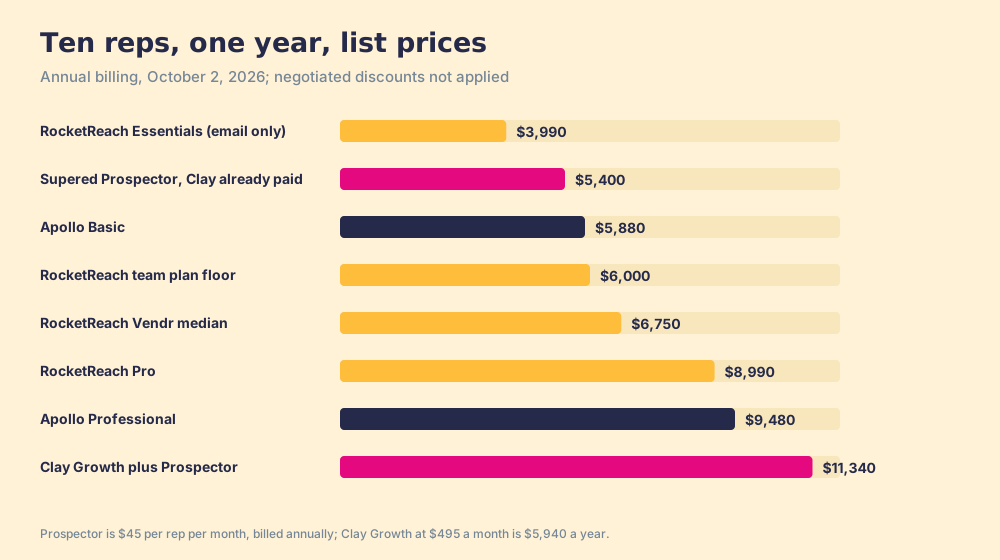
For ten reps at list, the totals sit close. Ten Apollo Basic seats cost $5,880 a year and ten Professional seats $9,480. Ten RocketReach Pro seats cost $8,990, and RocketReach’s team plans “start at $6K annually,” with a Vendr median of $6,750 a year (Vendr, RocketReach). Apollo’s Vendr median is $19,000 across 101 purchases (Vendr, Apollo, last updated February 2026), because Apollo buyers tend to buy more seats and more credits once the sequencer is in use. Ten RocketReach Essentials seats, for a team that only emails, cost $3,990. Fuller ladders are on RocketReach pricing and Apollo pricing.
Where does each toll booth sit, and when does it flip?
Go back to the highway. Apollo’s booth is at the on-ramp. RocketReach’s is at the off-ramp. The unit prices above assume every car that enters the road also leaves it at the CRM exit, and sales teams do not drive that way.
A rep building a list opens profiles, checks titles, looks for the right person at an account, and keeps some fraction of what they open. On Apollo, each phone and email revealed along the way is a toll paid at entry. On RocketReach’s annual plans, the browsing is free and the toll arrives only for the contacts that leave. So the number that decides which road is cheaper sits inside your own team: how many contacts does a rep reveal for each one that makes it into the CRM?
Walk it forward. At one reveal per keeper, Apollo Basic costs about 17.6 cents a kept contact and RocketReach Pro 25, so Apollo is cheaper. At two reveals per keeper, Apollo costs about 35.2 cents and RocketReach still 25. At three, Apollo costs about 52.8. The two lines cross near 1.4 reveals per kept contact, because 25 divided by 17.6 is about 1.4.
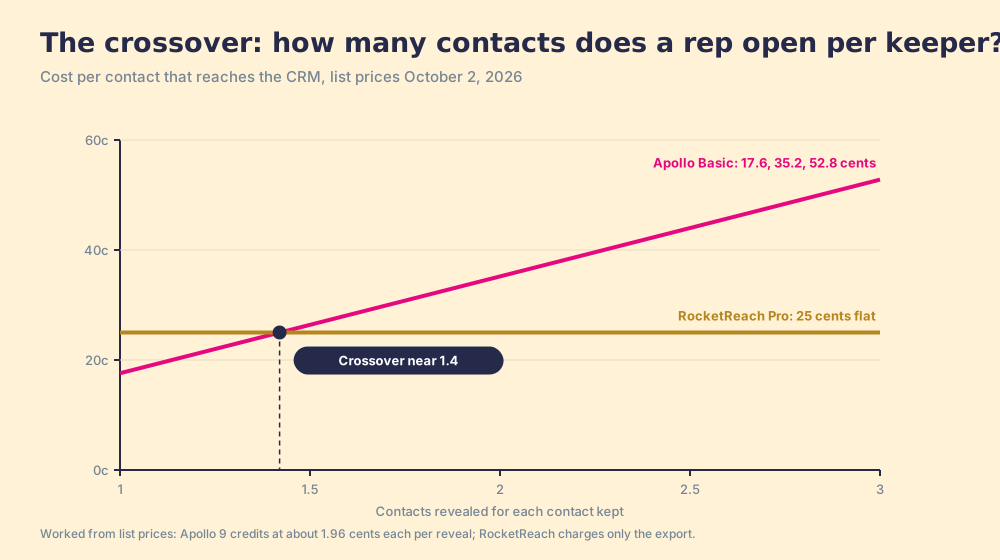
Three details move the crossover. Apollo charges a phone credit only when it finds a phone, and an Apollo rep can often decide from the profile, before revealing, that a person is the wrong fit, so a disciplined team keeps the ratio near one. RocketReach’s lookups are unlimited only on annual billing; its monthly plans cap lookups at the same count as exports, which puts the booth back at the on-ramp. And a capacity question sits under the unit price: an Apollo Basic seat holds about 3,333 email-and-phone reveals a year, so a rep revealing two for every keeper runs out at about 1,667 kept contacts, while a RocketReach Pro seat holds 3,600 kept contacts and treats the browsing as free. Measure the ratio on your own team for two weeks before you sign either contract. Apollo’s admin page shows credit use by user, and RocketReach’s account page shows lookups against exports.
Whose data is better, RocketReach or Apollo?
Each is good at something real, so start with the praise.
- Apollo, the bundle. Data, sequences, a dialer and Gmail and Salesforce extensions under one login, with a free tier and posted seats. The pricing page claims 240 million contacts and 30 million companies and “over 600,000 companies using Apollo.” If your job is a ten-to-fifty-rep outbound team that wants the data and the outreach in one tool, Apollo is the better of these two.
- RocketReach, the open road. A posted price, five free lookups with no card, refunded misses, and its pricing page claims “700 million professionals and 60 million companies.” RocketReach’s own knowledge base says a typical user sees an 85% or better fill rate for email addresses and 60% or better for direct phone numbers (RocketReach’s claim). If you run one to ten reps who research widely before they keep anyone, RocketReach is the better of these two.
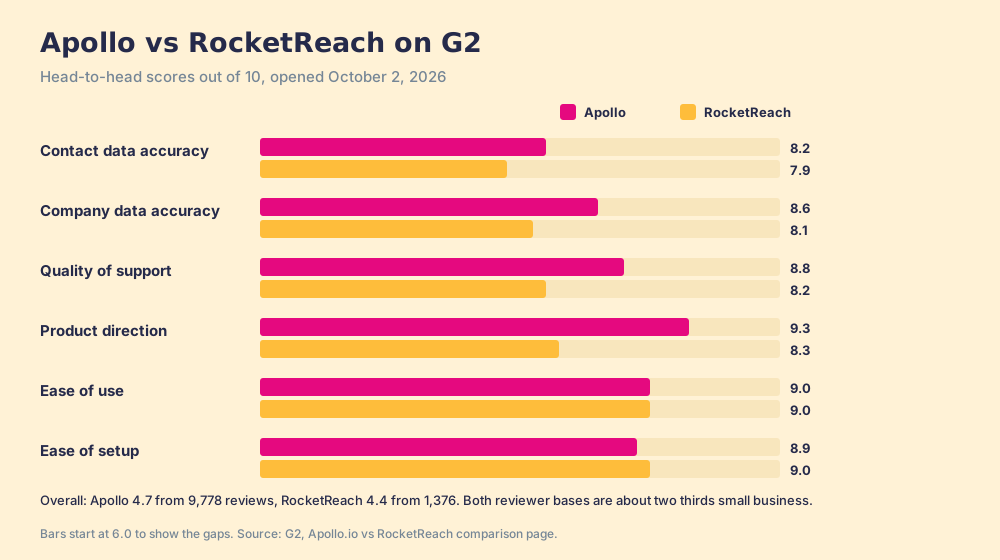
On the data, G2’s reviewers give Apollo the edge. The head-to-head page, opened October 2, 2026, scores contact data accuracy 8.2 for Apollo and 7.9 for RocketReach, and company data accuracy 8.6 against 8.1 (G2, Apollo.io vs RocketReach). Apollo also leads on quality of support (8.8 against 8.2) and product direction (9.3 against 8.3). The two tie on ease of use at 9.0, and RocketReach edges ease of setup, 9.0 against 8.9. Unlike the RocketReach vs ZoomInfo pairing, the audiences match: 67.0% of Apollo’s reviewers and 69.0% of RocketReach’s are small businesses, so the accuracy gap is between two groups chasing similar contacts.
- The Chrome extension. Apollo’s listing shows 1,000,000 users and 4.7 out of 5 from about 2,200 ratings (checked October 1, 2026). RocketReach’s shows 300,000 users and 4.2 from 459 ratings (Chrome Web Store, October 2, 2026). More on how each behaves on a profile is on the Apollo Chrome extension page.
- The accuracy claims. Apollo’s comparison page claims “98%” email accuracy for Apollo and “90-98% email deliverability” for RocketReach. Neither publishes an independent audit. The fair test is a few hundred contacts from deals you won last year, sent to both trials in the same week, with bounces and phone connects scored apart.
RocketReach vs Lusha: which meter fits a phone-first rep?
Lusha is the third name buyers type into this search, and it sits on the on-ramp side of the road with Apollo. Its pricing page charges “Reveal verified email address, 1 credit” and “Reveal a phone number, 5 credits,” with a free plan of up to 40 credits a month (lusha.com/pricing, credit rules re-checked October 2, 2026). The dollar ladder, captured October 1 for Apollo vs Lusha, is Starter at $449.10 a year for 4,800 credits and 1 seat, Pro at $629.10 for 7,200 credits and 2 seats, and Premium at $3,599.10 for 40,800 credits and 5 seats.
So a Lusha Starter seat covers about 800 email-and-phone contacts a year at six credits each, about 56 cents a contact. RocketReach Pro’s 3,600 exports with phones cost 25 cents each, and Pro lets the rep browse for free. On list price alone, a phone-first rep pays less than half as much per kept contact on RocketReach Pro. Lusha’s case is the start: a free plan, a posted ladder you can buy on a card, monthly credits that roll over up to twice the allowance, and a Data Waterfall that falls back to third-party providers when Lusha’s own data misses, on every paid plan since September 23, 2026 (Lusha changelog). On G2, Lusha held 4.3 out of 5 from 1,665 reviews on October 1, 2026. Choose Lusha for one to five LinkedIn-first reps whose phone needs are light. Choose RocketReach Pro when phones are the job. Lusha pricing has the full ladder.
What changed at RocketReach and Apollo in 2026?
Both vendors spent the year adding the other one’s half.
- Apollo. On February 3, 2026 Apollo appointed Matt Curl, previously COO, as chief executive, with founder Tim Zheng as chairman, and said it was “approaching $200M in annual recurring revenue and nearly 100,000 paying customers” (PR Newswire). On March 20 it acquired Pocus, a revenue intelligence startup, saying the deal helps it “continue to expand upmarket” (TNW). Its pricing page now describes one pooled, expiring credit balance per team and Waterfall Enrichment on every paid plan.
- RocketReach. On February 17, 2026 RocketReach launched AI email Sequences and expanded its intent data with 5x5 Data, counting “35,000+ intent topics” (PR Newswire). “MCP & API access” now sits on all three plan cards. Brighton Park Capital has held a majority stake since August 2020, and a news search on October 2, 2026 found no 2026 acquisition, funding round or rebrand.
Both companies are independent as of October 2, 2026. Apollo, the platform, added a fallback to partner providers. RocketReach, the database, added sequences. The two roads are each building a lane the other already had, which is a fair sign that buyers kept asking for both halves.
Is there a better option than RocketReach or Apollo for a team on Clay?
For a team that already runs Clay, yes, and it is why Prospector ranks first in the table. Prospector does not bring its own database. It brings Clay’s waterfall, which is every database, routed. We chose Clay as our only data provider for that reason.
Back on the highway, Clay is the road network. “Buy data from 200+ providers in one place,” in Clay’s words, with a waterfall that tries one provider after another until one returns a verified email or phone. If none has it, the trip costs nothing: “If an enrichment returns no result, you’re not charged Data Credits or Actions” (clay.com/pricing, October 2, 2026). Apollo is one of the roads: Clay lists Apollo.io as a Clay-built integration with every enrichment action marked “Bring Your Own Account Required” (Clay, Apollo.io), and Clay’s pricing page says bringing your own API keys skips Data Credits. Clay’s directory also lists RocketReach, joined July 26, 2024, with no named actions on the page when checked (Clay, RocketReach).
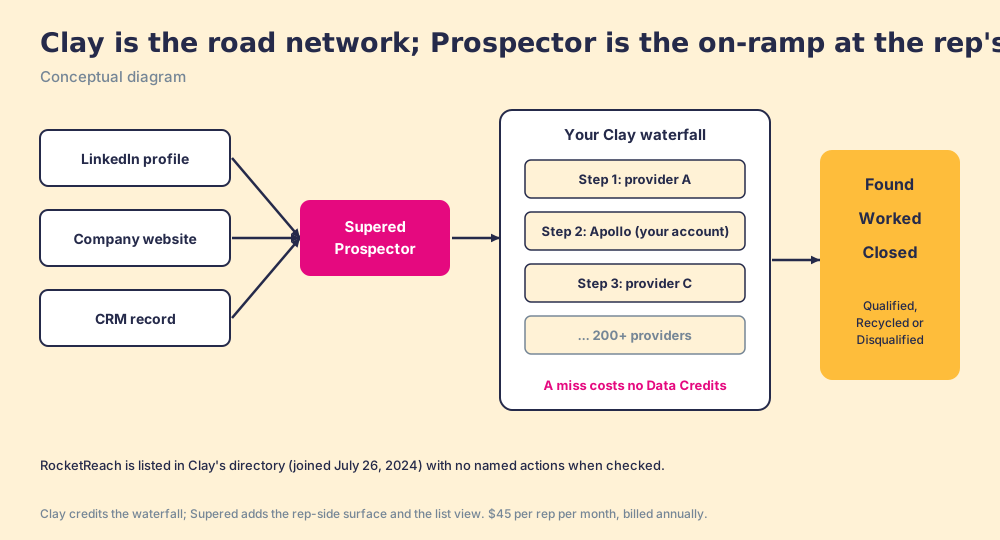
The network has one problem, and Clay names it on its own homepage: “GTM engineers build on Clay.” The tables live in the GTM engineer’s workshop and the reps live in LinkedIn and the CRM, so the engineer becomes the list desk. Clay plus Supered is the best way for a sales team to prospect: GTM engineers build in Clay, reps never open Clay. Prospector runs inside the Supered Chrome extension, on your own Clay account.
- Flows built once. The GTM engineer maps each flow to a Clay table or function and a destination, a sequence in your sales engagement tool or the CRM on the account. Reps pick the flow from a Push menu, and your waterfalls, tiers, tags and sequence variables stay yours. Start from the Supered Clay template or bring your own tables.
- A button where the rep sells. On a LinkedIn profile, a company website or a HubSpot, Salesforce or Pipedrive record, the rep runs the table in one click. In Sales Navigator, reps add leads to a prospect list and push the list to a Clay table. Prospector works within LinkedIn’s terms and does not copy search results in bulk; the contact data comes from Clay’s waterfall on the customer’s Clay account. Ask any vendor what it reads from a LinkedIn page, ours included.
- An owner check before the push. The rep sees the matching CRM record, who owns it, and whether the prospect was worked before, so two reps do not chase one buyer.
- Found, worked, closed. The leader sees who is working their list and who is not, and every lead ends the way your process says: Qualified, Recycled or Disqualified.
The price, laid out plainly. Prospector is $45 per rep per month, billed annually, from one rep, on your own Clay account and credits (Prospector). If RevOps already pays for Clay, ten reps add $5,400 a year, $480 less than ten Apollo Basic seats and $3,590 less than ten RocketReach Pro seats. If you are buying Clay for this, Clay Growth at its $495 monthly rate is $5,940 a year, so Clay plus Prospector is $11,340 for ten reps and $16,740 for twenty. From a cold start, Apollo Basic at $5,880 for ten seats is cheaper, and it includes a sequencer. The case for the network is coverage across 200+ providers, a miss that costs nothing, the rep’s own surface, and a leader who can see what each list became, and it is strongest for the team that already holds the Clay contract. The sourcing use case shows the rep’s side of it.
Choose something else if any of these is true:
- No Clay, and no plan to buy it. Prospector runs only on Clay. Pick Apollo or RocketReach from the branches below. If you want Clay built for you, RevPartners, a Clay Elite Studio Partner, builds and tunes the tables (disclosure: I founded RevPartners).
- Outreach in the same seat. Prospector has no sequencer and no dialer. Apollo bundles both.
- A solo rep on a card. RocketReach Essentials at $399 a year is a simpler purchase than a Clay plan plus a seat.
- A field or mobile-first team. Supered runs at the computer and has no mobile product.
Apollo vs RocketReach: which should you choose?
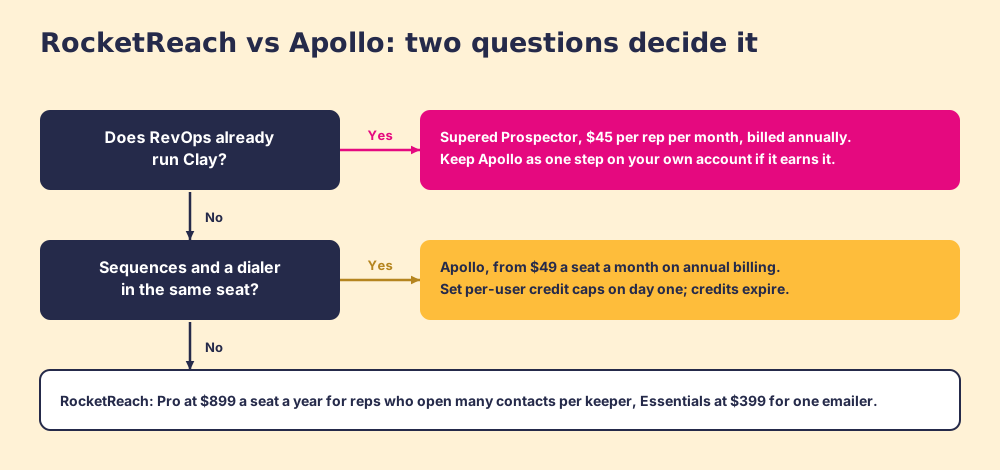
The branch comes before the score. If your problem is a team of ten to fifty that wants data, sequences and a dialer in one seat, and reps keep most of what they reveal, Apollo is the best pick. If your problem is reps who research widely and keep a few, or one person who wants a posted price, RocketReach is the best pick. If your reps already have Clay, the best pick is the waterfall in their hands, and the apollo vs rocketreach question shrinks to whether Apollo earns a step in it.
- Apollo, the on-ramp toll. Choose it for an outbound team that wants the whole workflow in one tool: about 18 cents per email-and-phone reveal at list, 8.2 on G2 for contact data accuracy, $5,880 for ten Basic seats. Set per-user credit caps on day one, remember that unused credits expire each cycle, and watch the add-on slider at renewal.
- RocketReach, the off-ramp toll. Choose it for reps who open about 1.4 or more contacts for each one they keep, or one emailer on a card: Pro at $899 a seat for 3,600 exports with phones, Essentials at $399 for emails, annual billing so lookups stay unlimited. Price the team plan from $6,000 a year once you pass six or seven Pro seats.
- Prospector on Clay, the network. Choose it if RevOps already runs Clay. Coverage becomes Clay’s waterfall across 200+ providers, your Apollo account can be one step, reps work from LinkedIn, the company site and the CRM record with no Clay login, and you see each list found, worked and closed, at $5,400 a year for ten reps on the Clay you already pay for.
If you do not have Clay, find out where your reps’ money goes before you pick a road: two weeks of reveals against keepers will tell you which booth costs less, and both admin screens already show the count. If you do have Clay, both roads already run through your network, and the purchase left is an on-ramp your reps will use. The same test runs on other pairs in this set: RocketReach vs ZoomInfo weighs the open road against the archive, Apollo vs Lusha prices two on-ramp tolls against each other, and a Prospector demo shows the network running on your own Clay account.
Frequently asked questions
Is RocketReach better than Apollo?+
Which is cheaper, RocketReach or Apollo?+
Which has more accurate data, RocketReach or Apollo?+
RocketReach vs Lusha: which is better for phone numbers?+
Can I use Apollo or RocketReach inside Clay?+
Do I need RocketReach or Apollo if my team already has Clay?+
Everything we have written on RocketReach
More on RocketReach
Supered Prospector vs RocketReach: the side-by-side- RocketReach Alternatives in 2026: The Cap Is on the Door, Not the Shelves
- RocketReach Pricing in 2026: Unlimited Talk and Text, a Metered Hotspot
- Is RocketReach Legit? A 2026 Review From the Three Chairs Around It
- The RocketReach Chrome Extension in 2026: An All-You-Can-Eat Buffet That Charges for the Takeout Box
- RocketReach vs ZoomInfo in 2026: The Lending Library, the Archive, and Interlibrary Loan
Everything we have written on Apollo
More on Apollo
Supered Prospector vs Apollo: the side-by-side- Apollo Alternatives in 2026: Read the Credit Meter Before the Price Tag
- Apollo Pricing in 2026: The Seat Is the Room Rate, the Credit Is the Minibar
- Apollo Reviews 2026: A Starter Home, Rated by the People Who Just Moved In
- Apollo Chrome Extension in 2026: The Nozzle Is Free, the Pump Is Metered
- Apollo HubSpot Integration (2026): What Syncs, the Six-Hour Window, and the Duplicates It Mirrors
- Apollo Salesforce Integration: The Mail Room, the Clerk, and the Six-Hour Clock
Your Clay waterfall, where reps already work.