Cognism vs Apollo in 2026: The Well, the Tap, and the Pipes
Cognism vs Apollo is usually told as Europe against America. That is half the story. The other half is the meter: one vendor charges once per contact, the other refills a team tank and drains what you did not use. Priced from sources opened October 1, 2026.
Cognism vs Apollo is a choice between Cognism, a quote-only contact database built around phone-verified European mobiles, and Apollo.io, a self-serve prospecting platform with seats from $49 a month, a dialer and sequences, metered by credits pooled across the team.
Cognism vs Apollo is a choice between Cognism, a quote-only contact database built around phone-verified European mobiles, and Apollo.io, a self-serve prospecting platform with seats from $49 a month, a dialer and sequences, metered by credits pooled across the team. The short answer, from sources opened October 1, 2026:
- Supered Prospector, for teams that already have Clay. Clay’s 200+ providers one click from LinkedIn, a company site, or the CRM record, at $45 per rep per month.
- Apollo, for US-heavy teams. Data, sequences, and a dialer in one tool, with a published price and a $19,000 Vendr median.
- Cognism, for phone-first teams selling into Europe. Phone-verified mobiles and DNC screening, on a quote with a $32,750 Vendr median.
Anyone who has bought a house past the edge of town has had the water conversation. You can lease a well: a man comes to dig, you pay for the digging, and after that the water you draw is yours, deep and clean, though it is only ever the water under your own land. Or you can join the town main: cheap to connect, a meter on the kitchen wall, and a bill that arrives whether you ran the tap or not. Cognism is the well. Apollo is the metered tap. The pages that rank for cognism vs apollo, both vendors’ own among them, argue about whose water tastes better, Europe against America, and that argument is half right. The other half is how the meter runs, because the meter decides what your team pays long after the demo is forgotten. And there is a third arrangement the two vendors do not sell, which is pipes to every well in the county.
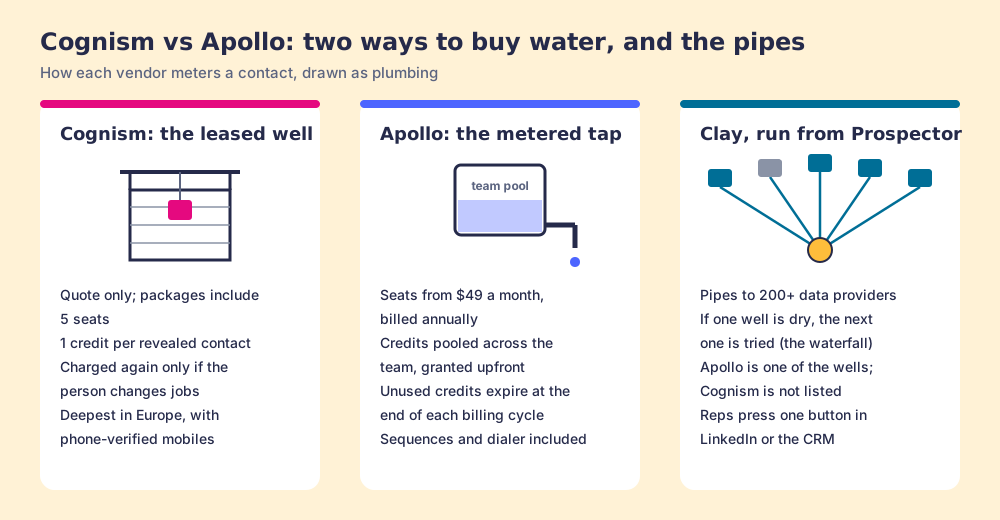
Cognism vs Apollo at a glance: the decision table
Five columns a buyer asks about, and a grade per tool. Prices are from pages opened October 1, 2026 unless marked.
| Rank | Tool | Grade | Best fit | CRM integration | Setup effort | Pricing | Reason to switch |
|---|---|---|---|---|---|---|---|
| 1 | Supered Prospector | A | Teams that already have Clay | Native: one-click sync to HubSpot, Salesforce or Pipedrive, field mapping set once | Under a week; no Clay login for reps | $45 per rep per month, billed annually, from 1 user, plus your Clay plan | All of Clay’s marketplace from the rep’s screen, and a view of which lists get worked and close |
| 2 | Apollo | A- | US-heavy teams wanting data plus outreach in one tool | Native CRM integrations; the advanced ones on Professional | Self-serve, same day | From $49 per user per month, annual; Vendr median $19,000 a year | Published price, free plan, sequences and dialer included |
| 3 | Cognism | B | EMEA, phone-first, compliance-led outbound | Native two-way HubSpot sync (launched 2026); CRM Enrichment add-on | Sales-led quote and contract | Quote only, packages with 5 seats; Vendr median $32,750 a year | Phone-verified European mobiles, DNC screening, ISO and SOC 2 certificates |
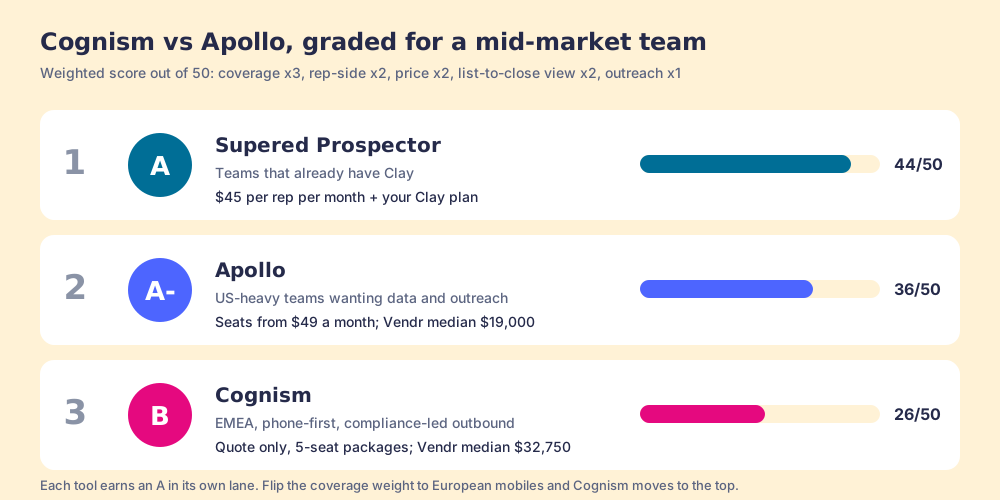
How we graded Cognism and Apollo
The weights are the same ones our Cognism alternatives page uses, so the grades line up across the cluster. They serve one job: a mid-market team, mostly selling in North America, that wants its reps to find the right contact and work it.
| Criterion | Weight | Supered Prospector | Apollo | Cognism |
|---|---|---|---|---|
| Coverage of the contact you need | x3 | 5 | 3 | 4 |
| Rep-side delivery (the profile, the site, the CRM record) | x2 | 5 | 4 | 3 |
| Price structure for mid-market | x2 | 4 | 5 | 2 |
| Seeing which lists get worked and close | x2 | 5 | 2 | 1 |
| Outreach in the box | x1 | 1 | 5 | 2 |
| Weighted total (out of 50) | 44 | 36 | 26 |
Prospector scores 1 on outreach because it has none: it hands the contact to your CRM and your sequencer. Apollo scores 5 there for the opposite reason. If your team sells into Germany, France and the UK by phone, change the first row to European mobile coverage, give Cognism the 5, and the order changes. The weights are printed so you can swap in your own.
Why do teams switch between Cognism and Apollo?
The reasons buyers give are rarely about the data in the abstract. They are about the contract and the meter, and the buyers say so in their own words.
- The unreadable order form. A Cognism buyer on Vendr wrote that “order forms are confusing as they don’t list unit pricing, list pricing, or line-item discounts,” and another warned, “They will not compromise if you miss the notice date by a 1-3 days!” (Vendr, Cognism, buyer notes captured September 25, 2026).
- The platform fee. Vendr’s Cognism buyers report the platform fee removed by building growth into the term, and waived “entirely” by buying 40 Diamond users. When the fee can disappear in a negotiation, it was a large part of the price.
- Apollo as the lever. One Cognism buyer took 26% off a renewal by bringing Apollo as competition, noting that “Cognism often pushes back on competition especially for EMEA.” Vendr’s Apollo page says the same from the other side: buyers often use Apollo’s lower pricing to get better Cognism terms (Vendr, Apollo, opened October 1, 2026).
- The tank that drains. Apollo’s pricing FAQ says unused credits “expire at the end of each billing cycle and do not carry over,” and that all seats on an account sit on the same plan, so one heavy caller can push the whole team up a tier (apollo.io/pricing, opened October 1, 2026).
- The phone number that is not there. Vendr’s Apollo page lists mobile overages of $0.50 to $1.00 per credit under capped plans, which is the bill a phone-first team meets when the bundled data runs thin.
Why trust this comparison?
Supered started inside RevPartners, the HubSpot partner I founded, which sold roughly twice as much Sales Hub as any other partner and reached Elite tier in 13 months. Supered is the #1 sales enablement app on the HubSpot marketplace, with 6,000+ installs, and holds a 4.9 out of 5 on G2 from 81 reviews (G2, October 1, 2026). We also sell a product in this category, Prospector, so read the grades with that in mind: we rank it first only for the team that already has Clay, and we say below exactly when Cognism or Apollo is the better buy.
What is the difference between Cognism and Apollo?
Be fair to both first, with proof, because the verdict is worth nothing if the praise is thin.
- Cognism, the deep European well. Cognism describes its data as “the most complete coverage across European markets,” with “phone-verified mobile numbers” sold as Diamond Data (Cognism vs Apollo.io, opened October 1, 2026). Its compliance page describes a notified database, lawful basis under GDPR Article 6.1(f), screening against Do Not Call and TPS registers in the UK, the US, Australia, New Zealand, Germany, France, Ireland, Spain, Portugal, Croatia, Sweden and Belgium, and ISO 27001, ISO 27701 and SOC 2 Type II certificates (cognism.com/compliance, September 25, 2026). On G2’s Europe Sales Intelligence grid for Autumn 2026, Cognism scored 88, the highest listed, with satisfaction of 100 from 759 European reviews. If your job is calling European buyers on their mobiles with a database built for GDPR, Cognism is the best pick on this page.
- Apollo, the open tap. Apollo publishes “$49/user/month (annual billing)” and claims “240M+ people and 30M+ companies” (Apollo vs Cognism, opened October 1, 2026). Its pricing page shows a free plan, a G2 badge of 4.7 from 9,690 reviews, and “GDPR Compliant.” Sequences, a dialer, and CRM integrations ship in the paid plans, so a twelve-person team gets data and outreach under one login without a procurement cycle. G2’s live compare page puts Apollo at 4.7 from 9,778 reviews against Cognism’s 4.5 from 1,355 (G2 compare, October 1, 2026). If your job is a published price and outbound bundled with the data, Apollo is the best pick.
Both companies are independent as of this week. Cognism is private and based in London, led by CEO Dominic Allon, refreshed its brand in April 2026 under the line “Fluent in Data,” owns Kaspr, and its newsroom shows no 2026 acquisition or funding round. Apollo appointed Matt Curl as CEO on February 3, 2026, bought Pocus in March, was named a flagship data partner for Salesforce’s Hunter outbound agent on September 15, and on September 30 launched what it calls an “AI GTM System,” saying it now serves more than 5 million users at more than 600,000 companies (PR Newswire, September 30, 2026). Apollo’s pricing page has been redrawn around four plans, Free, Basic, Professional and Custom, so if you priced it in September, price it again. For the full sibling matchup, see Cognism vs ZoomInfo.
Cognism vs Apollo pricing: what does each cost in 2026?
Start with the number the comparison tables quote, and then the number buyers sign.
Vendr’s Apollo page carries a side-by-side apollo vs cognism table. It prices Apollo at $49, $79 and $119 per user per month across its three paid tiers on annual billing, and Cognism at $800 to $1,200, $1,200 to $1,800, and $1,500 to $2,500-plus per user per year. For ten mid-tier users it estimates about $9,500 to $12,000 on Apollo and $12,000 to $18,000 on Cognism, and it says Cognism typically runs 20% to 50% more expensive than Apollo per user (Vendr, last updated February 2026, opened October 1, 2026). On that table the gap looks like a few thousand dollars.
Then look at what buyers paid. Vendr’s median Cognism purchase is $32,750 a year across 94 purchases, with a range of $16,585 to $88,449 and 26% average savings. Its median Apollo purchase is $19,000 across 101 purchases, ranging from $4,284 to $45,000 with 30% average savings. The medians sit $13,750 apart. They cover every team size, so neither is your quote, but both sources point the same way, and the medians show more of the gap than the per-seat table does.
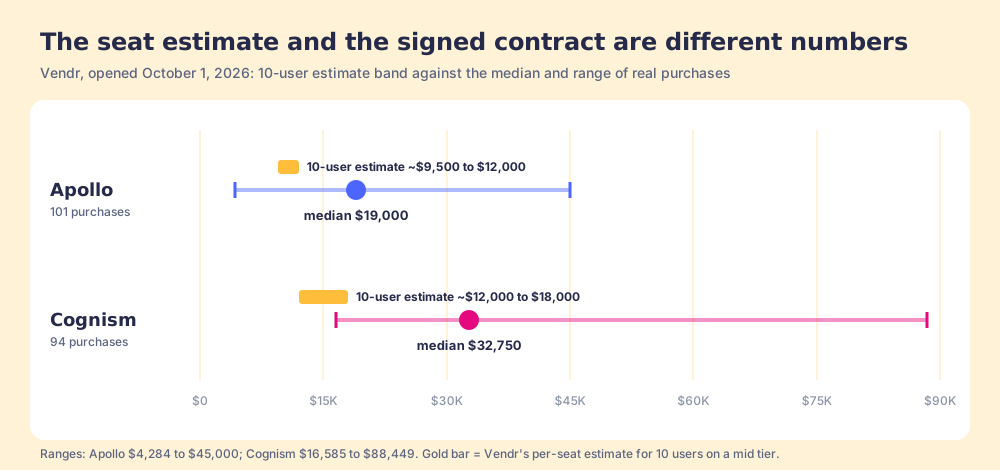
The gap comes from the shape of the sale. Apollo sells a seat; you can buy one. Cognism sells a package: its pricing page lists Standard and Pro, each with “5 seats included,” no dollar figures, and a button that says talk to sales (cognism.com/pricing, opened October 1, 2026). A package with a fee on top behaves like a well: you pay for the digging before you draw a bucket. So the platform fee is the line Cognism buyers fight hardest, and a fixed fee weighs far more on five reps than on fifty. For the full breakdowns, read our Cognism pricing guide and our Apollo pricing guide.
Two negotiating facts to carry into either call:
- Competition as a discount. Vendr’s Cognism buyers report 20% to 44% off by naming Apollo, ZoomInfo or Lusha, and Vendr’s Apollo page says Apollo’s sales team will often match competitive pricing for mid-market deals.
- Dates as a weapon. Cognism’s notice window is enforced to the day, by one buyer’s account. Put the renewal notice date in your calendar the day you sign, whichever vendor you choose.
How do the Cognism and Apollo credit meters differ?
Here the well and the tap stop being a figure of speech.
Cognism prices the reveal: “1 credit = 1 revealed contact,” with “no charge for viewing previously revealed contacts,” and the same credits work across the prospecting platform, Enrich and the API (cognism.com/pricing, October 1, 2026). Its FAQ adds that a credit is used again only if that contact changes jobs. In September its comparison page put the Standard seat at 10,000 credits a year and Pro at 12,000. So the bucket you draw is yours. A rep who reveals a head of operations in Munich in January can dial her in March, email her in June and open her record in October without touching the meter, until she moves companies.
Apollo’s rule runs the other way. “Credits are pooled across your entire team and granted upfront at the start of each billing cycle,” and unused credits “expire at the end of each billing cycle and do not carry over,” including add-on credits you bought (apollo.io/pricing, October 1, 2026). Admins can set per-user caps so one rep cannot drain the pool. The tank fills, the team draws from it, and what is left goes down the drain at month end or year end, depending on the billing.
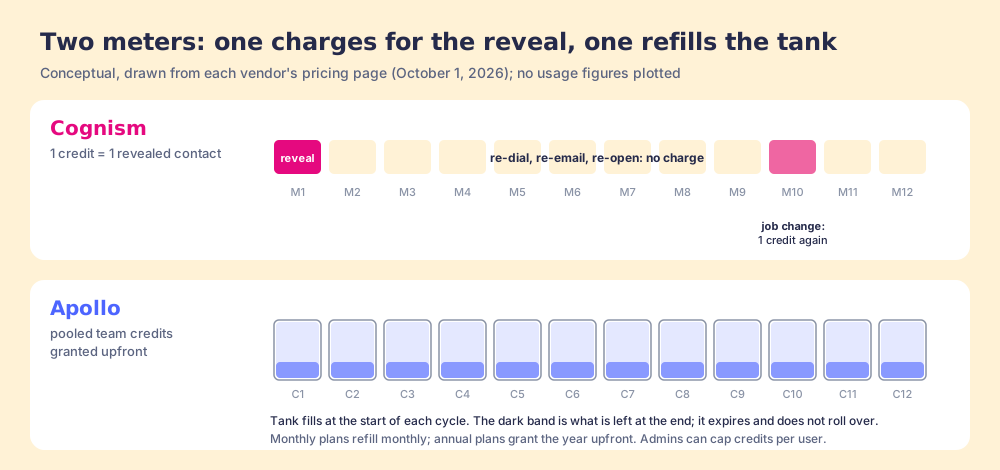
The two meters reward opposite habits.
- A stable account list. A team that works the same 400 European accounts all year, calling the same buying committees again and again, gets the most from Cognism’s meter, because every revisit is free.
- A high-velocity list. A team that burns through fresh contacts every week gets the most from Apollo’s tank, provided it spends the tank before the cycle resets.
- A fast-rising draw. Apollo’s September 30 release says daily credit consumption by teams using its MCP rose “nearly 10x” from March to August 2026. When software, rather than a rep, opens the tap, a pooled tank empties faster than a seat count suggests, so size the pool on usage, not on headcount.
Which has better data, Cognism or Apollo?
The ratings seem to contradict each other, and the contradiction is the answer.
On G2’s global compare page, Apollo leads Cognism on data accuracy, 8.2 against 7.8, and on star rating, 4.7 from 9,778 reviews against 4.5 from 1,355. Cognism leads on quality of support, 9.1 against 8.8. On G2’s Europe Sales Intelligence grid for Autumn 2026, as published by Cognism on September 8, Cognism leads Apollo on G2 Score, 88 against 78, and on satisfaction, 100 against 82, from 759 and 709 European reviews (Cognism newsroom).
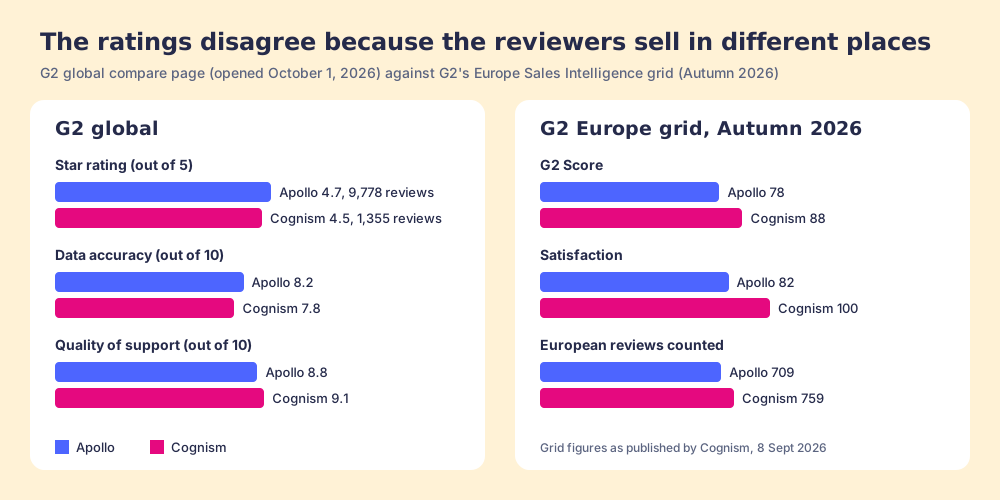
Both can be true because accuracy is not a property of a database. It is a property of a database in a place. A well can be the best in the valley and dry on the hill. Apollo’s 9,778 reviewers mostly sell where Apollo’s data is strongest; Cognism’s European reviewers sell where Cognism invested in phone verification and registry screening. Apollo’s own comparison page says Cognism’s “exact counts vary by region,” while Cognism’s page says Apollo “does not state which regions its database covers.” Neither vendor gives you a regional map, so make one. Pull 100 accounts from your real target list, split by country, and ask each vendor’s trial or sales engineer to return emails and mobiles for them. The hit rate on your own accounts outranks any badge.
On compliance, the gap is wider than the ratings. Cognism describes DNC screening across the twelve registries its compliance page names; Cognism’s comparison page characterizes Apollo’s DNC checking as covering the UK and the US. Cognism’s own compliance page also tells customers that each party acts as an independent controller and recommends legal advice before using the data. A certificate covers the vendor’s collection; your outreach stays yours to govern, whichever you buy.
Is there an option that skips the choice?
Go back to the house past the edge of town. Both vendors are asking you to pick one water source. A well is excellent until the morning it runs dry, and a metered tap is excellent until the bill arrives. The arrangement neither sells is pipes to every well in the county, with a valve that tries the next one when the first comes up empty.
That arrangement exists, and it is Clay. Clay says it offers data “from 200+ providers in one place” (clay.com/integrations, opened October 1, 2026), and its “signature data waterfalls check multiple providers to return the most verified emails (lower bounce rate) and phone numbers (higher connect rate)” (clay.com, September 25, 2026). Clay is not a third database in this comparison. It is the plumbing that connects databases, paid per result. Apollo appears on Clay’s integrations page, and Clay’s Apollo actions require you to bring your own Apollo account. Cognism did not appear on that page when we checked.
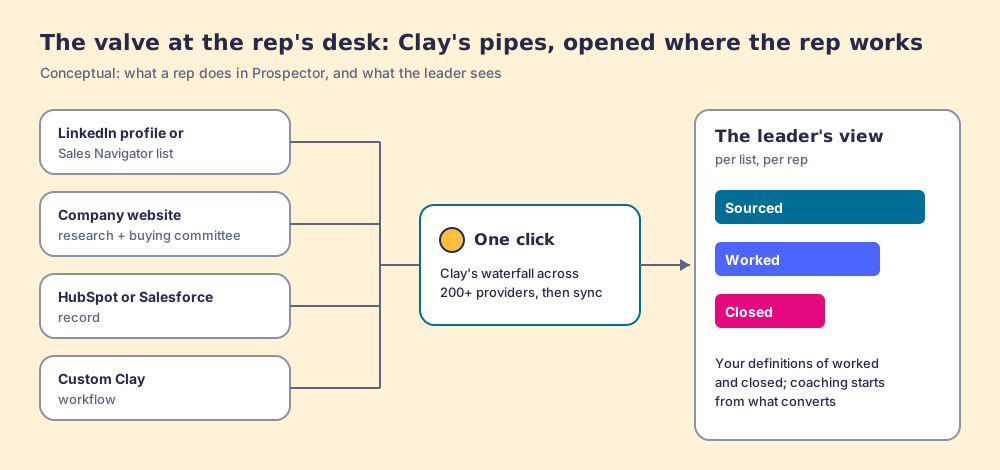
Prospector does not bring its own database. It brings Clay’s waterfall, which is every database, routed. We chose Clay as our only data provider for that reason. Prospector runs on your own Clay account, and reps never need a Clay login. The GTM engineer builds the tables and the waterfall in Clay; Prospector puts them in the rep’s hands, where the rep already is:
- A LinkedIn profile or Sales Navigator list. The rep sees whether the person is already in the CRM and whether the team worked them before, then enriches with one click.
- A company website. On acme.com the rep runs company research and a buying-committee lookup tuned to the titles, departments and seniority your team sells to.
- A HubSpot or Salesforce record. The rep fills the missing phone or the missing champion from inside the record.
- A custom Clay workflow. Any workflow your GTM engineer built becomes a button, and the rep can push a whole list into it.
The contact syncs to HubSpot, Salesforce or Pipedrive in one click, with field mapping set once by Ops. From there Supered does what it does across the rest of the CRM: your process applies to the prospects reps work, the next step reaches the rep in the flow of the work, and the leader sees which lists were sourced, which were worked, and which closed, so coaching starts from what converts. Clay governs the data. Supered governs the motion.
Prospector costs $45 per rep per month, billed annually, from one user, on its own plan (Prospector pricing). With Clay Growth at its $495 monthly list ($5,940 a year, captured September 25, 2026), ten reps come to $11,340 a year and twenty reps to $16,740, both under the $19,000 Apollo median and the $32,750 Cognism median, before any Clay credits beyond the plan. For the rep-side story in full, see the sourcing use case.
Choose something else if
- No Clay account. Prospector runs only on Clay. Without it, the branch below between Cognism and Apollo stands.
- European mobiles as the whole job. Cognism’s phone-verified Diamond Data is not on Clay’s integrations page, so Prospector cannot route to it. If those mobiles are what wins your deals, buy Cognism.
- Outreach in the same box. Prospector hands the contact to your CRM and your sequencer and drafts nothing. A small team that wants data, sequences and a dialer under one login is better served by Apollo.
- A field or mobile-first team. Supered has no mobile product; it fits teams of reps who work at a computer.
Cognism or Apollo: which should you choose?
Three branches, each earned by the rows above.
- Apollo. Choose Apollo if most of your buyers are in North America, you want a published price and a free plan to start on, and you want sequences and a dialer in the same plan as the data. Size the pooled tank on usage, not headcount, and set per-user caps on day one; remember that all seats sit on one plan.
- Cognism. Choose Cognism if your reps call European buyers on their mobiles and the compliance file matters to your legal team. Buy Pro if the mobiles are the reason you are buying. Negotiate the platform fee first, name Apollo as competition, and diary the notice date.
- Supered Prospector. Choose neither if your team already has Clay. Coverage becomes Clay’s waterfall across 200+ providers, paid per result; delivery becomes the rep’s own screen; and the list becomes something a leader can follow from sourced to closed. It is the only branch that does not ask you to bet the quarter’s calls on one well.
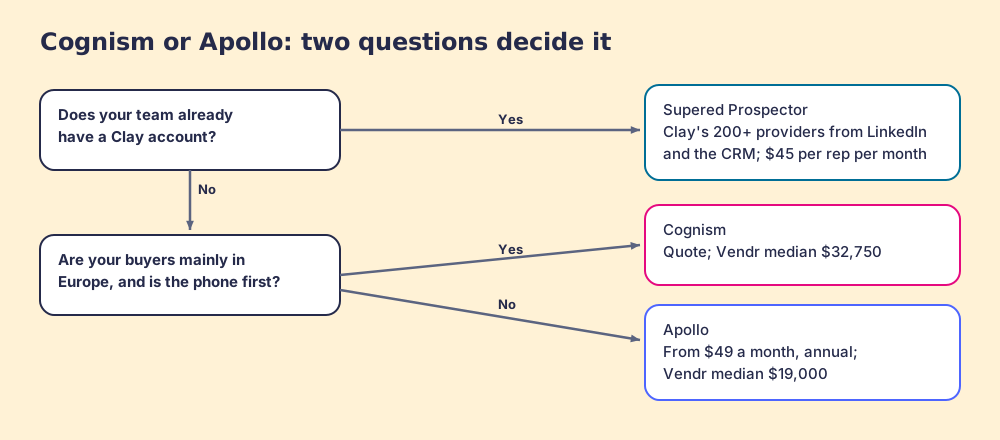
If you do not have Clay, pick the water by where your house stands: the well in Europe, the tap in America, and read the renewal clause twice either way. If you have Clay, stop choosing a single source. The pipes are already laid; what is missing is the valve at the rep’s desk. The next comparison in this set, Cognism vs ZoomInfo, asks the same question of the two quote-only vendors, and the Prospector page shows the valve.
Frequently asked questions
Is Cognism or Apollo better?+
How much does Cognism cost compared with Apollo?+
Does Cognism have better data than Apollo?+
How do Cognism credits and Apollo credits differ?+
Can I use Cognism or Apollo data inside Clay?+
Who should choose neither Cognism nor Apollo?+
Your process, running itself.