Apollo vs Outreach in 2026: Two Meters, One Running on Data and One on AI
Apollo meters the contacts you take.
Outreach, now outreach.ai, meters the AI its agents run, and buys its contact data from ZoomInfo, SalesIntel and LeadIQ. Apollo vs Outreach, graded on the same jobs with prices and G2 scores checked October 2, 2026.
Apollo vs Outreach is a choice between Apollo.io, a per-seat platform selling its own contact data with sequences and a dialer on a data-credit meter, and Outreach, an enterprise sales engagement platform sold on seats plus AI credits, with contact data bought from partners.
A house can have two meters on the outside wall, one for the water you draw and one for the power you burn, and the bill you dread depends on how you live. Apollo vs Outreach is a choice between Apollo.io, a per-seat platform selling its own contact data with sequences and a dialer on a data-credit meter, and Outreach, an enterprise sales engagement platform sold on seats plus AI credits, with contact data bought from partners. The short answer, by who it fits:
- A Clay team: Supered Prospector feeding Outreach. Teams whose RevOps runs Clay and whose reps sequence in Outreach. Clay’s waterfall across 200+ providers, run by reps, into the sequences they already use. Prospector is $45 per rep per month, billed annually.
- Apollo. One to thirty reps without Clay who want data, sequences and a dialer under a published price. From $49 a seat a month, annual.
- Outreach. Mid-market and enterprise teams with data in hand that want sequencing, conversation intelligence, deals and forecasting on one platform. Quote only; Vendr’s median is $45,600 a year.
How do Apollo and Outreach compare at a glance?
Prices and ratings were opened on October 2, 2026 unless marked. Grades use the weights below, for a ten-to-fifty-rep outbound team.
| Rank | Option | Grade | Best fit | CRM integration | Setup effort | Price (plan with the job) | Reason to switch |
|---|---|---|---|---|---|---|---|
| 1 | Clay team: Prospector + Outreach | A- | Teams that run Clay and Outreach | Prospector native in HubSpot, Salesforce, Pipedrive; Outreach keeps its own CRM sync | Ops builds the Clay tables and the sequence action once | Prospector $45/rep/mo annual + Clay plan + Outreach quote | 200+ providers feeding sequences you already run |
| 2 | Apollo | A- | 1 to 30 reps wanting data plus outreach | HubSpot, Salesforce, Outreach, Salesloft integrations | Self-serve; G2 ease of setup 8.9 | Basic $49, Professional $79, Organization $119/seat/mo annual | Data and sequences under one published price |
| 3 | Outreach | B- | Mid-market and enterprise teams with data | CRM sync; G2 reviewers flag HubSpot integration issues | Sales-led; G2 ease of setup 7.7 | Quote; Amplify packages; Vendr median $45,600/yr | One platform from sequence to forecast |
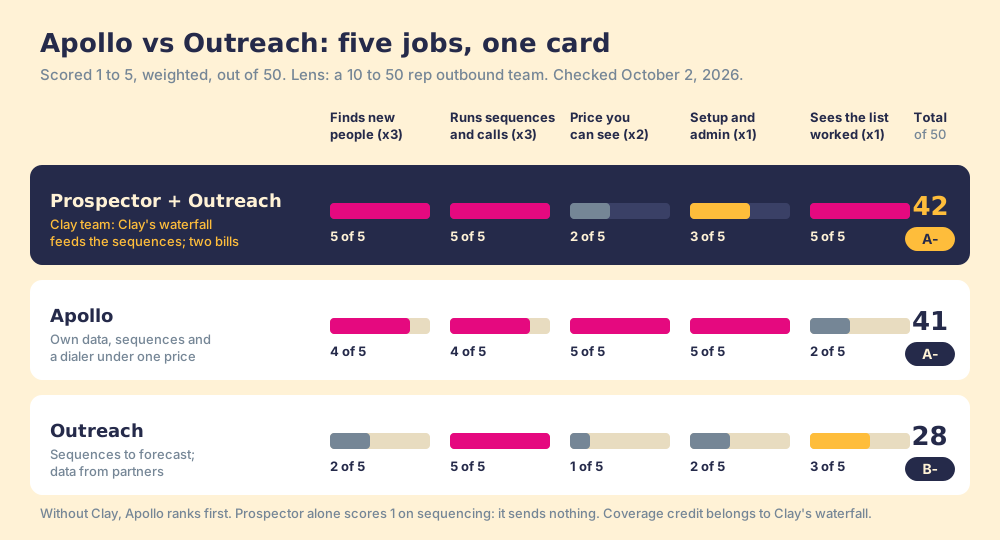
The scoring, so you can move it. Each job is scored 1 to 5, multiplied by its weight, maximum 50.
| Option | Finds new people (x3) | Runs sequences and calls (x3) | Price you can see (x2) | Setup and admin for a mid-market Ops team (x1) | Manager sees the list worked (x1) | Total |
|---|---|---|---|---|---|---|
| Prospector + Outreach | 5 | 5 | 2 | 3 | 5 | 42 |
| Apollo | 4 | 4 | 5 | 5 | 2 | 41 |
| Outreach | 2 | 5 | 1 | 2 | 3 | 28 |
Weight sequencing at 5 and price at 1 and Outreach closes most of the gap on Apollo. Drop the stack row and Apollo is first for any team without Clay. Prospector on its own would score 1 on sequencing: it sends nothing, and the stack row works only because Outreach runs the sequences.
Why trust this comparison?
I founded RevPartners, a HubSpot partner that did only sales implementations and reached Elite tier in 13 months, and I have watched teams wire Apollo and Outreach into the same CRM and then argue over which one owns the contact. Supered is the #1 sales enablement app on the HubSpot marketplace, rated 5.0 from 122 reviews there and 4.9 from 81 on G2, checked October 1, 2026. Prospector competes with Apollo’s data seat for teams on Clay, and it ranks first here only for that team. The weights are printed so you can argue with them.
What does each meter charge for?
Walk around the outside of the house and read the two dials.
Apollo’s meter counts what you take. A Basic seat comes with 30,000 credits a year and a Professional seat with 48,000; an email costs 1 credit and a phone number 8; the US dialer burns 2 credits a minute (apollo.io/pricing). The pricing FAQ, read October 1, 2026, says credits “are pooled across your entire team and granted upfront,” and “Unused credits expire at the end of each billing cycle and do not carry over.” Add-on credits run from $0.025 each at the smallest pack down to $0.015 at 250,000. On our arithmetic a Professional seat holds 6,000 phone numbers a year, about 24 a working day over 250 days. The Bridge Group’s 2025 SDR report puts the median SDR at 44 phone activities a day (Bridge Group), so a rep who needed a fresh number for every one of those dials would burn 352 credits a day and empty a Professional seat’s year of credits in about 136 working days. Treat that as our supposition about your team; we measured no one’s dials.
Outreach’s meter counts what the machines do. Its pricing page, headed “AI Agent Platform Pricing for Revenue Teams,” sells four Amplify packages with 10,000, 25,000, 50,000 and 100,000 AI credits, every one marked “Request pricing,” and explains the model in one line: it “combines seat-based platform access with consumption-based usage for AI-powered workflows” (outreach.ai/pricing). The entry package, Essentials, is built around conversation intelligence and does not list sequences; “Multi-Channel Engagement & Sequences” starts at Core.
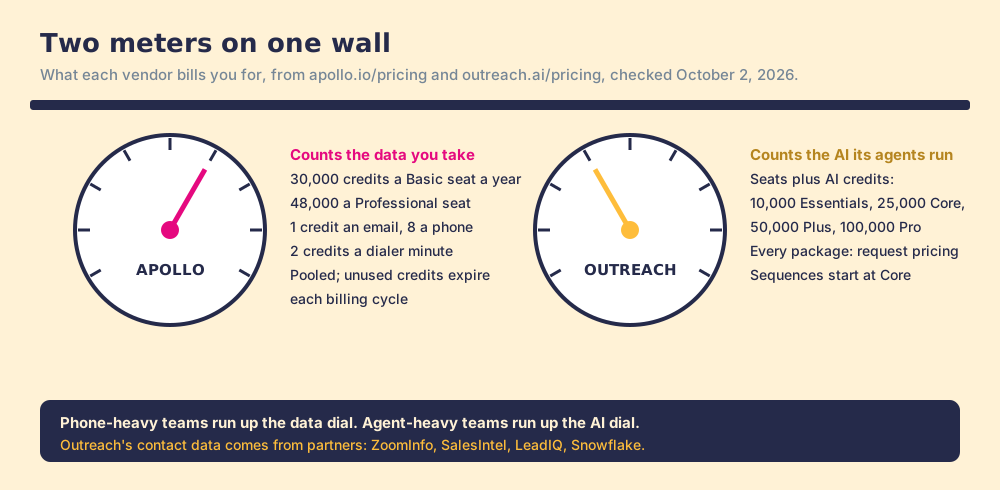
So outreach vs apollo is a question about how your team lives. A team that pulls a lot of fresh phone numbers runs up the data dial. A team that wants agents researching accounts, summarizing calls and drafting follow-ups runs up the AI dial. Buying the wrong one for your habits is how a reasonable contract becomes a surprise in month eight.
Does Outreach have its own contact data?
No, and its support portal says where the water comes from. Outreach’s article on data enrichment, modified August 17, 2026, names ZoomInfo, SalesIntel, LeadIQ and Snowflake as providers and says Outreach is “actively onboarding additional enrichment providers” (Outreach support). On March 24, 2026 LeadIQ announced it had become “an official data provider for the Outreach AI Revenue Agent.” Apollo’s own comparison page, dated July 13, 2026, says Outreach has “no proprietary contact database” (Apollo).
| Where the contacts come from | Apollo | Outreach |
|---|---|---|
| Own database | ”240M contacts & 30M companies” on its pricing page | None named |
| Fallback | Waterfall Enrichment, “20+ partners” or your own vendor | Partner providers: ZoomInfo, SalesIntel, LeadIQ, Snowflake |
| Question for the quote | How many credits a phone costs on your plan | Whether the package includes the provider’s data or assumes your own contract |
The practical consequence for a buyer comparing apollo or outreach: with Outreach, the sequences come from Outreach and the people in them come from someone else, so the data line deserves its own question in the quote.
How do Apollo and Outreach rate on G2?
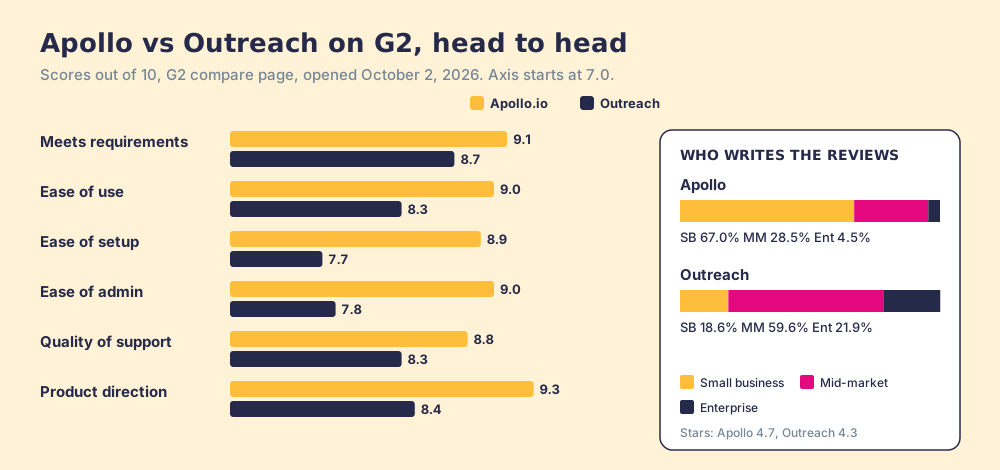
G2’s head-to-head, opened October 2, 2026, has Apollo ahead on every shared score, and the widest gaps are the ones an Ops team lives with (G2, Apollo.io vs Outreach).
| G2 score (out of 10) | Apollo.io | Outreach |
|---|---|---|
| Meets requirements | 9.1 | 8.7 |
| Ease of use | 9.0 | 8.3 |
| Ease of setup | 8.9 | 7.7 |
| Ease of admin | 9.0 | 7.8 |
| Quality of support | 8.8 | 8.3 |
| Product direction | 9.3 | 8.4 |
The reviewers explain the gap better than the scores do. Apollo’s are 67.0% small business, 28.5% mid-market and 4.5% enterprise. Outreach’s are 18.6% small business, 59.6% mid-market and 21.9% enterprise. Outreach holds 4.3 stars from 3,643 reviews on its own G2 page, and its complaint tags include “Steep learning curve” and “Integration issues, particularly with HubSpot” (G2, Outreach). Apollo holds 4.7 from 9,839, and its own most-cited complaint is about its data. A platform built for a two-hundred-seat Salesforce org will feel heavy to a fifteen-rep HubSpot team, and the setup score of 7.7 is that weight, measured.
How much does Outreach cost compared with Apollo?
| Apollo | Outreach | |
|---|---|---|
| Published price | Basic $49, Professional $79, Organization $119 per seat a month, annual | None; four Amplify packages on request |
| What buyers report | Vendr median $19,000 a year, 101 purchases | Vendr median $45,600 a year, 917 purchases, 12% average savings |
| Range | $4,284 to $45,000 | $8,620 to $214,450 |
| Meter on top | Data credits, expiring each cycle | AI credits by package; onboarding $5,000 to $25,000+ (Vendr) |
Sources: Vendr, Outreach and Vendr, Apollo; Vendr’s Outreach tier names still describe the older packaging, so trust its contract values over its plan labels. The Apollo ladder in full, monthly billing included, is on the Apollo pricing page, and what Apollo’s 9,839 G2 reviewers praise and complain about is in the Apollo reviews page.
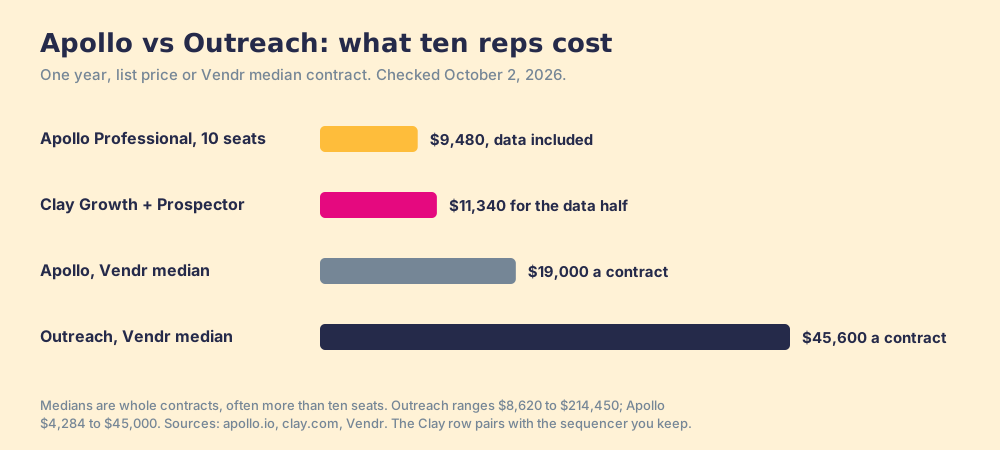
Ten reps, one year, list or median. Apollo Professional is $9,480 with data included. Outreach’s median contract is $45,600, a whole contract that often covers more than ten seats; ask whether its data line covers your phone volume. A Clay team’s data half, Clay Growth plus Prospector, is $11,340.
What changed at Apollo and Outreach in 2026?
The two meters are drifting toward each other.
- Outreach. The site now redirects from outreach.io to outreach.ai. On April 27, 2026 Outreach launched Omni, a conversational agent for Slack and mobile, and its chief product officer, Nithya Lakshmanan, said “Autonomous agents handle the execution” (Business Wire). Its tagline is now “the AI Agent Platform for Revenue teams.” Outreach is independent; the sequencers that compete with it are ranked on the Outreach alternatives page.
- Apollo. On February 3, 2026 Apollo named Matt Curl chief executive, “approaching $200M in annual recurring revenue.” It bought Pocus in March to “continue to expand upmarket,” and on September 30 launched an “AI GTM System,” saying teams using its MCP “grew more than 4x” between March and August. Apollo runs its AI research on the same credit pool as its data, 1 credit a run. Apollo is independent.
Apollo is climbing toward the enterprise buyer Outreach already serves, and Outreach is rebuilding itself around agents. Neither is building the other’s database. Our view, consistent with how we build Supered: an agent that drafts more outreach on an unchecked list sends the wrong message faster, and Gartner found in 2025 that “73% of B2B buyers actively avoid suppliers who send irrelevant outreach” (Gartner). The list is where relevance starts.
What do Clay teams run instead of Apollo?
Keep the sequences, change where the water comes from. Clay’s marketplace sells data from 200+ providers, and its waterfall asks one after another until one returns a verified email or phone; “If an enrichment returns no result, you’re not charged Data Credits or Actions” (clay.com/pricing). ZoomInfo and Apollo can both be steps on your own accounts. Clay’s Outreach integration includes an action to “add leads from Clay directly into Outreach sequences,” on the Launch plan and up, with your own Outreach account (Clay).
Supered does not bring its own database. It brings Clay’s waterfall, which is every database, routed; we chose Clay as our only data provider for that reason. Clay plus Supered is the best way for a sales team to prospect: GTM engineers build in Clay, reps never open Clay. Prospector runs inside the Supered Chrome extension, on your Clay account, and puts a tap in every room the rep works in.
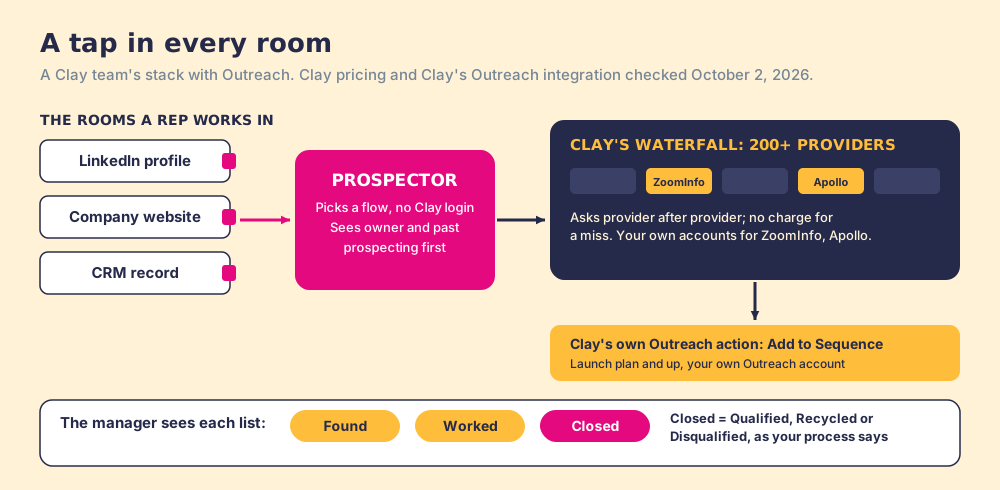
What each person gets:
- The GTM engineer. Named flows built once, each a Clay table with a destination, the CRM record or a sequence, picked by reps from a Push menu. Your waterfalls, tiers and sequence variables stay yours.
- The rep. The table as a button on a LinkedIn profile, a company website, or a HubSpot, Salesforce or Pipedrive record. The rep sees who owns the record and whether the prospect was already worked before pushing, so two reps never sequence the same buyer.
- The manager. Found, Worked, Closed: who is working their list and who is not, and how each lead ended, Qualified, Recycled or Disqualified, the way your process says, so coaching starts from what is converting.
Prospector works within LinkedIn’s terms and does not copy search results in bulk; the contact data comes from Clay’s waterfall on the customer’s Clay account.
The price, done straight. Prospector is $45 per rep per month, billed annually, from one rep (Prospector). Ten reps add $5,400 if RevOps already pays for Clay, or $11,340 with Clay Growth at its $495 monthly rate, against $9,480 for ten Apollo Professional seats at list, so Apollo is cheaper on a cold start by $1,860. Prospector drafts nothing and runs no agent; it puts the list in the rep’s hands and the outcome in the manager’s view. Which sequence actions your flows end in is set up by your GTM engineer, so bring your Outreach setup to the demo.
Choose something else if:
- No Clay, and no plan to buy it. Prospector runs only on Clay. RevPartners, a Clay Elite Studio Partner I founded, builds tables for teams that want help; otherwise pick a branch below.
- One seat that does everything for a small team. Apollo’s data, sequences and dialer in one login is simpler for ten reps than Clay plus Outreach.
- A field or mobile-first team. Supered runs at the computer and has no mobile product.
Apollo or Outreach: which should you choose?
- Apollo. Choose Apollo if you run one to thirty reps without Clay and want the data, sequences and dialer under one published price. Watch the data dial: size the pool for your phone volume, set per-user caps, and remember unused credits expire.
- Outreach. Choose Outreach if you run a mid-market or enterprise team that already has a data contract and wants sequencing, conversation intelligence, deals and forecasting on one platform. Ask which Amplify package carries sequences, how many AI credits your team will burn, and which data provider the quote assumes.
- Neither Apollo nor another database, if you already have Clay. Keep Outreach for sequences and choose Supered Prospector for the list. Clay’s waterfall across 200+ providers fills the sequence, and you see each list become pipeline.
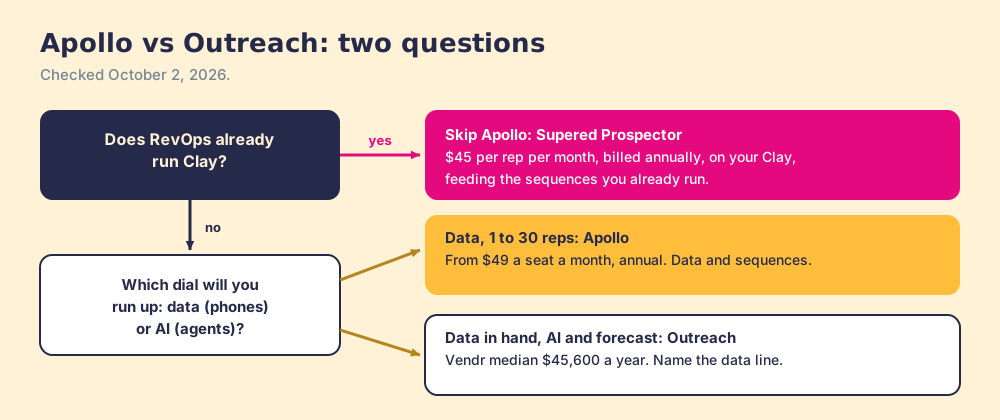
My recommendation follows the meters. A team that lives on fresh phone numbers should buy the data dial it can read, which is Apollo, and keep an eye on the pool. A team that already owns its data and wants one heavy platform from first touch to forecast should buy Outreach and get the data provider named in the quote. And a team that already pays Clay to ask 200 providers should not install a third meter on the wall for contacts it can already draw. Apollo vs Salesloft runs the same test against the other big sequencer, the one that sells cadences, deals and a forecast with no warehouse behind them.
Frequently asked questions
Is Apollo or Outreach better?+
Does Outreach have its own contact database?+
How much does Outreach cost compared with Apollo?+
What changed at Outreach in 2026?+
Can you use Apollo with Outreach?+
Do I need Apollo if my team has Clay and Outreach?+
Everything we have written on Apollo
More on Apollo
Supered Prospector vs Apollo: the side-by-side- Apollo Alternatives in 2026: Read the Credit Meter Before the Price Tag
- Apollo Pricing in 2026: The Seat Is the Room Rate, the Credit Is the Minibar
- Apollo Reviews 2026: A Starter Home, Rated by the People Who Just Moved In
- Apollo Chrome Extension in 2026: The Nozzle Is Free, the Pump Is Metered
- Apollo HubSpot Integration (2026): What Syncs, the Six-Hour Window, and the Duplicates It Mirrors
- Apollo Salesforce Integration: The Mail Room, the Clerk, and the Six-Hour Clock
- Apollo Pipedrive Integration (2026): It Shares the Rolodex, Not the Deal Board
- Apollo vs Kaspr in 2026: The Same $49 at the Door, Two Very Different Clubs
- Apollo vs LeadIQ in 2026: The House, the Delivery Van, and the Market
- Apollo vs LinkedIn Sales Navigator in 2026: A Map, a Phone Book, and the Gap Between Them
Your Clay waterfall, where reps already work.