Outreach Alternatives: When Sequencing Is Not the Problem
Most teams shopping Outreach alternatives are comparing sequencers when the real gap is whether reps run the process. Here is the honest 2026 list and the behavior job no sequencer was built to do.
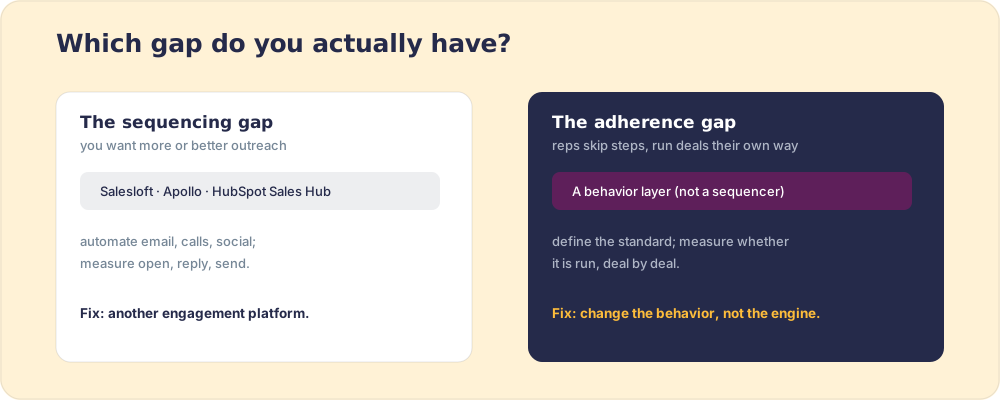
Outreach alternatives are the sales-engagement platforms teams weigh against Outreach, which sequences rep outreach across email, calls, and social; the credible options are Salesloft, Apollo, HubSpot Sales Hub, and a behavior layer for teams whose gap is process adherence.
Outreach alternatives is one of those searches where the list everyone hands you answers a question you may not have. The lists compare sequencers: send volume, deliverability, the number of touches you can automate. That is a fair comparison if your problem is sequencing. For a lot of teams, it is not, and the honest first step is to ask which problem you have before you swap one outreach engine for another. (Search behavior bears this out: many people type outreach.io alternatives expecting a sequencer list and leave with the wrong tool for their gap.)
Outreach alternatives are the sales-engagement platforms teams weigh against Outreach, which automates and sequences rep outreach across email, calls, and social, with the credible options being Salesloft, Apollo, HubSpot Sales Hub, and the behavior layer for teams whose gap is process adherence, not send volume. Hold that last clause, because it is the fork most lists never draw.
Who are the credible Outreach alternatives?
Sort the field by the job, and a clean read of the outreach competitors names the trade for each one:
- Salesloft, the direct rival. The other heavyweight sales-engagement platform, now part of the merged Clari-Salesloft company since the deal closed on December 3, 2025 under new CEO Steve Cox, which adds forecasting ambition but a multi-year integration the company itself describes as years from a unified product (Salesloft on completing the Clari merger).
- Apollo, engagement plus data. Pairs sequencing with a built-in prospecting database, which appeals to teams that want outreach and a contact source under one roof.
- HubSpot Sales Hub, native sequences. Sequencing built into the CRM, strong for mid-market teams already on HubSpot who want to skip a second platform and a second source of truth.
- The behavior layer, a different axis. Not a sequencer at all, for teams whose problem is process adherence rather than send volume.
Be fair about Outreach first, because the comparison is only credible if the incumbent gets its due. Outreach is genuinely strong sales-engagement software for high-volume outbound, and it has spent the last few years widening beyond sequencing into forecasting and revenue intelligence, having folded in Canopy.io (rebranded Outreach Commit) to build out deal-health and forecast tooling (Outreach adds revenue intelligence with Canopy). It has stayed independent while Salesloft consolidated, which as of mid-2026 makes it the standalone choice in a market that is busy merging. If your job is heavy, multi-touch outbound, Outreach or a peer is the right tool, and you should pick on volume, deliverability, and fit.
How should you choose an Outreach alternative?
The table sorts the like-for-like options, then names the one that sits off the axis.
| Outreach | Salesloft | Apollo | HubSpot Sales Hub | Behavior layer | |
|---|---|---|---|---|---|
| Core job | Sequence outreach | Sequence outreach | Sequence + data | Native CRM sequences | Run + measure the process |
| Best for | High-volume outbound | Outbound + forecast bet | Outreach + prospecting | Mid-market on HubSpot | Teams with an adherence gap |
| Status (2026) | Independent | Merged with Clari (closed Dec 3, 2025) | Independent | Native to HubSpot | Runs inside the CRM |
Choose Salesloft if you want the closest peer and are comfortable with the merger’s transition. Choose Apollo if you want engagement plus a prospecting database in one place. Choose HubSpot Sales Hub if you are mid-market and already on HubSpot and native sequencing covers the job. Choose a behavior layer if your reps already sequence fine and the real gap is that they skip discovery and run deals their own way.
Why do most Outreach alternatives miss the lever that matters?
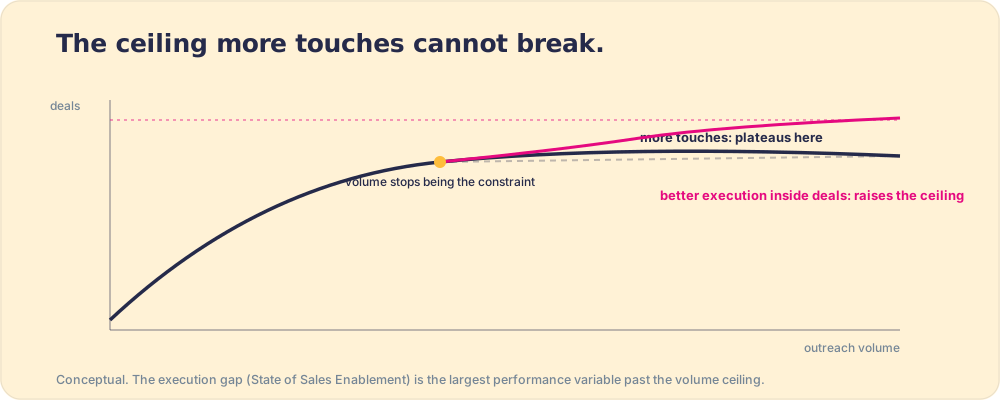
Because every sales-engagement platform competes on the same axis, the volume and quality of automated outreach, and that axis has a ceiling that activity alone cannot break through. More touches is not more deals once the touches stop being the constraint. The constraint becomes what reps do inside the deals the touches create, and no sequencer was built to govern that.
There is a hard finding underneath this. The execution gap, the spread between what top reps and average reps do on the same process, is the single largest performance variable on most teams, larger than tooling or talent, as the State of Sales Enablement documents. A sequencer cannot close that gap, because it measures send, open, and reply, not whether the rep ran discovery or logged the buyer’s real position. It is a captain’s log that records how hard the crew rowed and never once which way the ship moved. Activity is real and worth capturing, but a deal does not advance because the rep sent more email; it advances when the buyer moves, and the buyer moves when the process is run well.
This is the deeper reason another sequencer rarely fixes a stalling pipeline. The pipeline is not short on touches; it is short on consistent execution inside the deals. Swapping engagement platforms changes the engine and leaves the road unchanged. The lever is the behavior inside the deal, in the flow of work, and that is a different category of tool, the one we draw out in sales engagement platform and in pipeline hygiene.
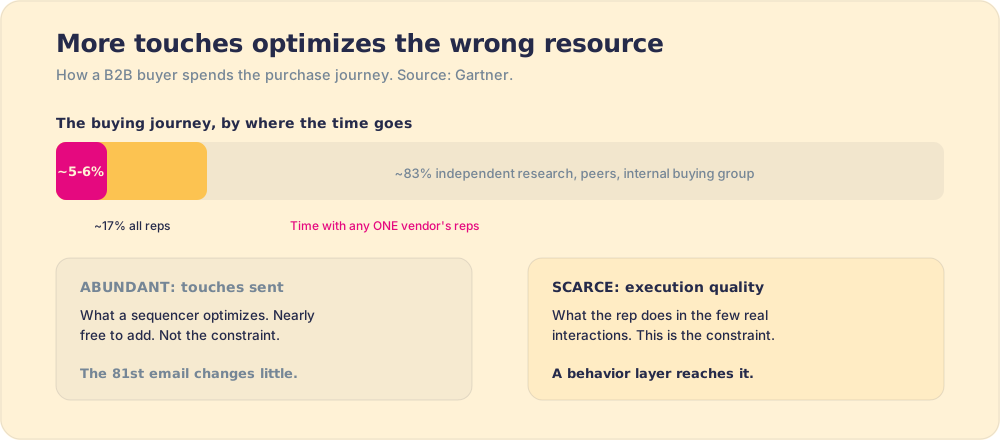
The buyer side of the math makes the ceiling lower than most teams assume. Gartner has tracked B2B buyers spending only about 17 percent of the purchase journey meeting with any supplier’s reps, and a sliver of that, perhaps 5 or 6 percent, with any one vendor (Gartner, the future of sales). When the rep gets that little time in front of the buyer, the marginal touch is not the constraint. What the rep does with the few real moments they get is the constraint. A platform that helps you send the eighty-first email is optimizing the abundant resource and ignoring the scarce one. The scarce resource is execution quality in the handful of interactions that shape the buyer’s decision, and that is precisely what a sequencer does not see and a behavior layer does.
What should you evaluate before switching?
If the diagnosis above is right, the buying question changes. Most evaluations of sales engagement software score features: how many channels, what deliverability, which integrations, how clever the AI assist. Those questions matter when sequencing is the gap. They are beside the point when adherence is the gap. So run the diagnosis before the demo.
- Measure the gap before you shop. Pull your own numbers. If reply and meeting rates are healthy but win rates and stage conversion sag, your problem lives inside the deals, not in the top of the funnel, and no sequencer reaches it.
- Separate the two budgets. Sales engagement software and a behavior layer are not competitors for the same line item; they solve different jobs. A team can need both, or only one, and conflating them is how teams buy a faster engine for a road problem.
- Ask what each tool can prove. A sequencer can prove a touch was sent. Ask whether the tool you are evaluating can prove discovery happened, the next right step was taken, or the buyer’s real position was captured. If it cannot, it is not built for the adherence job.
What we recommend
If your gap is genuinely sequencing, pick on the merits. Choose Salesloft for the closest peer with a forecasting bet attached, Apollo for engagement plus prospecting data, or HubSpot Sales Hub if you are mid-market and on HubSpot already. All are credible sales engagement software, and Outreach itself remains strong for heavy outbound.
But test the premise first. Most teams who shop Outreach alternatives are not short on outreach; they are short on consistent execution inside the deals their outreach creates. The execution gap, not send volume, is the largest variable in the number. If that is your situation, the answer is not a faster engine; it is a behavior layer that lives where reps work, defines the standard, and measures adherence in the flow of work, so the deals you already have get run the way your best rep would run them.
From here: the category in full in sales engagement platform, the discipline of keeping deals honest in pipeline hygiene, the data in the sales execution gap, and the Salesloft merger story in Clari alternatives.
Frequently asked questions
What are the best Outreach alternatives in 2026?+
What is the difference between Outreach and Salesloft?+
Is Outreach worth it for a mid-market team?+
What do Outreach alternatives all miss?+
Your process, running itself.