Salesloft Alternatives in 2026: A Graded Guide After the Clari Merger
Salesloft now lives inside Clari, in a suite running two overlapping engagement tools. Here are the Salesloft alternatives that matter, graded by the job each one does.
Salesloft alternatives are the sales engagement platforms teams weigh against Salesloft, and in 2026 the search is fueled by its merger with Clari, which left the combined suite running two overlapping engagement tools and an unfinished integration.
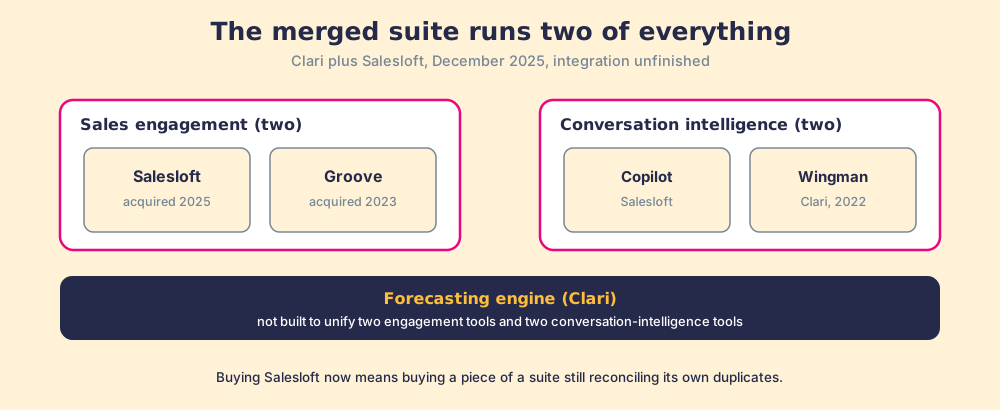
Most “Salesloft alternatives” lists were written for a Salesloft that no longer exists as an independent company. In December 2025 Clari completed its acquisition of Salesloft, folding it into a combined entity it calls a Predictive Revenue System, under new CEO Steve Cox (Salesloft newsroom). That is the fact that should shape the search, because Clari already owned a sales engagement tool, Groove, bought in 2023. The merged company now runs two engagement systems and two conversation-intelligence systems at once, and the integration is unfinished. Forrester called the Clari Salesloft merger a high-stakes bid for dominance (Forrester).
Salesloft alternatives are the sales engagement platforms teams weigh against Salesloft, and in 2026 the search is fueled by its merger with Clari, which left the combined suite running two overlapping engagement tools and an unfinished integration. So the useful comparison is not feature by feature against the old Salesloft. It is which tool does the job you need, with a clear head about the consolidation you may be buying into. The Salesloft competitors worth your time are the ones that close a real gap, not the ones with a longer feature grid.
Why are teams looking for Salesloft alternatives now?
A switch search has a cause, and in 2026 three of them recur.
- Merger overlap. The combined Clari and Salesloft owns two sales engagement systems (Salesloft and Groove) and two conversation-intelligence systems, sitting on a forecasting engine that was not built to unify them. Buying Salesloft now means buying a piece of a suite that is still reconciling its own duplicates.
- Roadmap uncertainty. When the vendor is busy merging two products that do the same thing, the energy goes into integration, not the features you are paying for. Groove’s integration into Clari was still incomplete two years after the 2023 acquisition.
- The adoption question. Salesloft sends the sequence and logs the touch beautifully. What it cannot tell you is whether the rep ran the right play around that touch, the discovery question, the next step, the qualification. That gap ends many searches, and no competing cadence tool closes it either.
What job is each Salesloft alternative built to do?
The field splits in two, and naming the split keeps you from buying the wrong half.
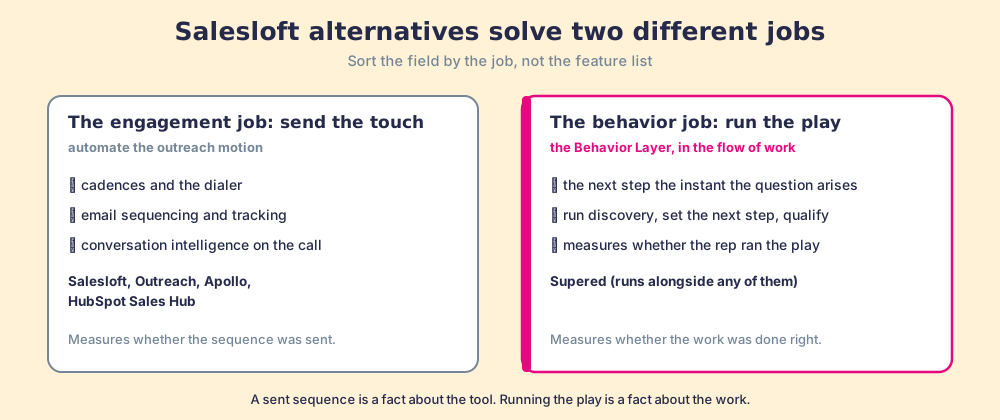
The engagement family does the visible job: automating the outreach motion. Cadences, the dialer, email sequencing, and the conversation intelligence that records the call. Outreach is the most direct rival, used by more than 6,000 organizations, with sequencing, deal management, and AI-guided coaching that edges Salesloft on depth. Apollo.io is the value leader, rated 4.7 on G2 across more than 9,000 reviews, and it bundles prospecting data with engagement, which removes a separate data bill. HubSpot Sales Hub and Salesforce Sales Engagement put the same motion inside the CRM you already run. Salesloft itself, at 4.5 on G2 from more than 4,260 reviews, remains capable; the question is what owning it means now (G2).
The behavior family does the unsolved job: making sure reps run the right process around the outreach, and measuring whether they did. A sent sequence is a fact about the tool. Whether the rep ran discovery, set the next step, and qualified the deal is a fact about the work, and the cadence engine cannot see it. This is a different product than engagement, and it does not replace the dialer; it governs the behavior the dialer cannot.
How we graded the Salesloft alternatives
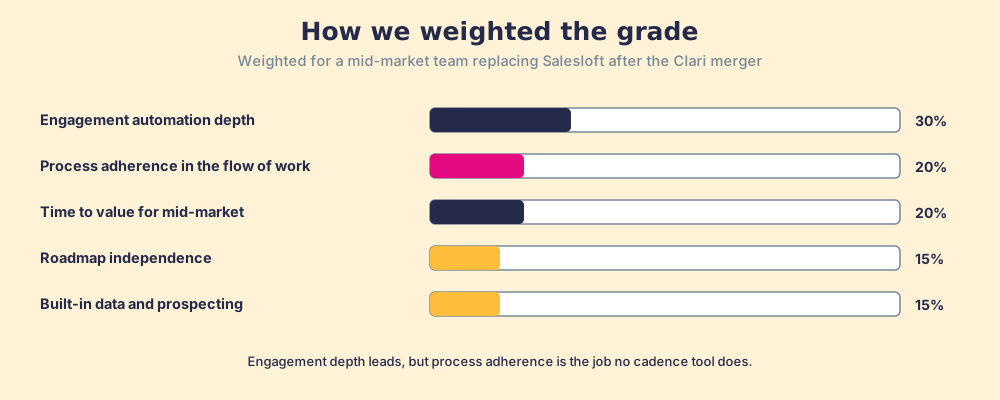
A ranking that hides its math is an advertisement, so here is the lens, stated plainly. We weighted the criteria for a mid-market revenue team replacing Salesloft after the Clari merger: a team that needs the cadence engine to work and reps to actually run the process around it. Weight engagement depth heaviest and the dedicated tools rise; weight roadmap independence and the merger drags the incumbents down.
| Criterion | Weight | What it rewards |
|---|---|---|
| Engagement automation depth | 30% | Cadences, dialer, sequencing, conversation intelligence |
| Process adherence in the flow of work | 20% | Getting reps to run the play, not just send the touch |
| Time to value for mid-market | 20% | Standing up fast without an enterprise rollout |
| Roadmap independence | 15% | Not buying into an unfinished merger integration |
| Built-in data and prospecting | 15% | Removing a separate data subscription |
The honesty rule is the point: the weights serve that job, and each tool earns the A it deserves in its own lane. Supered does not compete on cadences, so it is graded on the adherence lane it is built for, not ranked as a drop-in cadence replacement it is not.
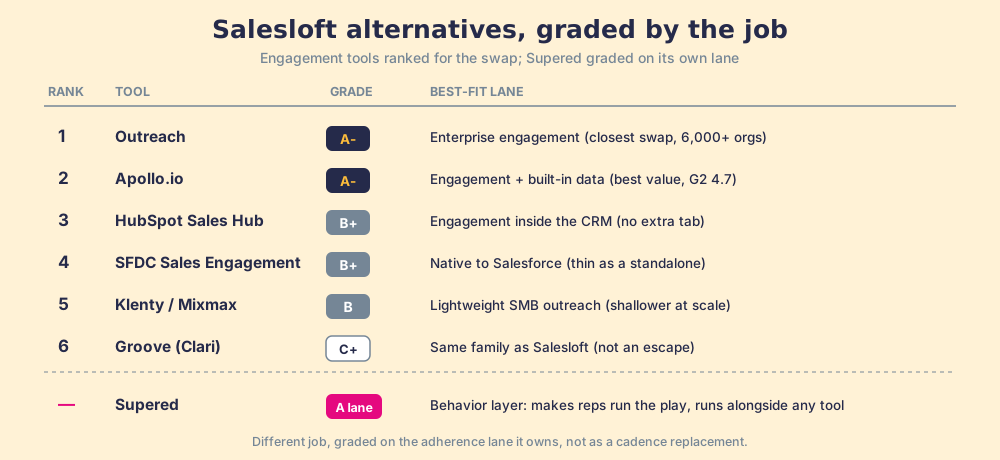
Here is the field, graded and ranked for the job, with corporate status named.
| Rank | Tool | Grade | Best-fit lane | Why it ranks here |
|---|---|---|---|---|
| 1 | Outreach | A- | Enterprise sales engagement | The most direct Salesloft replacement (6,000+ orgs); deepest sequencing and AI coaching |
| 2 | Apollo.io | A- | Engagement + built-in data | Best value, 4.7 on G2 from 9,000+ reviews; bundles prospecting data |
| 3 | HubSpot Sales Hub | B+ | Engagement inside the CRM | No extra tab if you run HubSpot; lighter than the specialists |
| 4 | Salesforce Sales Engagement | B+ | Native to Salesforce | Solid if you live in SFDC; thinner as a standalone |
| 5 | Klenty / Mixmax | B | Lightweight SMB outreach | Fast and cheap for small teams; shallower at scale |
| 6 | Groove (Clari) | C+ | Salesforce-native engagement | Capable, but now the same family as Salesloft, so it is not an escape from the merger |
| alt | Supered | A (its lane) | Process adherence, the business logic layer | Different job: it makes reps run the play around the cadence, and runs alongside any tool above |
The table makes the split visible. The first five compete on the engagement job and differ on depth, price, and CRM fit. Groove ranks last as an escape because it shares the suite you may be leaving. Supered sits outside the ranking on purpose: it is graded A on the adherence lane it owns, and it complements the engagement tool rather than replacing it.
Which Salesloft alternative is right for your job?
The choice resolves once you name the job, and the behavioral reason is worth stating, because it explains why a better cadence tool alone rarely fixes the real problem. The intention-action gap, the studied distance between deciding to act and acting, is what an outreach tool cannot close. Peter Gollwitzer’s research on implementation intentions, drawn from a meta-analysis of 94 studies, found that tying an action to a specific cue in the moment roughly doubles follow-through. The sequence is the plan. The cue at the moment of the work, run discovery now, set the next step now, is what turns the plan into the deed.
- Outreach, for the enterprise replacement. If you want the closest like-for-like swap with deeper sequencing, Outreach is the pick; see the wider field in Outreach alternatives.
- Apollo.io, for value and built-in data. If budget matters and you want prospecting data bundled in, Apollo wins on price and reach (one database, sold by the seat; Clay’s waterfall can include it).
- HubSpot Sales Hub, to lose a tab. If you run HubSpot, engagement inside the CRM removes a login and a sync.
- A business logic layer, for adoption you can see. If the real gap is that reps do not run the process around the outreach, no cadence tool reaches it, and you want a business logic layer alongside whichever engagement tool you pick.
The deeper reason matters in 2026, and it is why this is a painkiller and not a nice-to-have. AI has commoditized the engagement half. Any rep or agent can draft the sequence, write the follow-up, summarize the call. What AI cannot do on its own is run your process the right way around that outreach and prove it ran. That is the unsolved, expensive job, and it is the one Supered is built for. Supered is the business logic layer: rules, guides, the Process Board, and the Sidekick panel put the next action in front of the rep in the flow of work, and it ships an MCP server so your AI agents read the same process rules, see what reps actually did, and act in flow without replacing the rep. It does not replace the dialer; it governs the behavior the dialer cannot see, and the scorecard below makes the line clear.
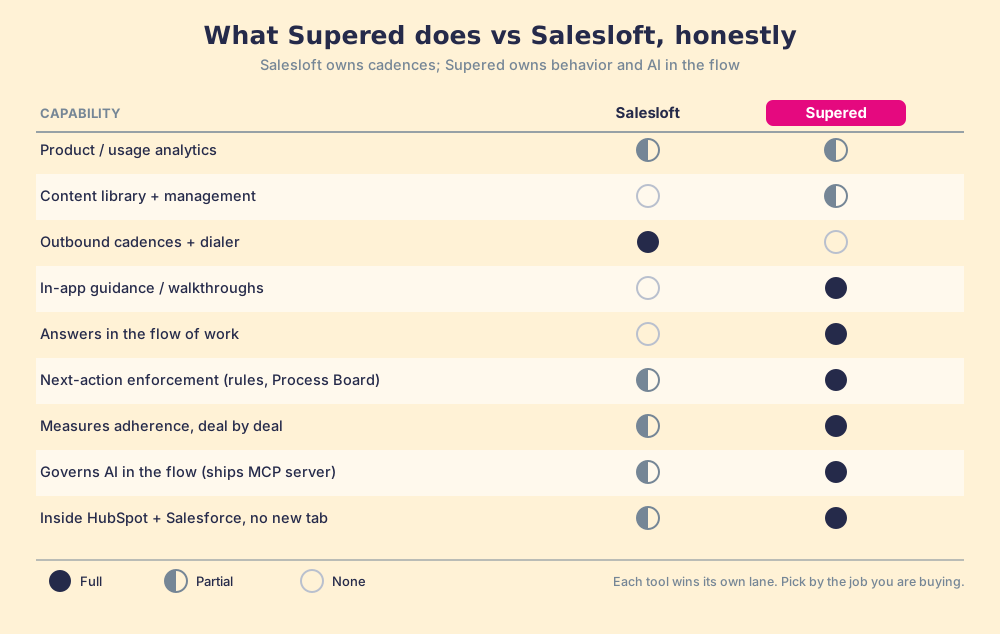
So here is what we recommend. If you need to replace Salesloft’s cadence engine, Outreach is the safest like-for-like and Apollo the best value (its pricing decoded), with HubSpot Sales Hub the move if you want it inside the CRM. Avoid treating Groove as an exit, since it sits in the same suite you may be leaving. And if the real problem is not the cadence tool at all, but that reps are not running the process around it, then the answer is not another engagement platform, because the missing thing is the behavior signal none of them carry. The decision was never Salesloft versus a cheaper Salesloft. It is whether your gap is sending the touch or running the play. For the forecasting and revenue-intelligence side of the same merger, see Clari alternatives, and compare the conversation-intelligence angle in Gong vs Salesloft.
Frequently asked questions
What are the best Salesloft alternatives in 2026?+
Why are people looking for Salesloft alternatives after the Clari merger?+
Is Outreach or Apollo a better Salesloft alternative?+
Can a business logic layer replace Salesloft?+
Everything we have written on Salesloft
More on Salesloft
Your process, running itself.