Gong vs Salesloft: Two Tools, Two Different Bets
Gong vs Salesloft is often framed as one fight, but they were built for different jobs, and the Clari merger changed what Salesloft now is. Here is the honest 2026 breakdown.
Gong vs Salesloft is a choice between two tools built for different jobs: Gong is a conversation-intelligence platform that analyzes calls after they happen, while Salesloft is a sales-engagement platform for sequencing outreach, now part of the merged Clari-Salesloft company.
Gong vs Salesloft gets typed into a search bar as if it were one fight with one winner, and it never was. The two were built for different jobs at different points in the deal, so scoring them head-to-head is like ranking a smoke detector against a fire extinguisher. The 2026 wrinkle is that one of them is no longer the company it was: Salesloft merged with Clari in December 2025. So the honest comparison separates the jobs first, then names what the merger changed.
Gong vs Salesloft is a choice between two tools built for different jobs: Gong is a conversation-intelligence and revenue platform that analyzes calls and deals after they happen, while Salesloft is a sales-engagement platform for sequencing outreach, now part of the merged Clari-Salesloft company. Hold the phrase different jobs, because it dissolves most of the confusion in one stroke.
What do Gong and Salesloft each do?
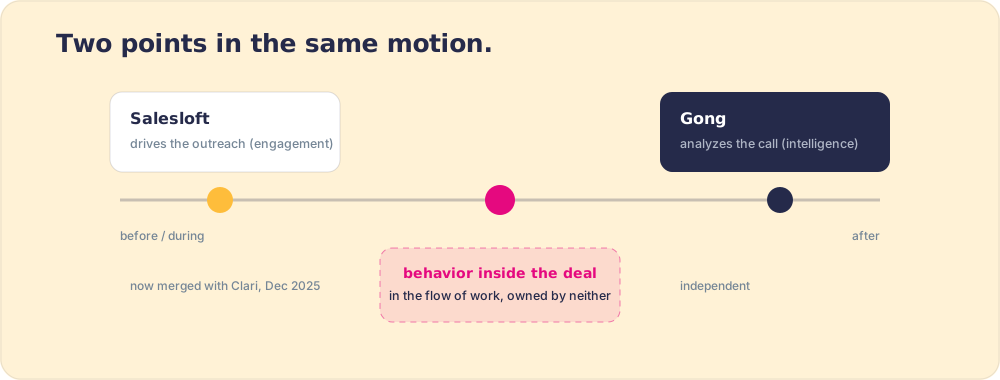
Different ends of the same motion. A clean gong vs salesloft comparison starts by refusing to put them on one axis:
- Gong, the analyst. Conversation intelligence and revenue analytics: it records calls, transcribes them, reads deal risk in the language, and turns the call from a black box into coachable data. It works after the interaction, on what already happened, and it is the category leader, with one of the largest review bases on G2.
- Salesloft, the engine. Sales engagement: it sequences and automates outreach across email, calls, and social, driving the activity that creates and advances deals. It works before and during the interaction, on what the rep does next.
- The overlap. Both have widened toward the middle (Gong into engagement, Salesloft into intelligence), but their centers of gravity are still analysis and activity, respectively.
Be fair to each, because the comparison is only useful if both get their due, with proof rather than impressions. On G2, Gong holds a rating around 4.7 out of 5 across more than 6,000 reviews as of mid-2026, and it sits at or near the top of G2’s conversation-intelligence grid; that is not marketing, it is the largest verified review base in the category. Salesloft rates similarly well, around 4.5 across several thousand reviews, and competes directly with Outreach for the sales-engagement crown. Both are real leaders in their own lane. Gong is the stronger product if your job is to understand and coach what happens inside calls and deals. Salesloft is the stronger product if your job is to drive and orchestrate outreach at volume. They are not substitutes; a team can run both without redundancy, one driving activity and one reading it.
Here is the clean split, the load-bearing sentence of any honest comparison. If your problem is that you cannot see what happens inside your calls, that managers coach from memory and hunches, and that deal risk hides until it is too late, Gong is the best pick, full stop. If your problem is that reps are not running enough structured, multi-touch outreach and your top-of-funnel activity is thin and inconsistent, Salesloft is the best pick. The two questions are different, and the answer to one tells you nothing about the other. Most “which is better” debates are two people who have different problems arguing about a single score.
Laid side by side, the two tools line up on different axes, and the table makes the non-overlap obvious.
| Gong | Salesloft | |
|---|---|---|
| Category | Conversation intelligence and revenue analytics | Sales engagement and sequencing |
| When it works | After the interaction, on what happened | Before and during, on what the rep does next |
| Core job | Understand and coach calls and deal risk | Drive and orchestrate outreach at volume |
| G2 (mid-2026) | ~4.7, 6,000+ reviews, category leader | ~4.5, several thousand reviews |
| Corporate status | Independent | Merged with Clari, closed Dec 3, 2025 |
| Best pick if | You cannot see inside your calls | Your outbound activity is thin and inconsistent |
The row that should give a 2026 buyer pause is the last-but-one. One of these companies is what it was a year ago. The other is mid-merger, and that changes what you are buying.
How did the Clari merger change the Salesloft side?
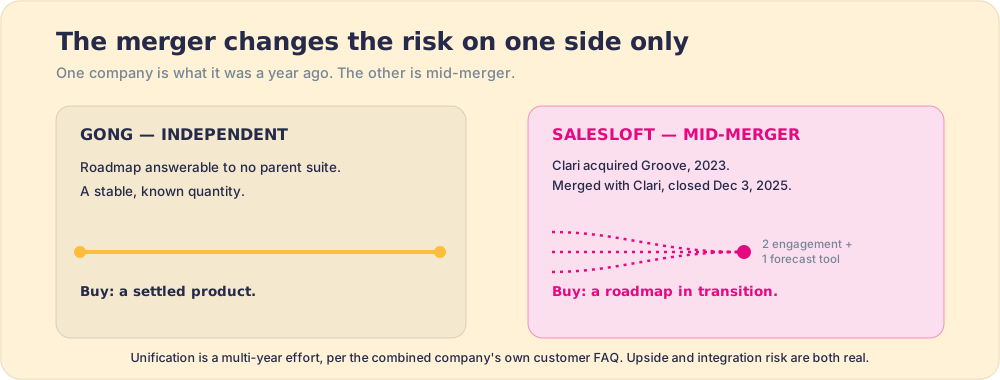
It changed what you are buying. Salesloft is now half of a combined company: it merged with Clari, the forecasting platform, and the deal closed on December 3, 2025, with the stated ambition of one platform spanning engagement and forecast (Forrester on the Clari-Salesloft merger). The vision is real and the combined data scale is genuine. The catch is the timeline: leadership has framed unification as a multi-year effort under a new chief executive, so a 2026 buyer is choosing a roadmap in transition.
That matters for a salesloft vs gong decision because it changes the risk profile on one side only. Gong remains independent, with a roadmap answerable to no parent suite. Salesloft now carries both the upside of a broader platform and the integration risk of a merger still years from done. Neither fact decides the choice, but pretending the merger did not happen would make the comparison wrong, which is exactly the failure that catches roundups written from last year’s market.
The history here is worth a moment, because mergers in this category have a track record. Clari itself acquired the sales-engagement vendor Groove in 2023, a deal Forrester flagged as a milestone for revenue tech, and then turned around two years later to merge with Salesloft, a second, overlapping engagement platform (Forrester, on Clari’s Groove acquisition). A buyer choosing Salesloft today is choosing a product whose parent is now integrating two engagement tools and a forecasting tool into one suite at the same time. That can produce a genuinely broad platform. It can also produce years of roadmap spent on internal plumbing rather than on the features a customer wants. The combined company’s own customer FAQ is candid that unification is a multi-year effort, which is the honest answer and also the cautionary one. None of this makes Salesloft a bad tool. It makes it a tool in motion, and “in motion” is a real variable to weigh against Gong’s stability, in either direction depending on your appetite for it.
Why does gong vs salesloft leave the deciding lever untouched?
Because both work around the deal, and the lever that sets the number is inside it. Gong reads the call after it happens. Salesloft drives the outreach that surrounds it. Neither defines what a rep should do inside the deal itself, in the flow of work, or checks whether they did it.
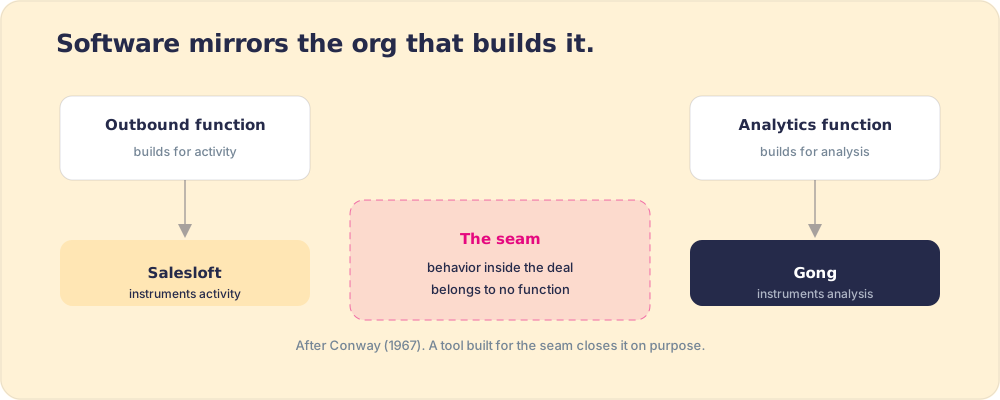
There is a structural reason these tools cluster around the deal rather than inside it, and the historian Melvin Conway named the law behind it in 1967: organizations design systems that mirror their own communication structures (Conway’s Law). Conversation intelligence grew out of the analytics function, so it instruments analysis. Sales engagement grew out of the outbound function, so it instruments activity. The behavior inside the deal, the rep deciding the next right step in the flow of work, belongs to no single function’s tooling, so it falls between the tools each function built. The gap is not an oversight; it is the shape of the org reflected in its software. Closing it takes a tool built for that seam on purpose, which is the case we make in conversation intelligence and sales engagement platform.
What we recommend
Stop scoring gong vs salesloft as one contest; decide which job is yours, and you may find the answer is both. Choose Gong if you need to analyze calls, coach from real evidence, and read deal risk; it is the conversation-intelligence leader. Choose Salesloft if you need to drive and sequence outreach as a sales engagement platform, weighing the merger’s transition against the breadth it may bring. Running both is common and sensible, since they instrument different stages.
What neither owns is the behavior inside the deal, and Conway’s Law explains why: each was built by a function that instruments its own slice, and the deciding behavior lives in the seam between them. If your number leaks not from too little analysis or too little activity but from reps running deals inconsistently, the fix is a behavior layer that lives where reps work, defines the standard, and measures adherence in the flow of work. That seam is where the number is decided, and it is the one place neither Gong nor Salesloft was built to reach.
From here: the after-the-fact analysis in conversation intelligence, the activity engine in sales engagement platform, the Salesloft merger in full in Clari alternatives, and the data on the gap in the sales execution gap.
Frequently asked questions
What is the difference between Gong and Salesloft?+
How did the Clari merger change Salesloft?+
Is Gong or Salesloft better?+
What do Gong and Salesloft both leave out?+
Your process, running itself.