LeadMagic Pricing in 2026: One Transit Card, Fourteen Fares
LeadMagic pricing checked on October 2, 2026: Essential, Growth, Professional and Ultimate, the rate card behind one credit pool, why seats pick your plan before volume does, and when a Clay team should run LeadMagic on its own key.
LeadMagic pricing in 2026 is four self-serve plans sharing one credit pool, Essential at $99 a month, Growth at $249, Professional at $499 and Ultimate at $849, two months free on annual billing, where an email costs 1 credit, a mobile 5, and a failed lookup nothing.
A city transit card is a lovely piece of engineering. One balance pays for the bus, the express train and the ferry; the gate reads the card and charges each ride its own fare. You top it up once and stop thinking. The engineering has two quirks a commuter learns the hard way: the card holds a fixed number of riders, and a few turnstiles charge you on the way in, whether or not the train ever comes.
LeadMagic pricing in 2026 is four self-serve plans sharing one credit pool, Essential at $99 a month, Growth at $249, Professional at $499 and Ultimate at $849, two months free on annual billing, where an email costs 1 credit, a mobile 5, and a failed lookup nothing (leadmagic.io/pricing, opened October 2, 2026). The credit is cheap, from 1.98 cents down to 0.71. The two quirks set most of the bill: each plan holds a fixed number of seats, and a short list of endpoints charges per request.
The quick answer, three ways:
- LeadMagic Essential, annual at $990. A GTM engineer or a three-person team enriching by API, CSV or a Clay table, with the cheapest mobiles of any tool on this page.
- LeadMagic Professional, annual at $4,990. A team of six to ten that needs its own seats, or a data team that wants the unmetered search API.
- Supered Prospector, $540 a rep a year on your own Clay account. A sales team that already pays for Clay, where LeadMagic can sit in the waterfall on your own key and reps run it from LinkedIn, a company site or the CRM record.
How much does LeadMagic cost in 2026?
LeadMagic publishes every plan, both billing cycles and its per-credit math on the page. Everything below comes from it, opened today.
| LeadMagic pricing (Oct 2, 2026) | Essential | Growth | Professional | Ultimate | Enterprise |
|---|---|---|---|---|---|
| Monthly billing | $99 a month | $249 a month | $499 a month | $849 a month | From $2,490 a quarter |
| Annual billing | $990 ($83 a month) | $2,490 ($208) | $4,990 ($416) | $8,490 ($708) | Contracted |
| Credits | 5,000 a month, 60,000 a year | 20,000, or 240,000 | 50,000, or 600,000 | 100,000, or 1.2 million | Custom |
| Per credit, monthly / annual | 1.98 / 1.65 cents | 1.24 / 1.04 cents | 1.00 / 0.83 cents | 0.85 / 0.71 cents | Price lock |
| Seats, one shared pool | 3 | 5 | 10 | 20 | Custom |
| Search exports a day | 10,000 | 25,000 | 50,000 | 100,000 | Custom |
| Search API | 1 credit a request | 1 credit a request | Unmetered, 5 a second | Unmetered, 10 a second | 25+ a second |
| Support | Priority email | Slack and success rep | Plus team analytics | Plus SLA | Dedicated SLA |
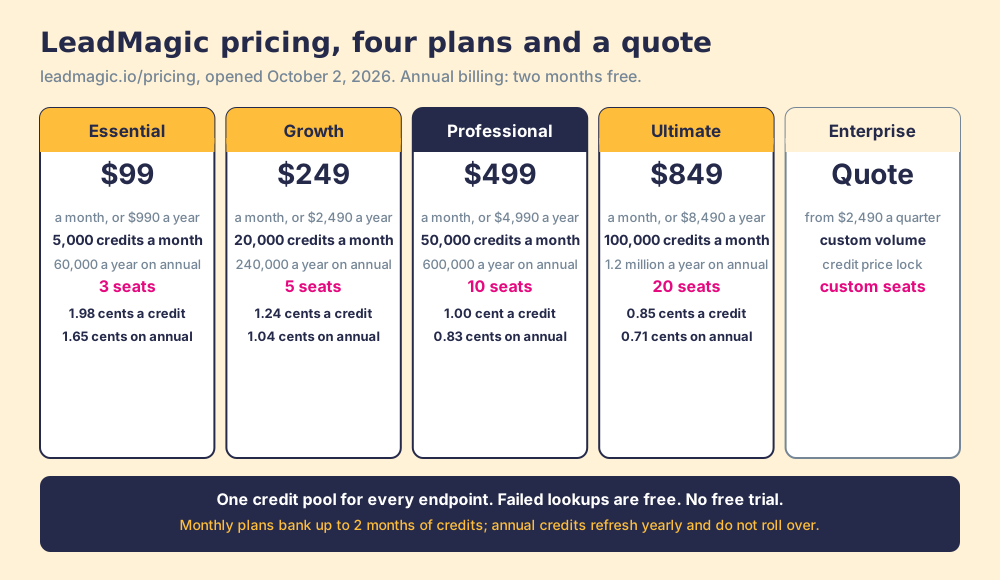
Two lines on the page change how you buy. There is no free trial: “We no longer offer a free-credits milestones program. New accounts choose a paid plan at signup.” And the refund policy is short: “Payments are non-refundable except where required by law or stated in a signed agreement.” You can cancel anytime and keep access through the paid period. So the cheapest test is one month of Essential at $99, which buys 5,000 emails or 1,000 mobiles.
What do LeadMagic credits buy?
Rides. LeadMagic’s rate card prices fourteen endpoints against one balance, “Same cost on every plan. Charged only when we return a result.” The four a sales team touches most: Email Finder at 1 credit “per valid email,” Email Validation at 0.25, Mobile Finder at 5 “per valid mobile,” and Profile Search at 1.
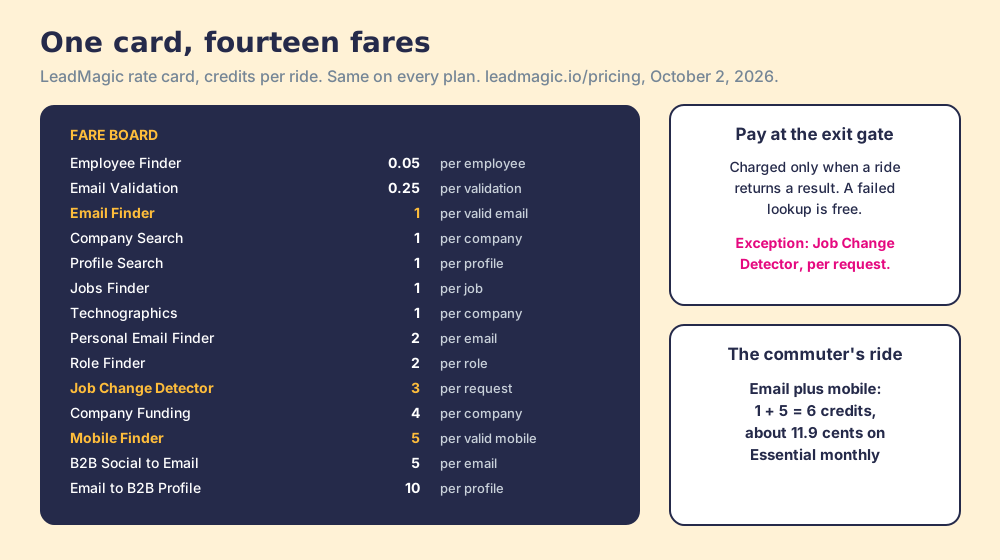
The exit-gate rule is generous and LeadMagic states it three ways: “Failed lookups are free,” “Credits are only deducted on successful enrichment,” and “failed or empty lookups do not deduct credits.” A commuter pays only for the rides that arrive.
The entry turnstiles are the exceptions worth knowing. The rate card bills the Job Change Detector “per request,” at 3 credits, whether or not the person changed jobs. On Essential and Growth, the Search API costs “1 credit/request,” while in-app search is free on every plan and the API becomes unmetered on Professional and Ultimate, up to 13,333 searches a day. A team that polls a thousand champions a month for job changes spends 3,000 credits, three fifths of an Essential month, before it finds a single mover. Price that use case on requests, not results.
Rollover follows the card type (LeadMagic pricing FAQ):
- Monthly card. Unused credits roll over, but “you may never bank more than two months of your plan’s included monthly allocation.”
- Annual card. “Annual billing and custom (negotiated) deals do not roll over unless your written agreement explicitly includes rollover.” The year’s credits refresh at renewal.
- Downgrade. The cap “drops to 2x your new plan’s allocation at the plan change,” and credits above it are removed. Spend down before you step down.
How much does a LeadMagic email or mobile cost?
Less than anywhere else on our pricing pages for mobiles, at list. A mobile is 5 credits on LeadMagic against 10 on Findymail and Prospeo, so on comparable plans the phone costs about half as much.
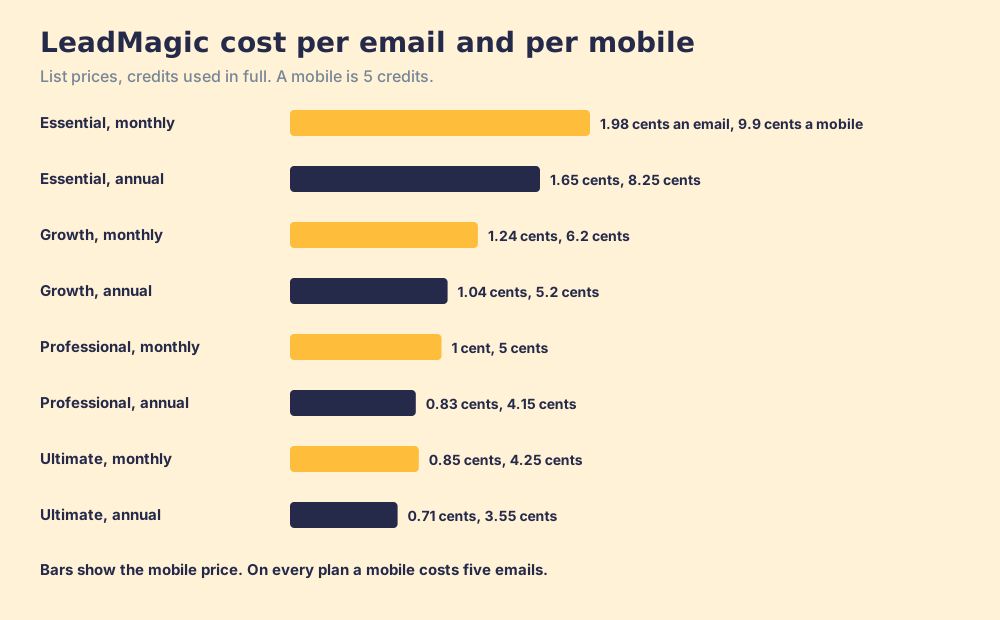
The comparison that matters is per mobile found, against the phone fares on our sibling pages, all at list:
| Per mobile found (list, Oct 2026) | Plan | Per mobile |
|---|---|---|
| LeadMagic | Essential, annual | 8.25 cents |
| LeadMagic | Essential, monthly | 9.9 cents |
| Findymail | Starter, monthly (10 credits) | 19.8 cents |
| Prospeo | Starter, yearly (10 credits) | about 18 cents |
| Apollo | Basic, annual (8 credits) | about 16 cents |
Sources: Findymail pricing (October 2), Prospeo pricing (October 2), and Apollo’s pricing page (captured September 25, 2026). The price says nothing about whether the mobile exists. LeadMagic does not publish a mobile coverage figure we could verify, and on G2, one reviewer wrote in November 2025 that “Out of 100 attempts, fewer than 15 were successful” for phones (Sanim M., G2). One review is one list, not a benchmark; test a hundred of your own before you plan a dial program around 8 cents.
For emails we do have independent data. In Clay’s test of 13 work-email providers on North American contacts, LeadMagic found 68.02% with a quality score of 81.95, ninth of 13 on coverage, at 0.3 Clay credits per lookup (Clay data tests, last tested October 22, 2025). Findymail led that table at 90.26%. LeadMagic’s own page says its Email Finder returns “verified B2B emails at 97% accuracy,” which is its claim, measured its way.
How do seats decide which LeadMagic plan you buy?
Before volume does. LeadMagic is priced by credits and gated by seats: “Seats are included per plan and share one credit pool: 3 seats on Essential, 5 seats on Growth, 10 seats on Professional, 20 seats on Ultimate.” The transit card holds a fixed number of riders, and a bigger family buys a bigger card even if it rides less.
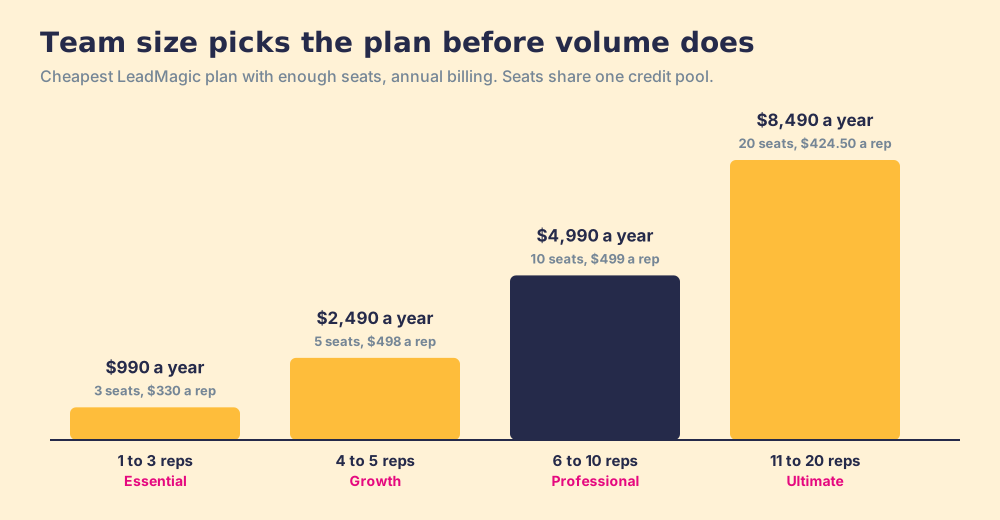
Run the step that hurts most. A three-person team on Essential annual pays $990. Hire a fourth rep and the cheapest plan with a seat for her is Growth at $2,490, $1,500 more a year, with four times the credits the team may not need. The step from five to six reps is the same shape: $2,490 to $4,990. The fix is to decide who needs a seat. In LeadMagic’s model the seat is a login to an enrichment tool, and the people who need one are the people who run tables, files and API keys, usually not every rep.
That points at who LeadMagic is built for. Its plans list “API, CLI & MCP access” and “Clay, Apollo & Zapier integrations” on every tier, and its customer quotes come from agencies and outbound builders who use it inside Clay, Smartlead and Instantly. A Chrome Web Store search for LeadMagic on October 2 returned a Google Sheets enrichment listing and no LinkedIn extension, and its integrations page lists Salesforce with HubSpot marked “Coming Soon.” LeadMagic is a strong engine for the person who builds the pipeline of data. A rep on a LinkedIn profile has no LeadMagic button to press.
Why do teams leave LeadMagic?
Fair first. The pricing is unusually transparent: per-credit math printed for every plan, a full rate card, a calculator that warns “Estimates assume every lookup returns a result,” and a FAQ that answers the uncomfortable questions in plain words. Its pricing page quotes Eric Nowoslawski of GrowthEngineX saying LeadMagic “consistently wins our Clay waterfalls on both hit rate and credit efficiency.” We found no acquisition or funding round in a news search on October 2.
The reasons teams look elsewhere are on the record:
- Small review base. On G2, LeadMagic held a 4.3 out of 5 from 19 reviews on October 2, 2026 (G2, LeadMagic reviews), a thin sample next to the hundreds for Hunter or Prospeo.
- Billing friction. One G2 reviewer wrote in February 2026 that “The cancellation flow is not transparent enough” (Stanislav K., Small-Business). With no trial and no refunds, a buyer has little room to change their mind.
- Account freeze. The FAQ: “If your subscription payment is past due or fails, your account will be frozen immediately,” including the API. For a team running live Clay tables on LeadMagic, an expired card stops the waterfall step until someone fixes billing.
- No rep surface. No LinkedIn extension and no HubSpot integration yet, so reps reach LeadMagic only through something else.
Why should you trust this breakdown?
We sell no contact data. Supered has no database of its own, on purpose; Supered Prospector runs on Clay, our only data provider, and LeadMagic is one of the providers Clay can call. So we gain nothing from whether you buy LeadMagic, Findymail or Apollo directly. Our stake is what reps do with a contact once it lands in the CRM.
Supered started inside RevPartners, the HubSpot partner I founded, which sold roughly twice as much Sales Hub as any other partner and reached HubSpot’s Elite tier in 13 months. Supered is the #1 sales enablement app on the HubSpot marketplace, with 6,000+ installs and a 5.0 rating from 122 reviews there, and on G2 it held a 4.9 out of 5 from 81 reviews on October 1, 2026 (G2, Supered reviews). Every LeadMagic credit price on this page comes from leadmagic.io/pricing, opened today.
Which LeadMagic plan, or which alternative, fits your team?
The grades use the five weights from our Hunter.io alternatives page: coverage of the contact you need (x3), delivery where the rep already works (x2), price structure for a mid-market team (x2), what happens to the list after the export (x2), and bundled outreach (x1), out of 50. The weights serve one job, a team of five to fifty reps building its own lists. Flip the lens to “cheapest credits for a GTM engineer’s API” and LeadMagic moves near the top.
| Rank | Option | Grade | Best fit | CRM integration | Setup effort | Pricing (plan with the feature) | Reason to switch |
|---|---|---|---|---|---|---|---|
| 1 | Supered Prospector | A (44) | Sales teams already paying for Clay | Native: HubSpot, Salesforce, Pipedrive | Demo, then live in under a week on your own Clay account | $45 a rep a month, billed annually, plus your Clay plan | Clay’s waterfall, LeadMagic included on your key, from the rep’s own screen |
| 2 | Apollo | A- (36) | Small teams wanting data plus sequencing | Native | Self-serve | Basic $49 a seat a month, annual | A rep surface, phones and sequences in one seat |
| 3 | Findymail | B+ (29) | Email-first teams | Native: HubSpot, Salesforce, Pipedrive | Self-serve | Starter $99 a month, shared credits | First in Clay’s North American email test, no seat limits |
| 4 | Hunter | B+ (28) | Work emails at any headcount | Native: HubSpot, Salesforce, Pipedrive, Zoho | Self-serve | Growth $104 a month, billed yearly | Unlimited users, about a cent an email |
| ref | LeadMagic | B- (24) | GTM engineers and agencies running API and Clay volume | Salesforce; HubSpot “Coming Soon” | Self-serve, API key at signup | Essential $83 a month annual, 3 seats | The reference: cheapest mobiles here, one pool for fourteen endpoints |
LeadMagic’s row is our scoring: 3 of 5 on coverage (68.02% on Clay’s email test, mobile coverage unverified), 2 on rep-side delivery (no LinkedIn extension), 4 on price (cheap credits, stepped seats), 1 on what happens after the export, 1 on outreach. The other rows reuse the scores on our Hunter.io alternatives page.
What does LeadMagic cost for a team of ten?
$4,990 a year, because ten reps need ten seats and Professional is the smallest plan that has them. That buys 600,000 credits a year, far more than ten reps building lists by hand will spend; at 6 credits for an email and a mobile, it covers 100,000 complete contacts. The team pays for the seats and receives the volume as a side effect.
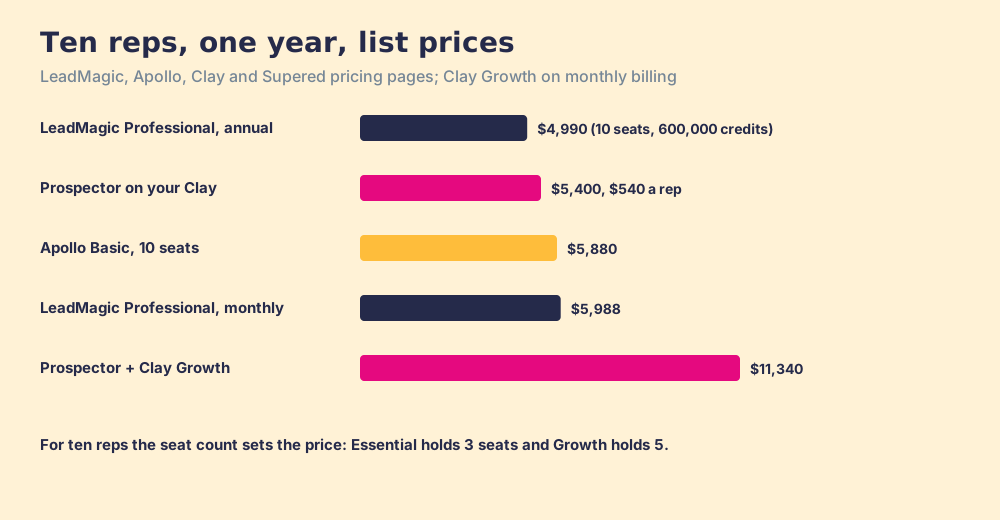
Read the chart both ways. On price per contact, LeadMagic Professional wins easily: 100,000 email-and-mobile contacts for $4,990, about 5 cents each, against roughly 12,000 a year from Clay Growth’s 6,000 monthly Data Credits at about six credits a contact (our arithmetic from Clay’s calculator; Clay Growth is $495 a month on monthly billing, clay.com/pricing). If your team has a builder who will run LeadMagic through files and tables, buy LeadMagic. The comparison turns on the reps. Ten LeadMagic seats give ten people an enrichment app; none of them gets a button on the LinkedIn profile or the HubSpot record they are already looking at.
How does Supered Prospector compare to LeadMagic pricing?
Go back to the transit card. LeadMagic sells one of the cheapest cards in town, with fair fares for nearly every ride. Clay is the network map: its waterfall asks provider after provider until one returns a verified email or phone, across 200+ data and AI vendors under one contract (clay.com, September 25, 2026), and “If an enrichment returns no result, you’re not charged Data Credits or Actions” (clay.com/pricing). LeadMagic already runs on that map. Clay lists it as a provider since May 9, 2024, with actions such as Find Mobile Number and Enrich Company marked “Clay Credits or Bring Your Own Account” (Clay, LeadMagic integration, opened October 2, 2026).
Whose credits pay matters by a factor of three or more.
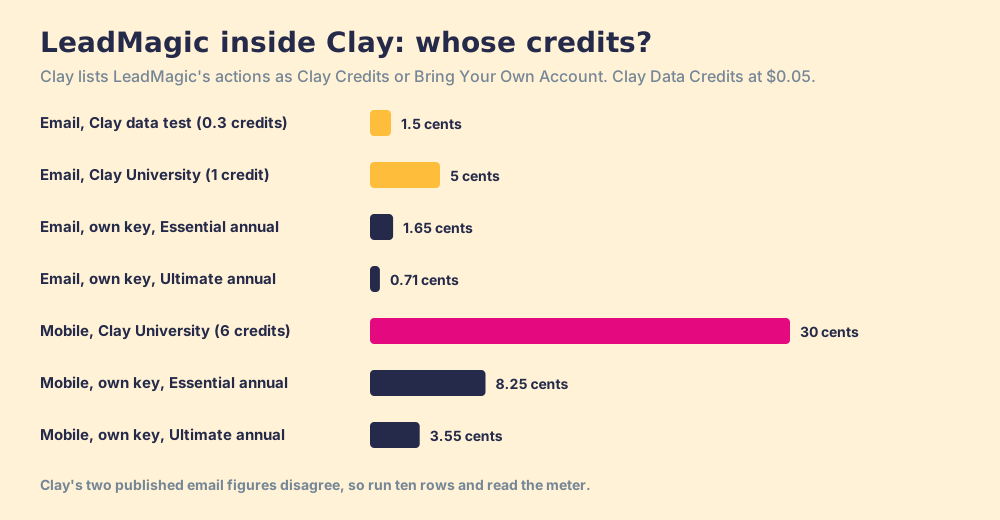
The mobile row is the one to act on: 30 cents through Clay’s managed account against 8.25 cents on LeadMagic Essential annual with your own key, and Clay’s pricing page says your own API keys skip Data Credits. A Clay team that pulls mobiles at volume can pay for LeadMagic Essential with the savings on a few thousand phones. The email row is closer and Clay’s own two figures disagree, so test ten rows.
LeadMagic and Clay both stop at the builder. Prospector puts what the builder made in the rep’s hands, where the rep already works:
- Where the rep already is. A LinkedIn profile, a Sales Navigator list, a company’s website, or a HubSpot, Salesforce or Pipedrive record. One click runs the waterfall, and reps never log in to Clay.
- A check before the duplicate. On a LinkedIn profile, the rep sees whether the person already has a matching record in the CRM and whether the prospect was worked in the past.
- The GTM engineer’s tables, on a button. Any custom Clay workflow runs from Prospector, a list can go into a Clay workflow, and the buying-committee lookup is tuned by title, department and seniority.
- The list after the export. The contact lands in the CRM with the team’s process applied, and the manager sees which lists get worked and how each lead ends: Qualified, Recycled or Disqualified.
Prospector is $45 per rep per month, billed annually, from one user, runs inside the Supered Chrome extension, and is live in under a week with implementation included (Prospector, Supered pricing). It runs on your Clay account and your Clay credits. Clay governs the data. Supered governs the motion. Ask every vendor what it reads from LinkedIn, ours included. The sourcing use case walks the rep’s side, and the Clay email finder guide shows the email steps inside Clay.
Choose something else if any of these is true:
- A builder, not a sales floor. If one GTM engineer or an agency runs enrichment by API, CSV and Clay tables for others, LeadMagic Essential at $990 a year is the better buy, and probably the cheapest mobile fare you will find.
- No Clay account. Prospector needs one. Without Clay, a team that wants a rep surface is better served by Apollo’s single seat.
- No waterfall owner. Someone sets the provider order in Clay. If no one owns it, a single tool with one price is less work.
What are the best LeadMagic alternatives?
By job, with the page that prices each:
- Findymail, for the best email coverage. First in Clay’s North American email test at 90.26%, no seat limits; a mobile costs 10 credits. Findymail pricing.
- Hunter, for unlimited users. About 1.04 cents an email on Growth yearly, any headcount, no phones. Hunter.io pricing.
- Prospeo, for per-user plans with a free tier. 100 free credits a month and a Chrome extension. Prospeo pricing.
- FullEnrich, for a waterfall without Clay. One credit plan that runs its own provider sequence. FullEnrich pricing.
- Apollo, for a rep surface with sequences. Apollo pricing.
What we recommend
Three ways forward, and our view on each.
- A builder or an agency. One month of Essential at $99 to test your own list, then Essential annual at $990 if the hit rates hold. Keep seats for the people who run tables and files, and price job-change monitoring on requests.
- A sales team without Clay. LeadMagic gives reps no surface of their own, so pair it with something they will open, or price Apollo’s seat against LeadMagic plus the tool they would use it through.
- A sales team with Clay. Put your LeadMagic key into Clay for mobiles and let the waterfall do the rest, then run that waterfall from where reps already work with Supered Prospector, at $540 a rep a year.
A transit card is the cheapest way across a city, as long as you know which turnstiles charge on the way in and how many riders the card holds. Read those two lines on LeadMagic’s page before the price. Then ask where your reps will press the button. If it is a LinkedIn tab, the Clay pricing page and waterfall enrichment show the rest of the route.
Frequently asked questions
How much does LeadMagic cost in 2026?+
What do LeadMagic credits buy?+
Does LeadMagic have a free trial?+
Do LeadMagic credits roll over?+
How many users can share a LeadMagic plan?+
Should a Clay team buy LeadMagic directly?+
Everything we have written on LeadMagic
More on LeadMagic
Looking past LeadMagic? See Supered Prospector on your own Clay accountYour Clay waterfall, where reps already work.