HubSpot Consultant: Romeo Mann on Why Knowing the Buyer Beats Knowing the Tool
Romeo Mann's first business ran on HubSpot and went bankrupt. His agency, MAN Digital, grew by learning from clients smarter than him. His bet on what makes a HubSpot consultant worth hiring.
A HubSpot consultant designs, builds and improves a company's HubSpot setup, and the good ones start from how that company's buyers make decisions before they touch a property or workflow.
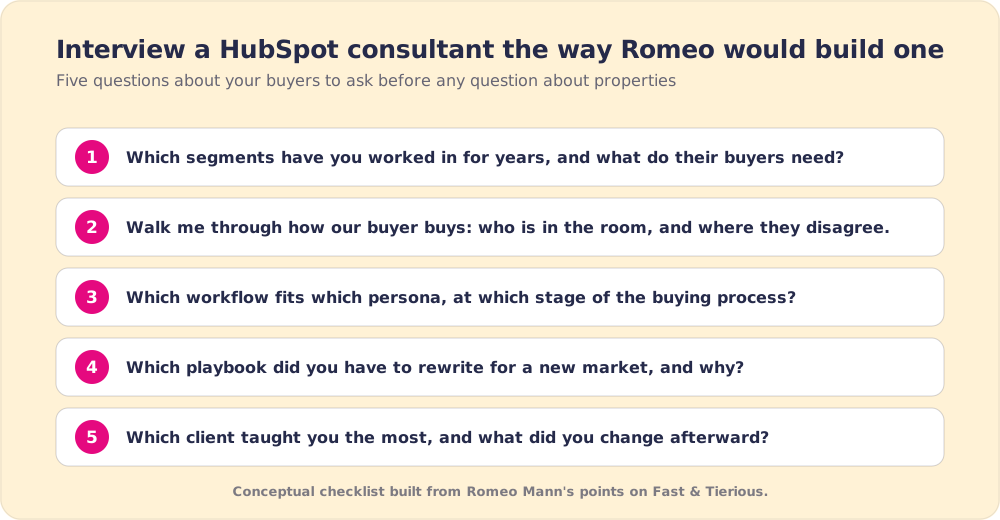
Romeo Mann’s first HubSpot project was a triathlon business. Around 2015, before HubSpot had much of a CRM, he and a partner ran bootcamps for triathletes in places like Denver and Barcelona, with Ironman winners as coaches. They bought Facebook ads aimed at lawyers and doctors, then used HubSpot to nurture those leads into webinars and high-priced tickets. The business passed a million in turnover. Then it went bankrupt.
“We were doing too many Facebook ads, and ROI was not there,” Romeo said.
What survived was the team: designers, copywriters, developers and marketing automation people. “We learned so much,” he said, so they decided to “make an agency out of all our learnings.” That agency is MAN Digital, where Romeo is head of delivery, and where the work today is RevOps and account-based marketing for B2B tech companies. When Romeo came on Fast & Tierious in 2024, I asked him what makes a HubSpot consultant worth paying. He said anyone can learn the tool in about a year, and the years it takes to learn how one market buys are what clients pay for.
He grew up with the product, and says he “evolved, let’s say, in RevOps and in HubSpot as HubSpot evolved.” At the start, he said, it was “blogs, landing pages and email.” MAN Digital did HubSpot work for about two years before anyone told them there was a partner program. “Some Dutch guy called us from HubSpot,” Romeo said, and his reaction was surprise: “So you care about agencies in Poland?” MAN Digital became a HubSpot partner around 2018.
How do you hire a HubSpot consultant?
Start with Romeo’s split between the fast skill and the slow one. Tool skill is quick to check: can this person build the pipeline, the lifecycle stages, the integrations and the reports you need? Keep those HubSpot consulting questions, because a consultant who fails them is out. Then spend most of the interview on your buyers, the part Romeo says takes years to learn.
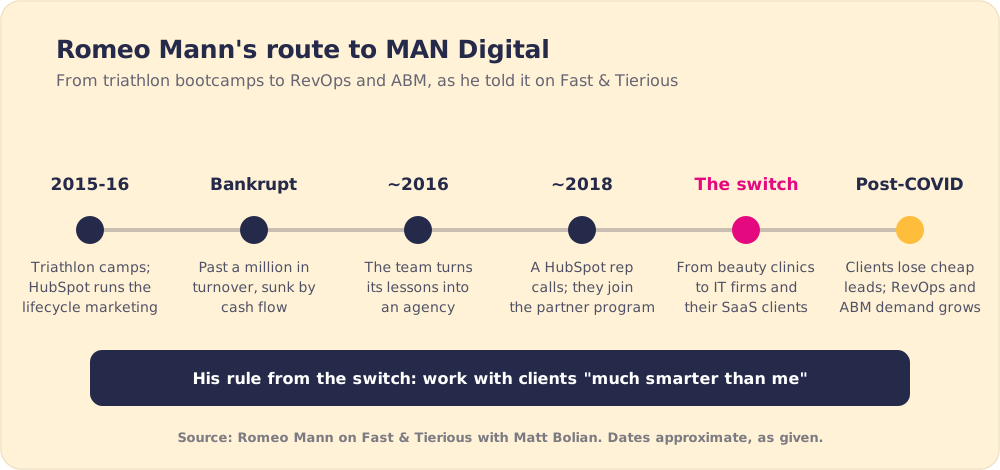
- Which segments have you worked in for years, and how close are they to ours?
- How does our buyer’s committee decide, and where does it get stuck?
- Which workflow would you build for which persona, at which stage of the buying journey?
- Which playbook did you have to rewrite for a new market?
- Which client taught you the most?
The answers you want sound like MAN Digital’s own history, which the rest of this post walks through. It was a team that learned the tool as HubSpot grew, then spent years learning how software houses, SaaS companies and insurers buy, and built its RevOps and ABM practice on that. A consultant who can only talk about properties and workflows will need a long discovery phase to learn your market, and you will pay for it. Our guide to the B2B sales process maps the buying steps worth asking about.
Why did Romeo want clients smarter than him?
“We learned the hard way,” Romeo said of the early years. Fresh from the triathlon business, the new agency took whatever came in: beauty clinics, hair and skin treatments, tourism. Then he looked at which businesses were thriving in his region. The ones doing well were IT outsourcing firms, “they like to call themselves software houses,” supplying developers to SaaS companies, mostly in the United States.
He wanted in, and his reason was about his own growth. “I want to learn from my clients,” he said. “I want to work with clients and partners much smarter than me, much, much smarter. I don’t want to explain what is PPC to a gynecologist anymore.”
The move paid in two ways. First, the software houses taught MAN Digital how they sold to SaaS companies. Then they became a channel: “we started to get references from these IT companies to their clients, to the SaaS companies.” Through that chain, Romeo’s team learned enterprise sales and long sales cycles from the inside. Learning from clients, he said, was “the best thing that could happen to us.”
On the episode I called this “the power of a channel”: MAN Digital found firms already serving the buyers it wanted, offered a service that fit beside theirs, and got references back. I also liked that Romeo stayed broad for a while. SaaS covers fintech, insurtech and much more, and MAN Digital worked across it before it narrowed to RevOps and ABM.
Why do US outreach playbooks fail in Europe?
Romeo talked openly about the mistakes that came next. MAN Digital tried “to copy what works in the US, mainly outreach,” and it fell flat. “In Europe is a different game, right, because it’s GDPR,” he said, and “the culture is different, even in the cold emails.” They kept the knowledge and rewrote the approach for their market.
Then they dropped spray-and-pray outreach altogether for their clients. When deals are high-ticket and depend on subject matter expertise, Romeo said, “we just simply cannot do that.” What worked was account-based: insight, peer-to-peer conversations, and thought leadership aimed at a defined set of accounts.
The timing turned in their favor. Before COVID, demand for developers was high and the software houses lived on inbound. After the layoffs, outsourced developers were the first cut. Romeo’s clients told him, “we cannot make leads anymore from SEO and PPC,” paid search had grown more expensive, “so now we need something smarter.” MAN Digital “actually started growing when they had problems.” Today, he said, he is proud to watch clients run good social selling and LinkedIn programs on their own.
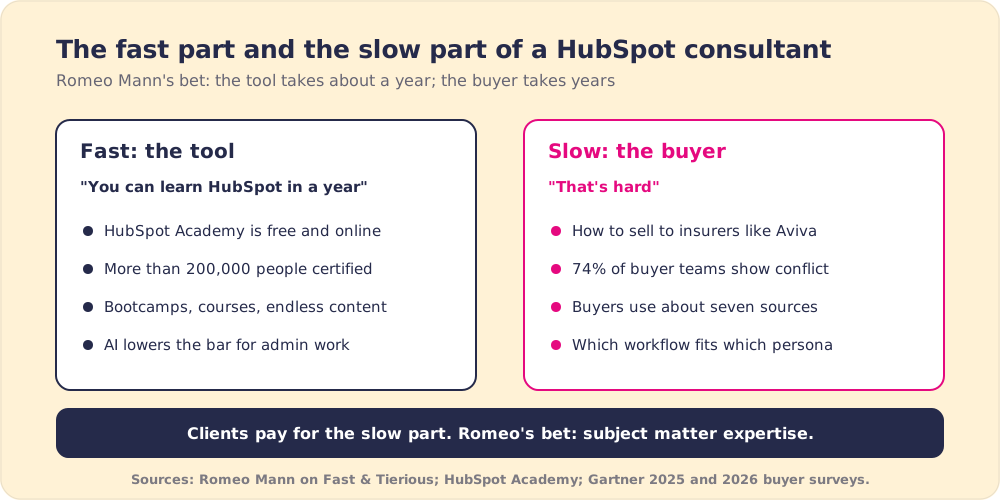
Buyer research supports his shift away from volume. Gartner surveyed 632 B2B buyers and found 74% of buying teams showed unhealthy conflict during the decision, and that groups reaching consensus were 2.5 times more likely to report a high-quality deal (Gartner, 2025). A later Gartner survey of 645 buyers found they use an average of seven information sources and that 67% prefer a rep-free experience (Gartner, 2026). Romeo’s clients sell to buying groups like these, where several people have to agree and often don’t. MAN Digital’s account-based work starts by finding out who is in the group and what each of them cares about.
What makes a HubSpot consultant worth hiring now?
Romeo’s bet for MAN Digital is subject matter expertise, and his reasoning starts with how easy the tool has become to learn. “Let’s be honest, you can learn HubSpot in a year,” he said, with bootcamps and “so much content out there.” HubSpot Academy is free and online, and says more than 200,000 professionals have been certified (HubSpot Academy). I added that AI is lowering the bar further: “there’s been a democratization of admin talent even through AI,” so “doing HubSpot work is not sufficient. You have to have HubSpot work plus experience.”
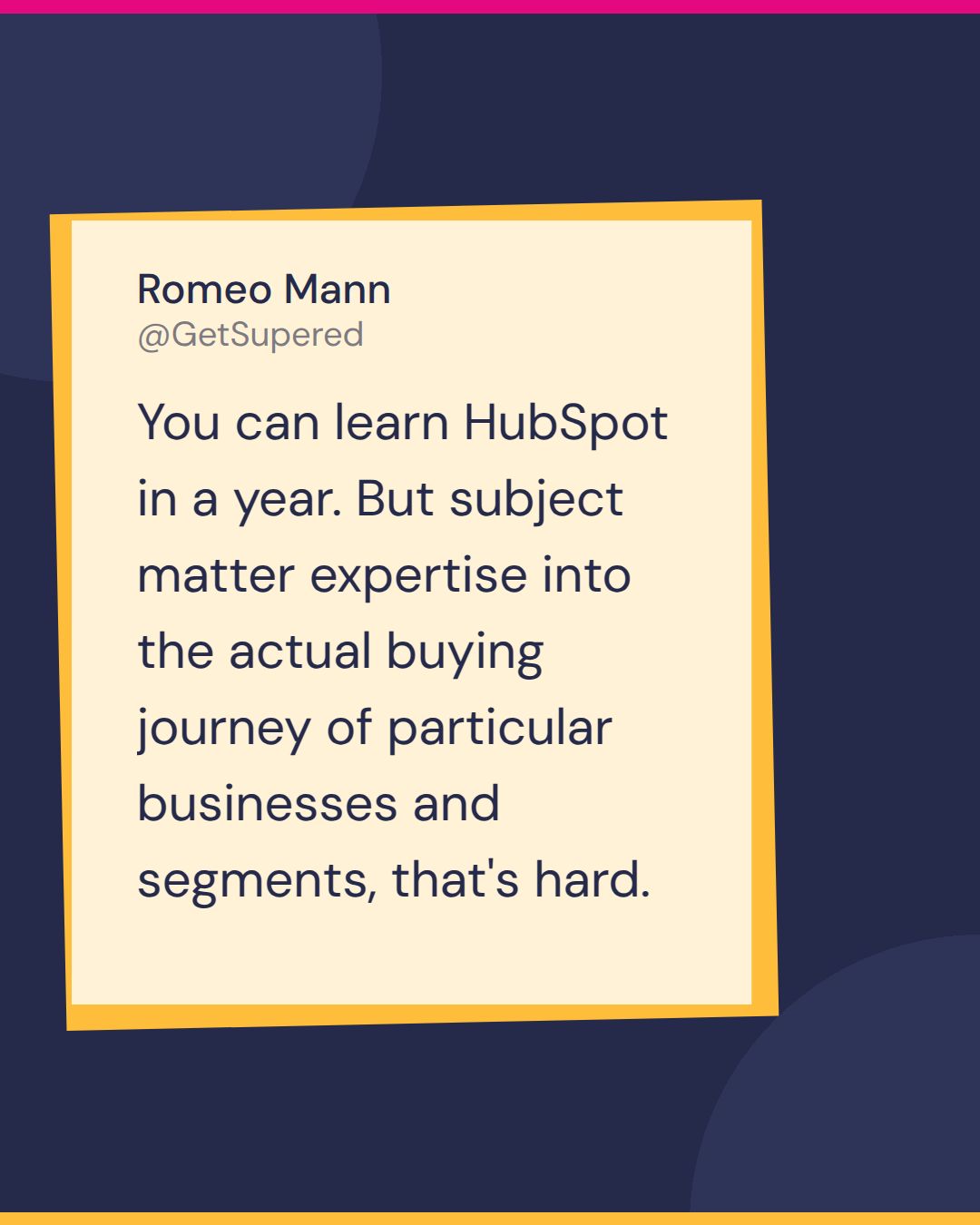
The slow part, in Romeo’s words: “subject matter expertise into the actual buying journey of particular businesses and segments, that’s hard.” He named examples. How do you sell developers to insurtech? “How do you sell to Allianz, how do you sell to Aviva?” That, he said, takes “years of experience to really understand the customers, the buying journey, and then configure ABM and HubSpot based on that.”
He applied the same test to Supered. The tech part is built, he told me, but “the use cases is what actually matters.” A package for social selling is a start. The question is “what are those workflows for that particular niche, for that sector, for that buying persona in this particular time in the buying journey.” “I can learn coding pretty fast, it’s not a biggie,” he said. “But the subject matter expertise, it’s a big one.”
His MAN Digital colleague Jakub Pasik made a related point in The State of Sales Enablement 2026: “AI without process just amplifies failure. The process must be adopted first before AI adds any real value.” Our survey also shows where AI is doing the work today. Teams use it most for call summaries (73%) and prospect research (64%), and 26% use it for deal strategy or forecasting, the work that depends on knowing how a particular buyer decides. Romeo says that part of the job takes years to learn.
Romeo Mann’s lessons for HubSpot consultants
- Clients smarter than you. Choose work that teaches you; Romeo left beauty clinics for software houses because he wanted to learn from his clients.
- A channel next door. Serve the firms that already serve your target buyers, and their references bring you the next tier of clients.
- A playbook rewritten for the market. Outreach copied from the United States did not survive GDPR and European business culture; keep the knowledge, change the approach.
- Expertise in how a segment buys. The tool takes about a year; years inside one market’s buying process are the moat.
- Process before AI. Jakub Pasik’s rule at MAN Digital: the team has to adopt the process before AI adds value.
What should you do with this?
If you are hiring a HubSpot consultant, hire someone who already knows how your kind of buyer decides, and spend discovery on your specifics. A consultant hired for tool skill alone needs a long discovery phase to learn your buyer. Make that call whenever the deal is high-ticket and the buying group is large, because Gartner’s data puts the hard part there: 74% of buyer teams in conflict, and consensus making a high-quality deal 2.5 times more likely.
If you are a consultant, Romeo’s route is available to you. Pick clients who know more than you, learn how their buyers decide, and build your HubSpot work on that knowledge. Supered’s partner program works with agencies that pair that expertise with adoption. For the next read, our HubSpot implementation guide covers what the build should include once you know the buyer.
Frequently asked questions
What does a HubSpot consultant do?+
How long does it take to learn HubSpot?+
How do you hire a HubSpot consultant?+
Does a HubSpot consultant need industry experience?+
Is account-based marketing a fit for HubSpot consulting clients?+
Your process, running itself.