RevOps Tools: Alexander Müller's Top Five, From Granola to Claude Code
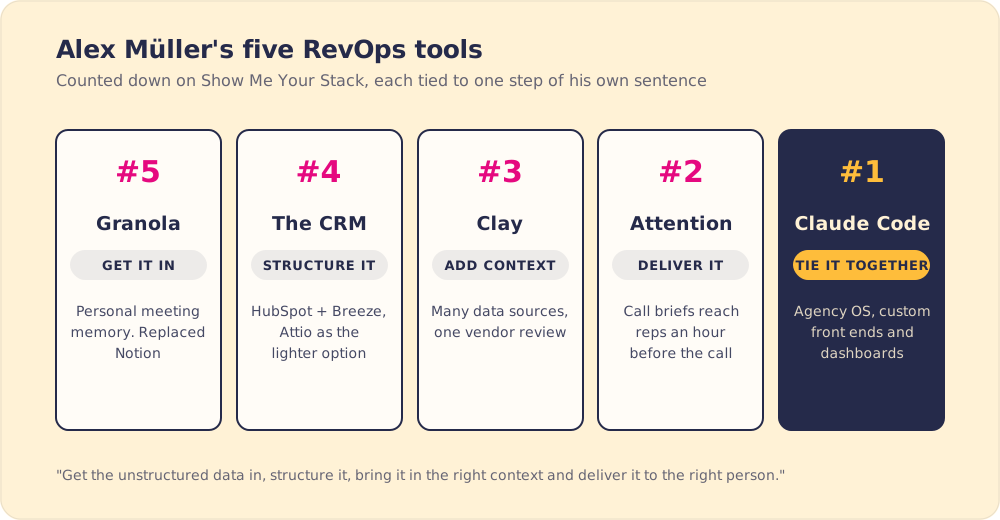
Alexander Müller ran revenue operations at three unicorns. On Show Me Your Stack he counted down his five RevOps tools, from Granola to Claude Code, and explained the one idea that ties them together: conversations are the company's memory.
RevOps tools are the software a revenue operations team uses to capture what happens with buyers, structure it in the CRM, enrich it, and deliver the useful part to the person who needs it, which is how Alexander Müller describes the job of his own stack.
When Alexander Müller started his first B2B job, about 15 years ago in banking, a colleague who shared a calendar stood out. In banking, he said, an open calendar was “almost like being an open book.” In 2026 it is “not that special anymore,” and he thinks it made companies “much more effective.” He expects recorded conversations to go the same way, and that bet shaped the five RevOps tools he picked.
Alex has run revenue operations at three unicorns, including the Berlin freight company Forto (RevOps Lab), and now runs the RevOps consultancy Revenue Enablement. He counted down his five favorite tools with me on Show Me Your Stack, and near the end he summed up what they are for: “get the unstructured data in, structure it, bring it in the right context and deliver it to the right person.”
He was describing his own revenue operations tools, but the sentence works as a checklist for anyone’s.
Why won’t Alex name a tool before he knows the company’s size?
When I asked for his number five, Alex said the answer depends. “My number five tool really depends a lot on where you’re at,” he said. “If I’m a 20 person startup, I optimize almost entirely for execution speed, right? If I’m a 500 person company, I still want speed, but I’m probably optimizing more for security, governance, permissions, existing infrastructure, and legacy.”
He consults for both kinds of company, and he described his day in the same terms: which client he is working in, how big it is, how “AI forward” it already is, and what has changed in its revenue since the last project update meeting. At the larger clients, a new tool also has to answer who may read the transcripts and whether it passes a security review.
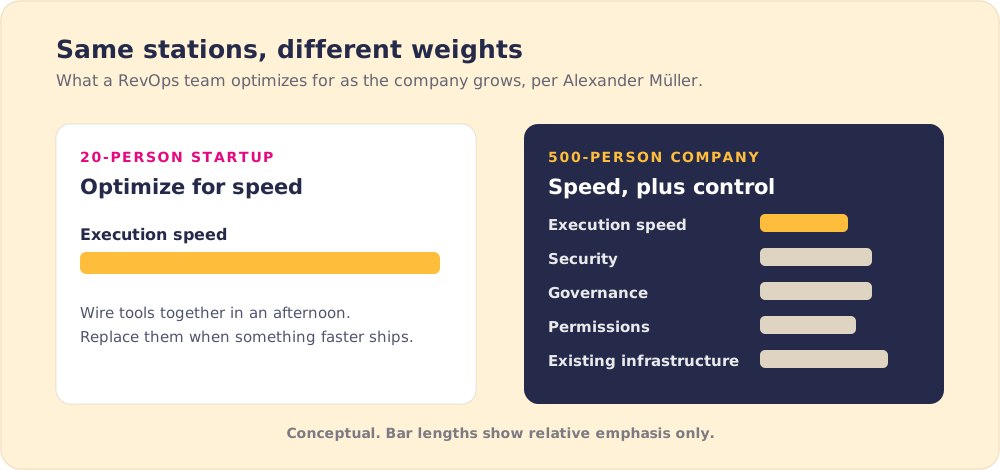
So before you compare two tools, write down which kind of company you are. Alex’s pick changes with the answer.
Why is Granola his number five?
Granola is a meeting notes app that records from the computer’s own audio. As I pointed out on the episode and Alex confirmed, it does not join the call as a bot, so the other side may never see it.
Alex was blunt that recording itself is a commodity: “it doesn’t really matter who is doing it for you.” Granola made his list because, as he put it, “it has replaced somebody that I thought would never be replaced in my life.” That was Notion. “Notion was basically my memory,” he said. “Whoever I spoke to over the last six, seven years is probably in there. And now Granola is actually replacing that.” He still prepares his own notes before a meeting and enriches them afterward, and he rates Granola’s off-the-shelf connections to email, calendar, teammates and LinkedIn as the best he has used.
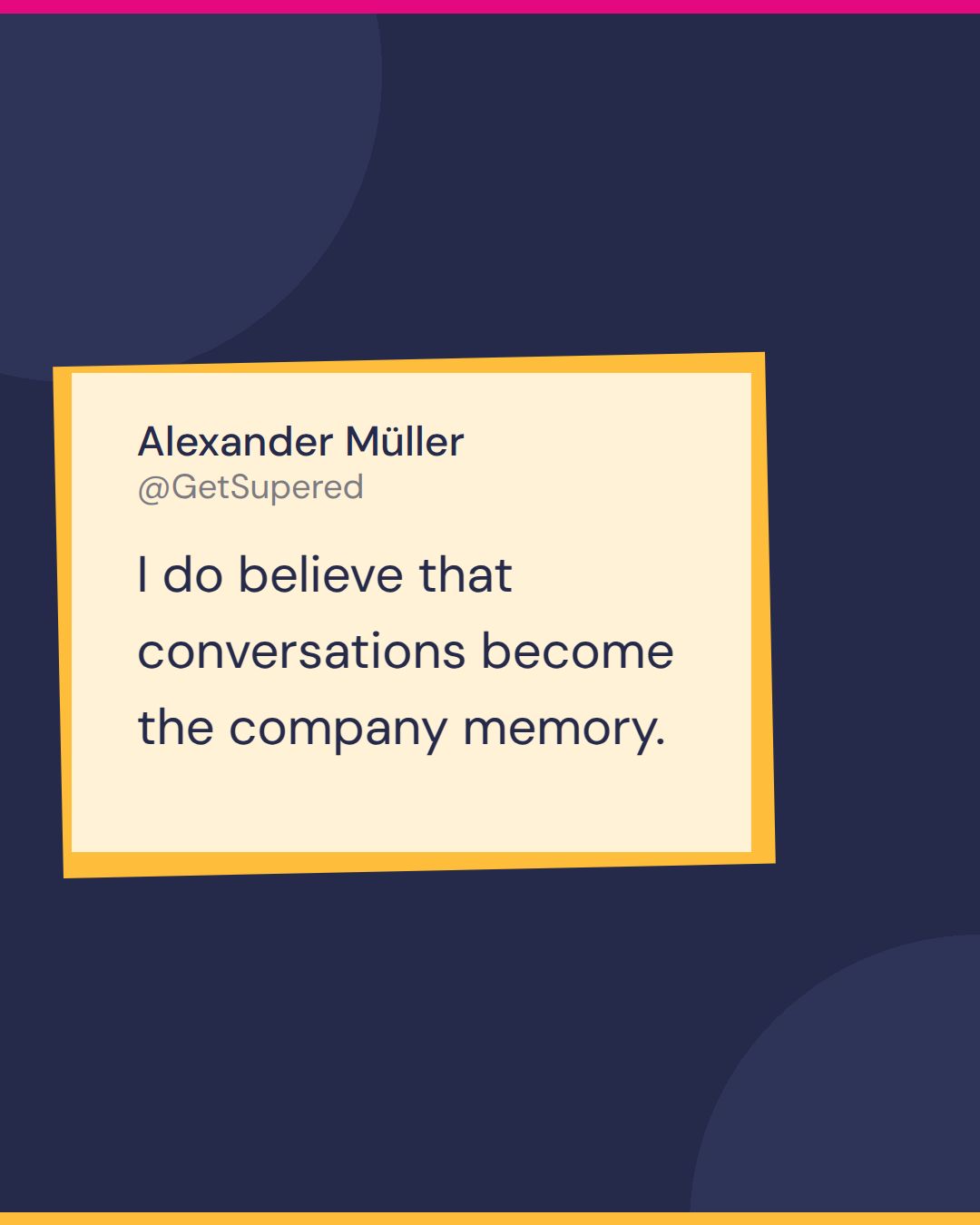
The bigger reason goes back to the calendar. Sharing conversations with the people around you, he said, makes a team “way more efficient” and helps it understand what customers are doing. “I do believe that conversations become the company memory,” he said.
If you are shopping for a recorder, Alex would have you judge it by where the notes end up, since the recording itself is the easy part.
What does Alex want from a CRM now?
His number four is “the good old CRM,” in layers. HubSpot with Breeze, which he finds much easier when it is connected to Claude Code or a Codex console, and Attio as the lighter CRM he enjoys working in, “maybe because of my old love to Notion.”
He does not pick sides on vendors. His test for any CRM is two questions: “number one how easily is the data accessible to my own AI model that I’m using and number two how well can I still have governance” when working with it headless, through Claude or another tool. In his view the system of record will still be there, while the screen people use on top of it may change. “Who in the world says that HubSpot or Salesforce have the best front end?” he asked. He expects custom front ends and custom dashboards to take over much of that job.
He also admitted how fast his own advice goes stale. If the Alex of 2025 pitched him today, he said, “I would probably kick him right out of the room and say, ‘Hey, haven’t you heard of what happened over the last 12 months?’”
Put his two questions to your CRM this week. Can your AI tool read the data you need, and can you control what it writes?
Why does Clay still earn a spot above the CRM?
Clay, at number three, is enrichment: it pulls company and contact data from many providers into one table. Alex likes the branding, but his main reason was procurement, which I admitted on air I had never thought about. At a scale-up, “you don’t have to go five times through the vendor approval process if you want to have five different enrichment sources.”
With one contract, he can switch providers, run waterfalls that try one source after another, and plug in his own API keys for the providers he likes, which keeps costs down. He also values that a grown company can add Clay without rebuilding its stack on GitHub, n8n and raw APIs.
The procurement point carries weight because software sprawl is expensive. Zylo’s 2025 index counts 152 applications at the average company with up to 500 employees and $21M a year wasted on unused licenses across its sample (Zylo, 2025). Alex’s single Clay contract gives his clients five data sources while adding one vendor to that list, not five. Our guide to data enrichment tools sorts the rest of that market by the job each tool does.
How does Attention get call insight to reps?
I did not expect his number two to be a second conversation tool. Alex separates the two by audience. Granola is his personal memory. Attention is for the go-to-market team, and he described the difference against Gong: “Gong had always this idea of I need to bring the reps out of the dirty dirty Salesforce that nobody likes to use. And with Attention it’s more like hey let’s deliver the informations to where our reps are right now.”
His simplest workflow is a customer call brief. The rep “always gets it an hour ahead of the call. They don’t have to go into Salesforce. They don’t have to go into the old calls.” Managers get briefs on at-risk customers and summaries of calls where pricing landed badly. He can set by role who receives which notification, and Attention writes the details into the CRM so the rep does not have to.
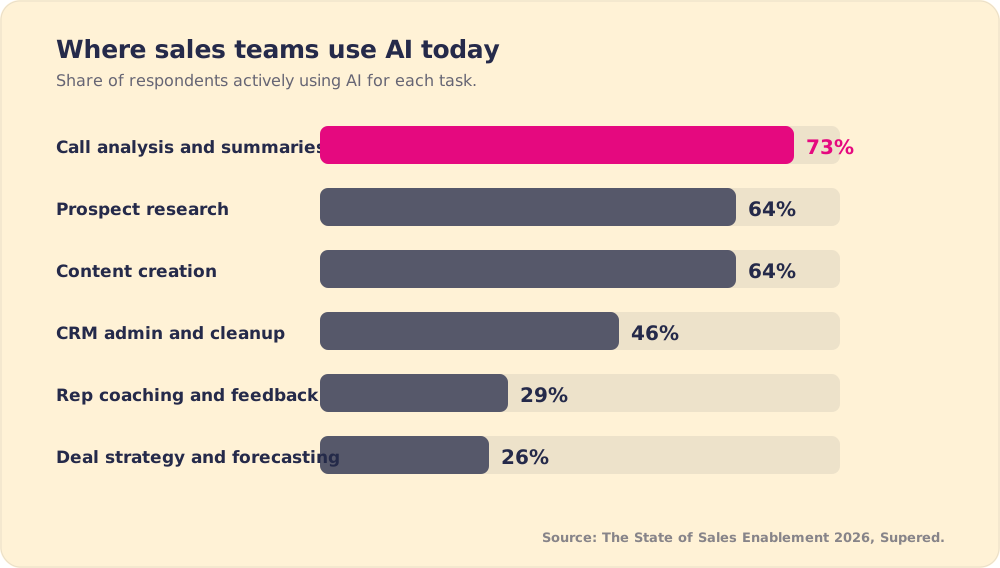
Going to the rep first makes sense when you look at how many tools reps juggle. Salesforce surveyed 7,775 sales professionals and found teams use an average of 10 tools to close deals, 66% of reps feel overwhelmed by the number, and reps spend 28% of their week selling (Salesforce State of Sales, 2023). Attention also sits where sales teams already use AI most. In our survey, call analysis and summaries led every AI use at 73%, ahead of prospect research and content creation at 64% each, and deal strategy and forecasting came last at 26% (The State of Sales Enablement 2026).
Alex’s call brief shows up an hour before the call whether the rep asks for it or not. When you evaluate a conversation tool, ask what it sends a rep before the next call. Our explainer on conversation intelligence covers the capture side, and our guide on where your sales process should live covers the delivery side.
Why is Claude Code number one, and why won’t it stay there?
Alex’s number one is Claude Code and the agency operating system his team built around it. It is where the other four come together: custom front ends, data pulled in from several sources, and scripts that define how data comes in clean. Over the last six to nine months it became the tool he spends the most time in.
I asked what it replaced. “Dashboards, dashboards and CRM,” he said, at least for his own small team. His week starts there. Claude pulls together a weekly mission from what used to live in Notion, the team agrees on the most pressing topics, and then Claude shows how revenue moved over recent months.
Then he bet against his own pick. “I don’t believe that in nine months from now we will still say [Claude Code] is the tool of choice.” He said he believes people “who have never looked at code” should not have to work in a coding environment, and he expects the ChatGPT and Claude apps to get good enough that they will not have to.
Gartner predicted in 2021 that 75% of the highest-growth companies would run a RevOps model by 2025, aimed at breaking down the “functional silos” that slow revenue growth (Gartner, 2021). Alex’s team uses Claude Code for that job today, as the place where the data from his other four tools meets. He fully expects to move it somewhere else within a year.
Key points from Alex’s RevOps tools
- Company size first. A 20-person team buys for speed; a 500-person team adds security, governance, permissions and legacy systems to the list.
- A commodity recorder. Granola won on where its notes go and how it replaced his old memory in Notion.
- A CRM your AI can reach. Alex asks whether his own AI can read the data and whether he keeps governance when he works headless.
- One enrichment contract. Clay lets a scale-up use five data providers without five vendor reviews.
- Delivery to the rep. Attention’s call brief arrives an hour before the call, so the rep does not dig through Salesforce or old recordings.
- A short stay at number one. Alex gives Claude Code, by his own estimate, less than a year at the top.
What we would do with Alex’s list
Take his sentence and write every tool you pay for under one of its verbs: get it in, structure it, add context, deliver it. Cut anything that fits nowhere. Then look hardest at the last verb, delivery, because that is the step Attention handles for Alex’s reps, and the one where our own survey found the widest gap.
Delivery inside the CRM is the part of this path we work on at Supered, and you can see how it works in a demo. Whatever you choose, keep Alex’s closing advice in view. Conversations hold the information, he said, “so go out there, meet people.” Then read our take on the sales tech stack as a set of behaviors, which picks up where his path ends: what you want the rep to do once the brief arrives.
Frequently asked questions
What RevOps tools does Alexander Müller use?+
Do RevOps tools change with company size?+
Why use two call recorders?+
What should a CRM offer in the AI era?+
How many RevOps tools is too many?+
Your process, running itself.
Turn the playbook into rep behavior.
More from Show Me Your Stack

RevOps Tech Stack: Chantel Hirschel's Five Tools, With Salesforce at the Center
Chantel Hirschel
HubSpot Solutions Architect Kasey Chan's Top Five Tools, From Endel to Claude
Kasey Chan