Conversation Intelligence: What It Sees, and What It Misses
Conversation intelligence records and analyzes sales calls to turn them into coachable data.
Here is what it is, what it is genuinely good for, and the one thing its timing keeps it from doing.
Conversation intelligence is software that records, transcribes, and analyzes sales calls to turn them into searchable, coachable data, and because it works after the call ends, it is powerful for review and blind to the live moment of the deal.
For most of the history of selling, the sales call was a black box. It happened, it ended, and what survived was whatever the rep chose to type into the CRM afterward, filtered through memory, optimism, and the wish to look busy. A manager who wanted to know how the call went could ask, and the rep would tell a story, and the story was the only record there was. Then conversation intelligence arrived and pried the box open. That is a real advance, and it is also where the misunderstanding starts, because teams buy it expecting it to change behavior and it is built to observe behavior. Both halves of that sentence are true, and holding them together is how you buy it well.
Conversation intelligence is software that records, transcribes, and analyzes sales calls to turn them into searchable, coachable data, and because it works after the call ends, it is powerful for review and blind to the live moment of the deal. Keep that last clause in view. No vendor is at fault for it. It is the category’s defining shape, and the shape tells you which problems it solves and which it cannot touch.
What is conversation intelligence, exactly?
It is the practice of turning sales calls into data. A conversation intelligence tool joins or ingests the call, records and transcribes it, and runs analysis on top: talk-time ratios, topic detection, competitor mentions, objection handling, sentiment, and deal-risk signals drawn from the language people used. The output is that a sales conversation, which used to vanish the instant it ended and live only in the rep’s notes, becomes a searchable, reviewable, comparable artifact. A manager who once coached from “how did the call go?” can now coach from the call itself. Coaching from the recording was the founding move of the category, and it was a large one.
The market is dominated by a few names, and their corporate shapes differ in ways that matter before you buy. Gong is the standalone leader, still independent and valued at about $4.5 billion in a November 2025 secondary sale on Nasdaq Private Market, down from the $7.25 billion of its 2021 Series E (Sacra). Chorus, once Gong’s closest rival, is no longer a standalone product: ZoomInfo acquired it for $575 million in 2021 and folded it in as ZoomInfo Chorus, sold mainly as part of ZoomInfo’s go-to-market suite (PitchBook). Lighter tools like Fireflies and Avoma compete below them on price. We line the major options up in best conversation intelligence software and run the two leaders head-to-head in Gong vs Chorus.
What did conversation intelligence reveal?
Describing the category as “call recording” loses its most interesting result. Once you can see a million sales calls instead of one rep’s recollection, patterns surface that no amount of anecdote would have found. Gong, analyzing more than a million recorded calls, reported that top performers talk for about 46% of the call and listen for the other 54%, while average reps talk 68% of the time and the weakest talk 72% (Gong). The folk wisdom that the best closers are the ones who never stop talking is exactly backward, and conversation intelligence is what made that checkable rather than arguable.
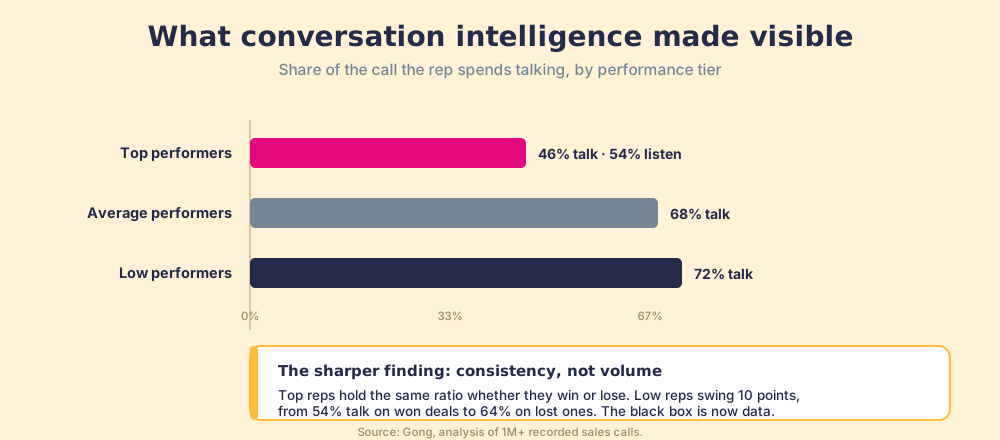
The sharper finding sits underneath the averages. Strong reps do more than talk less. They stay consistent. Top performers hold roughly the same talk-to-listen ratio whether the deal is going well or badly, while weaker reps swing about ten points, from 54% talk on deals they win to 64% on deals they lose, talking more as the call slips away from them. No pile of self-reports could have produced that behavioral fingerprint, and it points at a Supered conviction the data keeps confirming: consistency beats brilliance. The rep who runs the same disciplined motion on every call, win or lose, beats the one who improvises and starts talking too much the moment the deal wobbles.
What is conversation intelligence good for?
Three jobs, and it does them well.
- Coaching from reality. Managers review actual calls instead of the rep’s recollection, so the coaching is grounded in what happened rather than what was remembered. It is the strongest use, and it pairs with structured sales coaching.
- Deal intelligence. Patterns in the call language flag risk, surface next steps, and feed the forecast with a signal stronger than a stage field a rep set by hand.
- Spreading what works. The behaviors of top reps, once invisible, become observable and teachable, which is the raw material of a repeatable motion across the team.
Each of these rests on the same foundation: visibility. Conversation intelligence makes the content of sales conversations observable, and you cannot improve what you cannot see. For a team flying blind on what happens inside calls, that visibility is worth real money, and the payoff shows up in the coaching it enables. Korn Ferry’s CSO Insights research found that teams with a formal, process-aligned coaching approach posted win rates of 55.2%, against 41.8% for teams that left coaching to manager discretion (Korn Ferry). Conversation intelligence is what makes that formal coaching possible, because it hands the manager the real call to coach against instead of a secondhand summary.
Why does timing limit conversation intelligence?
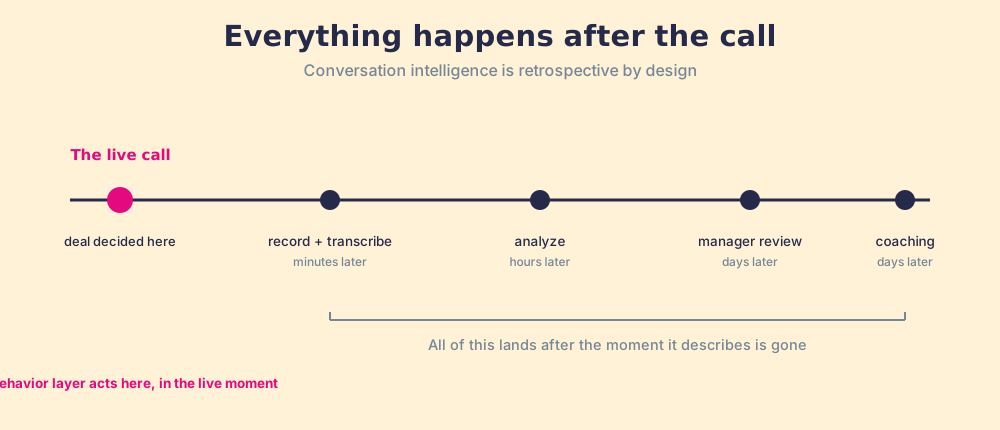
Because the analysis arrives after the moment it describes, and the moment is where the deal was decided. The limit is structural, and no vendor could patch it. The sequence is fixed: the call happens, then it is recorded, then it is analyzed, then a manager reviews it, then, days later, a coaching conversation occurs. By the time the insight exists, the deal where the rep should have run discovery differently has already moved on. You are studying the dashcam footage after the drive, which is the right tool for learning to drive better next time and the wrong tool for steering this car through this corner.
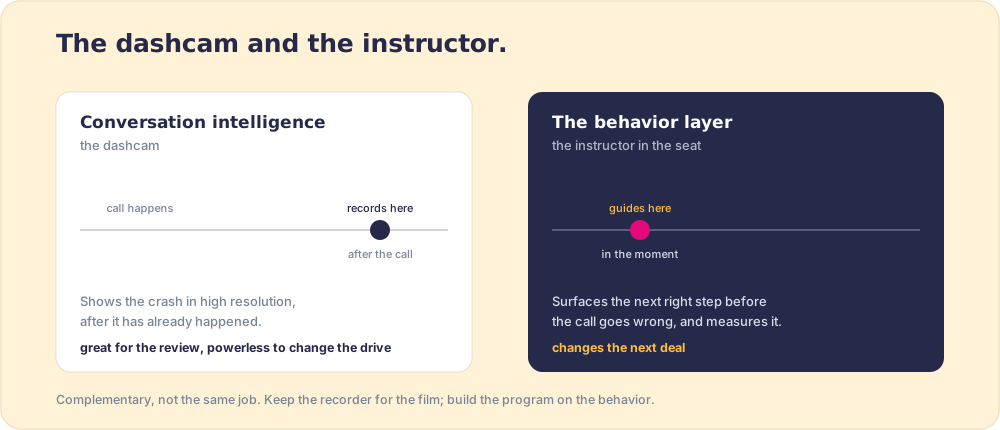
This matters because of where performance is made, which is the rep’s decision in the live moment: what to ask now, which objection to handle now, what the next step is. In The State of Sales Enablement 2026, teams whose enablement reached reps in the flow of the work hit quota at 49%, against 15% for those whose tools sat in separate destinations (The State of Sales Enablement). Conversation intelligence is, by design, a destination you visit after the fact. It improves the next call by analyzing the last one, which compounds into real value over a season of calls, and it leaves the deal that is live right now untouched. Naming that limit is fair to the tool, and it keeps you from asking a rear-view mirror to do the work of the wheel.
How do conversation intelligence and a business logic layer fit together?
They are complementary, not competing, and the strongest stacks run both. Conversation intelligence is diagnosis: it tells you what went wrong on the call after the call. A business logic layer like Supered is treatment: it acts in the live moment, running inside HubSpot and Salesforce, surfacing the next right step for the deal in front of the rep, and measuring whether the rep ran the process. One reads the deal that already happened; the other changes the deal that is happening.
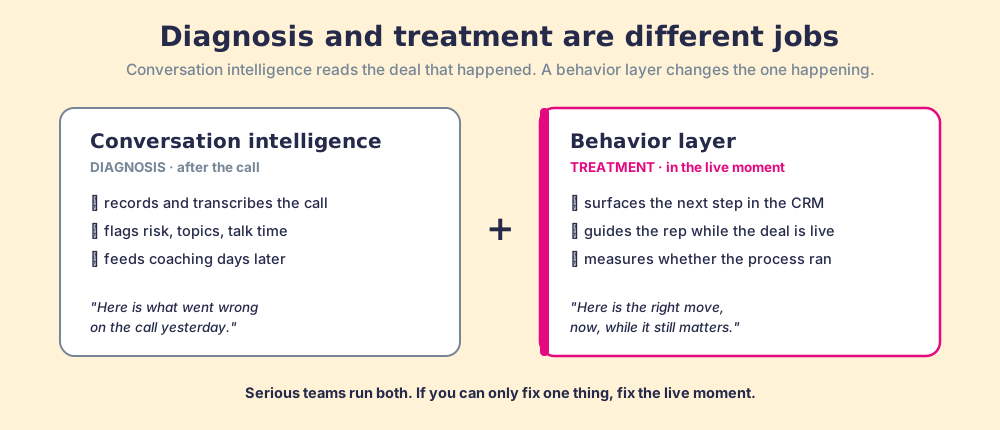
The order matters when budget is tight. If you can only buy one tool and your real problem is that reps do not run the process, buy the one that acts in the moment, because a better recording of the missed step does not put the step back. Diagnosis without treatment is a thoroughly documented decline. The full stack is both: conversation intelligence tools to learn what good looks like across a thousand calls, and a business logic layer to make the rep do it on the next one.
What we recommend
Conversation intelligence is worth it for what it is, and clear naming is how you get the value without the disappointment. It is the category that made the sales call visible and coachable, and visibility is the precondition for nearly everything downstream: better coaching, better forecasting, a real picture of what your best reps do. Buy it to coach from reality, to read deal risk in the language, and to turn the moves of your top performers into something teachable. Buy it knowing it works after the fact, and that visibility is not the same thing as change.
So our recommendation is a sequence, not a single product. Get the diagnosis, because coaching from the real call beats coaching from a story, and the data alone will teach your team things they would never have guessed, starting with the fact that the best reps listen more and stay consistent when the deal turns. Then close the loop with something that acts while the deal is live, because the win rate moves where the rep decides, not where the manager reviews. If you only ever fix one thing, fix the live moment. A team that sees every call clearly and still cannot get reps to run the process has bought a beautiful mirror and called it a steering wheel.
From here: the tools compared in best conversation intelligence software, the head-to-head in Gong vs Chorus, the field of options in Gong alternatives, the coaching it feeds in sales coaching, and the in-the-moment problem it cannot reach in sales process adoption.
Frequently asked questions
What is conversation intelligence?+
What is conversation intelligence used for?+
What is the difference between conversation intelligence and a business logic layer?+
Is conversation intelligence worth it?+
Your process, running itself.