RevOps Specialist the Long Way Around: Travis on Degrees, Mastery and Knowing Your Lane
Travis went from an MBA to recruiting to marketing director to his own RevOps practice, then rode his late cousin's bike 2,500 miles. His advice on degrees, the admin and RevOps line, and mastery with AI.
A RevOps specialist runs the systems, data and processes that connect marketing, sales and customer success, and in Travis's view the job calls for two strengths that rarely live in one person: technical skill in a CRM like HubSpot and real business experience.
Travis won his late cousin Brent’s Trek Madone road bike in a silent auction at a fundraiser in Brent’s name, back home in Indianapolis in the summer of 2024. Right after winning, he told the room he would ride it back to Indianapolis from his home near Spokane the next year. “People thought I had too many margaritas,” he said. On June 12, 2025 he left Liberty Lake, Washington, and 53 days and more than 2,500 miles later he rode into Indianapolis.
He told the story of the ride to Lindsey Smith and Cameron Conner on Becoming Admin, along with how he came to work as a RevOps specialist after stops in marketing, recruiting, an MBA program, Microsoft and a marketing director’s office.
How did Travis end up in RevOps?
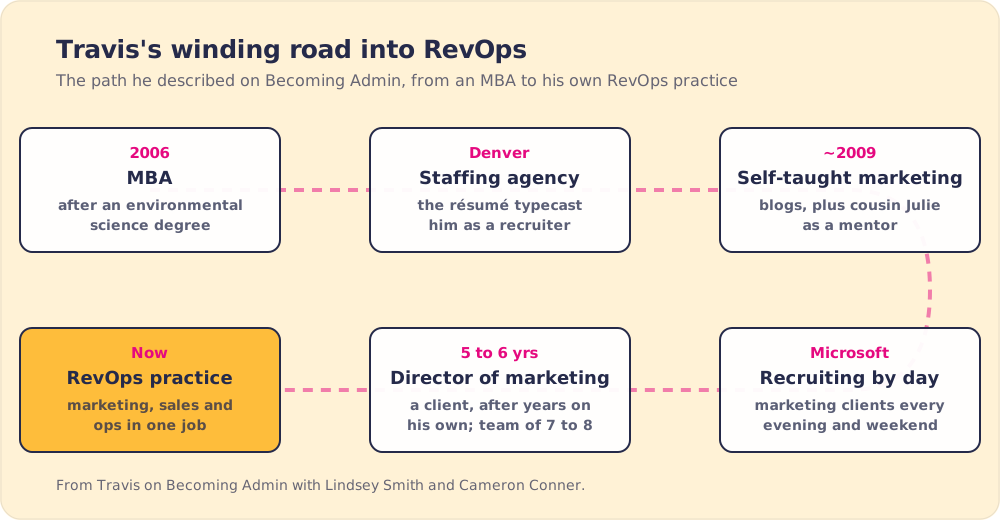
He calls it a winding road, and he liked the phrase enough to start a careers podcast about nonlinear paths under that name. Before RevOps he spent five or six years as director of marketing for a Denver company, managing seven or eight people. Before that he had a long run as a tech recruiter.
As a marketing director he kept finding himself in operations and technology work. He had felt the same pull during his MBA, when he could not decide between marketing and operations. “And so I I thought, hey, maybe revenue operations is a good combination of both,” he said. “And having sales and marketing experience uh helps quite a bit.”
Do you need a degree to become a RevOps specialist?
One of the hosts mentioned not having a college degree and asked what Travis would tell people climbing in RevOps without the traditional background. He answered as someone with an MBA from 2006 that “did open up doors,” including a sales role at a Seattle startup and a recruiting job at Microsoft. “But I think now even an undergrad degree is overrated with as quickly as you can learn things,” he said.
His own degree did not get him into marketing. After the MBA he took a job at a Denver staffing agency, and his résumé typecast him as a recruiter. Around 2009 he taught himself marketing from blogs, with his cousin Julie, one of the first seven employees on Google’s ads team, as a mentor. “I had to teach myself everything that didn’t come from a degree,” he said. Today an AI tool can pull the lessons out of YouTube videos without him watching them.
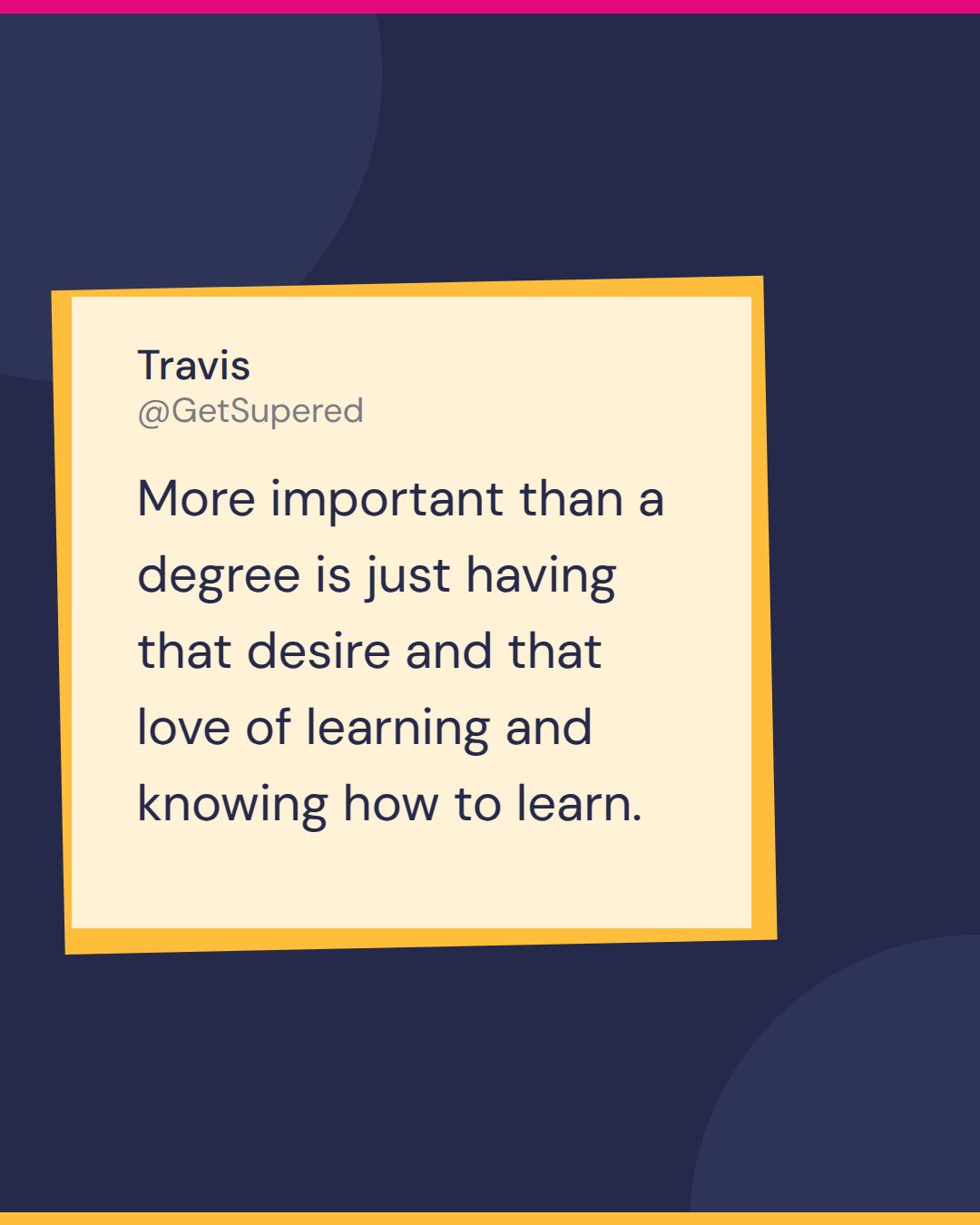
He knows the doubt too. “Impostor syndrome affects people whether they have a degree or not,” Travis said, especially in RevOps, where AI keeps changing the job faster than any program can teach it. He puts something else first. “More important than a degree is just having that desire and that love of learning and knowing how to learn.”
Impostor feelings are common, though hard to pin down. A systematic review of 62 studies and 14,161 participants found impostor syndrome prevalence between 9% and 82%, depending on how researchers measured it (Journal of General Internal Medicine, 2020).
Employers are slower than Travis to give up on the diploma. A Harvard Business School and Burning Glass Institute study of more than 11,000 job postings from 2014 to 2023 found that “fewer than 1 in 700 new hires benefited from the no-degree reforms” (Harvard Business School). Companies removed the requirement from their postings and kept hiring people who had one.
How do you get hired without leading with a résumé?
Travis went independent the first time because the market would not let him into marketing. “Nobody was hiring me for marketing and that was kind of pissing me off and so I thought I’m going to hire myself,” he said.
He took marketing clients on the side while recruiting at Microsoft, and the side work grew until it took every evening and every weekend. He was burning out. “I have two jobs and one has to lose,” he remembered thinking.
He quit recruiting and, in his words, never really looked back.
Then one of his first side clients, a company he had worked with for years, agreed when he pitched himself as its director of marketing.
He took a rule from that. “Something that I feel very strongly about now and that’s not leading with your resume,” he said. Build relationships and let the work and the reputation do the hiring, because “a resume is going to lose especially now.”
Where is the line between a HubSpot admin and a RevOps specialist?
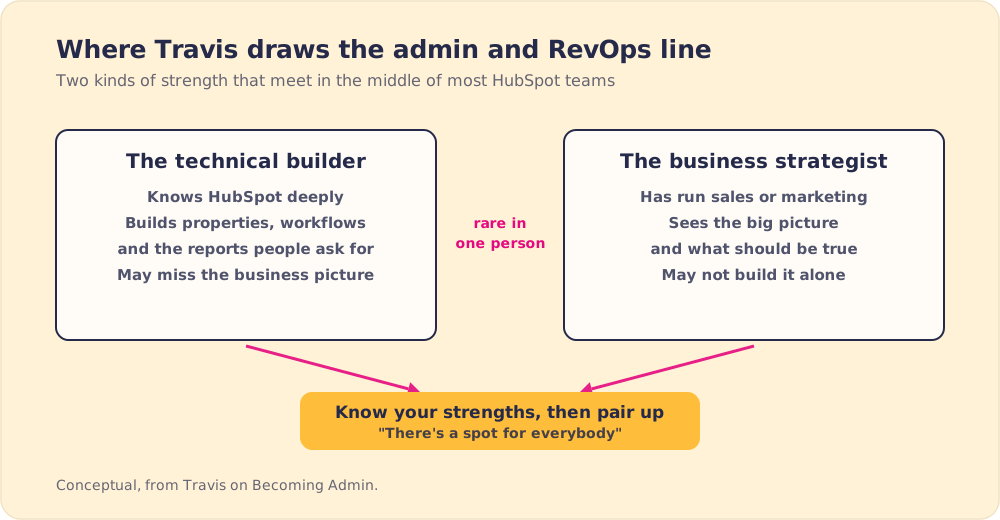
The hosts asked where the line sits. There are strong, technical HubSpot admins, and there are people who know how to use AI to get the reporting they need without understanding RevOps deeply. Travis started with temperament. “Sometimes we try to to force ourselves as a square peg and a round hole,” he said. He thinks “there’s a spot for everybody,” and he described two kinds of people. One is technical but not good at “seeing the big picture or the strategic aspects of it or even the business aspects of it.” The other has run sales or marketing. When he talks with RevOps professionals who have neither kind of experience, he said, “they’re just kind of making it up or trying to guess at what should be right.”
He rarely meets someone with both, so his advice is to know which one you are and team up with the other. Travis learned late in life that he has ADHD, which he said explained his nonlinear career, and he now puts real effort into “finding the people who have those things I’ve been trying to do that I’m not very good at and pairing together to to do more than I could have ever done alone.”
Teams split the same work in other places too. Our guides to sales enablement and sales operations and to the newer GTM engineer role cover who builds the system and who decides what it should ask of reps.
What does a RevOps specialist do, in Travis’s practice?
Pieced together from across the episode:
- Claude before anything else. He opens it first thing and picks up where he left off. “I don’t know how I worked without it a year ago.”
- Dashboards and reports. He builds them all the time, which he called time-consuming in HubSpot because each client “wants something that you don’t already have built.”
- Simple workflows. He picks a simple workflow over a custom object “every day because a custom object it just adds complexity,” and quotes his coach: “simple scales and chaos fails.” Our guide to HubSpot workflow dependencies shows how fast those simple workflows start leaning on each other.
- Scoping before building. He specs the work first, and connects the marketing and sales sides he has worked in.
Does mastery still matter when AI can build the report?
The hosts asked where mastering RevOps and data analysis fits when AI can do so much of it. Travis started with a line his coach, Dan Martell, had used the week before: “every master was a disaster.”
His own example was LinkedIn. He has been “awful at social media the last several years because of imposter syndrome,” he said, partly because RevOps felt so different from the marketing he knew. His fix for anyone in the same spot: “just hit record do it for 30 days commit to doing it for a set time and and it’ll get easier.”
AI, he said, “produces a lot of junk and if you don’t have an underlying knowledge of the area you’re using AI in it can bite you.” The people who win, in his view, will work the way a developer does, with “a lot of scoping,” “a lot of pre-work,” and “a lot of planning and specking out before you employ, before you code.”
Diana Gonzalez, a sales leader, made a similar point about teams in The State of Sales Enablement 2026: leaders build a process slowly, push it out in a quick training and expect it to stick, yet “it requires a lot of repetition to get ingrained.”
How does a solo consultant keep the work from following him home?
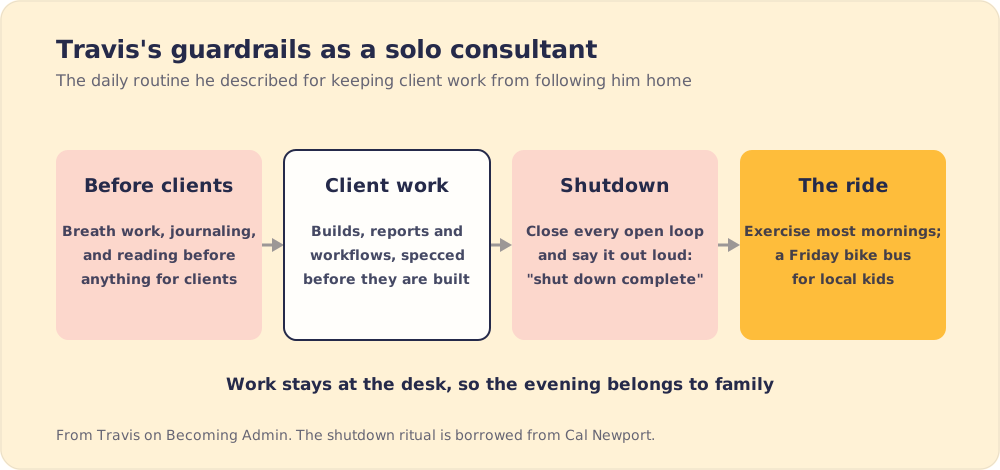
Travis works from home, where work “just follows you” after you step away. A morning routine began when he was writing a book with a baby and a two-year-old at home and started waking at 3:30 or 4:00 to get time alone. It stuck. He uses the time for breath work, journaling and reading, and he does “what’s fun for me before I have to start doing things that are for other people.”
When he stops work each day, he closes loops. He credits Cal Newport, who described a routine of checking task lists, calendar and weekly plan and then saying “Schedule shutdown, complete” so the worries stay at the desk (Cal Newport, 2009). The biggest lever, Travis said, is exercise. “The days I don’t ride my bike, I’m chippy.” He now runs a Friday bike bus that gets elementary kids riding to school.
The bike matters to him for a bigger reason. 2023 was a rough year: his parents divorced, Brent died suddenly, and Travis sank into depression. He said he had “seen what purpose can do,” so he started a nonprofit, Cycling on Purpose, and used the ride to hold talks on youth mental health in public libraries across the country.
What Travis’s path teaches
- A love of learning. Travis holds an MBA and still thinks knowing how to teach yourself matters more, though employers still hire on degrees more than they say.
- Relationships that do the hiring. His director of marketing job came from a side client who had watched him work for years.
- Two strengths, rarely one person. Technical HubSpot skill and business experience both belong in RevOps. Know which you bring and find the other.
- Scoping before AI. AI speeds up people who know the field and spec the work first, and produces junk for anyone who skips that step.
- Loops closed every evening. A morning routine, a shutdown ritual and a daily ride keep a solo practice from swallowing his family time.
What should an aspiring RevOps specialist do next?
Start with the inventory Travis did. Write down whether you are the builder or the business mind, then find the person who is the other one, inside your company or in a peer you trade work with. Take on work that lets people watch you deliver, since a degree still decides many hires on paper. And practice in public for 30 days, whether that means posting, recording or shipping small builds.
For teams hiring into RevOps, the same split applies to process. The builder can put the system in HubSpot, and someone has to decide what reps should do inside it and check that they do it. Supered helps with that second half by putting the process in front of reps in the CRM while they work and measuring whether they follow it.
Frequently asked questions
Do you need a degree to become a RevOps specialist?+
What is the difference between a HubSpot admin and a RevOps specialist?+
How do you get into RevOps from marketing or sales?+
Does AI make RevOps expertise less valuable?+
How do solo RevOps consultants avoid burnout?+
Your process, running itself.
Turn the playbook into rep behavior.
More from Becoming Admin

LinkedIn Prospecting Without the Slop: How Michael of First Touch Books Meetings With Digital Eye Contact
Michael
LinkedIn Content Strategy From the Mayor of Inbound: Rob Jones on AI and Real Content
Rob Jones