Quit Your Job to Start a Business? Crispy Barnett Wishes He Had Gone Sooner
Crispy Barnett started at $10 an hour on Upwork, logged 18,000 billable hours, and built a HubSpot consultancy while still holding a full-time job. Keeping that job is the one move he would take back.
Deciding to quit your job to start a business means giving up a steady salary to work on your own company full time, and the timing turns on whether the side business already has paying clients and proof that buyers can check.
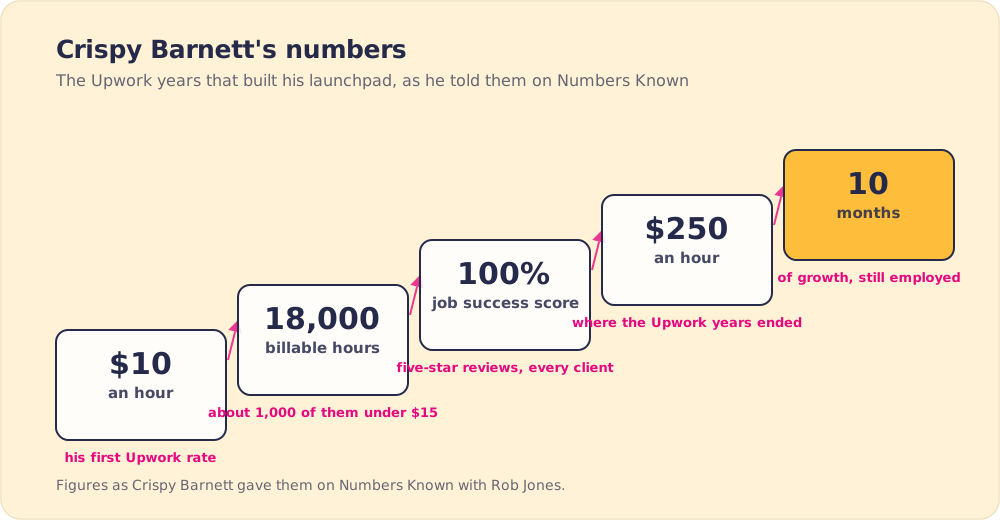
Crispy Barnett’s first rate on Upwork was $10 an hour. “That’s where I started. Like nothing,” he said. By the end of his freelancing years he billed about $250 an hour and had a 100% job success score. He went on to build a HubSpot consultancy called Workflow that reached Diamond in 10 months, and he did it while still holding a full-time job. Keeping that job is the decision he regrets most.
Rob Jones had him on Numbers Known, the show where top performers talk through the numbers behind their work. Rob brought numbers for Crispy and Crispy brought a few of his own. The one that matters most to anyone thinking about whether to quit a job to start a business is 10: the months he stayed employed after he should have left.
How did a $10 hourly rate turn into $250?
Crispy cared more about the early reviews than the early fees. “The review itself was more important than the $10 per hour because that was going to create credibility which allowed me to upscale and grow that hourly rate,” he told Rob. He would do extra work, even free work, to earn a client’s five stars. “I know how to trade value between me and some other person very well,” he said, and he thinks that skill is most of what makes a good salesperson.
Upwork’s scoring makes each client count. The Upwork Job Success Score is successful contract outcomes minus negative contract outcomes, divided by total outcomes, recalculated daily from six, 12 and 24 months of history (Upwork Help). One unhappy client stays on the record for up to two years.
Crispy kept his at 100%.
He also brought the number behind it. He logged 18,000 billable hours on Upwork, and he guesses about 1,000 of them paid under $15 an hour. Rob did the math on air and got 750 days, straight. “It is a grind and you don’t get there quickly,” Crispy said. “You get there through tenacious effort and indisputable excellence all along the way.” His advice to anyone on Upwork at $10 to $15 an hour was blunt: “It will suck. It will not be fun.”
Rob mentioned the old line that mastery takes 10,000 hours. Hours by themselves predict less than that line suggests. Macnamara, Hambrick and Oswald’s 2014 meta-analysis found deliberate practice explained 26% of the differences in performance in games and less than 1% in professions (Psychological Science, 2014). Crispy’s hours had something extra. At the end of each job a client graded his work in public, so he got feedback on every contract, and the next buyer could read it before paying him more. If you are starting out, find the proof your buyers check before they hire, and accept a lower price for a while to earn it.
How did he sell the full suite to clients who came for one hub?
Crispy built Workflow by himself in that stretch, and he did little cold outreach. “I wasn’t going out and, you know, hunting and killing things,” he said. “I was having conversations and driving value within my existing relationships to get people onto the full suite of HubSpot.”
The clients whose HubSpot he was fixing usually came in with one team in mind. “They were usually narrowly thinking about a marketing use case or just a sales use case,” he said, and “there’s always disconnect when you have different solutions and different platforms you can’t measure the data in the best way.” So he changed what he showed them. “The thing that I would always do is demo the full customer journey,” he said, “and it opened their eyes and showed them what’s really possible.” He connects it to solution selling. HubSpot’s own account executives came to know him as the partner who could sell the full suite.
Rob, who likes a soccer reference, asked which famous number 10 Crispy models himself on. Crispy chose Zidane. Messi, he said, is the player who can escape any situation. Zidane is “so precise with how he does things” and thinks five or six steps ahead. Crispy said he plays more like Zidane.
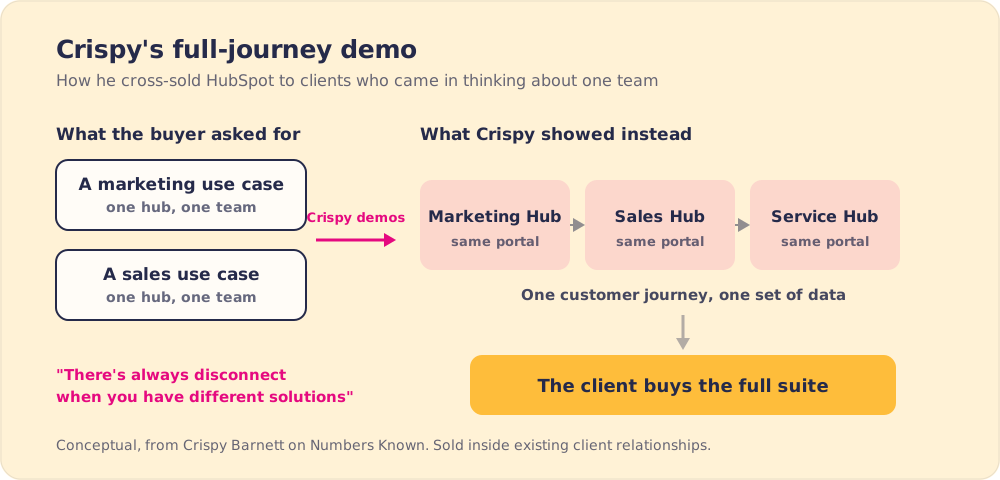
To try it, take the next client who asks about one hub and walk them through their whole customer journey in HubSpot, from first touch to service, before you scope anything.
Should you quit your job to start a business, or keep it while you build?
Crispy put his answer at the start of his book, Tenacity in Motion. “My biggest learning lesson and the the regret that I have is not quitting my full-time job that I had sooner to start my business,” he said. “I held on to it for like 10 months and it was a mistake.” Workflow’s fastest growth happened in those same 10 months, with Crispy consulting on top of a salaried role, and he thinks he “probably could have done it in half that time or maybe less potentially” with his full week.
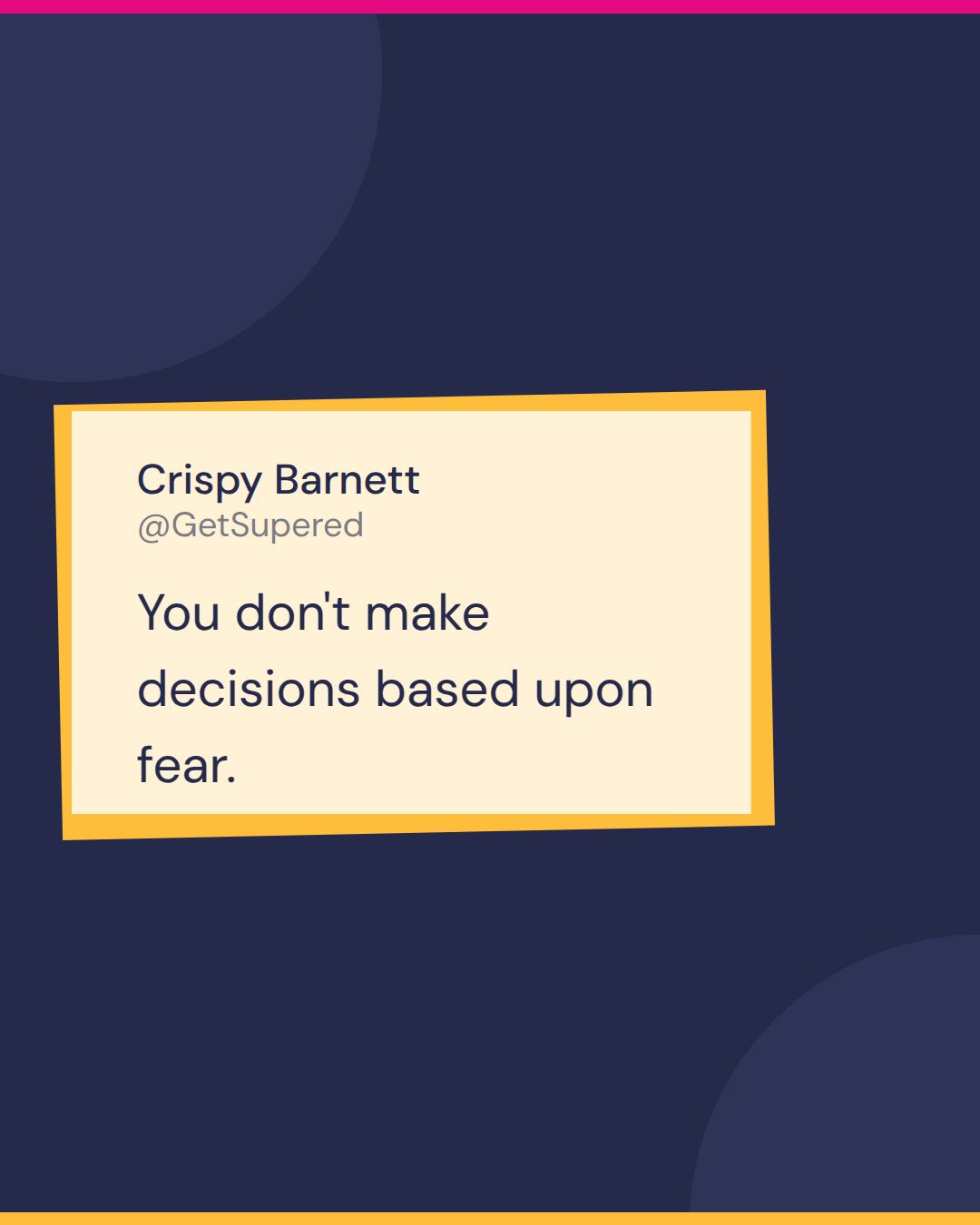
He now tells founders that fear is fine to feel, “but you don’t make decisions based upon fear.”
Rob asked about the phrase Crispy signs everything with, burn the ships. How do you leave yourself no way back without burning relationships, and how do you do it while running several things at once? Crispy said the phrase is about one goal, and one goal can include several projects. “I have a goal that I’m going to achieve and there is no option but success,” he said. “There is nothing that will distract me from my goal. Even if it’s something that’s net new and exciting.”
A well-known study disagrees with his timing. Joseph Raffiee and Jie Feng followed more than 6,300 entrepreneurs over 14 years and found that ventures started by people who kept their jobs, which researchers call hybrid entrepreneurship, were 33% less likely to fail than ventures started by people who quit first (Academy of Management Journal, 2014; summary in Psychology Today). A paycheck gives a founder time to find out whether anyone will pay.
That study measured whether ventures survived. Crispy already knew his would. He had paying clients, a long record of five-star reviews, and a consultancy growing fast enough to strain his evenings. For him the salary was insurance against a risk he no longer faced, and it used up hours his clients were ready to pay for.
When should you quit your job to start a business?
By the end of his 10 months, Crispy had four things going for him:
- Clients were paying him already, and some were buying more.
- Buyers could check his work before they met him, through reviews and his score.
- The business needed more hours than his evenings could give it.
- Fear was the only argument left for staying.
If you lack the first two, the Raffiee and Feng finding applies to you, and the job is buying you time to build them. Once you have all four, you are where Crispy was, and he would tell you to set a date.
What does burning the ships look like at INBOUND?
Rob’s third number for Crispy was five, the number of minutes it took him to win a $10K pitch by doing a live deployment on a Zoom call. It started on day three of INBOUND, when someone sent Crispy a message that made him angry. “I was like I’m coming for my money,” he said.
He stayed up all night rebuilding the pitch. At two in the morning he texted a customer who had signed with his firm only two weeks earlier and asked for a Zoom call the next day. Then he did the customer’s deployment live, on a product that was still new. “It was a massive risk and it worked and it paid off,” Crispy said. “There is no backup plan.”
Rob counted five career chapters in about five years: solo consultant on Upwork, founder of Workflow, which Crispy later sold, then three roles at other companies. Crispy’s number for the next five years is a net worth of $10 million by 35. He has another goal from when he sold Workflow: to help 100 founders “do something better than what I did.” He does not track it, he said, because he does not want to cap it.
What Crispy Barnett’s numbers teach
- A review before a rate. Crispy took $10 an hour to earn five-star reviews, and the reviews let him charge $250 later.
- Eighteen thousand graded hours. Deliberate practice explains less than 1% of performance differences in professions, per Macnamara. Each of Crispy’s hours ended in a client review the next buyer could read.
- The whole journey in one demo. Clients came asking about one team. He showed them the full customer journey in HubSpot, and they bought the full suite.
- A job kept too long. Ten months of salary overlapped his fastest growth, and he believes he could have done it in half the time.
- A goal with no plan B. Burning the ships, as Crispy uses it, means nothing distracts from the goal. Relationships stay intact.
What should you do if you are still holding the job?
If you do not yet have paying clients and proof buyers can check, keep the job while you build them. Raffiee and Feng’s numbers support that. Once you have both, pick a date and quit. Crispy had both early and held on for 10 months, and he now opens his book with that mistake.
Before your first hire, write down how you deliver, while the method still lives only in your head. Our guide to standard work covers turning one expert’s habits into a team’s default. Supered’s partner program helps consultancies run that method inside HubSpot, so a new consultant can follow it without calling the founder. For a firm selling the full suite the way Crispy did, our HubSpot implementation playbook is where that method gets built.
Frequently asked questions
Should I quit my job to start a business?+
When is the right time to quit your job to start a business?+
What does burn the ships mean for a founder?+
How do you raise your rates as a new consultant on Upwork?+
Does 10,000 hours of practice make you an expert?+
Your process, running itself.
Turn the playbook into rep behavior.
More from Numbers Known

Active Listening in Sales, Taught by a Comedian: Chris Bogue's Improv Rules for Sellers
Chris Bogue
Pipeline Coverage: Diana Marcela Gonzalez's Quarter Math and the Month-Two Check
Diana Marcela Gonzalez