Who Owns CRM Discipline? Matt Bolian and Caleb King Argue Over an Empty CRM
On Pardon the POV, Matt Bolian said weak CRM discipline is the manager's fault and Caleb King said reps owe their own ownership. Both cases in their words, plus coaching, follow-up and AI.
CRM discipline is a sales team's habit of doing its real work inside the CRM, logging activity, updating deals and taking next steps there, and it holds when managers set and inspect a clear expectation and the CRM shows reps what to do next.
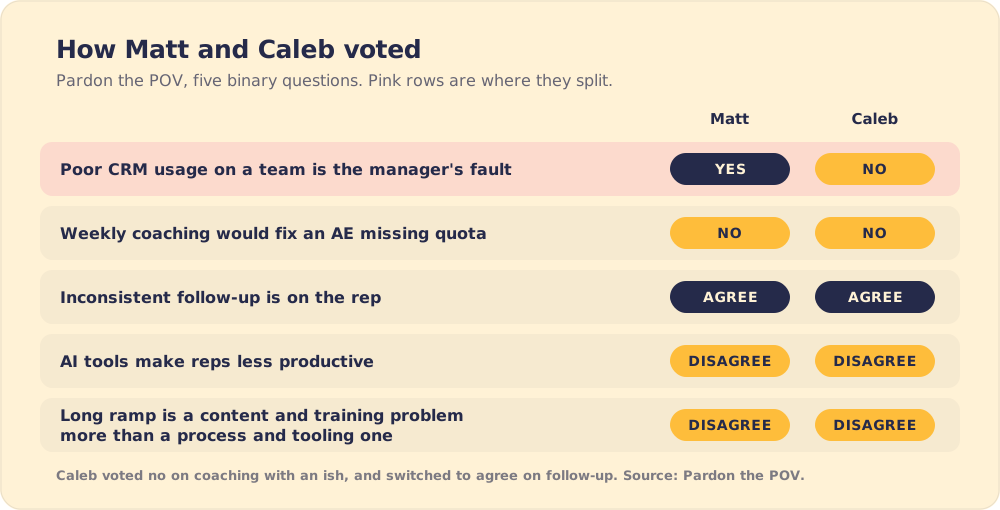
The host opened the episode with a handful of CRM statistics and one blunt yes-or-no question about CRM discipline. If your team is not using the CRM properly, is it the manager’s fault? I said yes. Caleb King said no.
Caleb sells for Supered and has worked on the rep side of plenty of CRMs, at large companies and small. On this episode of Pardon the POV he called the first question “a really loaded question,” and the host admitted that most of the questions were “intentionally loaded to get you to have to take a side.” Over five rounds we argued about blame, coaching, follow-up, AI and ramp time. The same disagreement kept coming back: when the manager is not in the room, what gets a rep to do the right thing in the CRM?
What is CRM discipline, and who owns it?
By CRM discipline I mean the habit of doing deal work in the CRM: the call gets logged, the stage and close date match what the buyer said, and the next step sits in the record instead of in a notebook. The host’s first question was who owns that habit.
Caleb made the case for the rep, and he made it well. “I think fundamentally as an individual contributor, there is a level of personal responsibility where you’re just not a lemming,” he said. A manager can take ownership, “but the same applies to individual contributors. Like you have to have level of ownership for your own thing.” Reps cannot claim the CRM is an obscure tool, either. “Something as widely known as the CRM, it’s just I don’t know how to use it, so I’m not going to use it. It’s hard for me to say you can push that blame up, especially for sales people.”
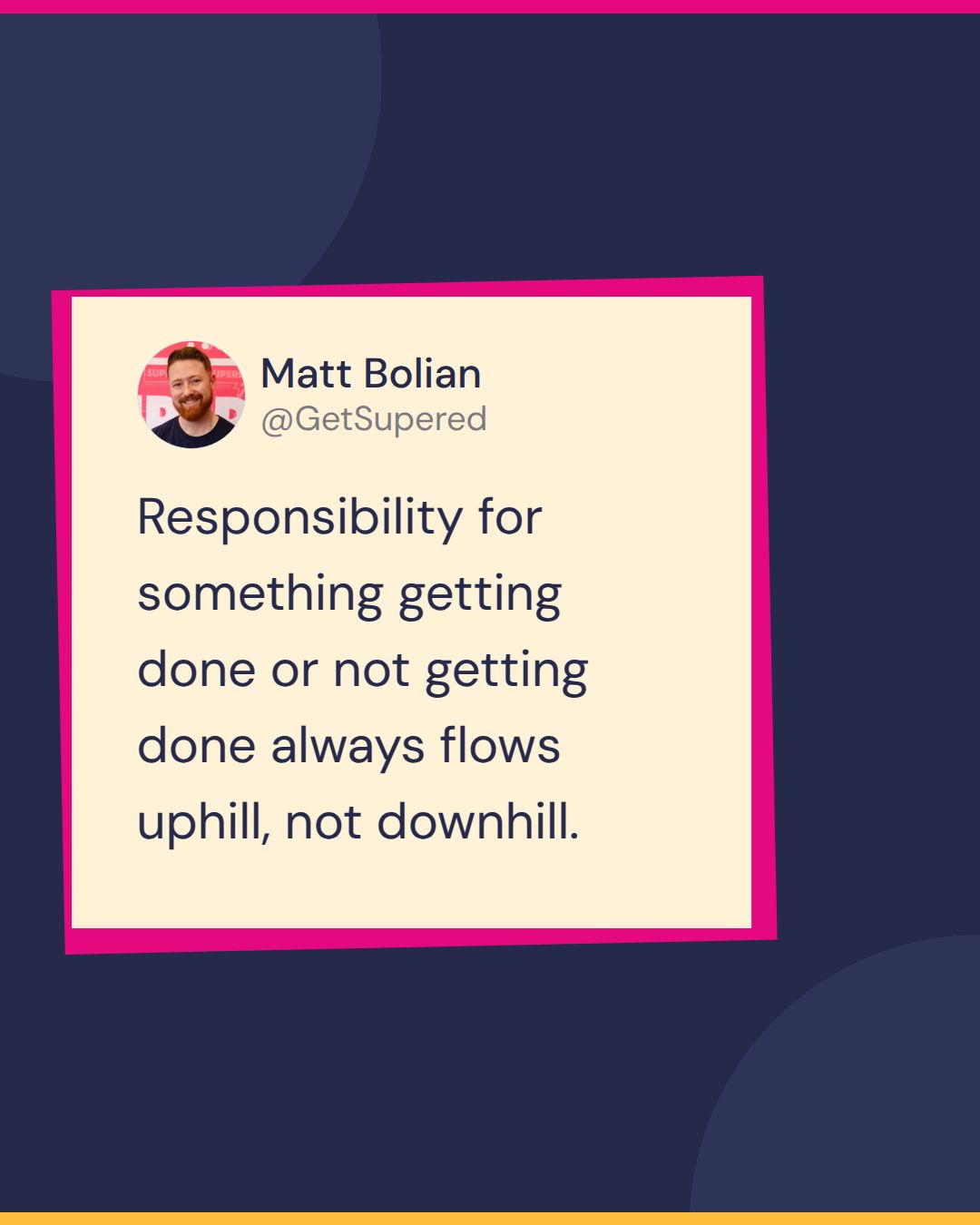
I argued from the manager’s chair. “Responsibility for something getting done or not getting done always flows uphill, not downhill. And eventually, someone must take responsibility.” A manager answers for how the team executes. “It is a manager’s fundamental job, if you have a tool that helps you execute the job, to ensure the people on your team are doing it.” I finished with the line I still believe: “The buck stops with the manager, and it’s not the sales reps’ fault.”
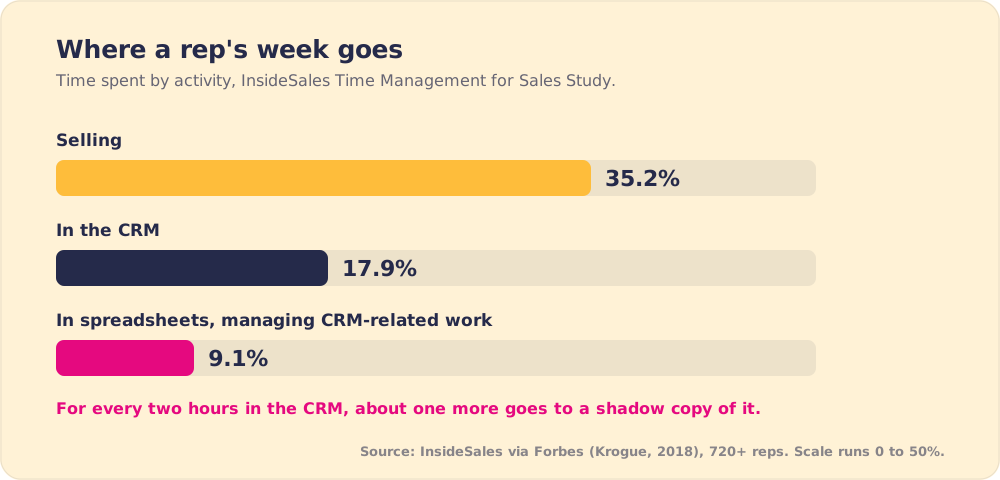
Plenty of reps do their CRM work outside the CRM. The InsideSales Time Management for Sales Study, covering more than 720 reps, found they spent 17.9% of their time in the CRM and another 9.1% in spreadsheets on CRM-related tasks (Forbes, 2018). A rep updating a private spreadsheet is still tracking deals. The manager decides whether that spreadsheet is allowed to replace the CRM.
We asked 198 sales leaders a version of the same question for The State of Sales Enablement 2026: why do reps skip the sales process? The most common answer was that managers do not enforce it (29%). Reps not seeing the value came next at 18%, then the process living in too many tools (12%) and reps not knowing the process existed (12%) (The State of Sales Enablement 2026). Caleb is right that reps have a duty. The leaders themselves put the manager at the top of the list.
Why doesn’t weekly coaching fix it?
The second round asked whether weekly coaching would fix an AE who is missing quota. We both said no, for different reasons, and Caleb went first.
“One-on-ones are almost always around forecast accuracy, not coaching,” he said. In most sales orgs he has worked in, “the manager is not equipped to actually coach on sales skills, deal philosophy, things like that. It’s just like your calls are just how close to accuracy can your forecast be.” Weekly coaching, as it runs today, “is set up poorly or managers are not getting the freedom to coach correctly.”
I started from the rep’s side. “If you complain about not having coaching, and that’s the reason you can’t hit it, are you a good sales rep? No.” A rep has to be able to learn on their own. “Get rid of the excuses and go read a book and get better by yourself.”
Then I tied it back to the first question. If managers are responsible for reps following a process, “what do they spend their time doing? Inspecting deals and reminding people to follow the freaking process.” A manager buried in that work has no hours left to coach. “In order to have time to coach or to even think about it and have the space to do it, you must get rid of the burden of having people follow the process.” Caleb, who had voted against me in round one, said: “I have to agree with that.”
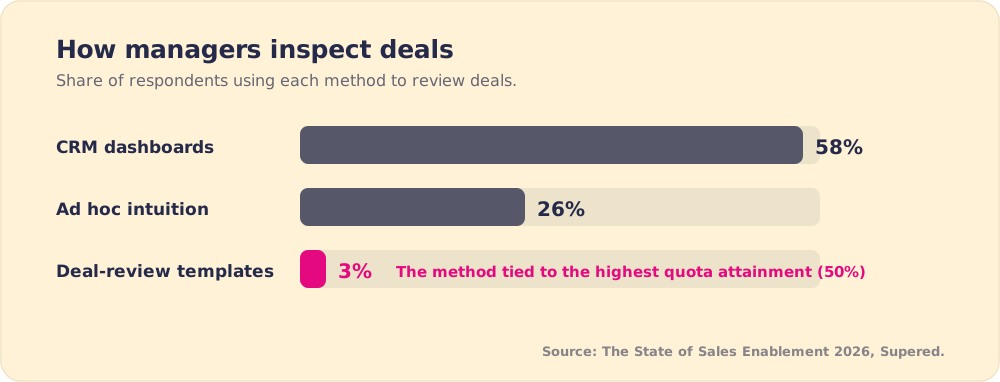
In our survey, among the leaders who named manager non-enforcement as the main reason reps skip the process, the cause they reported most often was capacity, more than indifference. The inspecting that does happen is mostly informal: 58% of managers review deals through CRM dashboards and 26% by gut feel, while deal-review templates, the method most strongly tied to high quota attainment, were in active use by 3% of respondents (The State of Sales Enablement 2026). So managers are short on time, and most of their reviews run on dashboards and instinct.
Is inconsistent follow-up a rep problem or a process problem?
The host read a claim that reps skip follow-ups because of decision fatigue, then asked whether inconsistent follow-up is a rep accountability issue. Caleb voted disagree, thought about it on air, and switched: “Actually, no, I agree.”
His reason tied straight back to the CRM. “You just got to do it. The systems are there. I mean, by default, your CRM will tell you in activity,” he said. “No activity in X days, no follow-up in X days.” Once the CRM shows the overdue task, “the decision is are you going to follow? Are you going to hold yourself accountable to actually following up?”
I agreed and put the manager back in the picture. “Rep accountability means that there is someone telling them to do something.” Reps know they should follow up. “They know more. They don’t do better.” I pointed to Patrick Lencioni’s model of team dysfunction, where accountability sits on top of trust and productive conflict (The Table Group). Someone has to tell the rep, in effect, that they are missing the expectation and how they compare with the rest of the team. “It is a behavior issue. And thus, you need someone saying do the right thing.”
Is AI making sales reps slower?
The host read research claiming AI users take longer on some tasks and asked if AI tools are making reps less productive. We both disagreed, with conditions.
I warned about “an illusion of power that AI gives you. And it makes you feel very powerful, but it doesn’t get you to the final state.” It helps most on individual tasks “where you’re both the input and the output checker,” I said. For a rep, that means writing responses and researching faster. “If you’re a sales rep not using AI, you will be slower.”
Caleb kept his claim modest. AI makes him more productive, he said, but by far less than the sales pitches for AI promise. “Caleb today with AI selling versus Caleb 3 years ago without AI is not 300% more effective in closing deals.”
Neither of us said it on air, but AI depends on CRM discipline too. An AI assistant can only read what the records hold. Validity’s 2024 survey on CRM data quality, covering more than 600 CRM administrators, found 24% said less than half their CRM data was accurate (Validity, 2024). If reps keep their notes in a spreadsheet, the AI never sees them.
What the debate taught about CRM discipline
- Shared ownership. Caleb’s rep owns the record and is “not a lemming.” The manager owns whether the team runs the tool, because responsibility flows uphill.
- Coaching with time behind it. Caleb saw one-on-ones swallowed by forecast accuracy. Managers need the inspection work taken off their plate before they can coach.
- The CRM as reminder. Caleb’s case for rep accountability rested on the CRM flagging “no activity in X days.” A rep can only be held to a next step the CRM shows them.
- Accountability that someone says out loud. Reps know to follow up. They follow up more reliably when a manager holds them to a clear standard.
- Modest AI. We both use it, and neither of us thinks it replaces the work. It helps most on tasks the rep can check.
The verdict
If the host asked again, I would still say yes: an empty CRM is the manager’s problem to fix. Caleb earned half the point, though. Once a manager sets up the conditions, they can hold reps to the standard without apology, and Caleb’s own follow-up answer shows how. The CRM flags the overdue task, the rep owns the next move, and the manager checks.
So a leader with thin CRM usage has a short list for building CRM discipline. Name the handful of things that must be true on each active deal. Put the next step inside the CRM where the rep already works, so the spreadsheet stops being the faster route. Inspect deals against that list weekly, and automate the readout so the hours go to coaching the gaps Caleb described. Few teams run that weekly check today. In our survey, the deal-review template was the inspection method tied to the highest quota attainment, at 50%, and 3% of respondents had one in active use (The State of Sales Enablement 2026).
Supered was built for that list. It brings your sales process into HubSpot and Salesforce while reps work, shows the next step in the record they already have open, and lets managers see, for each deal, whether the rep took it. Our guide to CRM adoption covers the rollout, and CRM best practices covers fields and structure.
If the coaching half of this debate is the one that stung, read our guide to sales coaching next.
Frequently asked questions
What is CRM discipline?+
Is weak CRM discipline the manager's fault?+
Why don't sales reps use the CRM?+
Does weekly coaching improve CRM discipline?+
How do you build CRM discipline on a sales team?+
Your process, running itself.
Turn the playbook into rep behavior.
More from Pardon the POV

Sales Reps Missing Quota: Caleb King and Matt Bolian Argue Whose Fault It Is
Matt Bolian & Caleb King
VP of Sales Responsibilities: Crispy Barnett and Matt Bolian on the Number, the Forecast and AI SDRs
Matt Bolian & Crispy Barnett