VP of Sales Responsibilities: Crispy Barnett and Matt Bolian on the Number, the Forecast and AI SDRs
On Pardon the POV, Crispy Barnett and Matt Bolian agreed a VP of sales is judged on the number, then split on forecasting and AI SDRs. Each case in their words, and the verdict.
VP of sales responsibilities are the duties a sales executive carries to deliver the new-business revenue target: the number itself, a forecast the company can trust, the SDR team that feeds pipeline, and training that changes behavior.
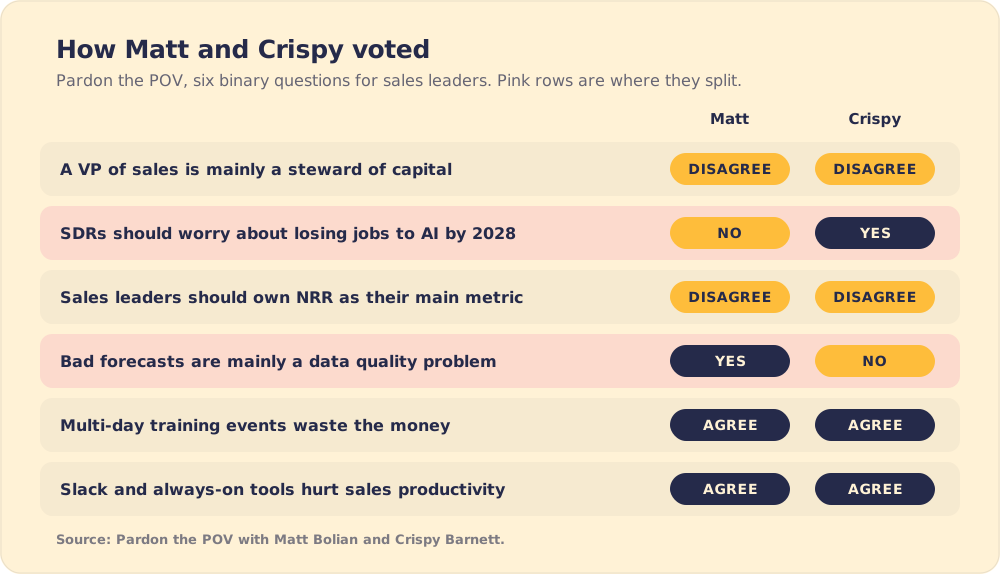
Robert, our host, opened the first round with a fight he said was brewing in sales leadership circles. On one side, a VP of sales is there to hit the number, period. On the other, the VP is a steward of capital: territory design, resource allocation, return on every dollar the sales org spends. Which one describes VP of sales responsibilities? Crispy Barnett and I voted at the same moment. We both said the number.
Crispy was back on Pardon the POV after a week away, in a good mood because Arsenal sat at the top of the Premier League table. We agreed on what a VP is for. Then Robert asked how a VP should forecast and whether SDRs should fear AI, and we split. A new sales leader can learn the most from those two arguments, so most of this post is about them.
What are a VP of sales’ responsibilities?
Pulled from what Crispy and I said across the episode, the job description reads like this:
- The new-business number. Revenue and the deal flow behind it, which Crispy called “kind of your only KPI.”
- The new-logo share of NRR. Net new is the VP’s pillar of net revenue retention; expansion and churn sit with the wider executive team.
- Territories and commissions. Part of the job, and a VP needs to “understand those and be good at that,” though no one is fired over them if the number lands.
- A forecast the company can plan around. Every buyer touch captured in the CRM, and every deal checked each week for what it still lacks.
- The SDR team. Seats filled by people who book meetings, with AI for research, prioritization and faster writing.
- Training that changes behavior. Reinforcement where reps sell, long after the kickoff ends.
Is a VP of sales there to hit the number or steward capital?
Crispy answered from how the job gets judged. “You’re never measured on capital allocation or like being a steward of capital,” he said. “You’re measured on like revenue purely.” He listed what feeds that revenue: “how much deal flow have you generated, how much like revenue have you actually generated, and that’s kind of your only KPI.”
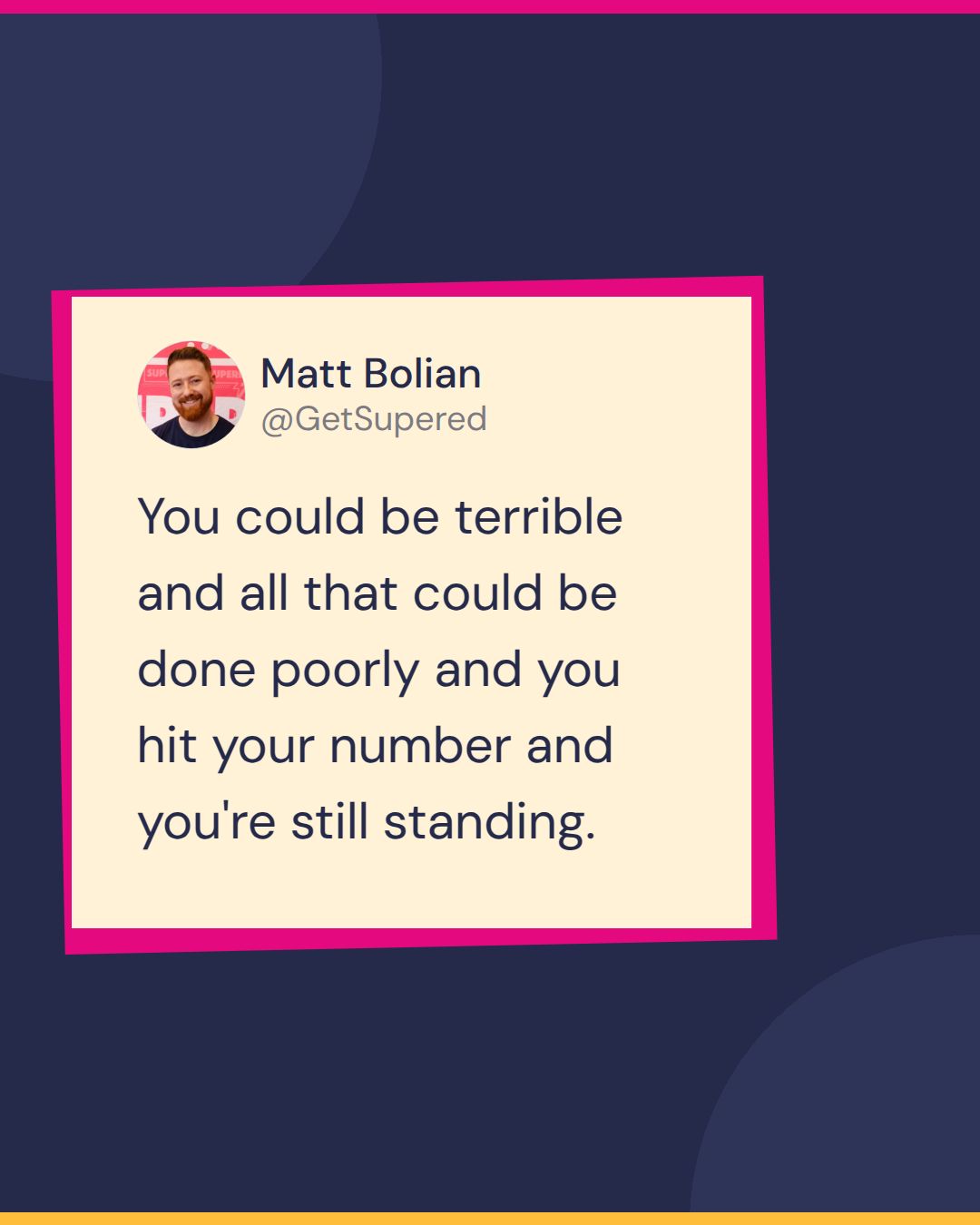
I was suspicious of the question. “This question seems like it was written by someone trying to sell me sales territory management software,” I said. A VP either hits the number or doesn’t. Territories and commissions are part of the job, “and you need to understand those and be good at that.” But I said it plainly on the show, and I would say it to any new VP: “You could be terrible and all that could be done poorly and you hit your number and you’re still standing. And that’s the reality of being a VP of sales.”
The tenure numbers are harsh. The Bridge Group’s research on chief revenue officers, drawn from 145 senior sales executives, put average tenure at just under two years (Blossom Street Ventures on The Bridge Group’s CRO research). Most sales leaders won’t be around in year three to find out whether the territory plan paid off.
Which number does a VP of sales own?
Robert pushed on what “the number” means. Force Management’s research, he said, puts net revenue retention near the top of executive priorities. Should sales leadership own NRR as its primary metric?
Crispy said no, because of what it would do to how reps sell. Making NRR the primary metric “changes the way that you sell massively.” A sales team should “focus more on like the new logo acquisition as a sales team because that’s what you go and hunt and kill.” Long customer relationships matter, but they belong to the handoff between sales and customer success.
I put NRR at the executive table. Should the company be measured on net revenue retention? “Yes, because it’s the health of the business.” NRR has three parts: new logos, expansion across current customers, and churn. “The sales leadership has one of those pillars, net new, and it should be the primary metric.” The other two affect the VP, but they come second.
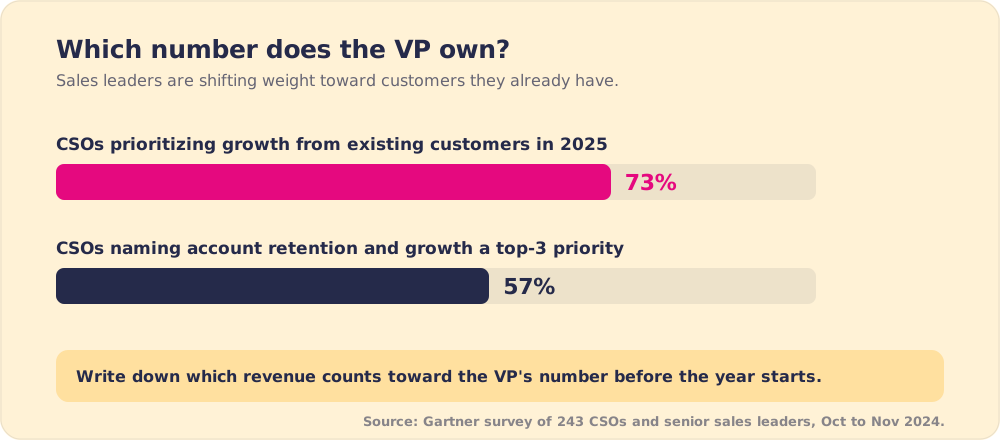
Sales executives are leaning toward expansion, so a VP should get the definition in writing. Gartner surveyed 243 CSOs and senior sales leaders and found 73% were prioritizing growth from existing customers for 2025, with 57% naming account retention and growth a top-three priority (Gartner, 2025). If the VP is chasing new logos and the board is counting net revenue, the VP can hit a target the board wasn’t counting.
Is a bad forecast a data problem or a trust problem?
This was the best exchange of the episode, and we disagreed.
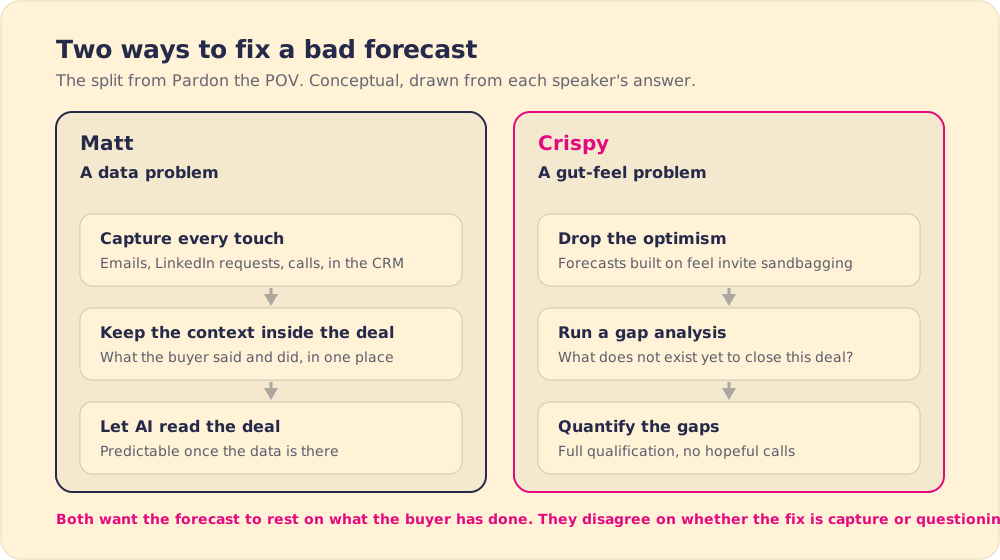
I said data. “If you have the data, and I say data I mean the communication between, whether I’m sending a LinkedIn request or I’m sending an email, and all the data that goes in the system, you can actually start to get predictable in your forecast.” I would even count a rep’s feeling about a deal as a data problem, because that feeling never makes it into the record. “Once you have the data and the context inside of a deal, you can then put AI” on it.
Crispy said data was the smaller problem. “The way that most people forecast is flawed because they forecast based upon gut feeling and the rep’s optimism in terms of what exists on the deal.” He works from the other end. “The correct way to forecast is actually to kind of do gap analysis forecasting, which is what does not exist to make this deal complete.” Ask what is missing, and “there’s no sandbagging. You’re doing full qualification. You can quantify it directly.” On data quality he was blunt: it is “not something that I think affects forecast all that much compared to the sandbagging and the hopeful attitudes of sales reps.”
Each of us has evidence. On my side, Validity’s 2024 survey of more than 600 CRM administrators found 24% said less than half of their CRM data was accurate (Validity, 2024). No model forecasts well from records like that. On Crispy’s side, The State of Sales Enablement 2026 found that teams inspecting deals against a defined process most often hit quota at 6.3 times the rate of teams that rarely inspect, and only 3% of managers use a structured deal-review template (The State of Sales Enablement 2026). Crispy’s list of what each deal still lacks would work as that template.
In practice a VP needs both. If the CRM is mostly empty, Crispy’s gap questions get answered from the rep’s memory, which brings back the optimism he was trying to remove. If the CRM is full and no manager asks what is missing, the forecast still leans on hope. So the VP has two jobs here: make sure the buyer’s activity gets captured, and ask Crispy’s question about every deal each week. Our guide to running a pipeline review lays out that meeting.
Should a VP of sales plan for AI to replace SDRs?
Robert read out a case study claiming one AI agent had replaced the output of 10 human SDRs, and asked whether an SDR should worry about losing the job to AI by 2028. We split again.
Crispy said yes. “I think there will be less SDRs out there in the world because they’re going to replace a lot of the fundamental reasons you have SDRs.” Who keeps the job? “If you’re hitting your numbers basically,” because AI can’t “hit your quota consistently time and time again.” Then he settled it: “The 10 SDRs that are getting replaced are the bad ones, not the good ones.”
I said no, and gave the SDR something else to worry about: “losing your job to the fact you’re not booking meetings.” AI is best, I argued, “for research and prioritization, for gathering intent, and for helping you write email” faster. I expect plenty of SDRs to follow each other off a cliff into AI-written outreach that all sounds the same. “Being able to be more human is what matters.” The SDR who replaces you, I said, will be “more human than you and faster than you.”
By the end we agreed on a rule a VP can staff by: the SDR who books meetings wins, and the one who doesn’t loses. Where we still differ is how many SDR seats will be left in 2028. More on the tools themselves in our post on AI SDRs.
Is a multi-day training event worth the money?
Robert described a three-day product training that costs $50,000 and is forgotten by the next week, then asked whether multi-day events are a waste. We both said yes.
My case started with my mom. We act as though “knowing more means we’ll do better. And my mom knows that’s not true.” As a kid I knew better, and I still stayed up all night drinking Monster and playing video games. “I knew better. I didn’t do better.” A VP needs a way to change behavior, “not just giving people more information.”
Crispy went after the sales kickoff. Classroom knowledge is “only emphasized at that point in time and not conducted in the place and area or time when it matters.” The kickoff “is more of like a feel-good rally,” and the lessons “are forgotten on the plane ride home.”
The memory research agrees with both of us. Jaap Murre and Joeri Dros replicated Hermann Ebbinghaus’s forgetting curve in 2015 and found the same steep drop within the first day, with a small bump after sleep (Murre and Dros, PLOS ONE, 2015). Unless someone reinforces the material while reps are selling, most of that $50,000 is gone within days.
What the debate settled
- The number. The job, in both of our answers. Crispy called revenue the only KPI; I said a VP who hits it survives weak territory plans.
- A written definition. Net new is the VP’s pillar of NRR. Get that on paper before the year starts, since 73% of CSOs are leaning toward existing-customer growth.
- The forecast. My half is capture, every buyer touch in the CRM. Crispy’s half is the weekly question of what each deal still lacks.
- The SDR bench. Keep the SDRs who book meetings, give them AI for research and speed, and expect fewer seats by 2028.
- Training that sticks. Events fade within days. We both want the learning delivered where reps do the work.
The verdict
A VP of sales is judged on the number, and Crispy and I would give the same answer tomorrow. Everything else on the list matters to the degree it moves that number.
On the forecast, take both of us. Get the buyer’s activity into the CRM so the record is complete, then run Crispy’s gap analysis on it every week. On SDRs, take Crispy’s warning and my advice: fewer seats, filled by people who book meetings and use AI to be faster and more human than the competition. On training, stop paying for events that end at the airport.
Supered handles the weekly half of that work. It brings the sales process to reps inside HubSpot and Salesforce while they work and shows a VP, deal by deal, whether it ran, so the gap questions have answers before the forecast call. Our breakdown of sales KPIs covers the leading numbers to watch beside bookings.
If the forecast is the part of the job that keeps you up, read our guide to sales forecasting next.
Frequently asked questions
What are the main responsibilities of a VP of sales?+
Is the VP of sales a steward of capital?+
Should the VP of sales own net revenue retention?+
Is a bad sales forecast a data problem?+
Will AI replace SDRs?+
Your process, running itself.
Turn the playbook into rep behavior.
More from Pardon the POV

Is Attribution Fake? Matt Bolian and Crispy Barnett on Word of Mouth and Self-Reported Attribution
Matt Bolian & Crispy Barnett
Sales Reps Missing Quota: Caleb King and Matt Bolian Argue Whose Fault It Is
Matt Bolian & Caleb King