Deal Inspection or a Better System? Crispy Barnett and Matt Bolian on Why Reps Skip the Process
On Pardon the POV, Crispy Barnett and Matt Bolian took five rounds on why reps skip the sales process. Both called it a systems problem, then argued over the fix, from where the process lives to deal inspection, shame and span of control.
Deal inspection is a manager's regular review of each open deal against the team's written sales process, checking the stage, close date and next step and asking about the gaps, and Matt Bolian argues it has to come before coaching.
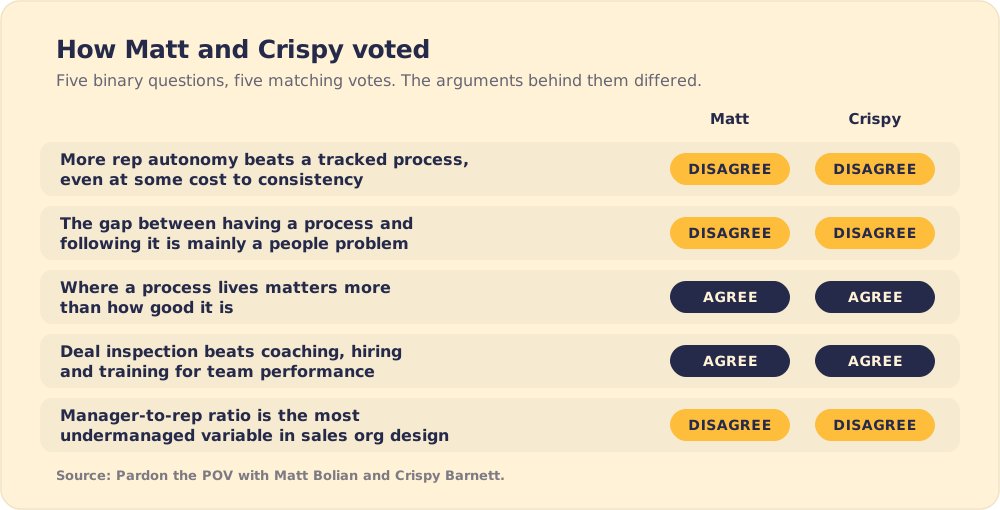
Our host read two numbers and asked us to pick a side on one of the oldest sales process problems. Eighty-nine percent of companies say they have a defined sales process. Thirty-six percent say their reps follow it consistently. Is that 53-point gap, the sales execution gap, a people problem or a systems problem? Crispy Barnett and I both said disagree on the same beat, and the host complained that he needed us to say different things.
Over five rounds on that episode of Pardon the POV, I kept coming back to deal inspection and Crispy kept coming back to where a process lives. He opened still betting on Arsenal to win the league, then voted with me on all five questions, each one built on data from The State of Sales Enablement 2026. We also disagreed about shame and about how many reps one manager can carry, and never fully settled either.
Should reps get autonomy or a tracked sales process?
The first round asked whether giving reps more autonomy, even at some cost to consistency, beats a rigid, visible, tracked process. We both disagreed.
Crispy started with the way sales leaders already talk about their reps: “cowboys in the wild west,” riding “on their own horses going to their own places.” Leave them there, he said, and you get “inconsistent experience across the board. And that will directly reflect in the data, in close rates, in deal sizes, in speed to close.” His answer was one standard the whole team runs, “because we know that it works and drives revenue.”
My answer came from the company I ran before Supered. At RevPartners we had the RP way, the RevPartners way. It set the standard for how we worked with customers: send recaps, communicate within the SLA. “These were activities that left to their own states the human would not do,” and it was our job in delivery and in sales to give every customer the same experience. “You must inspect so you can expect certain expectations. If you don’t, you will fail.”
Our host broke his own rule and chimed in. He had sold at RevPartners and followed the RP way himself, and he said he was told more than once that sticking to that process was what made the difference in the deals they won. The buyer felt the consistency.
Are sales process problems people problems or systems problems?
Round two was the one with the 89 and the 36.
I went first. “What you inspect is what you can expect,” I said, “and when you have 36% of a process not being followed, that is clearly a systems process, and it’s probably the lack of inspection occurring at the management level.” Then the part I believe most about reps: “People respond positively when you give them a path to doing what is good.”
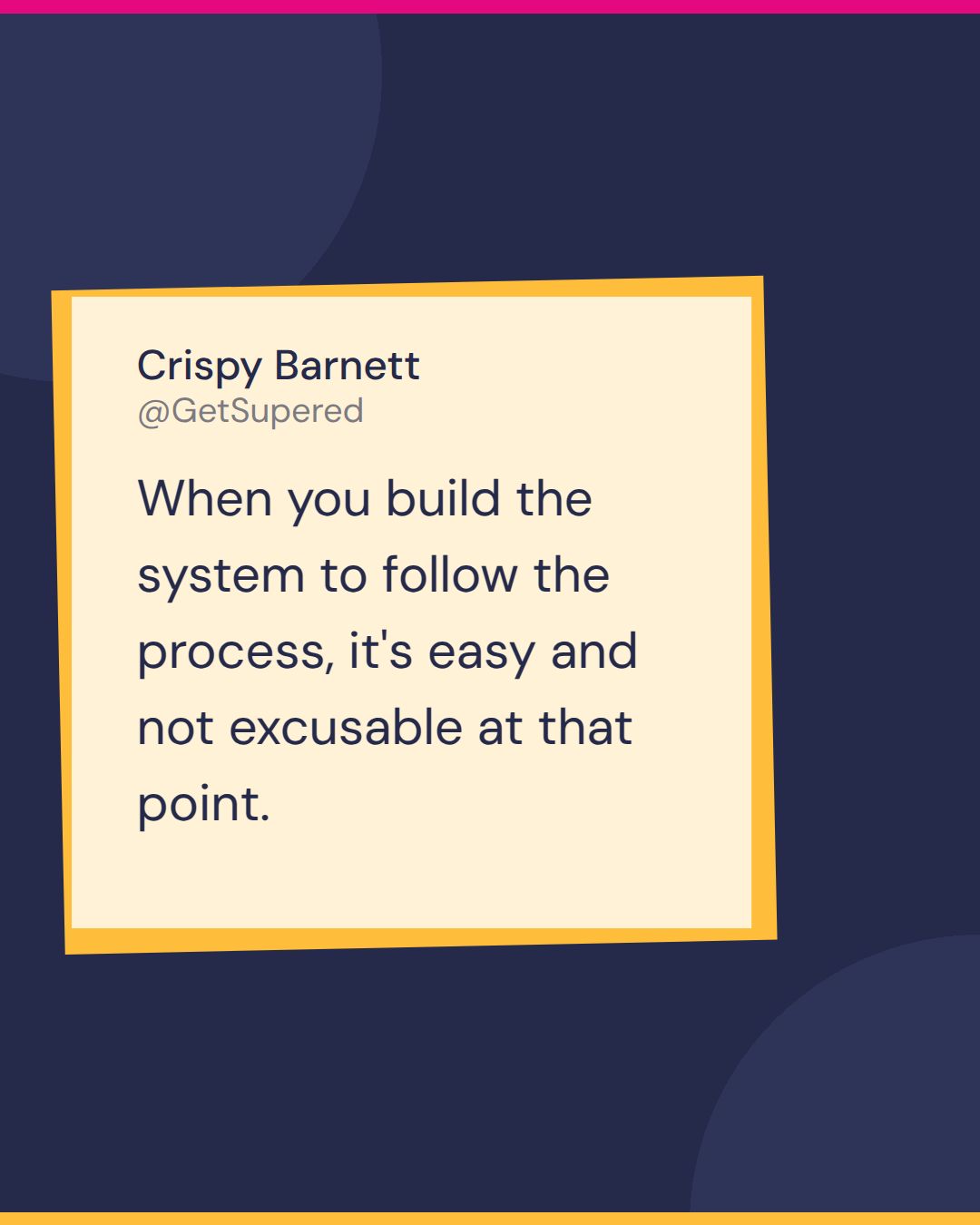
Crispy went after location. “It’s unrealistic to expect someone to go to Google Drive and read a document or go to notion and read a document and then bounce into the area where you actually take the action,” he said. “That is not a people problem.” Build the process into the flow of work and the excuses go away: “When you build the system to follow the process, it’s easy and not excusable at that point.”
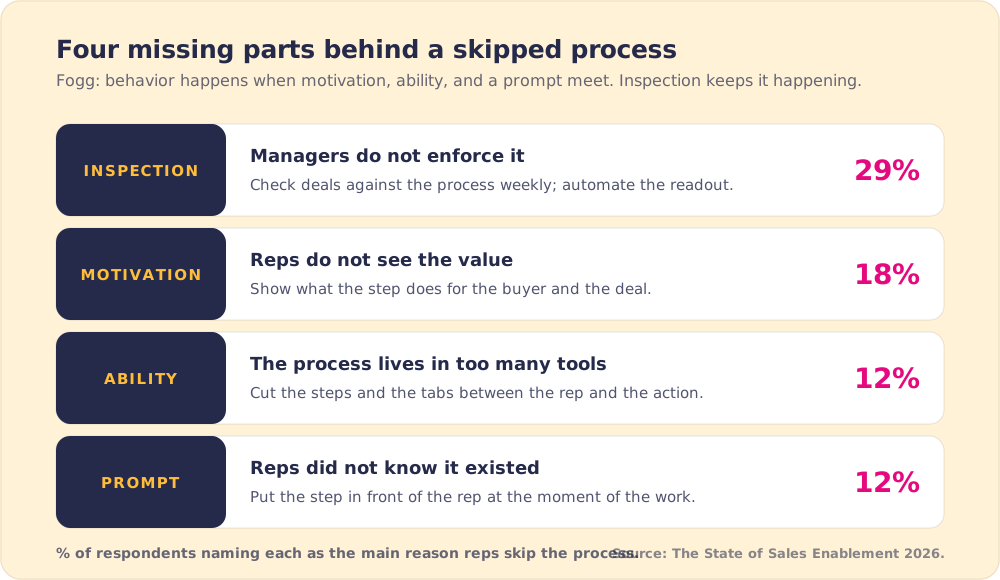
The survey behind the question asked leaders why reps skip the process: managers not enforcing it (29%), reps not seeing the value (18%), the process living in too many tools (12%), reps not knowing it existed (12%) (The State of Sales Enablement 2026). My answer covers the first. Crispy’s covers the third and fourth. All four would still be there if you replaced the rep with a new hire on Monday.
Does it matter where the sales process lives?
The third round asked whether where a process lives matters more than how good it is. We both agreed, and Crispy gave the episode its best image.
He talked about driving with directions on a phone. “It is unrealistic to expect me to arrive to my destination if I’m looking at my phone over here of the direction supposed to go to and drive a car.” You “crash and die,” he said. Then Apple CarPlay, with the same directions on a screen in the dashboard: “I can look at and drive and get to my destination safely. It’s brilliant.” A process in the flow of work sits “in a place where I’m constantly looking,” and a rep can “glance at it whenever I need to.”
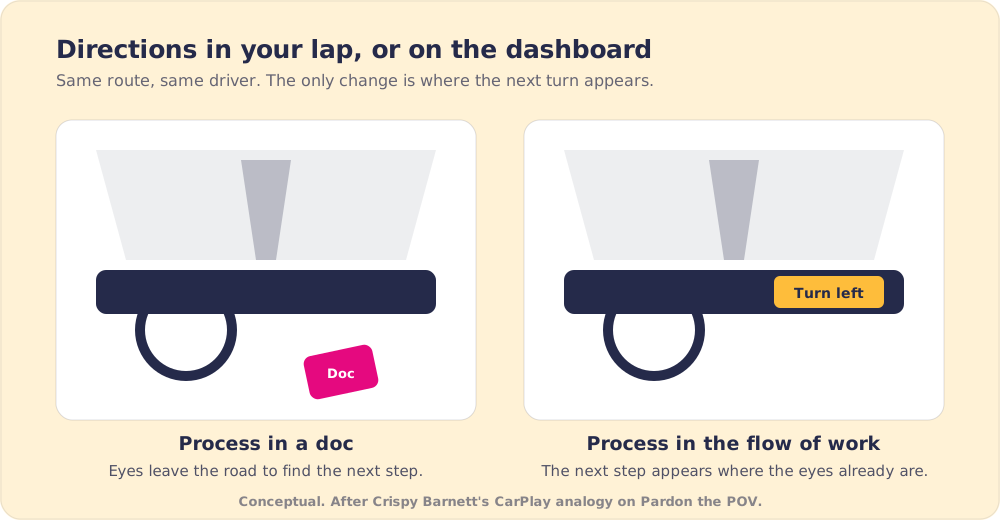
I went to behavioral science. BJ Fogg’s model says “Behavior happens when Motivation, Ability, and a Prompt come together at the same time” (Fogg Behavior Model). My example was charity. Show someone a sick child and they may have the motivation and the ability to give. “You never ask me for money. I don’t give money.” The ask has to arrive at the right moment. “That’s why embedded workflows work better because the reps want to win. They don’t want to lose.”
Our post on where your sales process should live makes the full case, with quota numbers for each place a process can sit.
Is deal inspection the most important thing a sales manager does?
Round four asked whether consistent deal inspection beats coaching, hiring and training as the thing a manager can do to lift the team. The host had the number that made him ask. Teams that inspect deals against a defined process most often hit quota at 6.3 times the rate of teams that rarely inspect, and only 3% of managers use a structured deal-review template to do it (The State of Sales Enablement 2026). We both agreed. We did not agree on why it works.
What is deal inspection?
On the show, deal inspection meant a manager going through open deals on a set cadence and checking each one against the standard the team already agreed to: is the stage right, is the close date current, is there a next step, did the rep do what the process asks at this point. Then the manager asks about whatever is missing. Crispy’s example later in the round, a close date that has not moved since the last review, is a deal inspection question.
In the same survey, 58% of managers reviewed deals through CRM dashboards and 26% by ad hoc intuition. Structured deal-review templates, the method tied to the highest quota attainment at 50%, were in active use by 3% of respondents (The State of Sales Enablement 2026).
My case was about order. Whether it is a kid doing homework or a rep sending a recap after a meeting, I said, “the number one be difference between behaviors of a human are and it’s simple.” Do they “expect and know they’re expected to do it,” and do you “inspect it.” Inspection is how a manager hands out expectations, and the conversation after a missed one is coaching. “You can’t coach without inspection. That’s where I see people get a lot of things wrong. They try to coach without first having a common standard of expectations that they inspect.”
Crispy’s case was about shame. “I believe shame is one of the most powerful things that a human can experience in their professional and personal life,” he said. His example was concrete: ask, in front of the team, why a close date has not been updated since the last review. “You will feel shame if you do not have the standard upheld against your peers in the pipeline.” The repetition of that, he said, “is enablement.”
Our host joked that the segment was sponsored by shame. Crispy held his ground: “Shame is extremely powerful.”
Psychologists have studied what Crispy is describing, and they split it in two. June Tangney and her colleagues, reviewing the research on moral emotions, separate shame, a painful judgment about the whole self, from guilt, a judgment about a specific act. Guilt tends to move people to repair what they did; shame more often moves them to hide or get defensive (Tangney, Stuewig and Mashek, Annual Review of Psychology, 2007). Crispy’s own example sits closer to guilt than his word for it. He asks about one close date on one deal, against a standard the whole team shares, and the rep can fix it before the next review.
What happens when a manager takes on a sixth rep?
The last round asked whether manager-to-rep ratio is the most undermanaged variable in sales org design. We both disagreed, and this is where Crispy and I were furthest apart.
Crispy said the ratio is a symptom. With the standard and the flow of work built in, “the number could be six, could be 20, could be whatever.” A manager with five reps “can manhandle it directly,” and adherence drops at six because there was never a system, only one manager’s effort.
I agreed with the diagnosis and was less sure about the cure. The jump from five to six is “going from man defense to zone defense,” and “you can’t play zone unless you have this a system in place.” With companies pushing revenue per employee up, I said, managers will have to accept that a ratio of one to five is going away. The goal is to “outsource inspection” so managers can coach more, and maybe that gets a manager to ten reps. “Who knows?” I also said the adherence rate at one to five is nothing to celebrate.
The report puts numbers on both points. At one to five reps per manager, 47% of teams report high process adherence. At six to eight, 23% (The State of Sales Enablement 2026). Adherence halves at the sixth rep, and even the small teams leave more than half their process unfollowed.
What the debate taught about deal inspection and sales process problems
- A standard over cowboys. Crispy: without one, the inconsistency shows in close rates, deal size and speed. My RP way: recaps and SLAs that people would not run on their own.
- The process on the dashboard. Crispy’s CarPlay picture and Fogg’s prompt both put the next step where the rep is already looking.
- Inspection before coaching. You cannot coach against a standard you never checked.
- Discomfort about a specific act. Crispy’s public question about one stale close date is about the deal, and the rep can fix it.
- A system that scales past five. Crispy says a built system makes the ratio matter less; I want inspection automated so managers can coach more reps.
The verdict
The host gave Crispy the win of the day, mostly because Arsenal was losing and he wanted Crispy to feel better. On the argument, we ended up in the same place. Sales process problems start in the system, and the order of the fix matters.
Put the process where the rep works, so following it costs a glance. Inspect deals against it every week, and make the question about the deal, the way Crispy does with a stale close date. Coach on what the inspection turns up. After that, hold reps to the standard without apology, because the system has made it easy to meet.
We built Supered for the first two steps. It brings the sales process into HubSpot and Salesforce while reps work, prompts the next step, and shows managers deal by deal where the process ran, so inspection stops eating the hours meant for coaching. Our guide to sales process compliance and adoption covers why the checking and the coaching both have to happen.
If your process lives in a doc today, the next read is our guide to sales process adoption, which walks through moving it into the work.
Frequently asked questions
Are sales process problems people problems or systems problems?+
Why don't reps follow the sales process?+
What is deal inspection?+
Can you coach reps without deal inspection?+
How many reps can a sales manager handle?+
Your process, running itself.
Turn the playbook into rep behavior.
More from Pardon the POV

Presidents Club in Sales: Matt Bolian and Crispy Barnett Argue Over Who the Trip Is For
Matt Bolian & Crispy Barnett
Is Sales Enablement Broken? Matt Bolian and Caleb King Argue Over What Is Failing
Matt Bolian & Caleb King