Software Demo Best Practices: Jeff Hatten's 2% Factor for Winning When Features Match
Jeff Hatten closed three million-dollar deals after one demo training, became TwoWin's first sales hire, and came back 12 years later. His case: a software demo is a judged event, and small choices move the score.
Software demo best practices are the habits that help a demo win when rival products look alike: opening with a story instead of a login screen, framing each screen in the buyer's words and outcomes, and doing the small things that lift a judge's score.
Twenty-some years ago, Jeff Hatten was a full-cycle account executive at a software company that hired an outside firm to teach its reps how to demo. Before the training, the method was to fire up the software and walk through the cool features. After it, Jeff closed three deals of more than a million dollars each, at a company where deals that size were rare. The firm was TwoWin and the program was Demo to Win. Jeff was “singing from the rooftops” about it until TwoWin hired him as its first salesperson.
He stayed 12 years, spent 10 more on his own, and had rejoined TwoWin a few months before Rob Jones asked him about his numbers in the Numbers Known episode on winning demos when everyone has the same features. The first number Jeff brought was 2%, and most of his software demo best practices hang off it.
How did one demo training make Jeff Hatten TwoWin’s first sales hire?
Jeff described his old demos plainly. “We went in and we fired up the software and just went in and started talking about, you know, all the different cool features and capabilities that we had,” he said. TwoWin taught him to start somewhere else, with what it calls a limbic opening: “you open with a story or something that’s engaging like a prop even.”
Rob asked whether the name meant the limbic system, the part of the brain tied to emotion and memory. Jeff said yes. “Humans need something to pay attention to and to something to reawaken their senses,” he said. A buyer who expects “a bunch of software screens thrown at them” will “tune out” once the screens stop being relevant.
Jeff makes comedy videos on LinkedIn, and his sales demo tips still handle humor with care. Humor “works great for people that are funny,” he said, and “it can fall really flat” for people who force it. Demo storytelling about the buyer’s business does the same work, and so does using a person’s name, which he demonstrated by glancing at his screen to remember he was talking to Rob.
Rob’s question about the limbic system has research behind it. In a 2004 review, the neuroscientist James McGaugh reported that how strongly the amygdala responds to emotionally arousing material while it is being learned “correlates highly with subsequent recall” (Annual Review of Neuroscience, 2004). A story that makes the committee laugh or wince has a better chance of being remembered on scoring day than the fourth settings screen.
To try Jeff’s opening, write down the first 60 seconds of your next demo before you write the click path. If those 60 seconds contain a login screen, start over with a story from the buyer’s industry.
Why is a software demo a judged event?
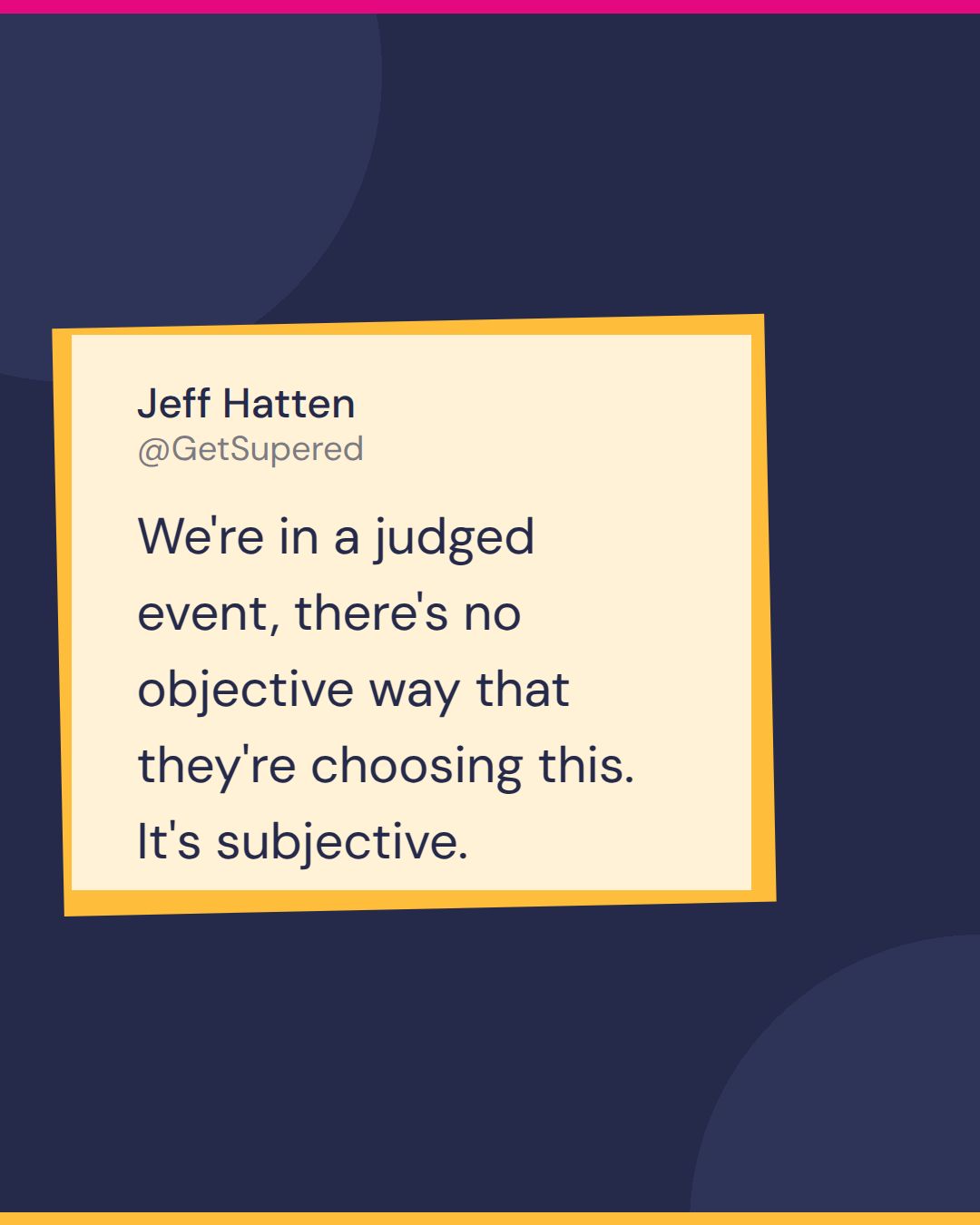
Jeff’s first number was the 2% factor, the idea TwoWin teaches across its workshops. “We’re in a judged event, there’s no objective way that they’re choosing this. It’s subjective,” he said. He compared it to figure skating. The judges carry a scoring sheet, but “ultimately it’s the humans that are making up the decision on what’s the best fit.”
So the job is to find the little things that raise the score. Jeff described a judge thinking, “I gave the the last person a four, but this demo or this presentation that I got is is slightly better, so I’m going to give them a 4.3.”
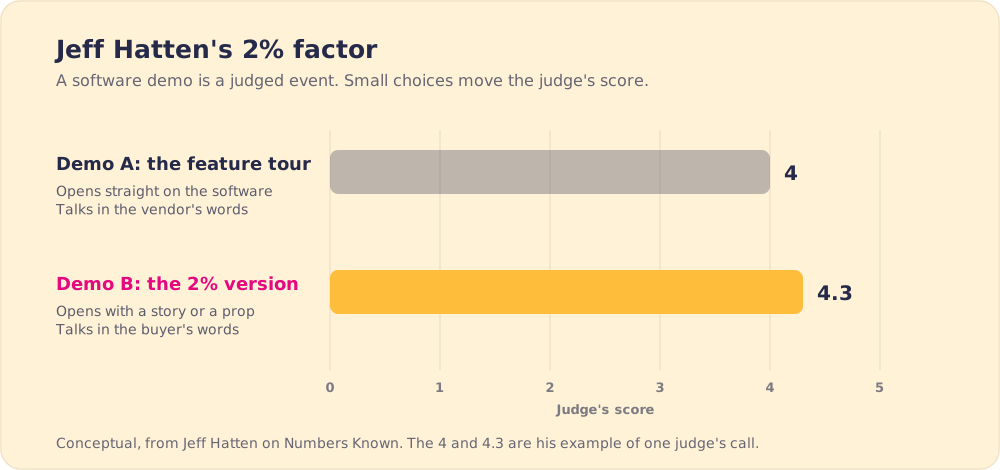
Skating scores do move on small things. Wändi Bruine de Bruin studied scores from figure skating and the Eurovision Song Contest and found that ratings rose with a performer’s position in the running order, whether judges scored each act right away or all of them at the end (Acta Psychologica, 2005). The running order had nothing to do with the skating, and it still moved the scores. A buying committee comparing three vendors in one week is open to the same drift.
Rob pushed the idea into the rest of the deal. In his own selling, he said, the close deals were rarely decided by features or feature parity. What separated them was “how the sales process was run.”
What are the software demo best practices that create a 2% edge?
Rob asked for one quick 2% move. Jeff said it was not quick, but it was the baseline: “framing the way you talk about your product solutions in the customer’s world versus in your world.” That means talking about “the outcomes that they’re they’re trying to achieve versus the features or capabilities that you have.” When that shift happens, buyers stop “feeling like they’re getting sold to or, you know, blasted with fire hose.”
Rob added a practical way in: “learn some new words. learn how to speak and use the terminology of whoever it is you’re selling to.” A real estate firm and a medical company may buy the same software and describe the problem in completely different words.
Jeff’s demo habits, as he and Rob laid them out:
- A limbic opening. A story, a prop, or something specific to the buyer’s business comes before the first screen.
- The buyer’s world. Each screen is tied to an outcome the buyer named, in the order they care about it.
- The buyer’s vocabulary. Their job titles, their metrics and their jargon replace yours.
- The small courtesies. Using a person’s name, the kind of detail that nudges a 4 toward a 4.3.
The buyer’s words have to come from somewhere, and they come from discovery. A rep who skipped good discovery call questions has no customer language to demo in.
Jeff knows he has done it right when the buyer says so. The deals he won came with feedback like “you understood our world better.”
What did Popper teach Jeff about solving a painful problem?
Rob’s second number for Jeff was an estimate: 22 billion, his rough count of memes and GIFs sent every day. It pointed at the hardest stretch of Jeff’s career.
After his first run at TwoWin, Jeff built a video production business, and COVID ended the live shoots it depended on. He had always wanted a software company, and he chose the problem of standing out in crowded inboxes. One day he made a branded GIF in Premiere Pro that played like a tiny video and sent it to a prospect on LinkedIn. The reply was “OMG, I love this. How did you do it?” He kept going until he had 300 comments like it. He hired a development firm in Argentina, and the result was Popper.ai.
Then the launch. “It was just like crickets like like nobody paid for it and signed up,” Jeff said. ChatGPT arrived around the same time, “a little bit more of a shiny object.” He worked on Popper for two and a half years.
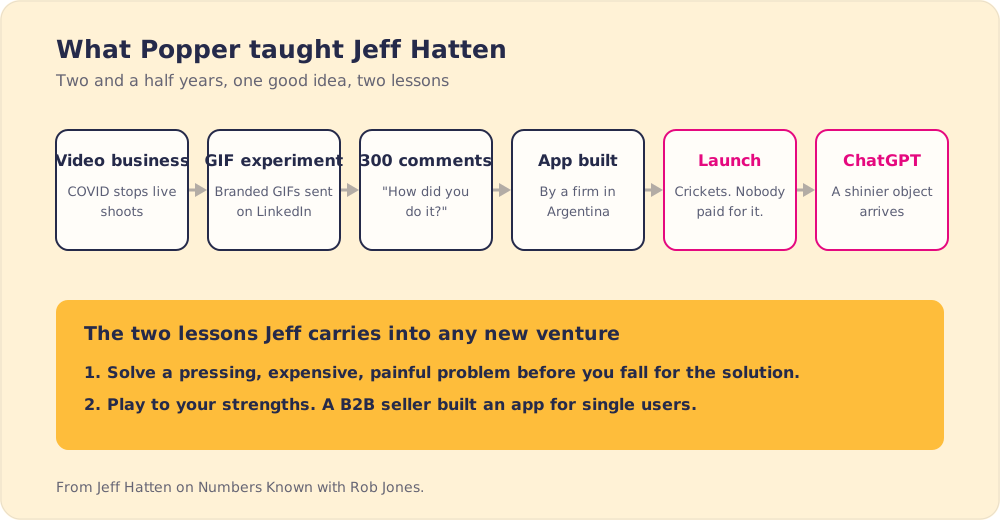
Rob defended him. The pain was real, Jeff had tested it before building, and he could not have seen ChatGPT coming. Jeff took the point and kept two lessons anyway. First, “make sure that the problem is paramount to what you’re doing before you get too excited about what the solution is.” The feedback he got said “I love this,” and it never said “this solves a really great problem for me.” Second, play to your strengths. He had sold B2B his whole career and built an app for single users.
Jeff’s first lesson carries into a demo room. A buyer who says “I love this” has told you about the demo. Before you count the deal, ask which problem it solves for them and what that problem costs.
Why would Jeff never go solo again?
Jeff’s own second number was 10, the years he spent on his own. He called working alone “on an island” the thing he regrets most, and said he would only go out again with a partner, someone who “helps elevate your weaknesses and you help elevate theirs.” He calls himself a visionary and “less operational,” which is why he needed one. He also warned founders, “don’t undervalue yourself and what you charge for your services.”
First Round Capital’s portfolio data leans Jeff’s way. Over its first 10 years, companies with more than one founder outperformed solo founders by 163%, measured by growth in value from First Round’s first check to today or exit (First Round Capital, 10 Year Project). Rob thought the answer depends on the problem, the timing and the skills. He also named the cost of going it alone: “you just feel very lonely.”
Popper also got Jeff making content. His funny sales videos on LinkedIn sent people to Popper’s free trial without a pitch, and they led to the Funny Five, a newsletter of the week’s five funniest LinkedIn videos that ran 65 editions for about 1,700 subscribers. It is paused while he builds a territory for TwoWin. His rule for any content, from a rep or a brand, is to be consistent and “offer value.”
What Jeff Hatten learned about winning demos
- A judged event. Buyers score vendors the way skating judges score a routine, by feel, so a 4 becomes a 4.3 through small choices.
- A limbic opening. A story, a prop or a relevant joke comes before the first screen, because buyers tune out a stream of screens.
- The customer’s world. Outcomes and vocabulary from the buyer replace features and vendor jargon.
- Pain over praise. Popper earned 300 compliments and few payments. The feedback said “I love this,” and it did not say the app solved “a really great problem.”
- A partner and a fair price. Ten years alone taught Jeff to build with someone who covers his weak side and to charge for the value he brings.
What should a sales team do with the 2% factor?
Make the small habits the standard, the way TwoWin did for Jeff two decades ago, instead of leaving demo quality to whoever presents well. Write the limbic opening and the buyer’s outcomes into the demo prep step. Then check recorded demos against them: did the rep open with a story, use the buyer’s words, and tie each screen to an outcome the buyer named? The skating research shows judges’ scores moving on something as small as running order, so the small things have to be checked deal by deal. Our piece on sales psychology covers more of the research behind openings like Jeff’s.
Jeff’s deals changed the day he stopped opening with the software. Start there, then build the win themes that carry the buyer’s words from the first call to the final score.
Frequently asked questions
What are the most important software demo best practices?+
What is the 2% factor in sales demos?+
What is a limbic opening in a demo?+
How do you stand out in a software demo when competitors have the same features?+
Should you use humor in a sales demo?+
Your process, running itself.
Turn the playbook into rep behavior.
More from Numbers Known

LinkedIn Personal Branding: Tom Boston on Three Pillars, One Lane, and Why Real Beats Funny
Tom Boston
SDR to AE in 11 Months: Dom Odoguardi's Numbers, From Quota to Do Content
Dom Odoguardi