SDR to AE in 11 Months: Dom Odoguardi's Numbers, From Quota to Do Content
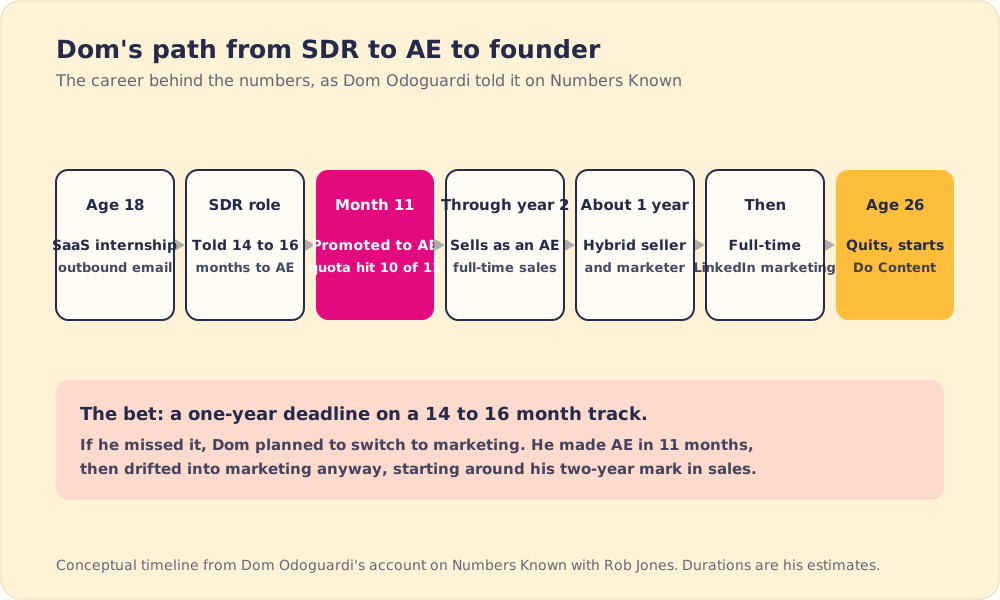
Dom Odoguardi gave himself one year to go from SDR to AE, made it in 11 months, then moved into marketing and started Do Content. On Numbers Known he walked Rob Jones through the numbers behind that path.
SDR to AE is the promotion from sales development rep, who books meetings, to account executive, who runs and closes the deals, and most companies tie it to a set number of months at or above quota.
Rob Jones did not wait for Dom Odoguardi to answer his invitation. He booked a Do Content meeting straight onto Dom’s calendar and named himself “Duke Content.” Dom laughed, showed up with no prep, and admitted that if Rob had waited for a reply “we would have done this in a month.”
Dom founded Do Content, a video agency for B2B brands, and he is the real person behind the AI avatar sales coach that turns up all over LinkedIn. He got his first SaaS internship at 18, doing outbound email. On Numbers Known, Rob picks numbers from a guest’s career and asks about them. His first number for Dom was one: the one year Dom gave himself to go from SDR to AE.
How did Dom Odoguardi go from SDR to AE in 11 months?
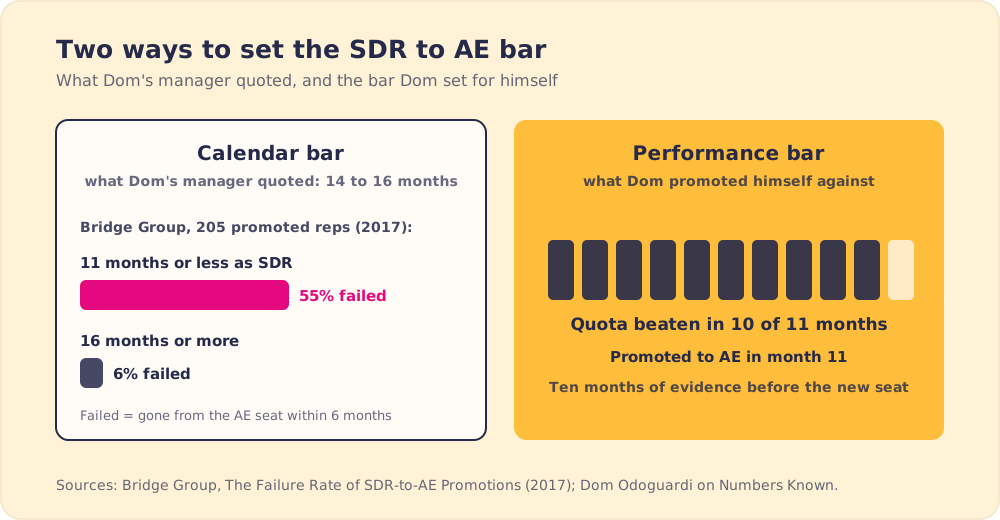
Dom and his friends left college wanting account executive jobs and found out in interviews that new graduates were not getting them. So Dom took an outbound SDR role. In the interview he asked the manager how long the track to AE took. The manager said “anywhere between 14 to 16 months.”
Dom asked what would happen if he crushed quota every single month. The manager’s answer, as Dom tells it: “We could probably get you there in a year.”
He held them to it. “I hit and surpassed quota 10 out of 11 months,” he said, and he was promoted in month 11. He was open about the one miss. By the last month, “I was kind of checked out because I knew I was going to become an account executive.”
Rob asked about the other side of the bet, the part where Dom would walk if it failed. Dom said that if he had not been promoted on time, “I would have probably switched gears completely and gone into marketing.” He made it, stayed in sales about two years, spent a year as a hybrid seller and marketer, then went into LinkedIn marketing full time.
How long does SDR to AE take, and what should the bar be?
The manager gave Dom a range of months. Dom asked what performance would shorten it, and got a bar he could check every 30 days. A sales leader can hand reps that bar up front.
Time served, on its own, tells you little. The Bridge Group looked at about 205 reps promoted from SDR to AE and counted a promotion as failed if the rep left the AE seat within six months. Of those promoted after 11 months or less, 55% failed. Of those with 16 or more months, 6% did (Bridge Group). The study is from 2017 and drew on one researcher’s LinkedIn connections, so it is a thin warning. By its numbers, Dom went early. His manager, though, had ten months of beaten quota to judge him on, which is more evidence than a tenure line gives.
For a leader, a bar like Dom’s has three pieces:
- The criteria, written down. Dom had to ask for them in an interview. Put them in the offer letter or the SDR playbook, so a new rep reads the SDR promotion rules on day one.
- A monthly scorecard. Quota attainment by month, plus the habits an AE seat needs, reviewed in the one-on-one where the rep can see the gap.
- A ramp plan for the new seat. The AE job is a different job. Our guide to sales ramp time covers the first months, and BDR vs SDR vs AE lays out how the roles hand work to each other.
Why was Dom nervous to say he was 26?
Dom’s own first number was 26, his age, and he said he has been reluctant to share it. “People think that just because you’re young, you know, you’re not capable or you’re not an expert,” he said. He has worked in SaaS since 18, which comes to about eight years.
Rob argued it should count for more, since startups pack more into a year. “I am now arguing that you’re wrong and it is technically 12 just because of the nature of work.” Rob had read Dom’s post about editing until two, catching a train to Boston and filming a conference all day. With four kids and a bad knee, Rob said, that day would put him down for a week.
Dom has decided his age helps in his line of work, where he makes short videos for LinkedIn and Instagram and has to stay on trends. He is planning a joke post about it, with a call to action to book him now, because “in about 3 years I’m going to start getting back pain.”
What happens when one person manages 94 interns?
Rob’s next number came from Dom’s first job. Before Do Content, Dom ran 94 interns over two years on market research in the nonprofit space. Rob asked if he knew the term span of control, and explained it. A manager needs “more than two people cuz what are you doing if you’re managing only two, but it shouldn’t be bigger than 10 because when you get to 10, it’s a lot to manage.” Then he looked at Dom’s number. “94 is an army of people.”
Dom did not defend it. “It was a bad decision,” he said. About 80 of the interns had one simple data task a week, and he met them on group calls of about 20. Even so, “my full-time job at that point became just managing these 94 interns.” The project hit its deadline because “there were some superstars within that group that kind of made up for the work that some of the other interns weren’t doing.” But he was worn out. “I can’t divide my time up 94 ways.”
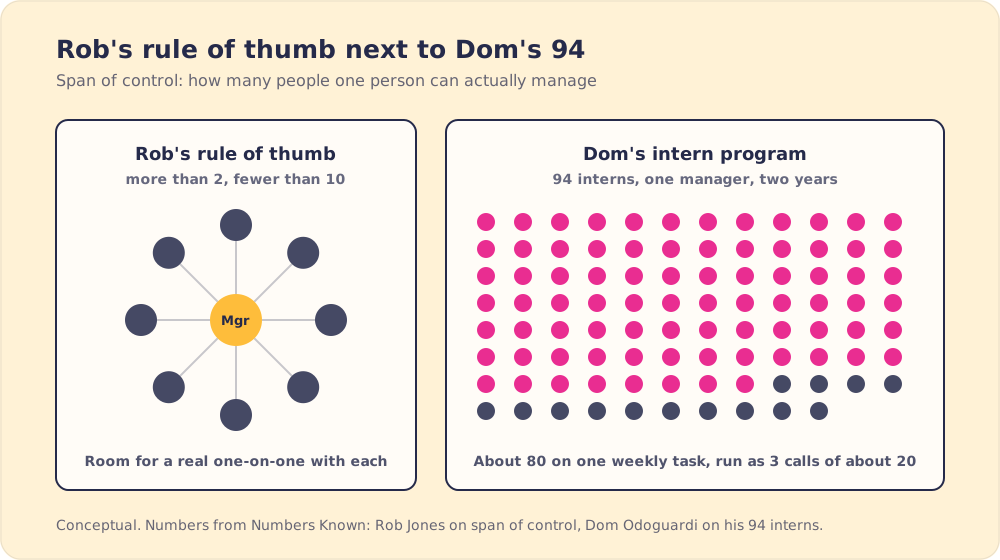
Gallup’s 2026 study of 92,252 teams adds a detail to Rob’s rule. The average US manager had 12.1 direct reports in 2025, and team size alone did not decide engagement. About seven in ten people were highly engaged at any team size when they strongly agreed they got meaningful feedback, and about one in four when they did not (Gallup). One manager on three weekly group calls has little room to give 94 people that kind of feedback, which fits Dom’s account of how it went.

Why did Dom quit his job, and where do his ideas come from?
Dom wore a shirt on the episode that said “ask me why I quit my job,” so Rob asked. He quit to start a video agency because he loves making videos and putting people in front of a camera. A week later, with no logo yet, he went to his first conference and needed a way to start conversations. “Let me buy a $3 Primark shirt, put some electrical tape on it.” People asked the question on the shirt, he pitched the agency in reply, and he got his first client meeting that way.
Rob asked how much of his content comes from his own life. Dom put it at “85% is like driven through my own experiences,” the funny, annoying and bad moments from years in sales and marketing.
Does scripted or candid content perform better?
Dom’s second number was 15, the most separate videos he has filmed with a client in one day. The client had never been on camera. It was “15 completely different concepts in 15 completely different locations,” all scripted. Some lines the client memorized, and Dom fed others line by line. With alternate hooks, they left with about 30 pieces to test.
Rob asked which footage wins. Dom’s crew keeps the cameras running all day, and the shaky, unscripted moments, the client wandering around asking what to say next, get cut into the scripted pieces. Rob asked whether that was taste or data. “It definitely performs better,” Dom said. He calls those moments “the key to the soul,” because the viewer feels like “you’re right there with them,” and they “typically have a higher retention rate when you look at those metrics.”
Why do the best marketers have sales experience?
Rob’s last number was zero, the amount of pineapple Dom allows on pizza. Then came the question he had saved. Rob went from sales to marketing, Dom did too, and so have plenty of their peers. Why?
Dom changed the question. “I think it’s why are some of the top performers in any industry have sales experience because you need sales for everything you’re doing in your life. Sales helps you with storytelling. Sales helps you sell internally, externally.” It teaches structure and the customer journey, he said, and “it’s no coincidence why like a lot of the most like creative people out there and a lot of the most high-achievers had sales experience before.” Then Rob let him go to his next call.
In 2006, Philip Kotler, Neil Rackham and Suj Krishnaswamy described the other side of this in Harvard Business Review. Sales and marketing fight over budget and prices and blame each other when results lag, and “sales departments tend to believe that marketers are out of touch with what’s really going on with customers” (HBR, 2006). A marketer who has carried a quota has been on the customer end of that complaint. Our guide to sales and marketing alignment covers the handoff between the two teams.
What Dom Odoguardi’s numbers add up to
- A one-year deadline. Dom turned a 14 to 16 month track into a monthly quota bar, beat it in 10 of 11 months, and made AE in month 11.
- A promotion bar made of evidence. Bridge Group saw 55% of early SDR promotions fail. Months of beaten quota give a manager more to judge than months served.
- A span of control he could not stretch. Dom ran 94 interns through group calls, and Gallup finds engagement follows feedback more than team size.
- Stories from real work. About 85% of Dom’s content comes from things that happened to him in sales and marketing.
- Candid footage inside the script. Fifteen scripted videos in a day, with the unscripted moments cut in because they hold viewers longer.
- Sales as the base skill. Storytelling, selling ideas inside and outside the company, and taking a buyer through a process.
What should sales leaders take from Dom’s path?
If you run an SDR team, make the path to AE something a rep can see and hit each month. Write the promotion criteria down, score them in each one-on-one, and keep teams small enough that a manager has time for real feedback. Dom got his bar by asking for it in an interview. Your reps can have it on their first day.
The scoring is the part that slips once a manager has more than a handful of reps. Supered puts the next step of your process in front of each SDR inside HubSpot or Salesforce while they work, and shows the manager who is running it, so one-on-ones can go to coaching.
Frequently asked questions
How long does it take to go from SDR to AE?+
Is it bad to be promoted from SDR to AE too early?+
What should an SDR do to get promoted to AE faster?+
What is span of control for a sales manager?+
Why do so many salespeople move into marketing?+
Your process, running itself.
Turn the playbook into rep behavior.
More from Numbers Known

LinkedIn Personal Branding: Tom Boston on Three Pillars, One Lane, and Why Real Beats Funny
Tom Boston
Social Selling Tips From Jen Allen-Knuth: Four Dogs, 18 Years of Quota and the Buyer's Status Quo
Jen Allen-Knuth