Marketing Agency Business Model: How Etienne Rebuilt digitalJ2 Around One Job
Etienne started digitalJ2 out of college as a marketing agency, then changed its business model to HubSpot implementation, taking on 25 to 50 customers a month. What the switch cost, and what he learned about commitment and accountability.
A marketing agency business model is how an agency earns its revenue, usually monthly retainers for strategy, content, design and ads; Etienne moved digitalJ2 off that model to high-volume HubSpot implementation projects because seven delivery skill sets made the firm fragile.
Etienne started digitalJ2 right out of college, with his father, and ran it on the usual marketing agency business model: monthly retainers, and whatever tools each project needed. It got harder with each hire, because no one on the team could learn every platform well. Around 2018 he downloaded a HubSpot ebook, got a call from HubSpot’s partner team, and made a decision: “maybe it’s time to standardize around a system.” He calls it “the best thing that we could have done.”
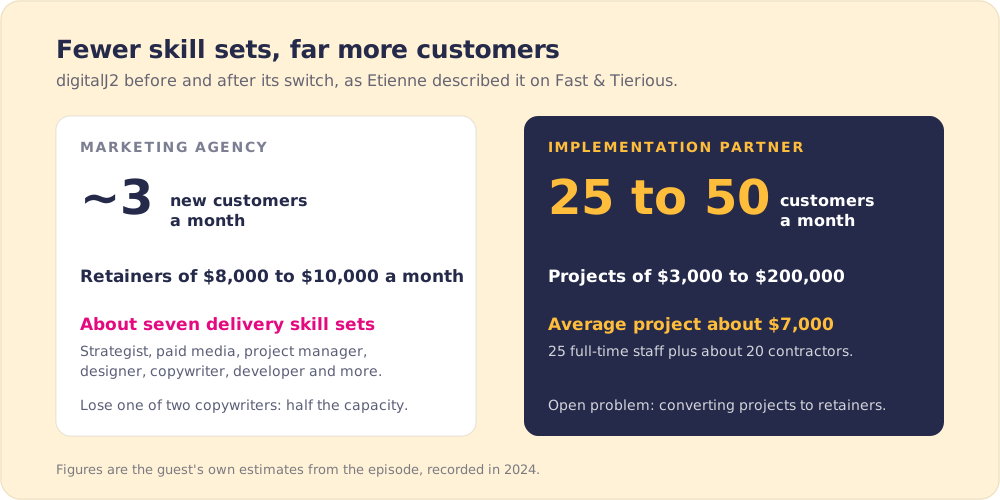
Five years later he made a bigger one. He told his leadership team that digitalJ2 would stop selling marketing services and become a HubSpot implementation partner. By 2024 the firm had 25 full-time employees, about 20 contractors, and 25 to 50 new customers a month for onboarding and implementation projects, up from about three a month as an agency. By then it was an Elite HubSpot partner.
Etienne, then CEO of digitalJ2, told me the whole story on Fast & Tierious in 2024. He covered why he cut the number of jobs his team had to do, how he got a doubtful leadership team to commit, and what the switch cost him in lost marketing revenue. A founder thinking about a similar move can use all of it, and so can a buyer picking an implementation firm.
Why did Etienne leave the marketing agency business model?
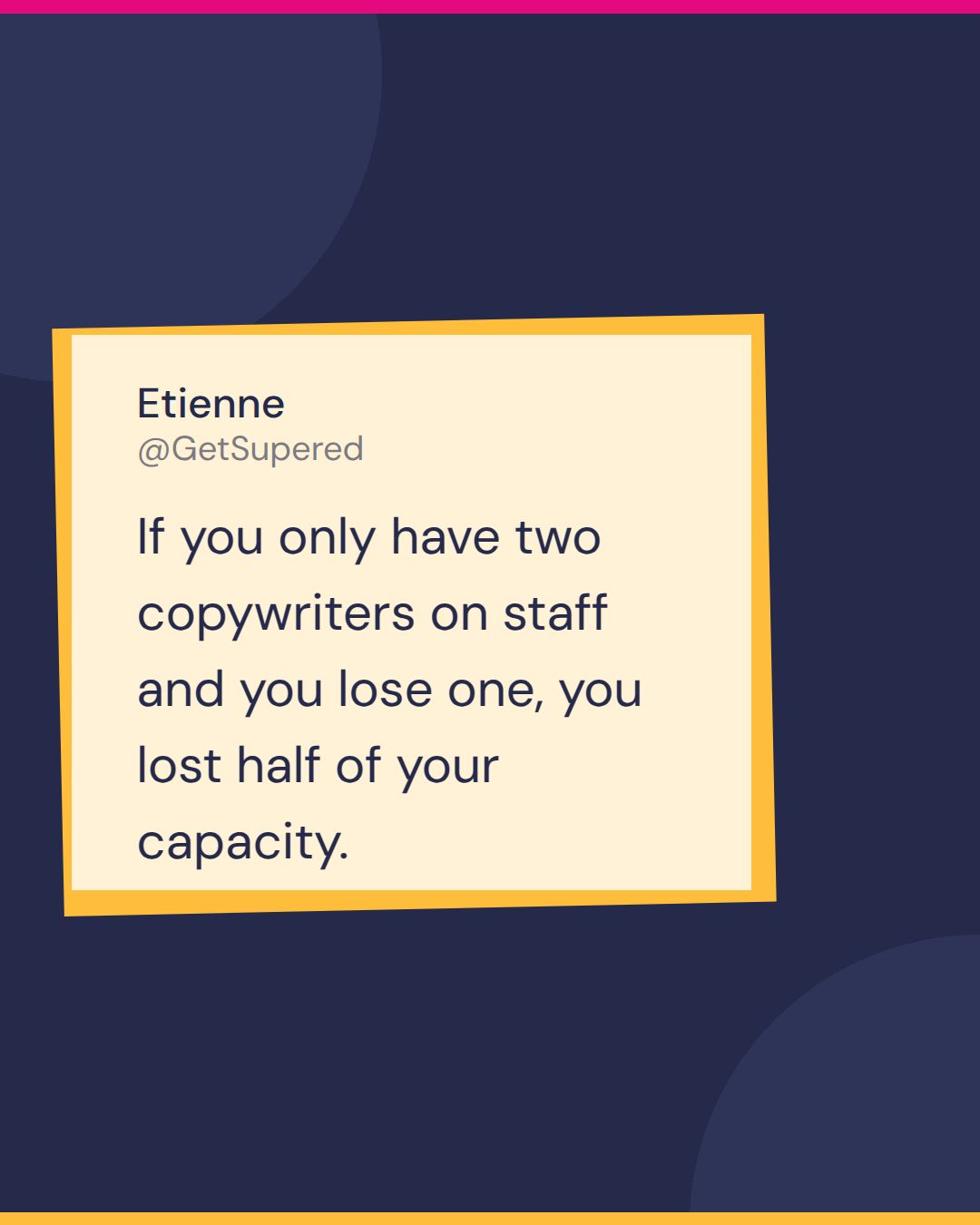
Because marketing delivery kept breaking at small scale. A marketing engagement needed a strategist, a paid media lead, a project manager, a designer, a copywriter, and a developer. “If you only have two copywriters on staff and you lose one you lost half of your capacity,” Etienne said. His question to himself: “why do we have seven different positions skill sets for delivery how can we reduce it so we could reduce our hiring onboarding who we were looking for and just get really good at it.”
digitalJ2 was already doing implementation work on the side. It was one of three partners in HubSpot’s partner-led onboarding program from its start, and Etienne described that line as “very hands off.” It kept producing profits, with little of his attention.
Then ChatGPT arrived, and Etienne got nervous about inbound marketing. “I think AI is going to begin taking away a lot of that search volume,” he said, and design and content writing were “becoming more of a commodity” with margins that “were only going to shrink more.” He looked at HubSpot moving upmarket and at the partner base, where by his count “like 98% were marketing agencies and like only 2% were in that and that were Technical.” His conclusion: “that might be a less competitive Place let’s do that.”
So digitalJ2 did “a whole reor.” It went from low volume to high volume.
The switch changed how the firm sold. As an agency, digitalJ2 won a few retainers and held on to them, so it barely needed a sales team. Selling dozens of projects a month forced the firm to build one. It also made the delivery process matter far more: “your processes were that much more important because if you’re doing that many more.”
How do you get a leadership team to commit to a switch?
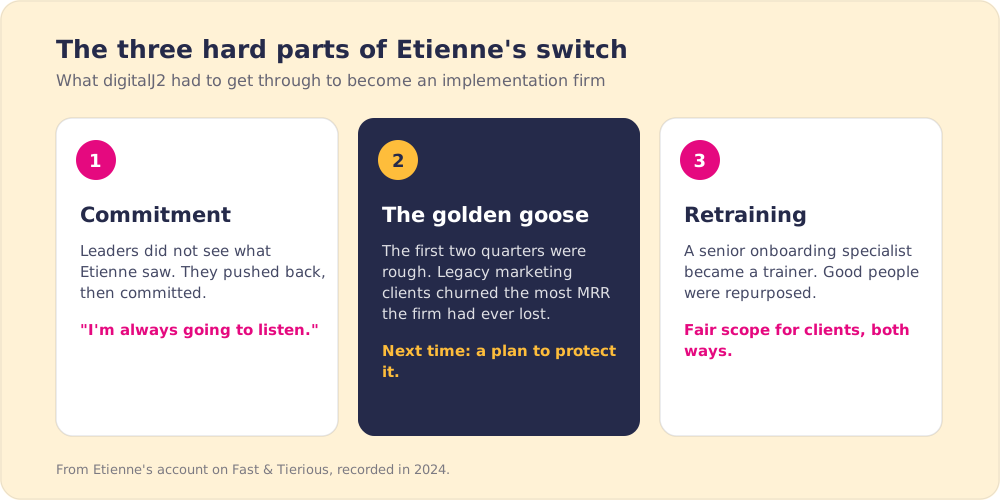
The first hard part was conviction. “My leaders weren’t really seeing what I was seeing and they were very reluctant,” Etienne said, “because I basically was saying we will no longer sell marketing services and we will only do this.”
He did not win them over by avoiding the argument. It took him about three attempts to build a leadership team, and the fourth “finally kind of got the right people.” He asks them to fight him. “I like to be challenged big time and honestly if I don’t get challenged I get upset.” His promise in return: “I can’t promise you I’m going to do what you you’re giving me but I’m always going to listen.”
His leaders had their say, Etienne told them where the firm was going and why, and then they committed. I told him on the episode that I hold to this: “agreement is not what’s most important commitment is what’s most important.” We both lean on Patrick Lencioni’s model of a team, which puts trust at the base and names the lack of commitment as a failure caused by “the lack of clarity and/or buy-in” (The Table Group, The Five Dysfunctions of a Team). That book shaped how I run my own leadership team, and Etienne’s leaders went through the same steps: they argued first and committed after.
What does a switch cost while it happens?
More than he planned. “The first q1 and Q2 were really difficult,” Etienne said. The org chart changed, people were stressed, and the firm put all its attention on the new model. “We didn’t protect our eggs of the Legacy business being marketing services,” he said, and digitalJ2 churned “the most Mr that we’ve ever churned prior.”
He would do it differently next time: plan how to keep the legacy revenue safe while the new business ramps. On the episode I called the old business the golden goose, because its eggs pay the bills while the new business gets going.
The third hard part was retraining. digitalJ2 let some people go and hired others, but it also had “a lot of really great talent that we wanted to repurpose.” It moved one of its most senior HubSpot onboarding specialists into a trainer role to teach the rest of the team the new delivery work. Etienne also held to a rule about clients through the change: “fair is a big one for me it’s not you just get un limited scope let’s be fair.”
What did the switch teach Etienne about accountability?
His “never again” is saying yes to everything. “When you’re first getting started you’re just wanting Revenue,” he said, “and you will say yes to anything.” Niching down made the rest easier: “everything selling becomes easier the servicing becomes easier the invoicing whatever becomes easier the hiring becomes easier.”
What he wishes he had learned sooner is accountability. He started the company straight out of school and had never worked in a professional setting, so he did not know what to expect from people. “I’m really like the really nice person,” he said, and he ended up “doing a lot of people’s jobs for a while.” Eventually, he said, “it had hit the ceiling that I could no longer grow by following this management style.” His definition now: “accountability is you know really understanding what you you’ve hired them to do and ensuring they have the right necessary resources and support and then holding them accountable to do it.” Then he asks for a date: “when are we going to get this accomplished what’s the date.”
He also stopped answering every question. When someone brought him a problem, he used to hand back the fix. “You start to develop order takers and versus getting them to critically think.” Now he guides people to the answer with questions. I pointed him to Turn the Ship Around, David Marquet’s account of commanding a submarine, and its simple move: ask “what’s your recommendation?”
How do the two business models compare?
Etienne gave enough numbers on the episode to set the two versions of digitalJ2 side by side, as of 2024:
- Customers. About three new customers a month as an agency; 25 to 50 a month as an implementation firm.
- Price. Retainers of $8,000 to $10,000 a month, against projects from about $3,000 to $200,000 that averaged roughly $7,000.
- Delivery. Seven skill sets for marketing work, against one repeatable job the team could get very good at.
- Sales. A few retainers held for a long time barely needed a sales team. Dozens of projects a month forced the firm to build one.
- Process. At that volume, he said, “your processes were that much more important.”
The new model has a weak spot too, and Etienne named it. In 2024 digitalJ2 had “a very strong uh great delivery method for implementation,” and was “still trying to figure out” how to keep working with clients after the project through managed services. Under the old model clients stayed on retainer, but now each one has to be won again after the project, and turning projects into ongoing work was “not there yet.” His plan for 2025 was to grow volume two to three times and raise that conversion rate.
Etienne’s lessons for a switch
- A standard system. Standardizing on one platform in 2018 was, in his words, the best thing digitalJ2 did.
- Fewer skill sets. Seven delivery roles made the agency fragile; one repeatable job let it scale to dozens of customers a month.
- Commitment after conflict. A leadership team that pushes back and then commits beats one that nods along.
- A protected golden goose. Plan how the legacy revenue survives the switch before you start it.
- Accountability with questions. Define the job, give the resources, set dates, and ask for recommendations instead of handing out answers.
Switch on purpose, and plan for month three
We talked on the episode about whether starting a separate company beside the old one would have been easier, and neither of us was sure. I would still choose Etienne’s path, with his own fix built in: get the leadership team to commit first, protect the legacy revenue while the new model ramps, and retrain the people you want to keep before you sell the new work.
If you run a marketing agency and the model feels fragile, count your delivery skill sets and ask what happens when you lose one person from each. That was the question that started digitalJ2’s switch.
digitalJ2 helped us build Supered’s action plans from the ground up, and the product is aimed at that stretch after launch: it shows each rep the next step of the process inside HubSpot or Salesforce while they are working. Partner firms can see how agencies productize onboarding on our page for HubSpot partners.
Before your next client kickoff, read our HubSpot onboarding checklist, then our post on CRM adoption for what to measure once the build is done.
Frequently asked questions
What is a marketing agency business model?+
Why did digitalJ2 switch from marketing to implementation?+
How much does a HubSpot implementation cost?+
Should a marketing agency switch to implementation work?+
What did Etienne learn about accountability?+
Your process, running itself.


