SDR Outsourcing Lessons From Two Founders Who Sold It for Three Years
Ryan Cooper and his partner sold SDR outsourcing for three years and watched booked meetings die after the handoff. So they built Set2Close around the client's systems instead. His lessons for anyone deciding whether to outsource.
SDR outsourcing means paying an outside firm whose sales development reps prospect and book meetings for you, often per meeting, and then hand each meeting to your own sellers and CRM.
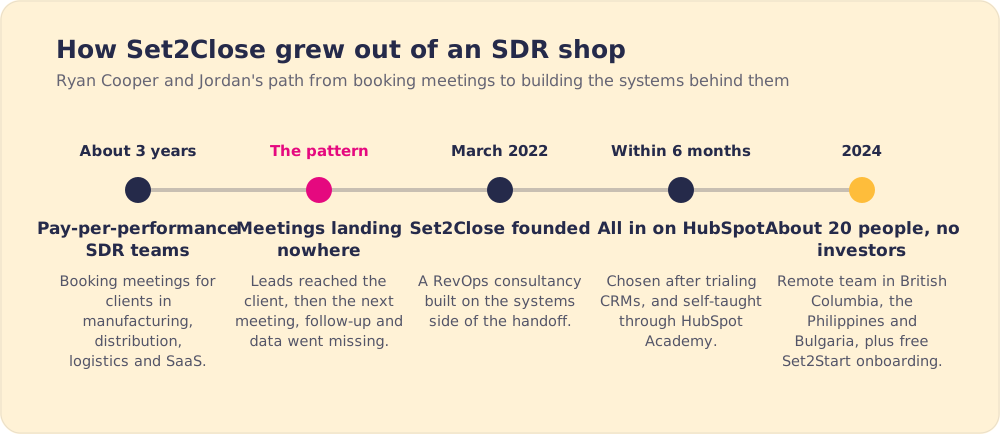
For about three years, Ryan Cooper and his business partner Jordan sold meetings. Their company did SDR outsourcing on a pay-per-performance basis for clients in manufacturing, distribution, logistics, and later SaaS. The SDRs found the prospect, booked the call and handed it over, and the company got paid per meeting. Ryan kept track of what happened to those meetings after the handoff.
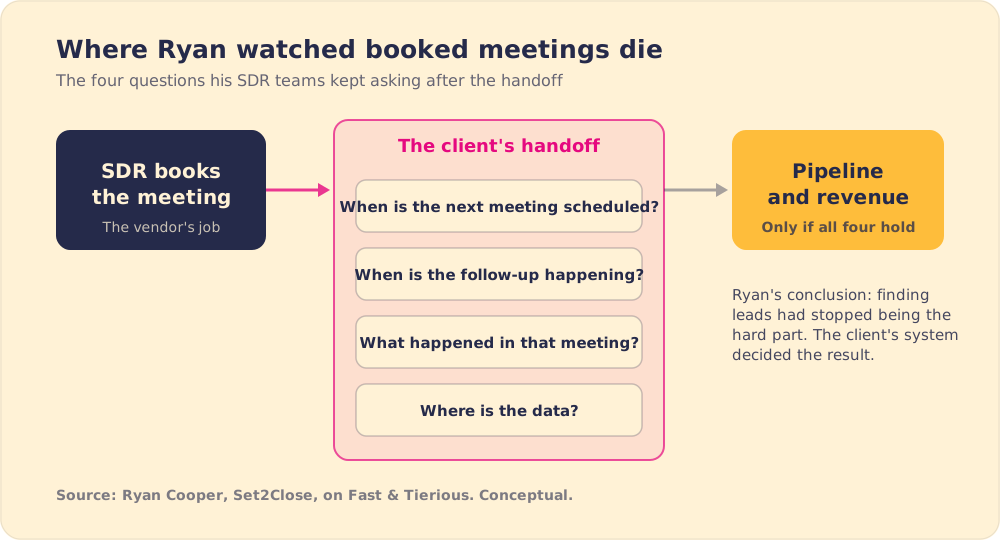
“Once the leads had been sent to the customer there was often a miss in, you know, when is that next meeting getting scheduled, when is the followup going to happen, what happened to that meeting, where’s the data,” Ryan said. Clients with systems that caught each lead turned those meetings into wins. Clients without them got the same quality of lead and closed little. If you are thinking about hiring an outsourced SDR firm, those four questions will decide what you get for the money.
Ryan is co-founder and COO of Set2Close, and he walked me through the whole arc on Fast & Tierious in 2024: the SDR years, the switch to revenue operations, and growing to about 20 people without investors.
What did running outsourced SDR teams teach Ryan Cooper?
By the time they wound down the SDR business, Ryan and Jordan had decided that finding leads mostly took effort and decent tools, and plenty of firms had both. “The problem’s no longer with finding leads,” he said. The trouble started once a lead reached the client.
Companies that buy outsourced SDR services are often disappointed. In 2023, Jason Lemkin cited a SaaStr survey in which 7% of respondents said outsourced SDRs had worked for them and another 26% said they “sort of worked” (SaaStr, 2023). Lemkin puts it down to how hard it is to hand a core function to outsiders. Ryan, who was one of those outsiders, saw a second cause, and it sits with the buyer. The SDR books the meeting, and then no one on the client’s side schedules the next step.
In an audit of 2,241 US companies, firms that tried to reach a web lead within an hour were nearly 7x as likely to qualify it as firms that waited longer (Harvard Business Review, 2011). A prospect who agreed to a first call last week has the same short attention span as one who filled in a web form this morning.
So Ryan and Jordan started a company to fix the client side. Set2Close launched in March 2022 as a RevOps consultancy. Whether you build SDRs in-house or buy them, write down the SDR handoff to the AE before the first meeting is booked, including who schedules the next call and where the notes live.
Why does Ryan believe the CRM makes the salesperson?
His SDR teams worked inside whatever the client ran: Salesforce, HubSpot, Maximizer, GoHighLevel and more. Across all of them Ryan saw the same thing. “You could take a good person and turn them into an amazing salesperson by giving them a fantastic CRM,” he said. A good system takes admin off a seller’s plate and leaves more hours for meetings. What he looks for, in his words, is “the systems that allow the excellent people to thrive.”
That belief decided Set2Close’s own platform. The team trialed several CRMs in its first six months and went all in on HubSpot, mostly because teams found it easy to use after launch. Ryan judged each option by the people who would sit in it every day. “Sales and marketing and customer success, they come down to the humans that operate in those ecosystems.” He and Jordan taught themselves the platform through HubSpot Academy.
Salesforce’s State of Sales research shows how much time admin takes from sellers. In a survey of 7,775 sales professionals fielded in 2022, reps said they spend 28% of their week selling, with most of the rest going to deal management and data entry (Salesforce, 2023). A CRM that handles more of that paperwork gives the seller back hours for buyers, which is the change Ryan watched turn good reps into great ones.
If you are hiring an outsourced SDR firm, open the CRM your AE will use to receive the meeting. Ask whether a new hire could see, on the record, what to do next. If the answer depends on someone’s memory, fix that before you pay anyone to fill the calendar. Our guide to lead qualification covers what a handed-off meeting should carry.
How does a bootstrapped agency decide when to hire?
Set2Close has taken no outside investment. Monthly cash flow pays for growth, and in a services firm the people are the product, so one bad hiring month turns into a payroll problem. Ryan named that balance, how fast to hire against how long training and onboarding take, as his hardest challenge.
He handles it with written plans. “If you’re not writing them down, you’re not understanding why you’re successful or why you’re not successful,” he said. Set2Close sets milestones and decides in advance which signals will trigger the next hire.
The numbers he watches most tell him whether clients are staying: NPS, customer success scores, surveys, churn, and recurring revenue from existing clients. A new client “may trust you for that month to give you that shot,” he said, but “how do you treat that customer once they come into your ecosystem” decides whether the money keeps coming. He calls it putting “value first rather than cash first.”
Frederick Reichheld of Bain & Company found that raising customer retention rates by 5% increases profits by 25% to 95% (Harvard Business Review, 2014). With no investors to cover a slow month, Set2Close pays for each new hire out of what its existing clients keep spending.
It reached about 20 people in two years that way.
Why did Ryan stop betting on one platform alone?
I asked what he would never do again. Ryan pointed to the early stretch when the team got comfortable in HubSpot and stopped looking at other technology. “It siloed us into a very small niche that we couldn’t serve outside of our customer base,” he said. Set2Close turned the mistake into a company value, progress and innovation. The team now studies other tools on purpose, so that when HubSpot is the right answer for a client, they can explain why.
He also warned that a new tool always costs more than the demo suggests. “There’s always a learning curve,” he said, and the danger is in not planning for it. Before Set2Close adopts a tool, it counts the training time as a cost next to the license.
His advice to people starting out in RevOps comes from the same place. Learn the systems early, take the free courses, and “develop your education more than anything else, because that will make you dangerous.” When I asked what he wished he had done sooner, he said he would have learned HubSpot earlier.
Ryan Cooper’s lessons on outsourced SDR work and growth
- The handoff after the booked meeting. Finding leads is no longer the hard part. Scheduling the next meeting, owning the follow-up and recording what happened decide whether the lead turns into revenue.
- A CRM that does the admin. Ryan has watched a good seller become a great one when the system takes the paperwork away and shows the next step.
- Written plans with hiring triggers. Set2Close hires when the milestones it wrote down are met.
- Retention as the growth budget. NPS, churn and client value decide how much cash a bootstrapped services firm has to grow on.
- Knowledge of the tools beyond HubSpot. Set2Close studies the alternatives so it can defend the recommendation it makes.
Is SDR outsourcing worth it?
An outsourced program does save you the hiring. The Bridge Group’s 2025 report puts the median in-house SDR ramp at 3.0 months, median tenure at 1.9 years and annual attrition at 40% (The Bridge Group, 2025). What it cannot do is run your side of the handoff, and Ryan spent three years watching that side decide which meetings turned into revenue.
So buy one if the math works, but set up the receiving end first. Before you sign, answer his four questions in writing, put the answers in the CRM where the AE works, and check each week that they are being followed.
Set2Close built its newest program on the same idea. Set2Start offers free onboarding to companies buying HubSpot’s Pro and Enterprise hubs, with a free RevOps Academy, so the system is in place before the pipeline arrives. Set2Close also uses Supered on top of HubSpot for in-app training, which Ryan said lets them keep coaching clients after the training call ends. If you run a partner agency, our partner page and Set2Close’s partner directory page are good next stops. For the in-house side of the decision, read our breakdown of BDR vs SDR vs AE roles and the rise of the AI SDR.
Frequently asked questions
Is SDR outsourcing worth it?+
Why does SDR outsourcing fail?+
Is SDR outsourcing cheaper than hiring SDRs in-house?+
Who is Ryan Cooper?+
What is Set2Start?+
Your process, running itself.