Agency Niche Lessons From a Physical Therapist Who Built One
Jeremy DuPont was furloughed as a physical therapist in 2020, built his own clinic on HubSpot, and turned that into Patch, an agency serving 120 clinics. His lessons on picking a niche you have lived and on client adoption.
An agency niche is the specific market an agency chooses to serve, usually one industry or one type of client, so that its services, language, and delivery can be built once and repeated across similar clients.
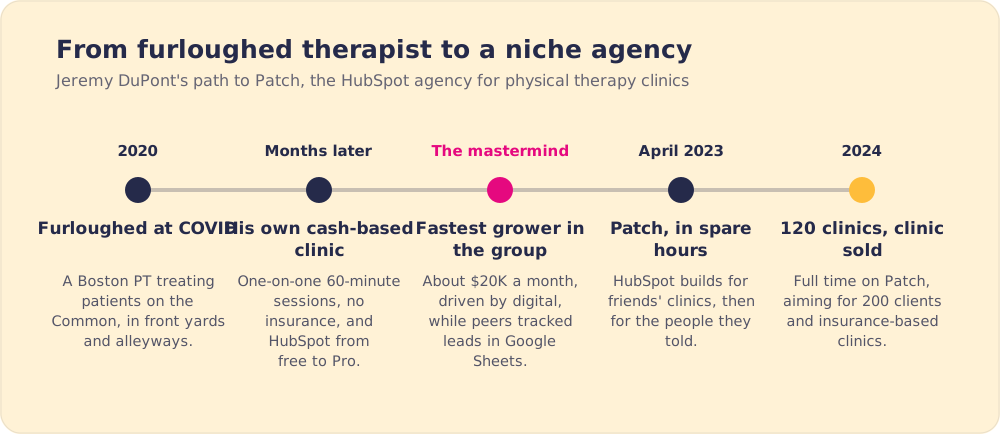
In the spring of 2020, Jeremy DuPont lost his job. He was a physical therapist at a traditional clinic in Boston, COVID shut it down, and he was furloughed. His patients still wanted care, so he kept treating them one on one wherever he could: on Boston Common, in front yards, in alleyways. “I don’t have a job now, so I better figure this out.”
Four years later he runs Patch, a HubSpot agency for physical therapy clinics, with over 120 clinics as clients when we talked. He never sat down to choose an agency niche. He owned a clinic first, learned its marketing the hard way, and built the agency out of what he learned.
Jeremy told me the whole story on Fast & Tierious, and three lessons came out of it for agency founders. He built in a niche he had been a customer in. He learned to run an agency by paying people who already ran one. And he found out, painfully, that client adoption takes as much work as the build.
How did Jeremy’s agency niche find him?
It started with his own clinic. The outdoor sessions took off, and after that summer he opened a clinic in downtown Boston. He made it cash-based, with no insurance: patients paid out of pocket for 60-minute, one-on-one sessions, and they loved it. Without insurance, no one sends a cash clinic its patients, so marketing was his job from the first day.
He found he liked that job. He enjoyed writing copy and building campaigns, which led him to HubSpot’s inbound training, then the free version of the product, then Starter, then Pro. He tried GoHighLevel and Keap along the way, and they “didn’t really match up to what HubSpot was providing.” Friends of his in Boston worked at HubSpot and talked it up, and he went all in.
Jeremy belonged to a mastermind group of cash-based clinic owners from around the US. His clinic was doing about $20,000 a month and grew the fastest in the group. The others mostly marketed locally, with workshops and low back pain boot camps at gyms, while Jeremy grew through digital. He asked two friends in the group how they handled leads and nurturing. “It’s just on a Google sheet,” they told him.
So he set up HubSpot for them, for free, because they were his buddies.
They kept their local events, added ads and a CRM, and their clinics “exploded,” in his word. More owners in the group heard about it. “I would rather do this versus patient care,” he realized, and in April 2023 Patch began in his spare hours. He calls those hours “magic time.” He later sold the clinic and went full time on the agency.
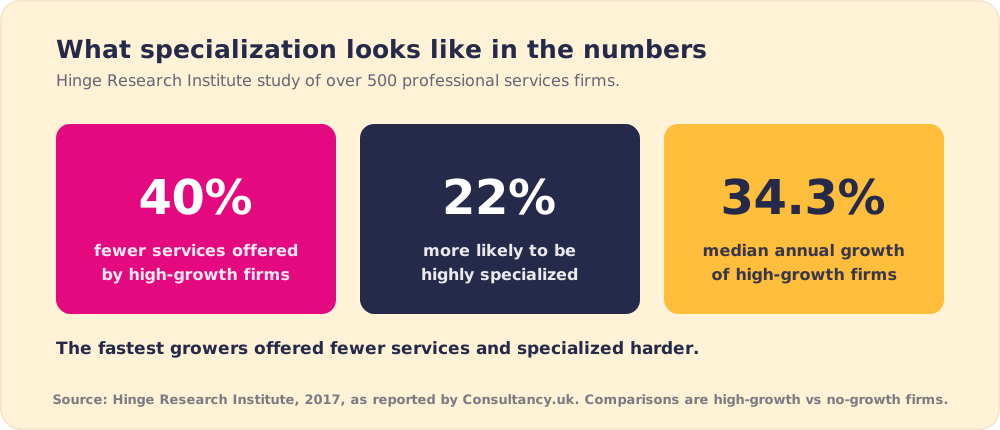
A Hinge Research Institute study of over 500 professional services firms found that high-growth firms offered 40% fewer services than no-growth firms and were 22% more likely to be highly specialized (Consultancy.uk, 2017). Patch sells to one kind of business.
The standard advice on agency positioning comes from David C. Baker’s book The Business of Expertise: pick a vertical or a horizontal and commit to it (Helios Design review). Jeremy never had to pick. He had run the same business his clients run, a cash clinic that lives or dies on new patients. On the episode I told him that healthcare on HubSpot has very few people in it, and that he can “say words” in a sales call that I could not.
How do you run an agency you have never seen?
Jeremy’s answer was to pay people who had. “I’m a physical therapist. I have no idea what an agency is or how to run an agency,” he said. So he called HubSpot agency owners in Boston and offered to pay for an hour of their time. “I’ll pay you whatever your rate is.”
He asked each of them how they ran their process, and then did his own translating. “I’m just going to take the principles of how you guys do things and just like put it to my niche.” He had learned HubSpot the same way, because no course existed on building a portal for a PT clinic. He took what B2B agencies did and cut it down to fit a clinic.
A founder coming in from another profession can copy this. Agency owners know how an agency runs, and many will sell you an hour of it. Jeremy brought the part they could not sell him: years of treating patients and running a clinic.
He also learned to go and get people instead of waiting for applications. His fiancée, Ally, joined as COO from management consulting and rebuilt Patch’s operations, tracking every build in Monday.com. His head of customer success came through LinkedIn, after he connected with her and followed her posts. “Good talent, they already have jobs,” he said, so you pitch them on joining “the pirate ship” you are building.
What did Patch get wrong about client adoption?
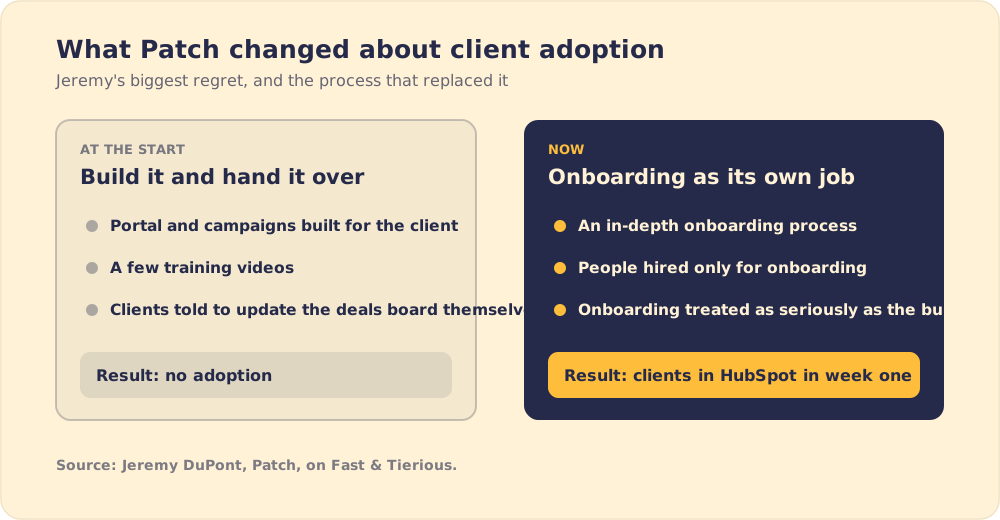
Jeremy’s biggest regret goes back to Patch’s early delivery. The team built the portal, launched the campaigns, sent a few training videos, and handed it over. Updating a deals board was easy, they told clients, so do it in your own magic time.
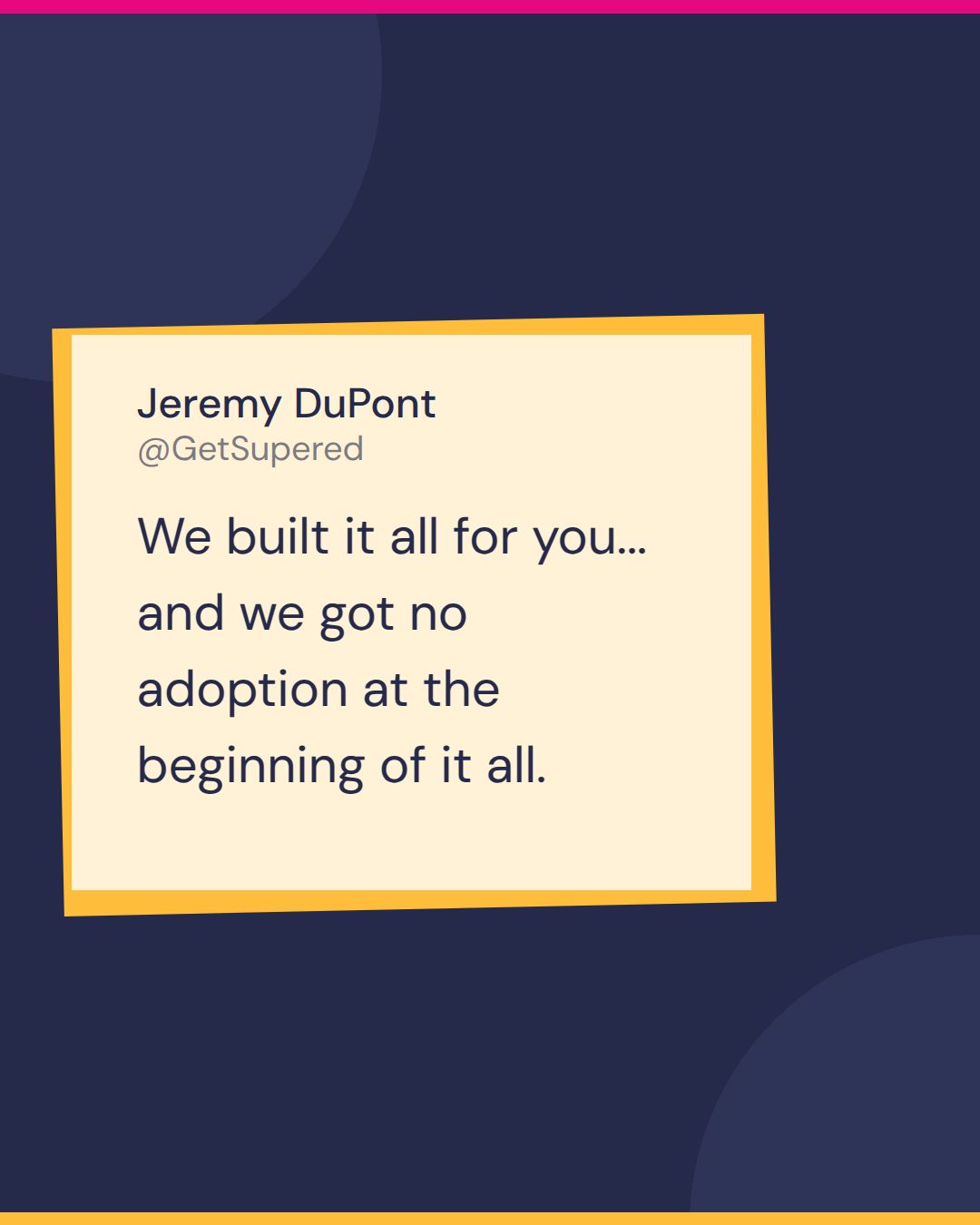
“We kind of put the onus on them,” he said. “It was kind of a crapshoot.”
A physical therapist knows this problem from the clinic. The session with the therapist goes well, and then the patient has weeks of exercises to do alone at home. Non-adherence to home exercise programs runs as high as 50 to 65% for general musculoskeletal conditions (Bassett, 2003, via Physiopedia). Patch’s early clients were in the same spot as those patients, with a good plan, a video, and no follow-up visit.
Patch rebuilt its delivery around adoption. It now runs “a very in-depth onboarding process,” hires people only for onboarding, and takes that work far more seriously. The goal is clients using HubSpot in their first week with Patch, which Jeremy called “huge” for them later on, because the reporting and automation Patch sets up depend on the clinic working inside the system.
The niche helps here too. Patch’s clients are mostly cash clinics of a similar size, running a similar business, so the onboarding team can use one program and improve it with each clinic it brings on. A generalist agency starts that work over with every new client.
Where does a niche agency go next?
Jeremy plans to stay with physical therapy and go upmarket. Most of Patch’s clients are cash clinics doing $300,000 to $800,000 a year, which limits how much they can do in HubSpot. Bigger hybrid and insurance-based clinics, some with 20 or 30 locations, have more room, and Jeremy says their marketing is “very archaic.” Patient insurance data had kept Patch away from those clinics.
HubSpot announced HIPAA support and new sensitive data tools on October 11, 2024 (HubSpot, 2024), and Jeremy said the change “really helps us.” His plan is to take what works for cash clinics to hybrid ones, with a goal of 200 clients by the end of the year. If HIPAA had not come through, he would have stayed with cash-pay practices outside PT: chiropractors, boutique fitness studios, and doctors who work on a cash basis.
Jeremy DuPont’s lessons for niche agencies
- A niche you have lived. Patch started as one clinic owner’s HubSpot setup, shared with friends whose leads sat in a Google sheet.
- A borrowed operating model. Paying experienced agency owners for an hour taught him agency operations; he supplied the PT knowledge himself.
- Talent you go get. His COO and his head of customer success both joined because he went after them.
- Adoption as a delivered service. A finished build with training videos produced no adoption. Dedicated onboarding and first-week usage fixed it.
- Growth inside the niche. HIPAA support opened bigger, insurance-based clinics without leaving physical therapy.
Should your agency niche down?
If you have worked inside an industry as an owner or operator, Jeremy’s story is a strong case for building your agency there first, and the Hinge data says specialized firms tend to grow faster. If you have not, use his second move before you choose: buy an hour from people who run agencies, and from people who run the businesses you want to serve.
Whatever niche you pick, copy what Jeremy learned from those first unused portals. Staff and schedule adoption as its own service, starting in the client’s first week. Supered helps agencies do that part inside HubSpot, with guidance that appears while the client’s team works, and our partner page covers how. For the delivery side, read our guides to client onboarding and the client onboarding process.
Frequently asked questions
Does an agency niche help growth?+
How did Patch choose its agency niche?+
How do you learn to run an agency with no agency experience?+
What was Patch's biggest early mistake?+
What is the next market for a PT-focused HubSpot agency?+
Your process, running itself.