HubSpot Onboarding Checklist: The Four Phases Most Plans Skip
HubSpot's own onboarding covers the technical setup. The three phases that follow, process design, rep onboarding, and measurement, are what decide whether the portal produces revenue or sits populated and ignored.
A HubSpot onboarding checklist is the structured sequence for configuring HubSpot, designing the process that runs inside it, onboarding reps to that process, and measuring adherence, with all four phases required for the investment to pay off.
HubSpot offers an onboarding program for every tier. For Starter, it is documentation and a self-guided setup path. For Professional and Enterprise, it is a dedicated specialist who guides the configuration. These programs are not fraudulent about what they deliver. They deliver a configured portal. The question most buyers do not ask before signing is: what happens after the portal is configured?
A HubSpot onboarding checklist is the structured sequence of steps for configuring HubSpot, designing the sales process that runs inside it, onboarding reps to that process, and measuring adherence, with all four phases required for the investment to produce consistent rep behavior. HubSpot’s program covers the first phase. The rest is the buyer’s problem, and it is where most onboardings stall.
What are the four phases of a HubSpot onboarding checklist?
Think of a piano. A piano tuner can service the instrument perfectly: the action is calibrated, the strings hold pitch, the pedals respond. That is Phase 1 of a HubSpot setup. Phase 2 is writing the music the team will play. Phase 3 is teaching the players to read and rehearse it. Phase 4 is the conductor listening to the performance and telling the players what to fix. A piano that is tuned but never played is a piece of furniture.
Most HubSpot onboardings produce a well-tuned piano.
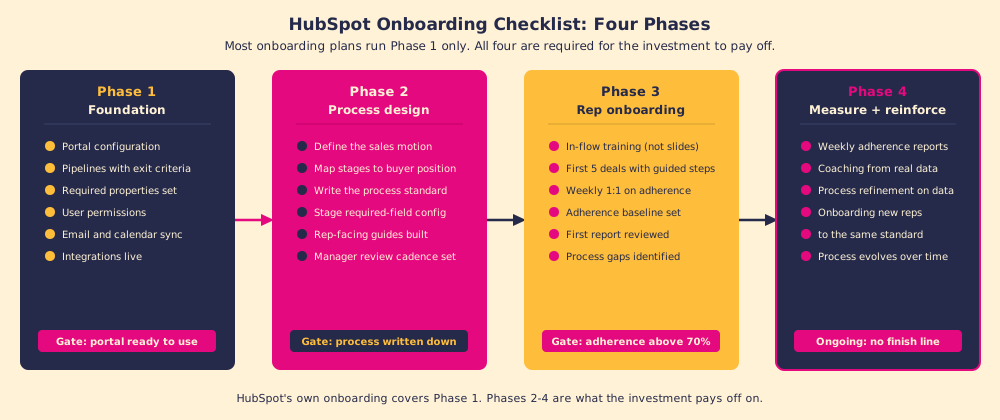
Phase 1: Portal configuration. The technical foundation. This is the phase HubSpot’s specialists guide and most checklists cover in full:
- Portal setup. Company name, domain, time zone, currency, branding defaults.
- Pipeline design. Stages defined with exit criteria based on buyer position, not seller activity. A stage the rep can advance by completing a task without buyer confirmation is not a stage; it is a checkbox.
- Required properties. Fields that must be completed at each stage before advancement. These enforce the data standard that makes the CRM trustworthy.
- User permissions. Who can see what, create what, delete what. Permission design is where most teams are too permissive for too long.
- Integrations. Email and calendar sync, conversation intelligence, sales engagement tools, and any custom connections to your tech stack.
Phase 2: Process design. The work HubSpot’s onboarding does not do and that most buyers underestimate:
- Define the sales motion. What does a rep do from first contact to close? What are the required steps at each stage? Where does the discovery call happen, and what must the rep capture before advancing?
- Map stages to buyer position. Each stage name should reflect where the buyer is, not what the rep did. “Meeting scheduled” is a seller action. “Qualified for next step” is a buyer position. The distinction is what makes pipeline reporting honest.
- Write the process standard. Document what a well-run deal looks like, stage by stage, so a new rep can read it and a manager can inspect against it. This is what the hubspot setup checklist cannot auto-generate.
- Configure required fields by stage. Feed the process back into the portal so the CRM enforces the standard automatically.
Phase 3: Rep onboarding. Getting the team to run the designed process, not the one they are used to:
- In-flow training. Not a slide deck, not a one-time walkthrough. The process needs to reach reps in the moment they are working a deal, inside HubSpot, as a guided next step. That is what makes the training stick rather than decay.
- First deals with guided steps. The first five to ten deals after go-live are where new habits form or do not. Guidance at the moment of work during this period is worth more than any amount of pre-launch training.
- Adherence baseline. By the end of the first month, you should have a number: what percentage of deals are following the process at each stage? That baseline is the start of the measurement system.
Phase 4: Measure and reinforce. The ongoing work that turns a configured portal into an adopted system:
- Weekly adherence reports. Which fields are being filled, which are being skipped, which deals have advanced without the required data. Not a quarterly audit; a weekly routine.
- Coaching from data. The manager reviews the adherence report before the weekly pipeline call and enters the conversation knowing where each rep drifted from the standard. The question is not “how are your deals?” it is “stage three requires a mutual close plan logged; four of your deals do not have one.”
- Process refinement. When adherence data shows that a required field is being skipped by 70% of the team, the right response is not to blame the team. It is to examine whether the field is the right requirement or the guidance is clear enough.
What does the hubspot crm onboarding miss in most implementations?
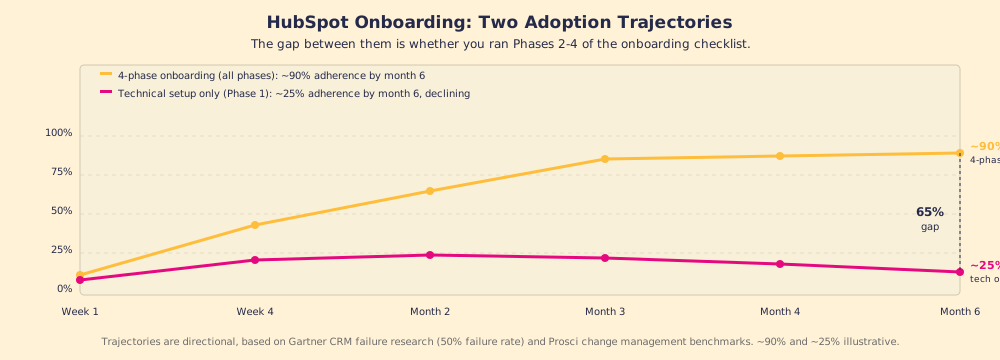
The gap between a configured portal and an adopted process has a documented mechanism. Prosci’s change management research finds that projects with excellent change management programs are six times more likely to meet objectives than those with poor ones (Prosci, change management benchmarking research). A technical implementation without a change management plan is not a partial success. It is a technical success and a business failure, because the business outcome is rep behavior, not portal configuration.
Two things the standard hubspot implementation checklist misses:
- Process inspection as a go-live requirement. Teams declare go-live when the portal is ready, not when the process is measurably being followed. Measuring adherence from week one, not from month three, is the change that makes onboardings stick. By month three, bad habits have calcified and cleaning them is harder than setting the standard from the start.
- In-flow guidance rather than memory-based training. Behavioral science is unambiguous that performance under pressure reverts to well-practiced habits, not recently learned procedures (Ebbinghaus forgetting curve, 1885). If reps must remember the new process during a live deal, they will not. If the process appears in the flow of work at the moment they need it, they will follow it. The hubspot onboarding program teaches reps how the tool works. Getting the process in front of them in the moment of work is a different system.
How should you sequence a HubSpot onboarding?
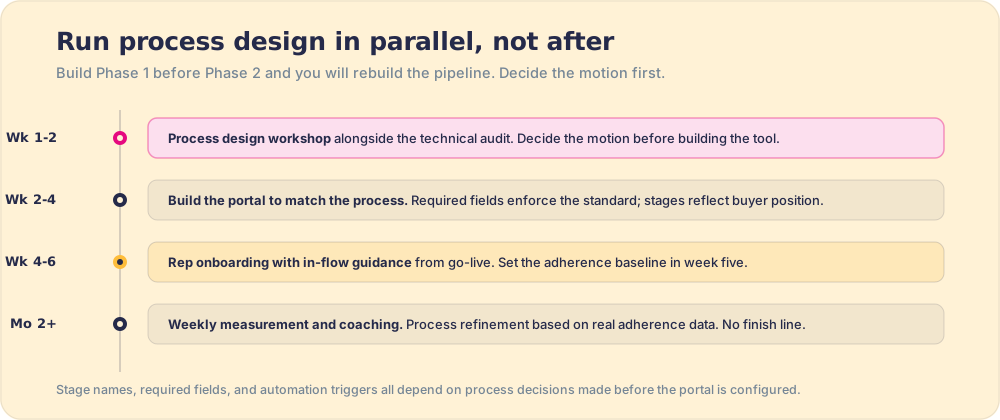
The most common sequencing mistake: building all of Phase 1 before starting Phase 2. The process design should run in parallel with the technical build, not after it, because the process design determines how the portal should be configured.
If you build the pipeline stages first and then design the process, you will rebuild the pipeline stages. Stage names, required fields, automation triggers, all of these depend on process decisions that should be made before the portal is configured, not discovered during it.
A better sequence:
- Week 1 to 2: Process design workshop alongside technical audit. Decide the motion before building the tool.
- Week 2 to 4: Build the portal to match the process. Required fields enforce the standard; stages reflect buyer position.
- Week 4 to 6: Rep onboarding with in-flow guidance from go-live. Set the adherence baseline in week five.
- Month 2 onward: Weekly measurement and coaching. Process refinement based on real data.
What we recommend
Run all four phases of the hubspot onboarding checklist, and start Phase 2 before Phase 1 is complete. The process design should precede the portal build, not follow it. And treat adherence measurement as a go-live requirement, not an afterthought.
HubSpot’s onboarding is a good starting point for Phase 1. For the full implementation methodology, HubSpot implementation covers what a complete build looks like. For the adoption work after go-live, CRM adoption is the framework. And for teams onboarding into a migration rather than a greenfield setup, HubSpot migration adds the data-transfer layer.
Frequently asked questions
What is a HubSpot onboarding checklist?+
How long does HubSpot onboarding take?+
What does HubSpot's own onboarding include?+
Why do HubSpot onboardings fail even with a dedicated specialist?+
Your process, running itself.