Bootstrapped SaaS: Harris Kenny's Five-Tool Stack
Harris Kenny runs OutboundSync without outside funding, so each tool has to earn its keep. His countdown from Grok to Cursor, and what a non-technical founder learned when AI let him build in hours what used to take weeks.
A bootstrapped SaaS is a software company funded by its own revenue, and Harris Kenny's OutboundSync shows how one picks tools when every dollar and hour has to pay for itself.
Harris Kenny used to run a HubSpot agency. Its best trick, he says, was packaging: the team could drop fields, lists, reports, workflows and views into a new client’s portal in one move, and clients would log in to find “a dashboard” and “20 reports” waiting. When he spun his app out of the agency, shut the agency down and became a HubSpot app partner, he kept the habit. Work on something once and “ship X number of times.”
That app is OutboundSync, which he runs as CEO without outside funding. I call his kind of company the bootstrap buggy, a bootstrapped SaaS with “very little fat on the body,” where every tool has to earn its seat. Harris came on Show Me Your Stack and counted down the five tools that carry OutboundSync. He buys the standard tool when the problem is solved, saves the unusual picks for the places they change the business, and has learned that speeding up one part of a company puts pressure on every part after it.
Why does Harris use Grok as his AI sparring partner?
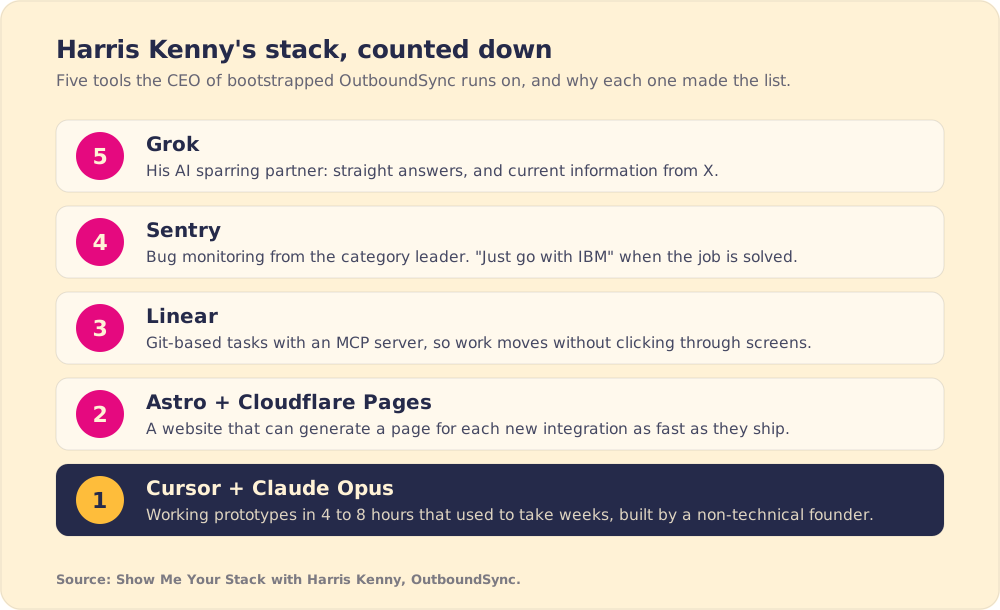
Number five is Grok, xAI’s assistant, which he calls “my like AI sparring buddy” and, later, “my fake co-founder.” He used ChatGPT for a long time and still has it. Two things moved him. Grok’s templates let him drop in a saved prompt with the right attachments for tasks he repeats. And he liked the tone: “It wasn’t like give me attaboys and getting me fired up. I just felt like I was just getting accurate information.”
He made the point with a joke. Tell some assistants you are building “a submarine with screen doors,” he said, and they will call it “an innovation in an aqua exploration.” I finished it for him: you end up drowning. Harris wants his answers the way he wants his memos, “bottom line up front.”
The other draw is how current it is. Grok reads the feed on X, and he had a case where that mattered. Comparing two tools, Grok surfaced a feature announcement from the past month that changed his choice. When he put the same question to Claude, Claude searched again and confirmed it. With tools changing month to month, he said, that stream from X is “not nothing.”
Harris runs OutboundSync without a co-founder, so the assistant fills part of that seat. He picked the one that tells him when an idea is a submarine with screen doors.
When should a bootstrapped SaaS pick the boring tool?
Number four is Sentry, for bug monitoring and application performance. He tried others and found good ones, but Sentry is “the biggest player in the space and kind of for a reason.” His developers already knew it and wired it up quickly, and it now catches bugs and suggests pull requests to fix them.
His rule for picks like this: “sometimes it’s cool to use unusual tools,” and “other times it’s like, you know, just go with IBM.” Then, shorter: “don’t overthink it.” I had a story to match. Steve, my CTO, set out on a mission to get rid of Intercom. We went through every alternative, and we ended up on Intercom.
A small company has only so many hours to spend testing software and keeping it running. Harris spends them on the tools that could change how OutboundSync works, and hands the settled problems, like bug tracking, to the category leader.
Why move tasks into Linear?
Number three is Linear, and OutboundSync had not finished the move when we recorded. “We literally are going to have to.” Product already runs on it. The website and the knowledge base are next, because “we need to move towards something that’s more Git based and has an MCP server and where where we’re able to interact with it without having to use the um the interface as much. So we can just like do stuff faster.” He is also “really trying to avoid Jira.”
An MCP server lets AI tools read and update the task list directly. Harris wants the AI he builds with to pick up a ticket and write back to it without anyone clicking through Linear’s screens.
Why rebuild the website on Astro?
Number two is the website itself, moving to Astro and hosted on Cloudflare Pages, so the company can manage content more programmatically. The reason is how fast engineering now moves. “Our engineering velocity is up just um just massively.” OutboundSync expected to double its integration count within a month, after three years of work to reach the current number.
That leaves a lot to publish. Each new sequencer works with a set of CRMs and a set of workflows, and each combination deserves its own page. “It’s just not going to make any sense to do that stuff manually.” He wants a merged pull request to trigger AI-generated pages for every combination, the same build-once, ship-many idea as his old agency packages.
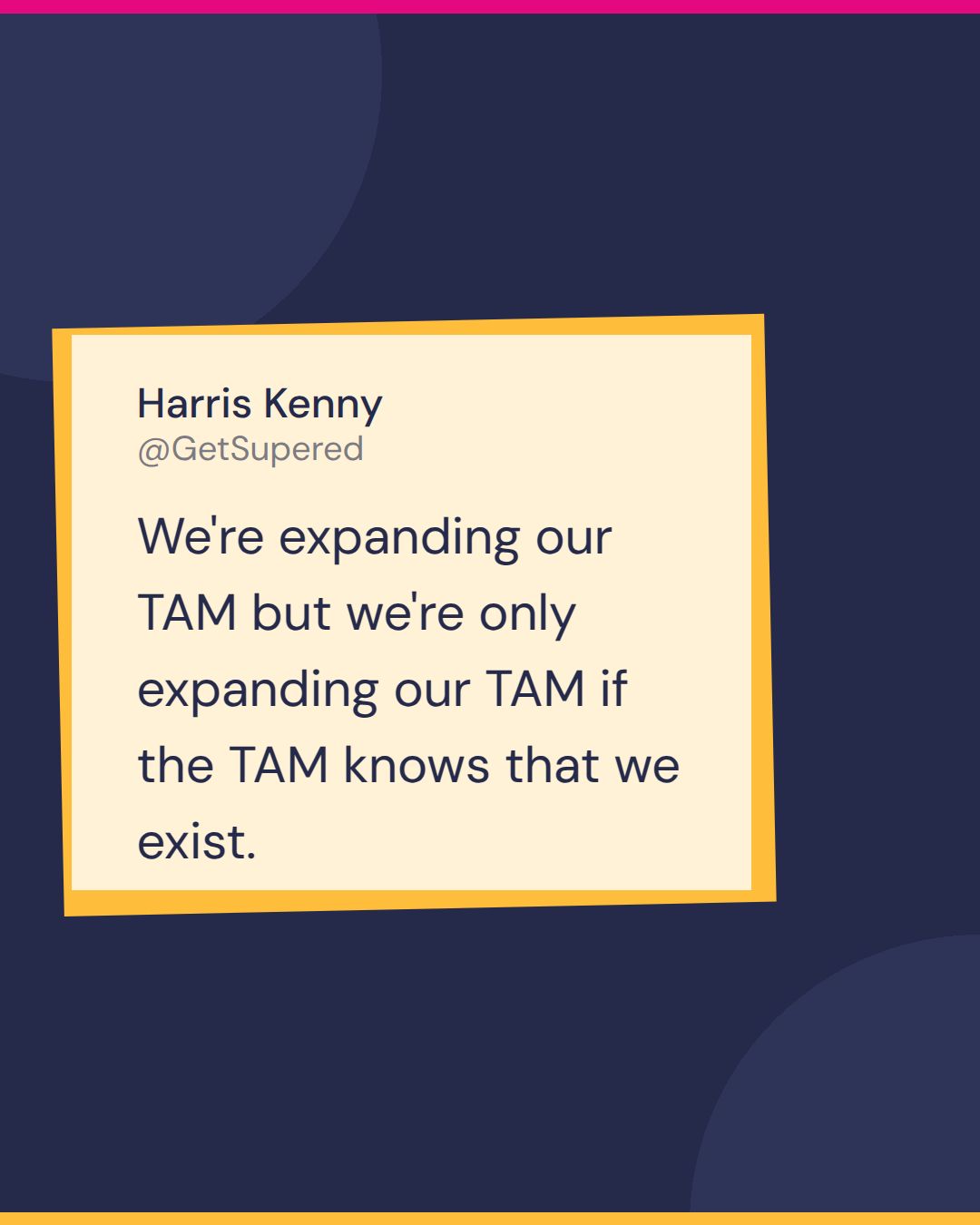
I confessed my own version: “I haven’t updated the website in like six months.” Harris answered: “So like the product is ahead of the website by a lot.” For an integration company that gap costs customers, and he spelled out how: “the more tools we add we’re expanding our TAM but we’re only expanding our TAM if the TAM knows that we exist.”
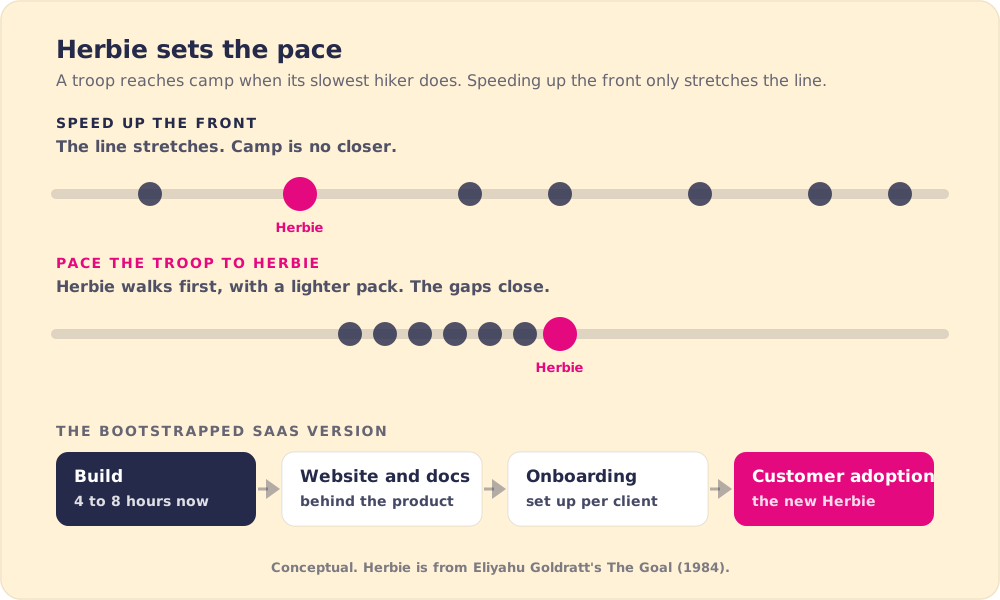
Eliyahu Goldratt told a story about this in his 1984 novel The Goal. A scout troop goes on a hike, the fastest boys race ahead, the line stretches out, and the troop reaches camp when its slowest hiker, Herbie, gets there. Goldratt’s theory of constraints says a system’s output is set by its slowest step, so you find that step and pace everything else to it (Wikipedia, Theory of constraints). At OutboundSync, AI coding sped up the build. The website, the docs and customers hearing about new features are now the slow hikers, and the Astro rebuild is Harris’s way of speeding them up.
Pendo’s analysis of 615 software products found 80% of features rarely or never used, with 12% of features generating 80% of daily usage (Pendo, 2019 Feature Adoption Report). If a company doubles what it ships and changes nothing about how customers hear of it, most of the new work will likely land in that unused 80%. Harris got there without the report: “what’s the point in building this stuff if people don’t adopt the features or don’t even know about it.”
What changes when a non-technical founder can build in hours?
Number one, “by far and away,” is Cursor paired with Claude’s Opus model, and his claim for it is large: it “is completely going to change our business like by a factor of like a hundred X.”
He explained why. He is a non-technical founder, he has spent six years in his market, and he is the product owner. Changes used to go through the engineers, one round of questions and corrections at a time. Now he builds “very good functional uh prototypes using our existing codebase” himself, and “it’s taking me 4 to 8 hours to build things that would have taken like weeks before.” He works on the front end, where his engineers have already built the hard back-end logic. He can change the flow, show a field only when it applies, or swap a drop-down for a checkbox, then hand it back for the team to wire up.
I know the old pain from my side of the table. As a non-technical founder, you ask for something small and hear “that’s going to be 2 weeks,” and you think, “but it’s a drop-down menu.” And often you do not know what you want until you see it. Harris now sees it first. When a version misses, he tells the AI “I don’t like that” and asks for another way, as many times as he likes.
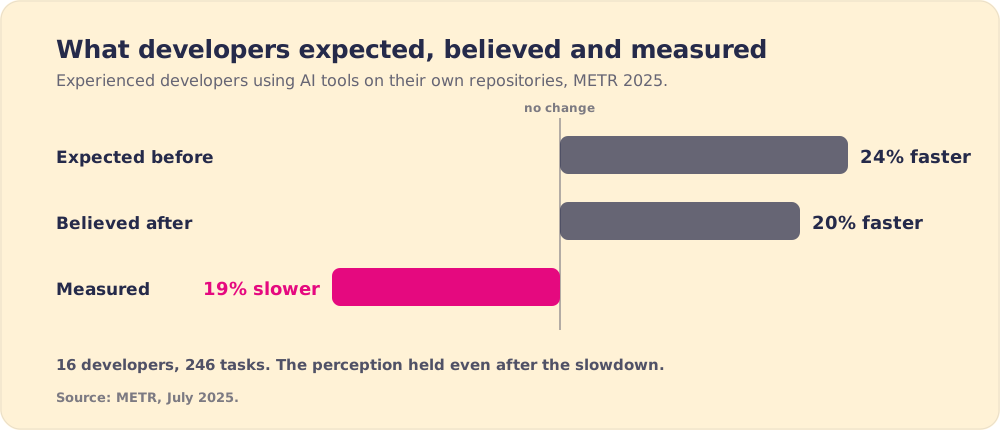
He is careful with it. He works in tight loops and batches, and “with each batch of changes I I have Codex check the work.” He picked Cursor over Claude Code for the same reason: “I don’t want it to be all magic. I do kind of want to see what’s going on.” The research backs his caution. In METR’s July 2025 study, 16 experienced open-source developers worked 246 tasks in their own codebases. With AI tools they took 19% longer, yet afterward believed AI had made them 20% faster, and beforehand they had expected to be 24% faster (METR, 2025). Harris’s work is different from theirs, front-end prototypes on a settled back end, but his second AI check and his habit of reading the code are how he makes sure the speed he feels is real.
He named the cost of the speed himself. “A year from today, the number of combinations of ways to use our product is literally going to be 100x what it is today. Um and so, it’s putting pressure on every single system.” The tools he is replacing at numbers two and three are the ones that “busted, or or or will bust within a month.” He expects more change, he said at the end, “to the chagrin of everyone that works on our team.”
Key points from Harris’s stack
- An assistant that argues back. Grok earned its place with straight answers and current information from X.
- Boring tools for solved problems. Sentry won as the category leader. Harris saves unusual picks for the places they change the business.
- Systems AI can reach. Linear’s Git base and MCP server let AI tools pick up and update work without anyone clicking through screens.
- Build once, ship many. From agency packages to programmatic web pages, Harris keeps turning one piece of work into many deliveries.
- The bottleneck after the speedup. When prototypes take 4 to 8 hours, the website, docs and customer awareness set the pace.
- Speed you can check. Batches, a second AI reviewing the work, and code he can read.
How should a bootstrapped SaaS spend its new speed?
A founder who suddenly has more engineering capacity can build more features and watch most of them go unused, or hire marketers to keep up, which a bootstrapped budget rarely allows. Harris is doing something else. He is spending part of the new speed on getting shipped features in front of customers, so a merged pull request produces its own pages, docs and announcements.
We recommend his route. SaaS Capital’s 2026 survey of more than 1,000 private B2B SaaS companies found median growth of 20% for bootstrapped companies against 25% for equity-backed ones (SaaS Capital, 2026), so a bootstrapper cannot close that gap by spending. Goldratt’s troop moves at Herbie’s pace, and Pendo’s numbers show that most features customers never hear about go unused. Harris put the whole argument in one line on the show: the TAM only grows “if the TAM knows that we exist.”
For HubSpot app partners, his old agency habit of packaging the customer setup is the part we help with. Our partner program shows how partners build a HubSpot onboarding once and deploy it to each client, and a demo walks through it. For the steps after the sale, see our guide to client onboarding and our HubSpot onboarding checklist.
Frequently asked questions
What is a bootstrapped SaaS?+
What tools does a bootstrapped SaaS founder use?+
How does AI coding change a bootstrapped SaaS?+
Does AI coding make developers faster?+
Why do SaaS features go unused?+
Your process, running itself.


