AI Impact on Entry-Level Jobs: Nate Singer's Forecast and His Own AI Workflow
Nate Singer, a strategic partner development manager at HubSpot, thinks a lot of entry-level jobs could go. What the payroll data shows so far, how he uses AI every day, the one thing he never lets it do, and his advice for anyone starting out.
The AI impact on entry-level jobs so far shows up as fewer junior hires in AI-exposed roles more than as layoffs; Nate Singer of HubSpot expects a lot of those jobs could be eliminated, and his own workflow uses AI to think harder while he keeps the writing.
In 2022, soon after ChatGPT came out, Nate Singer made a promise on a Loom recording for his partner newsletter. He would have ChatGPT write the newsletter, and whatever it wrote, he would read out live to every partner on his list.
“It did not go well,” he said.
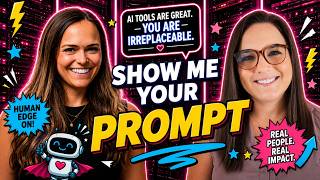
Nate is a strategic partner development manager at HubSpot, about seven years in. When he sat down with Ashley Freter on Show Me Your Prompt, he gave a blunt forecast on the AI impact on entry-level jobs, and walked through how far his own use of AI has come since that newsletter. He works with some of HubSpot’s most sophisticated agency partners in North America on winning and keeping customers. His own habits are a guide for anyone starting out: he uses AI to catch up and to argue with him, and he does his own writing and his own thinking.
When did AI click for Nate?
For a while Nate used AI the way he thinks most people still do. “The majority of of folks out there are still using this largely as Google,” he said. “There’s nothing wrong with that.” It is only the “tip of the iceberg.”
His “oh moment” came when he learned what a Claude bot was, an always-on AI agent that runs on its own machine. His first impulse was to put one on his laptop. Then: “Oh, this is a work computer. That’s real dumb.” A few days later he had a Mac mini, a separate screen, and “a separate everything.”
Setup took about eight hours. “I am not a technical person. I’m a sales person,” he said. “I didn’t know how to queue the terminal when I started with this thing. I’m like, ‘What is a terminal?’” By the end the agent “was alive and functioning and had a personality and an email account and a WhatsApp and its own phone number,” and one prompt sent it off doing things around the internet. “Oh my god. This is different.”
His rule at work is to use the tools your company gives you. Buying your own tools and plugging company data into them, he said, is “just such a dumb way to get fired. Get fired for something fun.” HubSpot gives him ChatGPT Enterprise, NotebookLM, Glean and its own agents. The Claude bot stays on the separate machine, for personal projects.
How does Nate use AI before a strategy call?
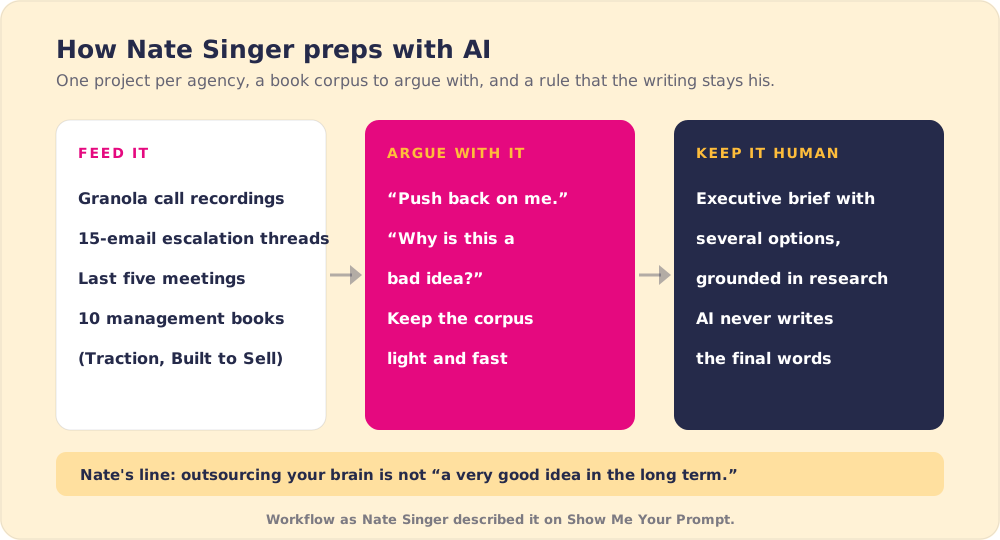
Each agency Nate works with has its own project in ChatGPT Enterprise. Every call Granola records goes into it. So does every long thread: if he gets pulled into a customer escalation with 15 emails behind it, those get summarized in the same place. Before a strategy call, he talks the account through with that project.
It helps most on the bad days. If you are in back-to-back meetings with 15 minutes to prepare for one “you probably should have done… the night before, but you definitely didn’t,” it can get you “caught up on everything from your last five meetings.”
He also knows where to stop. “If you’re like outsourcing your brain, um, I don’t not a doctor, but I don’t think that’s a very good idea in the long term.”
Why does Nate load management books into NotebookLM?
His top recommendation for knowledge workers is to get a pro NotebookLM subscription through work and fill it with a library for your job. For the agency world, that means “10 books on productivity management,” books on scaling a company such as Traction and Built to Sell, and denser material on accounting and agency finance, so you have “a kind of unique corpus of data that is specific for your job.”
He had used it a few hours before we recorded. An agency was growing from about $5 million a year to $8 million and trying to put its systems into templates, and “the founder’s magnetism is not holding it all together anymore.” He still talks a case like that over with colleagues. He also takes his own idea to the library and argues with it: “I think they should do this. Push back on me. Why is this a bad idea? Why is that a bad idea?”
Afterward he sends the agency an executive brief with several options, “grounded in so much thought, so much discipline,” and he can point to the reading behind his recommendation.
He keeps the library small on purpose. “You want it to be light and fast. You don’t want it to comb like all the works of Shakespeare to help you like understand why the sales to marketing handoff is broken for this marketing agency.”
He uses the same tool to learn things that are over his head. When a dense article or white paper is “a little above my technical ski tips,” he has it turned into a custom podcast for his runs.
What will Nate never let AI do?
“This thing doesn’t write for me ever,” he said. “The writing stinks.” Then the aside that got a laugh: “It killed the dash.” He is a sales guy, he said, and didn’t know what an em dash was until AI started putting them everywhere.
He meant the first part seriously. Later in the episode he said that “if everyone sounds the same, the alpha is in writing your own your own unique perspective.” Writing is where his own view shows, so he does it himself.
A team at the MIT Media Lab measured what happens when people hand writing over. In their study of 54 participants writing essays, the group using an LLM showed the weakest brain connectivity of the three groups, felt the least ownership of their essays, and “struggled to accurately quote their own work” (Kosmyna et al., MIT Media Lab, 2025). The study is small, and it lines up with Nate’s worry about outsourcing your brain.
Will AI eliminate entry-level jobs?
Ashley asked for his forecast, and he started with a warning. “Anyone that’s going to come on the internet or here and tell you they know exactly what’s going to happen is going to follow it up with selling you a course for $7,000 that will help you get ahead of it. Nobody knows, right?”
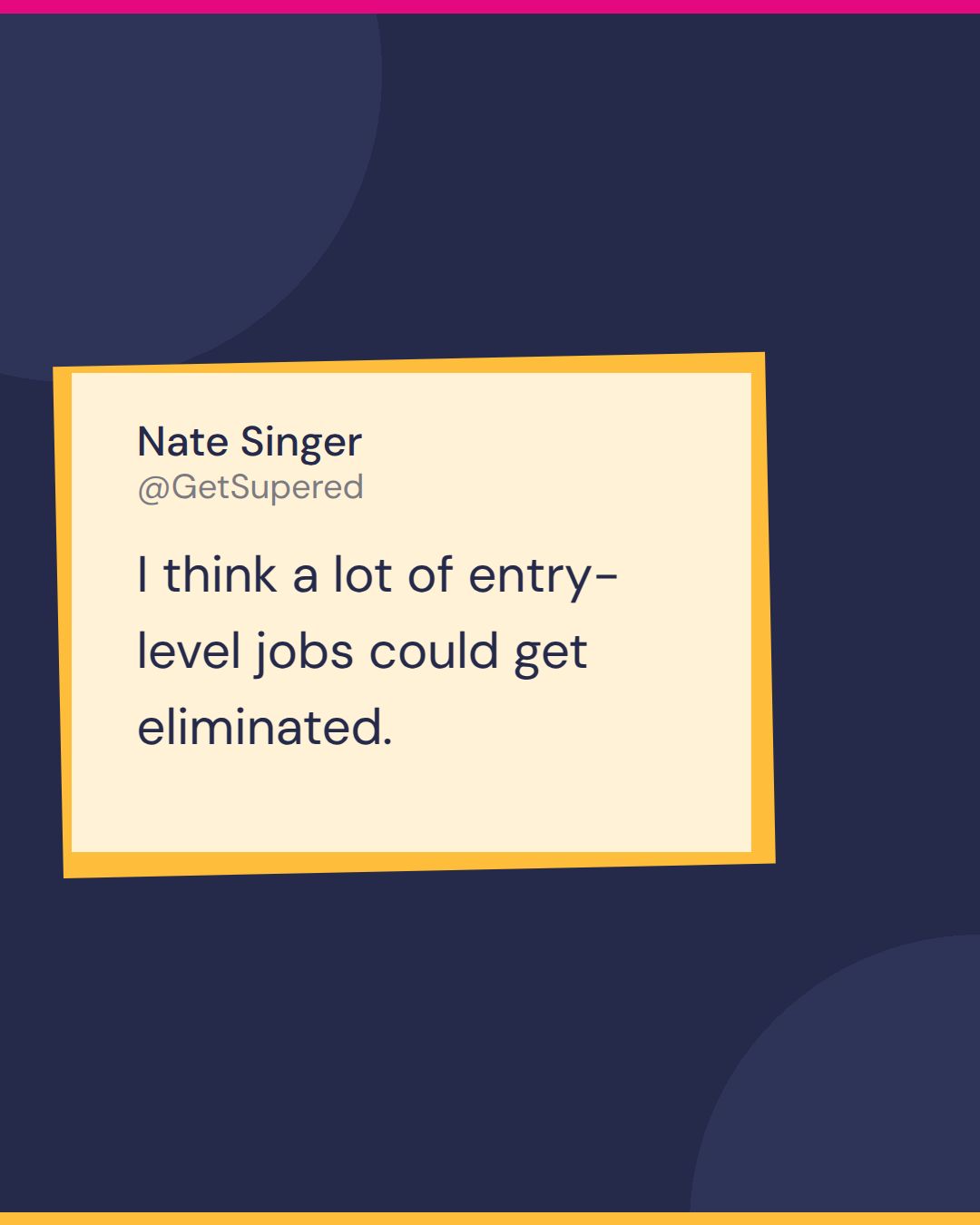
Then he gave his own guess, after asking whether it was okay that it was bleak. “I think a lot of entry-level jobs could get eliminated.” He compared it to “the outsourcing that happened decades ago to US manufacturing,” with the work moving to AI this time instead of overseas.
Nate expects knock-on effects “because humans are still human.” Writing is one, where sounding like yourself gets more valuable. Service is another. He pointed to Intercom’s move to its Fin AI agent: if all customer service is automated, “maybe humans are now like a way to retain that retain that revenue,” something that could “command a premium.” Asked whether we will need a human in the loop at all, he said, “I hope so… call me crazy, I’m still pro human generally.” He called this stretch humanity’s “tech adolescence,” and he remembers his own adolescence being “kind of rough at times.”
What does the data show about the AI impact on entry-level jobs?
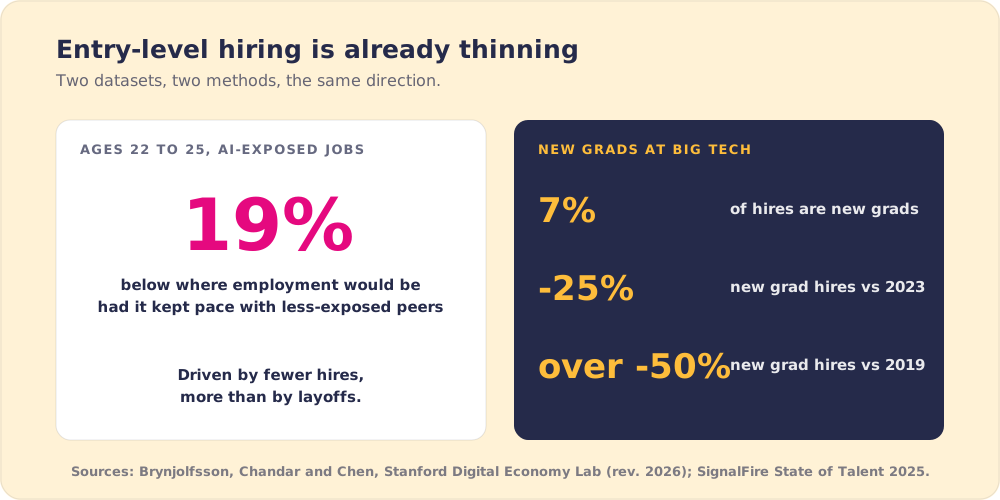
The payroll data so far supports a narrower version of Nate’s forecast. Erik Brynjolfsson, Bharat Chandar and Ruyu Chen at the Stanford Digital Economy Lab tracked ADP payroll records for millions of US workers. In the revised 2026 version of their paper, employment of 22 to 25 year olds in AI-exposed occupations stands 19% below where it would be had it kept pace with less-exposed peers, and most of the gap comes from fewer entry-level hires rather than layoffs (Stanford Digital Economy Lab, 2026). SignalFire’s 2025 talent report found new graduates made up 7% of Big Tech hires, with new grad hiring down 25% from 2023 and more than 50% from 2019 (SignalFire, 2025).
So far the jobs are disappearing as roles that never get posted, which is closer to Nate’s offshoring comparison than to a wave of layoffs. For the rep’s seat in particular, our post on whether AI will replace sales jobs goes further.
Can AI help new hires learn faster?
Some of the research is more hopeful, and it matches how Nate works: AI that helps a person catch up while the person still does the thinking.
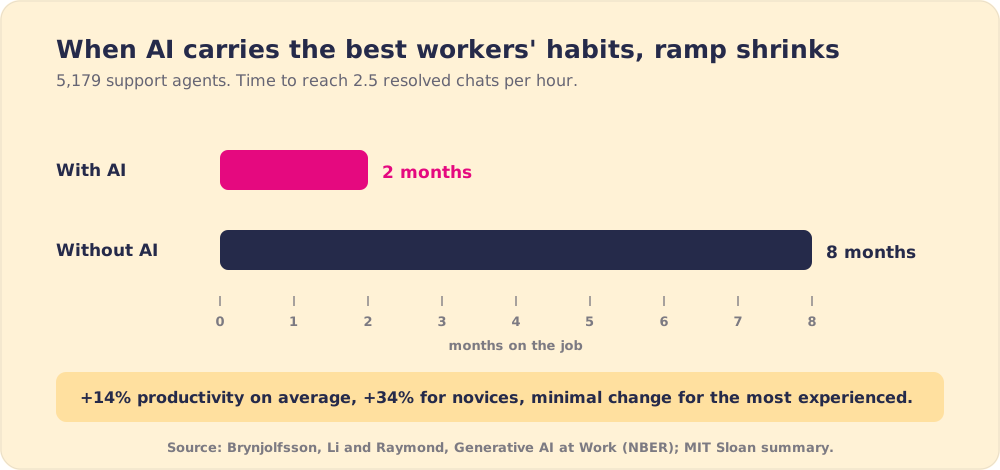
Erik Brynjolfsson, Danielle Li and Lindsey Raymond studied 5,179 customer support agents given an AI assistant. Productivity rose 14% on average and 34% for novice and low-skilled workers, with little effect on the most experienced (NBER, Generative AI at Work). The assistant passed the best agents’ practices to the rest. New agents with it reached 2.5 resolved chats per hour within two months; agents without it needed eight (MIT Sloan).
Sales ramp works the same way. A new rep gets up to speed faster when the best reps’ habits show up in front of them while they work, instead of in a binder from week one.
What is Nate’s advice for someone just starting with AI?
“You’re not behind. Cuz everyone’s behind.” Feeling behind, he said, is “a self-reinforcing kind of negative thing.” If you already write prompts and ask it questions, “you’re like a couple hours away from being like at the bleeding edge of what a non-technical average person is doing. Like none of us are working in frontier labs.”
He had two cautions. Don’t start with the always-on agent he built: “There’s like a ton of security weaknesses I wish I had known about before.” And pick a project you care about. Pay $20 a month for Lovable and another $20 for Claude, “cancel your Hulu and cancel your Netflix. It’s not helping you anyway,” and “build something you like.” He didn’t know what Supabase was when he started. “You’ll learn so so so much just by putting together something for the love of the game.”
Nate’s lessons on AI and entry-level work
- A project per relationship. Calls, long threads and past meetings go into one place per agency, ready before each strategy call.
- A library to argue with. Ten management books in NotebookLM, kept small, asked to push back on his ideas.
- Writing he does himself. AI never writes for him, because when AI copy all sounds alike, his own perspective is what clients can’t get elsewhere.
- Humility on forecasts. In his view anyone certain about the future of work is selling a course, and his own guess is still bleak for entry-level roles.
- Building for fun. A $20-a-month project you enjoy teaches more than a course.
What should teams do about AI and entry-level hiring?
Keep hiring juniors, and give them what Nate built for himself: AI that catches them up and argues with them, with the best people’s habits in front of them while they work. The payroll data shows companies going the other way, letting AI take the entry-level tasks and hiring fewer people to learn on them. In the support study, AI that carried expert practice to novices cut the time to reach a solid pace from eight months to two. Juniors who get that help become the experienced people a company needs in five years.
For sales teams, Supered does this part. It is the Behavior Layer that puts your best reps’ process in front of new reps inside HubSpot and Salesforce, in the flow of work, and shows managers which steps ran.
To see how long your new hires take to run the process alone, start with sales ramp time and what shortens it. To capture your best people’s habits before they walk out the door, read our post on tribal knowledge, and our guide to sales onboarding.
Frequently asked questions
What is the AI impact on entry-level jobs so far?+
What does Nate Singer predict for entry-level jobs?+
How does Nate Singer use AI at work?+
What should someone starting their career do about AI?+
Can AI shorten ramp time for new hires?+
Your process, running itself.
Turn the playbook into rep behavior.
More from Show Me Your Prompt
AI Content Workflow: Erin Wriggers' Pipeline and the Human MCP
Erin Wriggers
AI Upskilling: Lyron on the Kid in the Library
Lyron