Sales Ramp Time: You Cannot Shorten It With a Bigger Onboarding Binder
Sales ramp time is treated as a knowledge problem, so teams cram more into onboarding. Ramp is a behavior-acquisition curve, and front-loaded information decays before it is used. The fix is reinforcement in the flow.
Sales ramp time is how long a new rep takes to reach full productivity, and it is governed by how fast they acquire the winning behaviors, not how much they are told, so a front-loaded onboarding firehose decays before use and in-flow reinforcement ramps reps faster.
Most sales leaders want to shorten ramp time, and almost every attempt makes the same bet: if new reps knew more, sooner, they would produce sooner. So onboarding grows, another week of product training, a fuller playbook, more certification quizzes, and ramp time stubbornly refuses to fall. The bet is wrong because it misreads what ramp is. Ramp is not the time it takes to load knowledge into a rep. It is the time it takes a rep to acquire the behaviors that win, and behavior is not acquired by being told. A new rep can ace every onboarding quiz and still be months from running a real discovery call well, because knowing the steps and performing them under pressure are different things, and only the second one is ramp.
Sales ramp time is how long a new rep takes to reach full productivity, and it is governed by how fast they acquire the winning behaviors, not how much they are told, so a front-loaded onboarding firehose decays before it is used and reinforcement in the flow of work ramps reps faster. Treat ramp as behavior, and you can finally shorten it.
Why is sales ramp time worth fixing at all?
Because it is one of the largest hidden costs on a sales team, and almost nobody prices it. The Bridge Group’s repeated studies of SaaS inside-sales orgs have put average new-rep ramp in the range of four to five months before a rep is fully productive, and longer for complex or enterprise motions (The Bridge Group, SaaS Inside Sales reports). Put a number on it. A rep on a 120,000-dollar package who takes five months to reach full quota costs roughly 50,000 dollars in salary before the company sees a full return, and that ignores the larger figure: the pipeline that rep would have built had they been productive sooner. Multiply by every hire in a growing team and ramp is not a soft HR metric. It is a direct, recurring tax on growth.
Which is exactly why the instinct to fix sales rep ramp time by adding to onboarding is so seductive and so wrong. Adding a training week feels like progress, it is visible, it is measurable, and it ships next Monday. The trouble is that it loads the wrong variable. To reduce sales ramp time you have to move the moment a rep becomes capable, and capability does not move when you add information. It moves when the behavior gets practiced in context. The rest of this post is about why those are different, and what actually shifts the curve.
Why does a bigger onboarding program not shorten ramp?
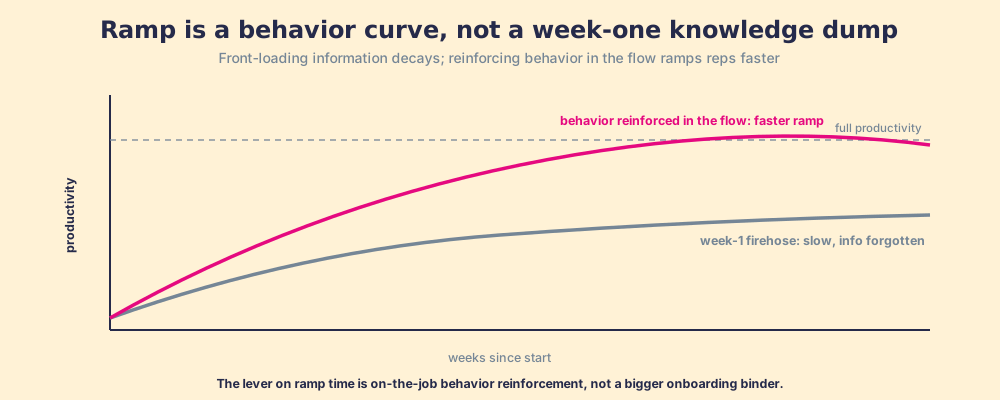
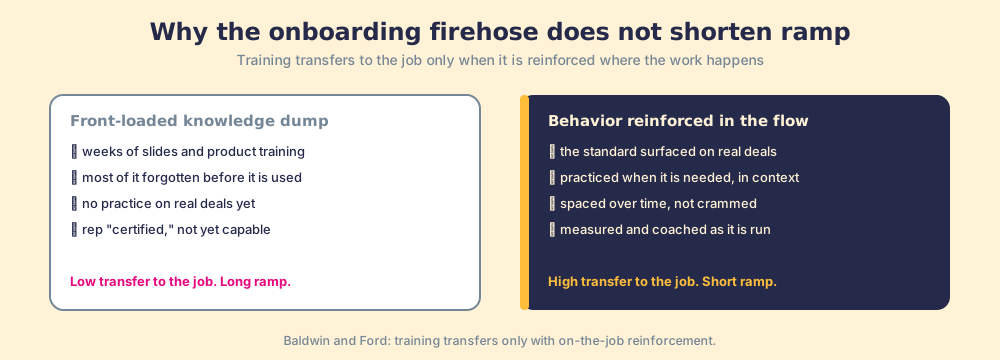
Because information delivered up front decays before the rep ever uses it, and knowledge that is forgotten cannot become behavior. This is the transfer-of-training problem that researchers Timothy Baldwin and Kevin Ford defined: training only produces results when it transfers to the job, and transfer depends heavily on reinforcement in the work environment, not on the volume of material taught (Baldwin and Ford, on transfer of training). A front-loaded onboarding firehose violates everything that makes training transfer. It teaches the behavior weeks before the rep has a deal to practice it on, with no reinforcement in between, so by the time the moment arrives, the lesson is gone. Hermann Ebbinghaus mapped this forgetting curve more than a century ago: information learned without reinforcement is mostly gone within days, and a much-cited application of his work in sales puts retention from a single training event at roughly 16 percent after about 90 days (Sales Performance International on the Ebbinghaus curve). Cramming a rep with product knowledge in week one and expecting it to surface in month three is fighting human memory.
The same body of research also tells you the fix, and it is not “teach it harder.” Ebbinghaus found, and a century of memory research has confirmed, that the single most powerful lever against forgetting is spacing: the same total study time, broken into spaced sessions with retrieval in between, produces far more durable memory than one massed block. The effect is one of the most replicated findings in cognitive science. A front-loaded onboarding firehose is the massed block, the worst possible schedule. It takes the one thing known to build durable capability, spaced practice, and does the opposite by design, then blames the rep when the lesson evaporates. The rep did nothing wrong. The schedule did.
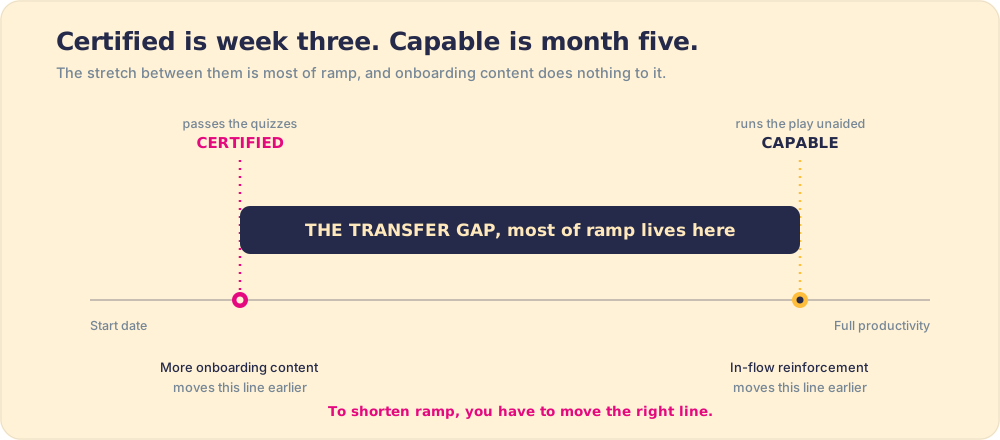
So the rep ends onboarding “certified” and not yet capable, and the long gap between those two states is most of the ramp. They passed the quizzes. They cannot yet run the play. The certification measured knowledge, which was never the constraint; capability comes from doing the behavior in context, repeatedly, with feedback, which onboarding content does not provide.
It is worth saying plainly what those two words mean, because the whole sales onboarding ramp is built around blurring them. Certified means a rep can recall the right answer when asked, in a low-stakes setting, with time to think. Capable means a rep produces the right behavior under live conditions, with a buyer pushing back, with no time to look anything up. Driving instruction makes the distinction obvious: nobody believes that passing the written test makes you a driver. The written test is certification. The hours behind the wheel, in traffic, with a coach in the passenger seat, are where capability is built. A sales team that front-loads onboarding is handing reps the written test and then acting surprised when they stall at the first real intersection.
What shortens sales ramp time?
Reinforcing the winning behaviors in the flow of work, where they transfer and stick. If ramp is behavior acquisition, the lever is everything that makes behavior transfer: practice in context, spacing over time, and feedback on the real work. That means surfacing the standard on the rep’s actual deals as they work them, so the lesson arrives at the moment it is needed rather than weeks early. It means spacing the learning instead of cramming it, because spaced reinforcement is how memory holds. And it means measuring and coaching the behavior as the rep runs it, so capability is built under real conditions. This is the same loop as sales onboarding done right and sales process adoption: the behavior is reinforced where the work happens, not front-loaded in a classroom.
- Practice in context, not in advance. Surface the standard on real deals so the rep learns it when they need it, which is the moment it transfers.
- Space it, do not cram it. Reinforcement over weeks beats a week-one firehose, because spacing is how learning survives.
- Measure and coach the behavior. Capability is built by doing the behavior with feedback, not by passing a certification quiz.
How should you redesign onboarding to ramp faster?
Move the weight of onboarding out of week one and into the flow of the rep’s first deals. Keep the core orientation up front, the product basics, the systems, the context, but stop trying to front-load the behaviors that can only be learned by doing. Instead, wire the winning behaviors into the rep’s real work so they are surfaced, practiced, and coached as the rep runs actual deals, spaced over their first weeks rather than crammed into the first. This closes the gap between certified and capable faster, because it builds capability directly rather than hoping knowledge will convert into it later. The reps ramp faster not because they were told more, but because the behavior was reinforced exactly where and when it had to be performed, which is the only place ramp is won.
What we recommend
Stop trying to shorten sales ramp time by adding to onboarding, because ramp is not a knowledge-loading problem and more content only adds more to forget. Ramp is the time it takes a rep to acquire the winning behaviors, and behavior is acquired by doing it in context with reinforcement, not by being told about it in week one. The transfer research is clear: training produces results only when it transfers to the job, and transfer needs reinforcement where the work happens. So redesign onboarding around that fact: keep the core orientation up front, then reinforce the winning behaviors on the rep’s real deals, spaced over their first weeks, measured and coached as they run them. The gap between a certified rep and a capable one is most of your ramp, and you close it by building capability in the flow of work, not by handing new reps a bigger binder to forget.
From here: the first-quarter roadmap in a 30-60-90 day sales plan, the onboarding design in sales onboarding, the coaching that reinforces it in sales coaching, the adherence loop in sales process adoption, and the wider frame in the sales execution gap.
Frequently asked questions
What is sales ramp time?+
Why is sales ramp time so long?+
How do you reduce sales ramp time?+
Why does onboarding content not shorten ramp?+
Your process, running itself.