Sales Intelligence Platforms in 2026: The Shelf, the Shopper, and the Doorstep
Sales intelligence platforms sell three jobs under one label: a database, a waterfall across many databases, and the rep layer where data gets used. Graded for a mid-market team, priced October 2, 2026.
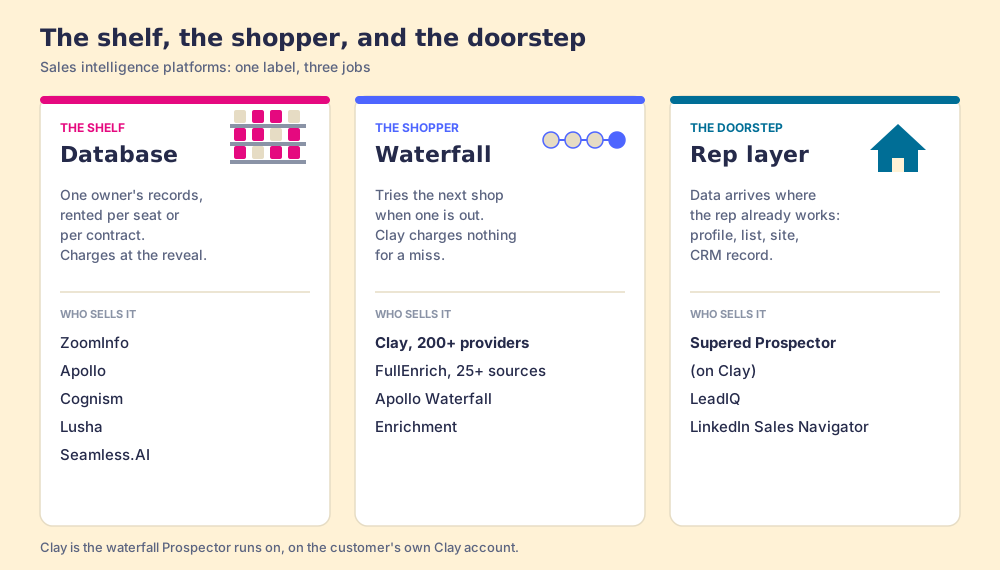
Sales intelligence platforms are tools that find and verify B2B contact and company data for sales teams, and they do one of three jobs: rent you one database, run a waterfall across many databases, or put that data in the rep's hands where they already work.
Sales intelligence platforms sell three different jobs under one label, and most buying mistakes come from paying for the wrong one. The short answer, graded in full below:
- Supered Prospector. For teams that already have Clay: Clay’s waterfall across 200+ providers, run from a LinkedIn profile, a Sales Navigator list, a company website, or the CRM record, at $45 per rep per month billed annually.
- Apollo. The best single database for a small team that wants data, sequences and a dialer in one plan, from $49 a seat on annual billing.
- ZoomInfo. The deepest North American database, for a team that can carry a quote-only contract with a Vendr median of $33,500 a year.
Ask three sales leaders which sales intelligence tool they use and you can get three answers that are not the same kind of thing. One names a database. One names Clay. One names the Chrome extension the reps open on LinkedIn. All three are right, and the vendor lists of b2b sales intelligence platforms that rank for this term mostly compare the first kind against itself: twelve supermarkets, graded on the size of their shelves.
Sales intelligence platforms are tools that find and verify B2B contact and company data for sales teams, and they do one of three jobs. A database is the supermarket: one owner, one set of shelves, and a membership card per seat. A waterfall is a personal shopper with a list of two hundred shops, who walks to the next shop when the first is out and charges you only for what comes home in the bag. The rep layer is the doorstep: the groceries arrive at the kitchen where the cook is already standing, so the cook never leaves the stove to go shopping.
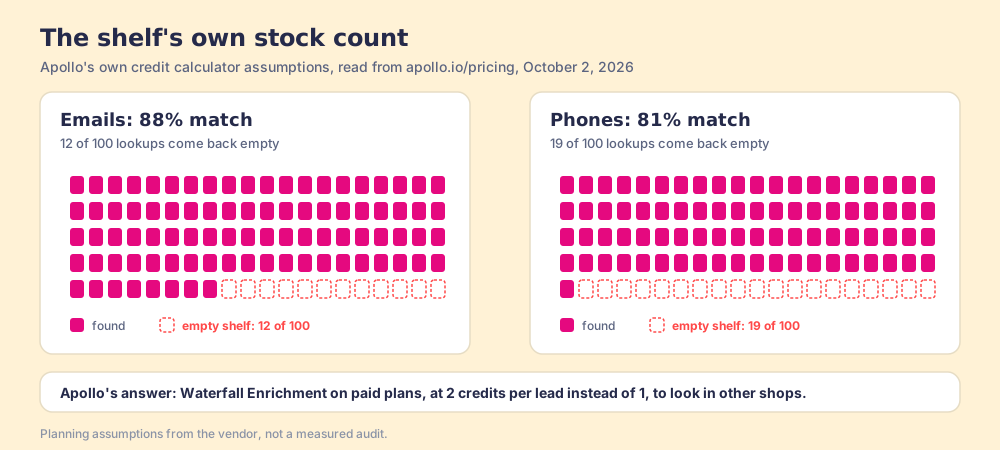
The finding that changes the order of this list sits in the supermarkets’ own fine print. Apollo’s pricing page, read on October 2, 2026, runs a credit calculator whose built-in assumptions are an 88% match rate on emails and 81% on phones, and it sells a Waterfall Enrichment feature on every paid plan (apollo.io/pricing). The database with the most reviews in G2’s category plans for a fifth of its phone lookups to come back empty, and sells you a shopper for the gap. Meanwhile ZoomInfo, Apollo, Lusha, LeadIQ and RocketReach each have a page in Clay’s integration directory (clay.com/integrations). The shelves are moving into the shopper’s route.
Why do teams switch sales intelligence platforms?
G2 counted 601 products in its Sales Intelligence category on October 2, 2026, and its definition explains why the shelf comparisons dominate. To qualify, a product must “provide and source accurate contact information for potential customers, such as direct dials or verified email addresses” and “integrate with sales and marketing software” (G2, Sales Intelligence). The category of sales intelligence software is built around owning the records. The complaints in the reviews are about what happens when the records are not there.
- The shelf is out of stock. “The main drawback is the accuracy of employee data. It’s not uncommon to find prospects listed who have left their companies,” a Cognism BDR wrote in January 2026 (G2, Cognism). Apollo’s own calculator plans for 12 missed emails and 19 missed phones in a hundred lookups.
- The second shelf stocks the same goods. “Numbers and emails are similar to ZoomInfo, not enough data it seems,” a Lusha SDR wrote in April 2026 (G2, Lusha). A second database bought to cover the first often overlaps it.
- The contract outgrows the team. ZoomInfo’s Vendr range runs from $7,220 to $155,730 a year, with annual escalators “typically 5-10%” (Vendr, ZoomInfo), and ZoomInfo’s CEO told staff in May 2026 the company was “reducing the resources we allocate downmarket” (SEC Form 8-K). A 15-rep team is not who that contract is being built for.
- The data lands somewhere the rep is not. The Bridge Group’s 2025 report, 351 companies, puts the median SDR at 112 activities a day, 19 of them on LinkedIn (Bridge Group, 2025). A platform the rep has to leave LinkedIn to open is a platform the rep opens less.
Those four reasons are the grading criteria below, in that order, and they apply to every one of the sales intelligence companies on this page.
Why trust this ranking?
I started RevPartners, a HubSpot partner that did only sales implementations, sold roughly twice as much Sales Hub as any other partner, and reached Elite tier in 13 months. My view of sales intelligence is from the CRM end, where the records land and either get worked or sit. Supered came out of that work, and it holds 4.9 out of 5 from 81 reviews on G2 (October 2, 2026). That is also the disclosure: we make Supered Prospector, and it ranks first here for teams that have Clay. The weights are printed so you can flip them, and the flip for a team without Clay puts Apollo on top.
Which sales intelligence platforms are graded highest?
The lens is a mid-market or SMB team, ten to fifty reps, that needs contact data reps will use where they already work and a leader who can see which lists turn into pipeline. Each criterion is scored 1 to 5 and multiplied by its weight, for a maximum of 50. The criteria match the ZoomInfo competitors page and the Apollo alternatives page, so the pages read together.
| Criterion | Weight | What it rewards |
|---|---|---|
| Coverage of the contact you need | 30% (x3) | A verified email and mobile when the first source misses |
| Rep-side delivery | 20% (x2) | Works on the profile, the company site, the CRM record; no new tab or login |
| Price structure for mid-market | 20% (x2) | Published, per seat or per result, no platform fee or auto-escalator |
| What the leader sees after the export | 20% (x2) | Which sourced lists were worked and which closed |
| Bundled outreach | 10% (x1) | Sequencer, dialer, drafting in the same plan |
| Rank | Platform | Job | Grade | Score | Best fit | CRM integration | Setup effort | Pricing (plan with the feature) | Why it ranks here |
|---|---|---|---|---|---|---|---|---|---|
| 1 | Supered Prospector | Rep layer on Clay’s waterfall | A | 44 | Teams that already have Clay | Native (HubSpot, Salesforce, Pipedrive) | Under a week on an existing Clay account | $45 per rep per month, billed annually, plus your Clay plan | 200+ providers per lookup, on any page the rep is on, lists followed to closed |
| 2 | Apollo | Database (plus its own waterfall) | A- | 36 | Small teams wanting data plus outreach | Native (HubSpot, Salesforce) | A day | $49 / $79 / $119 per seat per month, billed annually | Widest self-serve shelf, sequencer and dialer included |
| 3 | ZoomInfo | Database | B+ | 28 | North American depth, intent, enterprise motion | Native (HubSpot, Salesforce, Dynamics) | Weeks | Quote only; Vendr median $33,500 a year | Deepest US records; contract built for upmarket |
| 3 | Lusha | Database | B+ | 28 | Self-serve LinkedIn extension with a posted price | Native (HubSpot, Salesforce) | Minutes | From $37.45 a month, billed yearly | Posted ladder, low entry, one shelf |
| 5 | FullEnrich | Waterfall | B | 27 | Bulk email and mobile finding by API or CSV | HubSpot | A day | From $29 a month for 500 credits | Pays only for found data; no rep-side surface |
| 5 | LeadIQ | Rep layer (own database) | B | 27 | SDRs capturing into Outreach or Salesloft | Native | A day | Free for 1 user and 50 credits; Pro up to 5 users | Capture-to-sequencer workflow |
| 7 | Cognism | Database | B | 26 | EMEA, phone-first outbound | Native | Weeks | Quote only; Vendr median $32,750 a year | Phone-verified mobiles, compliance-led |
| 8 | Seamless.AI | Database | C+ | 21 | High-volume real-time search | Integrations listed | Days | No published price | Volume, with a 60-day renewal notice |
| 9 | LinkedIn Sales Navigator | Rep layer (search) | C | 19 | Finding the right person | Advanced Plus only | Minutes | Core $119.99 a month, $1,079.88 a year | Best at search; no email or phone |
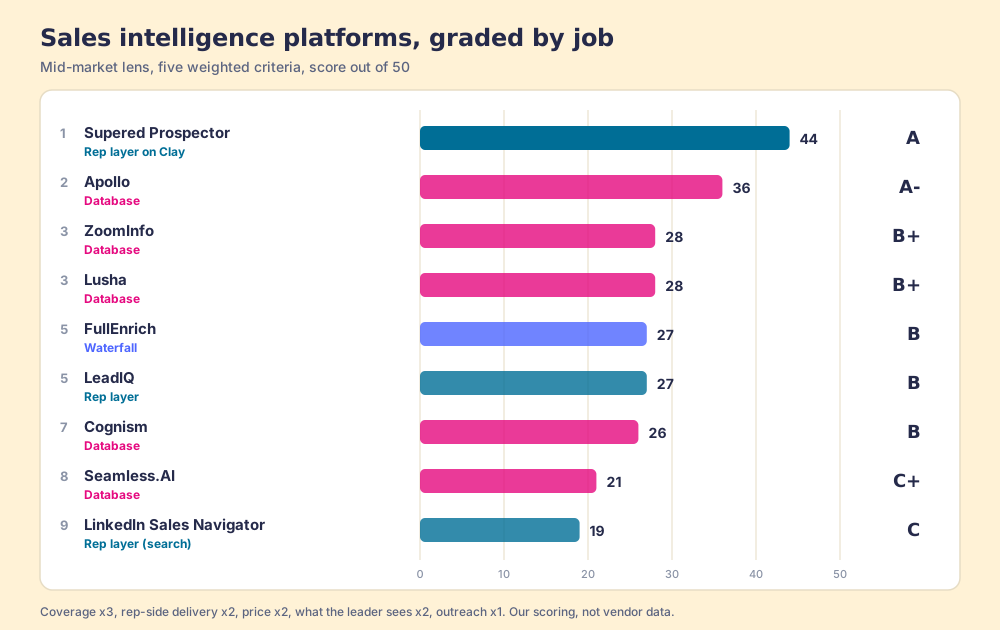
The scores, criterion by criterion, so the math is checkable. Letter bands: A 44+, A- 34-43, B+ 28-31, B 26-27, B- 23-25, C+ 20-22, C below 20.
| Platform | Coverage (x3) | Rep-side (x2) | Price (x2) | Leader sees (x2) | Outreach (x1) | Total |
|---|---|---|---|---|---|---|
| Supered Prospector | 5 | 5 | 4 | 5 | 1 | 44 |
| Apollo | 4 | 4 | 4 | 2 | 4 | 36 |
| ZoomInfo | 4 | 4 | 2 | 1 | 2 | 28 |
| Lusha | 3 | 4 | 4 | 1 | 1 | 28 |
| FullEnrich | 4 | 2 | 4 | 1 | 1 | 27 |
| LeadIQ | 3 | 4 | 3 | 1 | 2 | 27 |
| Cognism | 4 | 3 | 2 | 1 | 2 | 26 |
| Seamless.AI | 3 | 2 | 2 | 1 | 2 | 21 |
| Sales Navigator Core | 1 | 3 | 3 | 1 | 2 | 19 |
Prospector’s coverage 5 is Clay’s waterfall coverage, credited to Clay. Its outreach 1 is the lowest on the card on purpose: it has no sequencer, dialer or drafting. If outreach in the same plan decides it for you, Apollo wins this page, and that is a fair result.
Corporate status, checked October 2, 2026. ZoomInfo is public (Nasdaq: GTM) and in May 2026 approved a restructuring of about 600 roles, about 20% of headcount. Cognism is private and has owned Kaspr since April 2022. Apollo, Lusha, LeadIQ, Seamless.AI, FullEnrich and Clay are independent, and no acquisition among them was found in a news search that day.
Where does Supered Prospector fit among sales intelligence platforms?
Prospector does not bring its own database. It brings Clay’s waterfall, which is every database, routed. We chose Clay as our only data provider for that reason, and it is why Clay is not a row in the tables above. Clay is the row that contains the other rows. Clay governs the data. Supered governs the motion.
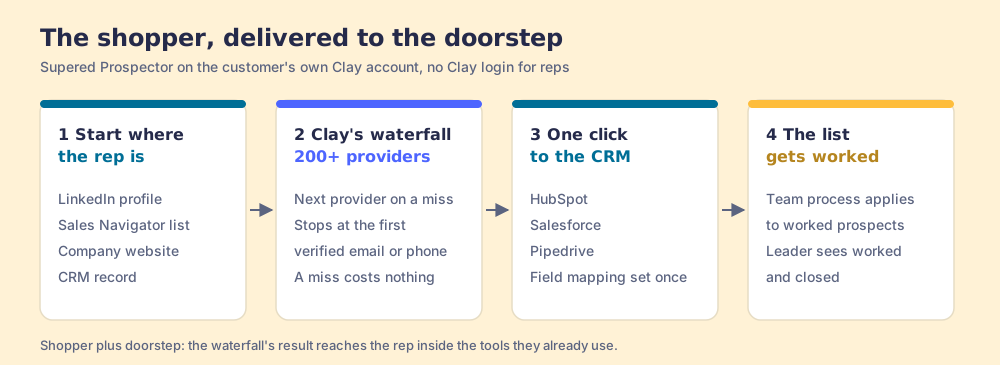
The shopper first. A waterfall is a list of instructions the GTM engineer writes down: ask this provider first, then that one, stop when a verified email or phone comes back. “Clay’s signature data waterfalls check multiple providers to return the most verified emails (lower bounce rate) and phone numbers (higher connect rate)” (Clay, rep prospecting). Clay’s pricing page, read October 2, 2026, says it can “buy data from 200+ providers in one place,” and it prints the rule that makes the shopper cheap to send out: “If an enrichment returns no result, you’re not charged Data Credits or Actions” (clay.com/pricing). The same page quotes Adam Wall, a head of sales operations: “We have 3x our enrichment rate with Clay’s combination of data providers vs. our previous solution.” That is one customer’s result, printed by the vendor, and it is the direction the mechanism predicts.
Then the doorstep. Clay is the GTM engineer’s workshop, and Clay says so itself: “GTM engineers build on Clay.” A rep on a LinkedIn profile with a buyer waiting does not open a workshop. What a rep gets from Prospector, on the team’s own Clay account and with no Clay login:
- Lookups from the page they are on. A LinkedIn profile, a Sales Navigator list, a company’s website with company research alongside, or a HubSpot, Salesforce or Pipedrive record. The enrichment runs one click from wherever the rep is looking.
- A list the rep builds. The rep assembles the list from those sources, Clay’s waterfall fills the emails and phones, and a buying-committee lookup returns the titles, departments and seniority the team set.
- Context before the first touch. On a LinkedIn profile, the rep sees the matching CRM record and whether the prospect was already worked in the past, before adding a duplicate or stepping on a teammate.
- One click to the CRM, or into a workflow. Field mapping is set once; a contact syncs to HubSpot, Salesforce or Pipedrive in one click, and a whole list can be pushed into any custom Clay workflow the GTM engineer built.
- Lists the leader can follow. The team’s process applies to worked prospects, so the manager sees which sourced lists were worked and which closed, and coaches from what is converting.
Prospector runs inside the Supered Chrome extension. Prospector works within LinkedIn’s terms and does not copy search results in bulk; the contact data comes from Clay’s waterfall on the customer’s own Clay account. Ask every vendor on this page what its extension reads on LinkedIn, ours included.
Choose something else if you do not have Clay. Prospector runs on the customer’s Clay account and does nothing without one, and a team that has never built a waterfall needs someone to build it. Choose something else, too, if outreach in the same plan is the deciding job, because Prospector has no sequencer or dialer and Apollo does. The sourcing use case shows the whole loop for teams that do have Clay.
What does a sales intelligence database do, and where does it run out?
A database is a supermarket. One company buys, builds and cleans a set of records, puts them on its shelves, and sells you a membership: by the seat, by the credit, or by a platform contract. When the shelf has the item, a supermarket is the fastest way to get it. When the shelf is empty, you are standing in an aisle with a basket and no second shop.
Apollo’s calculator puts a number on the empty shelf. The plan data apollo.io/pricing loads on October 2, 2026 carries the assumptions behind its credit estimate: an email match rate of 0.88, a phone match rate of 0.81, and two credits per lead when the waterfall runs (apollo.io/pricing). These are Apollo’s planning assumptions, not a measured audit, and they come from the database with the most G2 reviews in the category. Read them as a supermarket telling you, in its own stock system, that it expects to be out of phones about one visit in five.
None of that makes a database the wrong buy. It makes it one shop. The five worth knowing:
- Apollo. The widest self-serve shelf with the outreach built in. Basic is $49 a seat per month billed annually ($65 monthly), Professional $79 ($99), and Organization $119 with a 3-seat minimum, annual only; seats carry 30,000, 48,000 and 72,000 credits a year, with an email at 1 credit and a phone at 8. G2: 4.7 from 9,442 reviews in the category listing (October 2, 2026). Vendr’s median Apollo contract is $19,000 a year across 101 purchases (Vendr, Apollo, September 25, 2026). Apollo also ships Waterfall Enrichment on paid plans, the clearest sign the shelf knows its limits. Apollo pricing works the credits out per phone.
- ZoomInfo. The deepest North American shelf: “more than 100 million companies, 500 million contacts,” by its August 2026 filing, with intent data and a G2 rating of 4.5 from 8,923 reviews under its GTM Workspace listing. No public prices. Vendr’s median buyer pays $33,500 a year across 1,574 purchases, saving 22% on average, in a range from $7,220 to $155,730 (October 2, 2026). Net revenue retention was 89% in Q2 2026, which means the average existing customer spent 11% less than a year earlier. ZoomInfo pricing covers the contract terms.
- Cognism. The EMEA phone specialist, with phone-verified mobiles on the top package and screening against national Do Not Call lists. Quote only; Vendr’s median is $32,750 a year across 94 purchases, range $16,585 to $88,449 (October 2, 2026). G2: 4.5 from 1,370 reviews. It has owned Kaspr since April 2022, so the two are one kitchen with two dining rooms. Cognism alternatives grades it in its own lane.
- Lusha. The self-serve LinkedIn extension with a posted ladder: Starter at $37.45 a month billed yearly, Pro $52.45, Premium $299.95 with 5 seats, at 1 credit per email and 5 per phone (lusha.com/pricing, captured September 25, 2026). G2: 4.3 from 1,667 reviews (October 2, 2026). Since March 10, 2026, Lusha is also a step inside Clay’s waterfall, with the contact actions marked “Bring Your Own Account Required.”
- Seamless.AI. Real-time search at volume, with no published prices for paid tiers and annual terms that renew unless cancelled more than 60 days ahead (seamless.ai terms). G2: 4.4 from 5,400 reviews. Read the renewal clause before the demo.
What is a waterfall, and why are the databases joining one?
A waterfall is the personal shopper. She owns no shelves. She carries a list, walks into the first shop, and if the item is out she walks to the next, in the order you wrote down, until it is in the bag. You pay for what comes home. That last rule is the economic difference: a database charges for the visit, and Clay charges for the result.
The striking thing about 2026 is who is on the shopper’s list. Clay’s integration directory, read October 2, 2026, has pages for RocketReach (joined July 26, 2024), LeadIQ (September 1, 2024), ZoomInfo (January 15, 2025) and Lusha (March 10, 2026), and a page for Apollo with no join date shown. ZoomInfo’s, Apollo’s, Lusha’s and LeadIQ’s contact actions are each marked “Bring Your Own Account Required.” So the supermarkets are not being replaced by the shopper; they are becoming stops on her route, reached with your own membership card, while other providers on the route are paid in Clay credits.
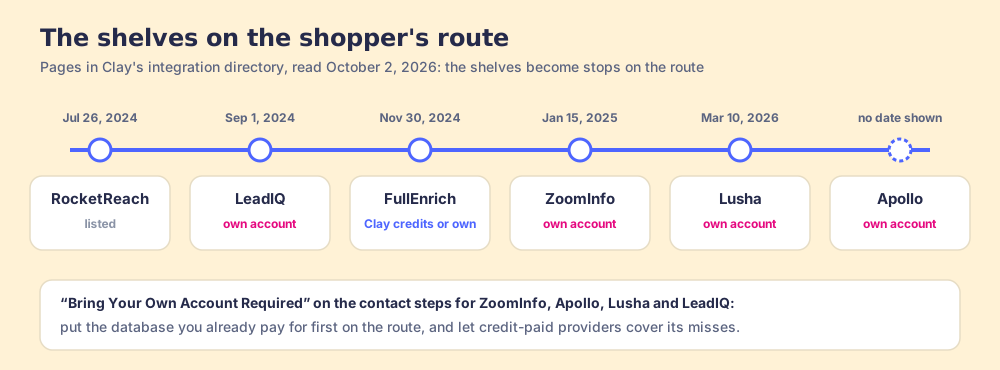
That changes the buying math in a specific way. A team that already pays for one database does not have to cancel it to get a waterfall. It can put that database first on the route, with its own key, and let Clay’s credit-paid providers cover the misses. The second database contract, the one bought to fill the first one’s gaps, is the purchase the waterfall makes unnecessary.
Two waterfalls compete with Clay for this job, and both are fair picks in their lane:
- FullEnrich. A waterfall sold by the credit, “25+ sources” on its pricing page, Pro from $29 a month for 500 credits, a mobile at 10 credits, and a published rule that a not-found costs nothing (fullenrich.com/pricing, October 2, 2026). G2 4.8 from roughly 239 reviews. Its Chrome extension was listed as discontinued in 2025 by Chrome-Stats, so it is an API and CSV tool. FullEnrich alternatives covers the field.
- Apollo Waterfall Enrichment. A shopper hired by the supermarket, at 2 credits per lead in Apollo’s own calculator. Convenient if you live in Apollo; the route is Apollo’s to set.
The grocery picture stops there, because contacts are not groceries. The same person sits in several shops at once with different phone numbers, and the newest shelf is not always the most accurate one. A waterfall’s order matters, and someone has to write it. Clay calls that person the GTM engineer, a role it says it coined in 2023 (Clay, GTM engineering).
What is the rep layer, and why does it decide whether the data gets used?
The doorstep is where the other two jobs pay off or do not. A shelf of 500 million contacts and a shopper with 200 shops both end at the same place: a record that a rep has to see, trust, and act on while a buyer is in front of them. If that record arrives in a tab the rep has to go and open, it waits there.
Three tools sell the doorstep:
- LinkedIn Sales Navigator. The best search on this page. Core is $119.99 a month or $1,079.88 a year per seat, Advanced $159.99 or $1,799.88 (LinkedIn compare plans, October 2, 2026), and G2 lists it at 4.4 from 2,178 reviews. It finds the person. It does not give you a verified email or mobile, and native CRM sync needs Advanced Plus. If your reps already pay for it, keep it. Sales Navigator alternatives explains the pairing.
- LeadIQ. Capture on LinkedIn straight into Outreach or Salesloft, on its own database: an email is 1 credit, a phone 10, both 11; Free covers 1 user and 50 credits, Pro up to 5 users, Enterprise is quoted, and annual billing is 25% off (leadiq.com/pricing, October 2, 2026). G2: 4.2 from 1,186 reviews. A doorstep with one shop behind it.
- Supered Prospector. The doorstep with the shopper behind it: Clay’s waterfall on the profile, the Navigator list, the company site or the CRM record, then one click into HubSpot, Salesforce or Pipedrive.
The case for weighting this job heavily rests on where reps spend the day. The Bridge Group’s median SDR makes 112 activities a day, 44 of them calls and 19 on LinkedIn, and sources $3.78 million in raw pipeline a year, which the report itself calls “not forecast or closed-won revenue.” A contact that reaches the rep inside that day gets dialed. A contact that reaches a spreadsheet gets dialed when someone remembers the spreadsheet.
What do sales intelligence platforms cost for ten reps?
The arithmetic for a ten-rep team runs on list prices and Vendr medians, checked October 2, 2026. The rows do not buy the same thing, which is the point of sorting by job.
| Option | Job | Annual cost for ten reps | What it buys |
|---|---|---|---|
| ZoomInfo | Database | $33,500 (Vendr median, seats vary) | One deep shelf, intent, quote-only terms |
| Cognism | Database | $32,750 (Vendr median) | One EMEA shelf, verified mobiles |
| Apollo Professional | Database + outreach | $9,480 (10 x $79 x 12) | One shelf, 480,000 credits, sequencer and dialer |
| Sales Navigator Core | Rep layer (search) | $10,798.80 (10 x $1,079.88) | Search, no emails or phones |
| Clay Growth + Prospector | Waterfall + rep layer | $10,752 ($446 x 12 + 10 x $540) | 200+ providers, a miss costs nothing, in the rep’s tools |
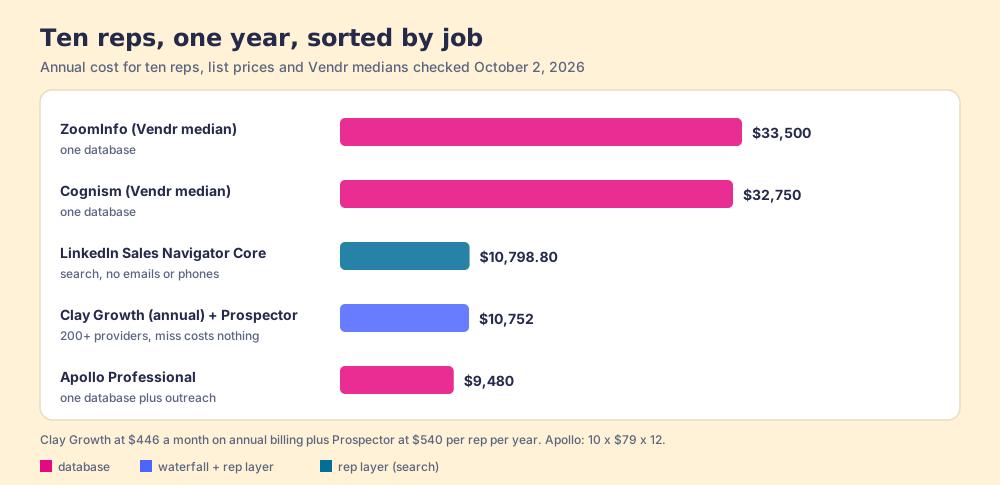
Apollo is the cheapest line, and for a team that wants outreach in the same plan it is the right line. The Clay row costs about the same as Sales Navigator alone and covers the job Navigator skips. Many teams will run Navigator and the Clay row together, at $21,550.80 for ten reps, and drop the second database contract that used to sit beside them. Clay’s monthly-billed Growth plan starts at $495 a month, so the same row is $11,340 without the annual toggle.
What happens to the contact after the platform finds it?
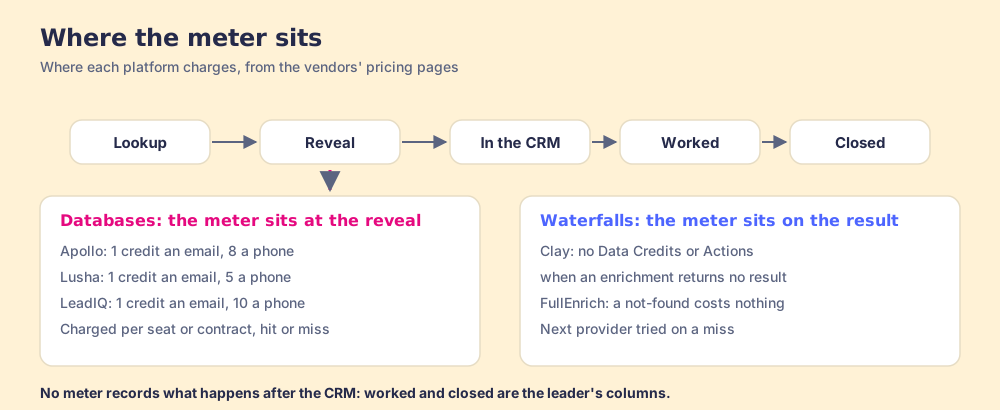
The database meters above sit at the reveal and the waterfall meters at the result. Both are fair to the vendors, whose job ends when the number appears. A sales leader’s job starts there. The renewal meeting for any of these tools asks one question the reveal count cannot answer: which of the lists we paid for turned into meetings and deals.
A rep-built list that lands in the CRM with the team’s process attached can answer it. The rep gets the next step in the flow of the work, the manager sees the list become pipeline and coaches from what is converting, and the next data purchase is made on what closed instead of what was revealed. The sales prospecting guide walks the whole motion from list to meeting.
Which sales intelligence platform should you choose?
The choice resolves once you name the job you are missing. The ways forward:
- A team with Clay. Supered Prospector, so the waterfall the GTM engineer built reaches every rep on LinkedIn, the company site and the CRM record, and the leader can follow each list to closed.
- A small team without Clay that wants one tool. Apollo: a wide shelf, a sequencer, a dialer, and a waterfall add-on, at a posted price. Size the credits before the seats, since a phone costs 8.
- North American enterprise depth. ZoomInfo, if the seat count makes a platform contract sensible and you negotiate the escalator.
- EMEA phone-first outbound. Cognism, knowing Kaspr is the same owner downstairs.
- A self-serve LinkedIn extension on a budget. Lusha, from $37.45 a month billed yearly.
- Bulk enrichment by API without Clay. FullEnrich, which charges nothing for a miss.
- Finding the right person. Sales Navigator, kept alongside whichever of the above fills the email and phone.
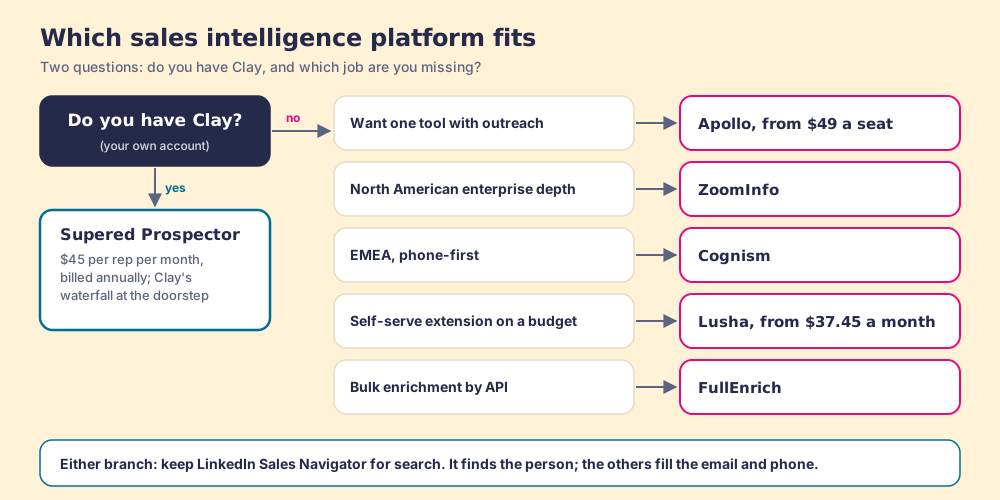
What we recommend depends on one fact about your stack. If you do not have Clay, pick the supermarket that fits your region and team size, buy annual, and read the renewal clause; Apollo is the best value for most small teams, and the calculator on its own pricing page tells you how often to expect an empty shelf. If you have Clay, do not sign a second database contract to cover the first one’s misses. Put the first one on the shopper’s route with your own key, send the shopper to every rep’s doorstep, and pay nothing for the shops that come back empty. The supermarkets were always going to tell you the price of the visit. A Prospector demo on your own Clay account shows you what came home in the bag, and which bags got cooked.
Frequently asked questions
What are the best sales intelligence platforms in 2026?+
What is the difference between a sales intelligence platform and a waterfall enrichment tool?+
How much do sales intelligence platforms cost?+
Is LinkedIn Sales Navigator a sales intelligence platform?+
Do I need a Clay account to use Supered Prospector?+
Which sales intelligence companies are independent in 2026?+
Your process, running itself.