Sales Coaching Software: What It Should Free, Not Replace
Sales coaching software promises to make managers better coaches.
The good tools do not coach for you; they remove the one thing that crowds coaching out of a manager's week. Here is the buyer's frame.
Sales coaching software is the category of tools that help managers improve how reps sell, across conversation intelligence, AI roleplay, and adherence measurement, and the most valuable kind removes the inspection burden that crowds coaching out of a manager's week.
Buy sales coaching software for the wrong reason and you get a beautiful dashboard that changes nothing. The category is sold on a seductive promise, that the right tool will make your managers better coaches, and that promise misreads the problem. Where coaching fails, it rarely fails because managers lack a tool that coaches for them. It fails because the one finite resource coaching needs, a manager’s time, is consumed by something else first. The sales coaching software worth buying does not coach. It clears what stands in the way.
Sales coaching software is the category of tools that help managers improve how reps sell, spanning conversation intelligence, AI roleplay, and adherence measurement, and the most valuable kind removes the inspection burden that crowds coaching out of a manager’s week rather than trying to do the coaching itself. Hold that frame, because it sorts a noisy category into a clear buying decision.
What are the categories of sales coaching software?
Three jobs hide under one label, and they are not interchangeable. Be fair to each, because each is good at its job.
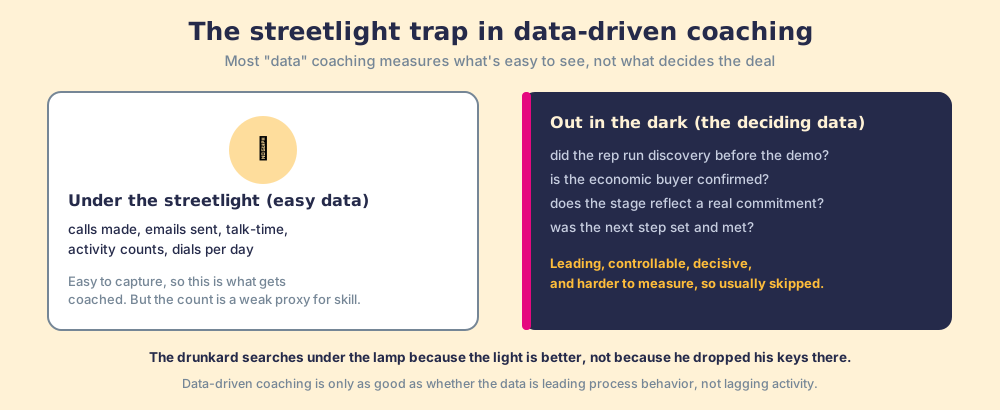
- Conversation intelligence. Gong and ZoomInfo Chorus record and score calls so coaching runs from the real conversation instead of the rep’s recollection. The strongest use is visibility; the limit is timing, since it analyzes the call after it ends, covered in conversation intelligence.
- AI roleplay and training. Hyperbound, Second Nature, and Mindtickle let a rep practice against a simulated buyer with instant feedback. Real value for building skill before a live call, and it is practice, not the live deal, covered in AI sales coaching.
- Adherence measurement. Process guidance like Supered surfaces whether the rep ran the process on each live deal and where they drifted. This job removes the inspection burden, and coaching programs often lack it.
These categories did not arrive together. Conversation intelligence came first, when Gong and Chorus turned the call recording from a compliance archive into a coaching corpus around 2016, and for a few years “sales coaching software” and “call recording” were nearly synonymous. AI roleplay is the newer wave, riding the language-model leap to let a rep rehearse against a convincing simulated buyer, with Hyperbound, Second Nature, and Mindtickle each staking out the practice-before-the-call ground. Adherence measurement is the part the category mostly skipped, because it is the hardest to build and the least glamorous to demo, which is why teams tend to own one of the first two and feel the absence of the third without a name for it.
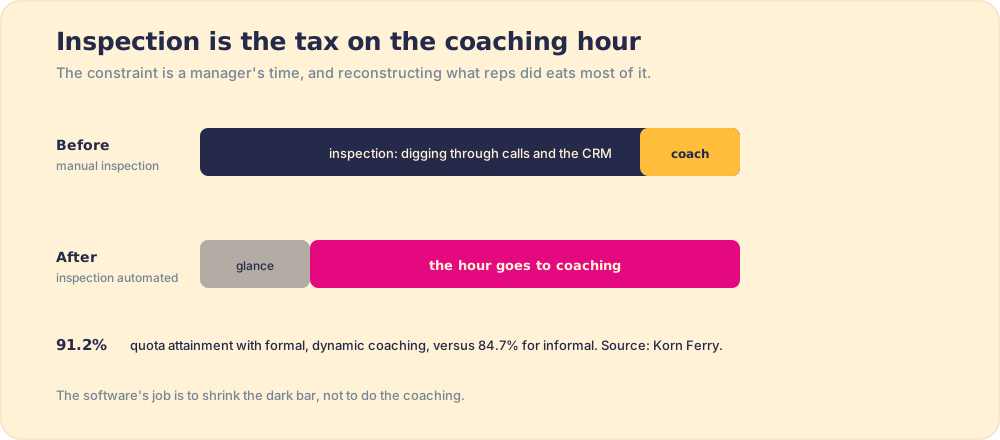
The reason the third job matters most is mechanical, not promotional. A manager’s coaching hour is mostly spent on inspection, digging through calls and the CRM to find out what a rep did, before any coaching can begin. That reconstruction eats the hour, which is why coaching is the first thing cut, and why the payoff of getting it back is large: Korn Ferry found formal, dynamic coaching lifts quota attainment to 91.2 percent against 84.7 percent for informal approaches (Korn Ferry). The 6.5-point swing comes from coaching that is formal and repeatable instead of catch-as-catch-can, and a better pep talk does not produce it. The full argument is in the sales coaching guide.
Does Gong’s revenue intelligence count as coaching?
It counts, and it earns the credit. Gong did not stumble into this market; it named the category. The thesis is called Revenue Intelligence, and Gong states it plainly: it “automatically captures customer interactions, analyzes them to provide insights, and applies those learnings to determine the next best action for winning outcomes” (Gong, April 15, 2022). The argument underneath it is real and worth granting in full: a CRM, Gong’s founder Amit Bendov noticed, “was great at recording what happened but not why it happened.” Conversation data closes that gap. It surfaces signal a manager standing outside the call never had, the words themselves, the objection that landed, the moment the buyer went cold. Before Gong, most of that was lost the second the call ended. The contribution is real, and an account of sales coaching should start by saying so.
We part company on time, not quality. Recording is retrospective. The richest scorecard in the world describes a call that is already over, a deal that has already moved, a buyer who has already formed an impression. It tells you, in high resolution, what happened. It cannot tell the rep what to do next with the deal still open in front of them. The signal is real; it arrives after the moment it could have changed.
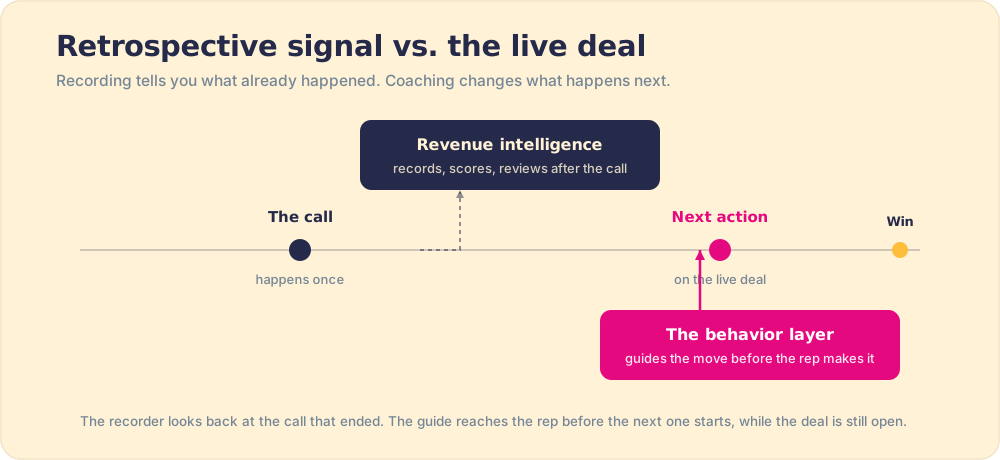
The win-rate lift, as the next section shows, comes from coaching that is structured and process-aligned, not from more recordings to review. Whether you call it a sales coaching app or a platform, a recording only pays off when a manager spends time coaching from it, and that time is scarce. The question that decides the purchase is whether the app spends that scarce hour helping the rep make the next move, or narrating the last one.
Does sales coaching software improve win rates?
Coaching improves win rates, with one condition: the coaching has to be structured. CSO Insights, now part of Korn Ferry, compared coaching styles in its 2019 Sales Enablement Study and found that teams with dynamic coaching, the kind formally aligned to the sales process and delivered consistently, posted win rates of 55.2%, against 41.8% for teams that left coaching to each manager’s discretion (Korn Ferry). Structure alone produced a 32% relative lift.
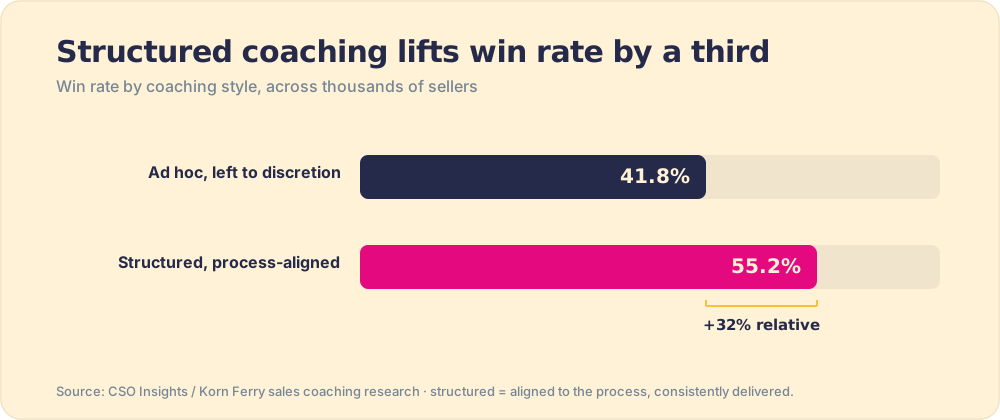
Read that finding against the two categories. The win-rate lift comes from coaching tied to the process and delivered consistently. A recorder gives you more raw material to coach from; it does nothing on its own to make the coaching structured or to anchor it to the process. The structure has to come from somewhere, and a pile of scored transcripts is not structure. So ask of any sales coaching software whether it makes coaching consistent and process-aligned, or only generates more to watch. The quality of its AI scoring comes second.
How do you choose sales coaching software?
Name the bottleneck, then buy the matching job, because the best sales coaching software for one team is the wrong buy for another.
- You cannot see your calls. Buy conversation intelligence. Coaching from the real call beats coaching from a story.
- New reps fumble the fundamentals. Buy AI roleplay. A hundred private practice reps build the skill before the live one.
- Reps know the motion and still do not run it. Buy adherence measurement. The State of Sales Enablement 2026 found 89 percent of teams have a defined process and only 36 percent see reps run it, and neither recording nor roleplay closes that gap.
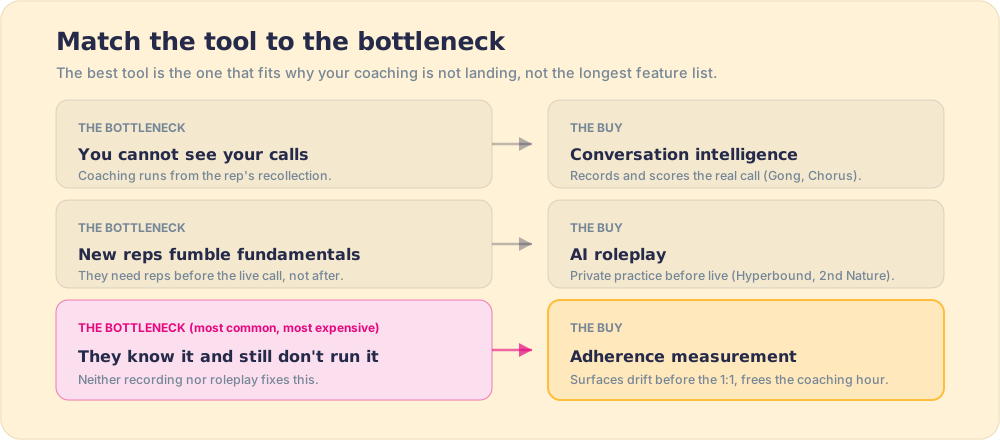
There is a cleaner way to sort the three than feature lists, and it is the line between inputs and outputs. Conversation intelligence and roleplay both improve inputs to coaching: better visibility into the call, more practice before it. Those are necessary, and they are not the output. The output is whether the rep ran the standard on the real deal, and only adherence measurement reports it. A team can pour money into the input tools, give reps perfect call recordings and endless practice reps, and still see no change in what happens on the live pipeline, because knowing the motion and running it are different things separated by the same execution gap that swallows every process. The question to put to any vendor is blunt: does this change what the rep does on the next deal, or only analyze the last one?
These sales coaching tools are complementary as often as competitive; a serious team may run conversation intelligence to see calls, roleplay to build skill, and a business logic layer to free the coaching hour. The mistake is buying any of them expecting it to do the manager’s job. The aim of a sales coaching platform is to give the human more time and better evidence for the acts only a human can do.
Does sales coaching software replace the manager?
The biggest promise in the category right now is that AI will do the coaching itself, that a model can listen to a call, score it, and hand the rep a development plan without a human in the loop. Grant the strong version of the claim its due, because the technology is real. AI can transcribe and score a conversation, flag a missed discovery question, and run a roleplay that feels close enough to a buyer to be useful. Those are real acts, and a few years ago they were science fiction.
The promise breaks on what coaching is. Coaching is behavior change, and feedback delivery is only a small part of it. Behavior change has three parts a model cannot do well. It requires seeing the one blind spot the rep cannot see in themselves, which takes a human who knows this rep, not a generic rubric applied to a transcript. It requires deliberate practice on a single habit at a time, chosen because it is the constraint on this person’s growth, not because it scored low on a checklist. And it requires reinforcement on the next real deal, the follow-through that turns a noted weakness into a changed motion, which lands only when a trusted human keeps returning to it. Anders Ericsson, whose research on deliberate practice underpins the whole field, was explicit that the gains come from a coach designing targeted practice against an individual’s specific weakness, not from volume of feedback (Ericsson on deliberate practice). A model can generate feedback at infinite scale. It cannot want this rep to get better, and the wanting is half of what makes coaching land.
So the role of software is narrower and more valuable than the marketing. It removes the inspection burden, the hours of reconstruction, so the scarce human time goes to the acts only a human can do. A tool that claims to replace the coach is selling the wrong thing, and a tool that frees the coach is selling the thing the data says moves the number.
What we recommend
Choose sales coaching software by the bottleneck, and weight your spend toward the tool that removes the inspection burden. Conversation intelligence and roleplay are worth owning, and they improve the inputs to coaching, visibility and practice, rather than the constraint itself, which is a manager’s time. If your coaching is sparse, ask why. Almost always, managers have no time, because inspection eats it. So the highest-return purchase is the one that automates inspection and hands the hour back. Buy the tool that frees the coach, not the one that claims to replace them, because the acts that change behavior are still human.
From here: the full method in the sales coaching guide, the conversation-intelligence category in conversation intelligence, the AI roleplay job in AI sales coaching, and the inspection system underneath in sales process adoption.
Frequently asked questions
What is sales coaching software?+
What is the best sales coaching software?+
Does sales coaching software replace the manager?+
How do you choose sales coaching software?+
Your process, running itself.