Gong Alternatives, Chosen by the Job You Are Solving
Gong is the conversation intelligence leader, and a premium one. Here are the real alternatives grouped by the job you are trying to solve, with an honest verdict on when to stay and when a different category fits.
Gong alternatives are the tools teams weigh when Gong's price or scope outgrows the job they need done, and the right pick depends on whether the job is cheaper call analysis, a consolidated stack, or changing what reps do in the moments that decide deals.
Start with a fair word about Gong, because an alternatives list that opens by trashing the leader is selling, not helping. Gong is the best conversation intelligence platform on the market. It records calls, analyzes them, and turns the contents of every sales conversation into searchable, coachable, forecastable data, at a depth no one else matches. If your problem is that your calls are a black box, Gong solves it, and it is worth its price for teams whose constraint is genuinely call visibility.
Gong alternatives are the tools teams weigh when Gong’s price or scope outgrows the job they need done, and the right pick depends on whether the job is cheaper call analysis, a consolidated stack, or changing what reps do while the deal is still being decided. That last branch is the one most alternatives lists miss, and it is the one where switching to a cheaper Gong is the wrong move entirely.
Why do teams look for a Gong alternative?
Two reasons dominate, and only one is about conversation intelligence at all.
The first is price and scope. Gong is the premium product, built and priced for substantial deployments. A smaller or mid-market team often finds it heavier and more expensive than the job requires, and goes looking for something that records and analyzes calls without the enterprise price tag. That is a legitimate fit question with clean answers. Before switching on cost alone, it is worth knowing what Gong actually costs in 2026, including the AI credit meter it introduced in June, because a well-negotiated Gong lands a long way below its opening quote.
The second is deeper, and it is the one worth getting right. A team buys conversation intelligence expecting it to lift performance, watches the dashboards fill with insight, and finds that reps still do not run discovery the way the best rep does, still skip the qualification step, still let deals drift. The calls are visible now, beautifully so, and behavior has not moved. That is not a Gong failure; it is a category limit. Conversation intelligence analyzes the call after it ends. It does not act while the deal is still live.
What are the best Gong alternatives, by job?
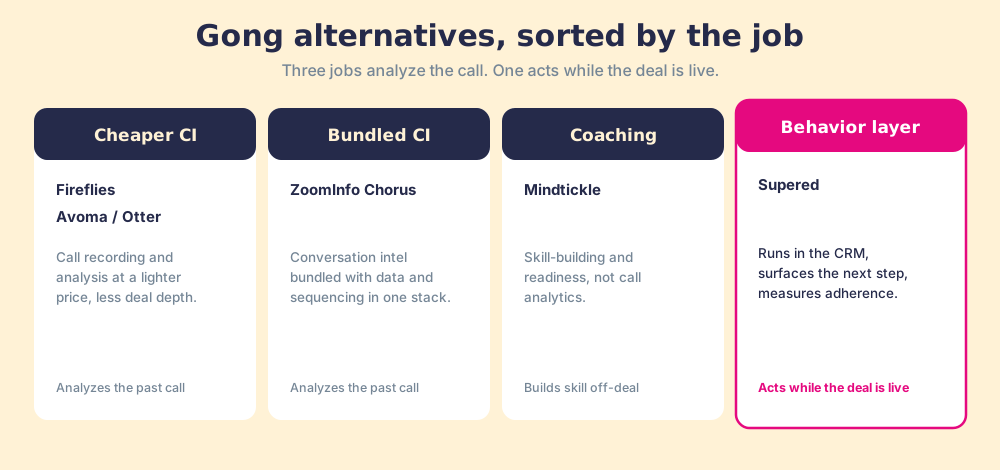
The honest way to choose is by the job, because the gong competitors worth weighing do genuinely different things.
| Alternative | Job it does | Where it fits vs Gong |
|---|---|---|
| Fireflies / Avoma / Otter | Lighter conversation intelligence | Cheaper call recording and analysis, less deal depth |
| ZoomInfo Chorus | Bundled conversation intelligence | Sensible if you already run ZoomInfo |
| Mindtickle | Training and coaching | Readiness and skill, not call analytics |
| Supered | Process adoption in the CRM | A different category: acts in the moment, measures adherence |
If the job is cheaper call analysis, Fireflies and Avoma are the credible lighter options; a Gong alternative chosen on cost is a fair trade for a smaller team that wants transcripts and basic analysis without enterprise depth. If the job is stack consolidation and you already run ZoomInfo, ZoomInfo Chorus is the natural pick, covered in the Gong vs Chorus comparison. If the job is coaching and readiness, Mindtickle does skill-building, not call intelligence. And if the job is adoption, getting reps to run the process and seeing whether they did, that is a different category, and a content or call tool will not do it.
Why the real Gong alternative is a different job
There is a piece of economic theory that explains this whole list better than any feature table, and it comes from Clayton Christensen. His framework of jobs to be done says customers do not buy products, they “hire” them to do a job, and his theory of disruption adds a second law: once a job is done well enough that the improvements outrun what customers can use, the product overshoots, the job commoditizes, and the differentiation, and the profit, migrate to the next unsolved job up the chain (on jobs to be done). Watch that happen to conversation intelligence in real time. Gong did the “see the call” job so completely that free notetakers and cheap tools now do a good-enough version of it. That job is commoditizing, which is exactly why a list of cheaper alternatives exists at all.
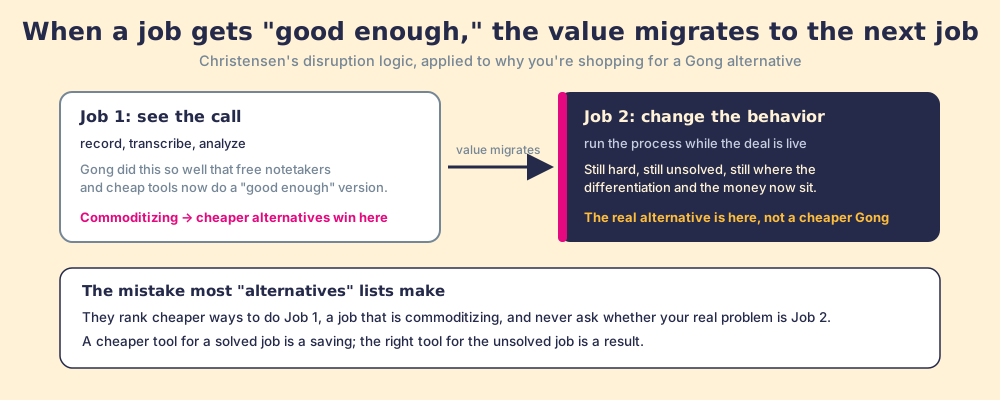
The mistake nearly every Gong-alternatives list makes follows from missing this: it ranks cheaper ways to do a job that is already good enough, and never asks whether your actual job is the next one up. A cheaper tool for a solved job is a saving; the right tool for the unsolved job is a result. So the sharper question is not “what is a cheaper Gong” but “is my problem Job 1 or Job 2.”
When is the problem behavior, not call analysis?
Worth noting before the mechanism: in 2026, Gong itself is making moves into this adjacent territory. The company hit a $500 million annual revenue run rate and launched “Mission Andromeda,” adding an AI coaching chatbot and open Model Context Protocol integrations, repositioning itself as a Revenue AI OS rather than a pure conversation intelligence platform (Ctech, Gong $500M ARR). Gong also acquired RightBound to add account and contact data signals. These moves tell you something true about the category: even the leader knows that analyzing the past call is not the whole job. Watch where the market is expanding, not where it is.
Here is the mechanism behind the disappointment, because it explains why a cheaper Gong fixes nothing when the real issue is behavior. Conversation intelligence produces information, and the bottleneck on most teams is not information; it is action in the moment. Our research found teams whose enablement reached reps in the flow of work hit quota at 49 percent versus 15 percent for those whose tools sat in separate destinations (The State of Sales Enablement). A platform you review after the call is, structurally, a separate destination. It tells the manager what went wrong yesterday. It does not put the right next step in front of the rep today.
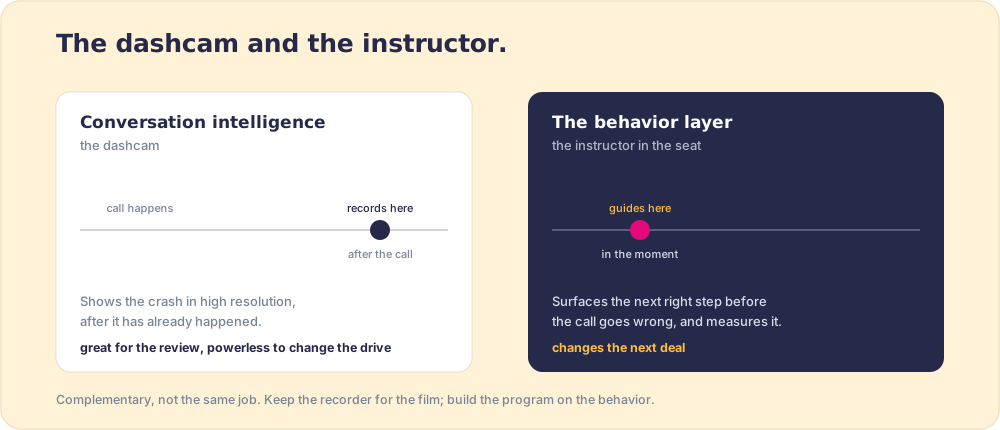
This is the category we build. A behavior layer like Supered runs inside HubSpot and Salesforce, surfaces the next right step and the right play in the moment of the deal, and measures whether reps run the process. It does not replace conversation intelligence; it does the job conversation intelligence cannot, which is changing the live deal rather than analyzing the dead one. On G2, Supered holds a high score on a smaller, newer base than Gong, the signature of a younger, more focused product.
The verdict: which Gong alternative, and when to stay
- Gong itself. The right call when your binding constraint is call visibility and deal analytics, you run at enterprise scale, and the depth justifies the price. It is the best at that job, and trading down to solve a problem you do not have is motion, not progress.
- A lighter conversation intelligence tool (Fireflies, Avoma). The pick when you want call recording and analysis at a smaller-team price and can trade away enterprise deal intelligence.
- ZoomInfo Chorus. Worth it when consolidating on the ZoomInfo stack beats best-of-breed analytics.
- A behavior layer like Supered. The answer when your real problem is that reps do not follow the process in the moments that decide deals, and reviewing calls has not changed it. That is a different category, and it is the one where a cheaper Gong would change nothing.
The throughline: the best Gong alternative is not a cheaper Gong. It is the tool matched to the job you are trying to do. If that job is seeing your calls, buy the conversation intelligence tool that fits your budget. If that job is changing what reps do while the deal is live, buy the one that acts in the moment.
From here: the head-to-head in Gong vs Chorus, the category in best conversation intelligence software, the full field in the best sales enablement tools, and the behavior problem underneath in sales process adoption.
Frequently asked questions
What are the best Gong alternatives?+
Why do teams look for a Gong alternative?+
Is there a cheaper alternative to Gong?+
What is the difference between Gong and Supered?+
Your process, running itself.