The 30-60-90 Day Sales Plan: A Template Is Not a Ramp
Everyone builds a 30-60-90 day sales plan and few reps run one. Here is the template, the day-30/60/90 gates, and the loop that turns the document into a faster ramp.
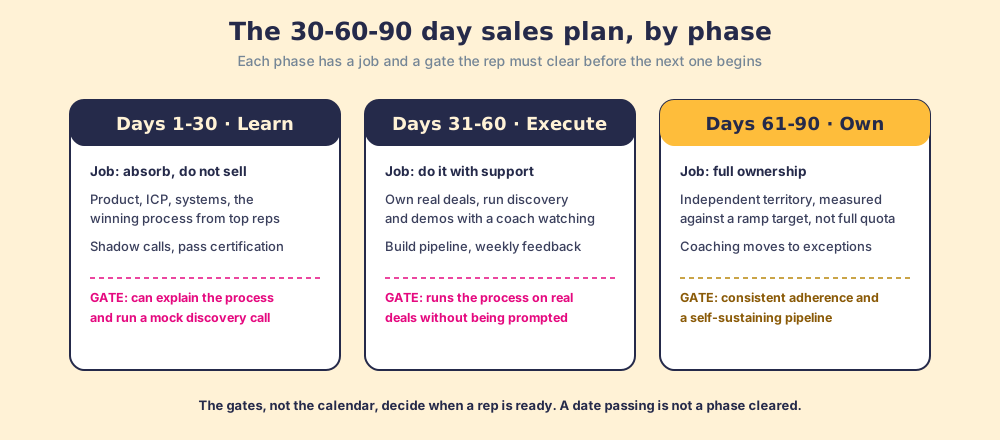
A 30-60-90 day sales plan is a written onboarding roadmap that sets what a new sales rep should learn, do, and own across their first 30, 60, and 90 days, and it shortens ramp only when the plan is inspected and reinforced in the flow of work rather than filed and forgotten.
Nearly every sales manager can produce a 30-60-90 day plan for a new hire, much as a traveler can produce a map, right up to the moment you ask when they last opened it. The plan gets built in a burst before the rep starts, lives in a shared doc or a slide, and is rarely read again once the rep is in the building. Then, three months later, the rep is behind, and everyone is surprised. The plan was fine. It was the running of it that never happened.
A 30-60-90 day sales plan is a written onboarding roadmap that sets what a new sales rep should learn, do, and own across their first 30, 60, and 90 days, and it shortens ramp only when the plan is inspected and reinforced in the flow of work rather than filed and forgotten. That second clause is the part most templates skip. This post gives you the template, phase by phase, with the gate for each. Then it gives you the part the template roundups leave out: why the document alone changes almost nothing, and what turns 90 days of good intentions into a rep who ramps.
What is a 30-60-90 day sales plan?
It is a roadmap that breaks a new rep’s first three months into three phases, each with a job. The first 30 days are for learning, the next 30 for executing with support, and the last 30 for owning the work. The structure is old and sound, borrowed from Michael Watkins’ onboarding research in The First 90 Days, which found that the transition period is where new hires either build momentum or slip behind, and that a deliberate plan for it changes the outcome (Watkins, Harvard Business Review).
The phases matter because ramping a seller is not one task; it is three, and they come in order. A rep cannot execute what they have not learned, and cannot own what they have not executed under supervision. Skip a phase and you get the two most common ramp failures: the rep thrown onto real deals in week two who burns your pipeline learning in public, or the rep still shadowing calls in month three because nobody ever handed them the wheel.
What goes in each phase of a 30-60-90 day sales plan?
Here is the template. Treat every phase as a column with three rows: the goal, the activities, and the one gate that says the rep is ready for the next phase.
Days 1-30, Learn. The job is absorption, and the rep should not be carrying a real number yet. Load the things that only exist inside your company: the product deep enough to demo, the ideal customer and why they buy, the tools and where data lives, and above all the winning process as your best reps run it. Activities are certification, call shadowing, mock discovery, and territory setup. The gate is not “30 days passed.” It is that the rep can explain the process in their own words and run a scored mock discovery call. If they cannot, more calendar will not fix it.
Days 31-60, Execute. The rep now does the work with a coach in the passenger seat. They run live discovery and demos, own a starter set of real deals, and get weekly feedback on recorded calls and deal reviews. This is where the sales onboarding program earns its keep, because behavior is built by doing under supervision, not by watching. The gate is that the rep runs the full process on real deals without being prompted. When you stop having to remind them to send a recap or set a next step, they have cleared it.
Days 61-90, Own. The rep takes the territory. They run complete deal cycles, keep their pipeline clean in the CRM, and forecast their own number, while coaching narrows to exceptions. The gate here is the subtle one, and getting it wrong is the most common mistake in the whole plan: it cannot be “hit full quota,” because they will not be fully productive yet. The gate is consistent adherence to the process and a pipeline that sustains itself.
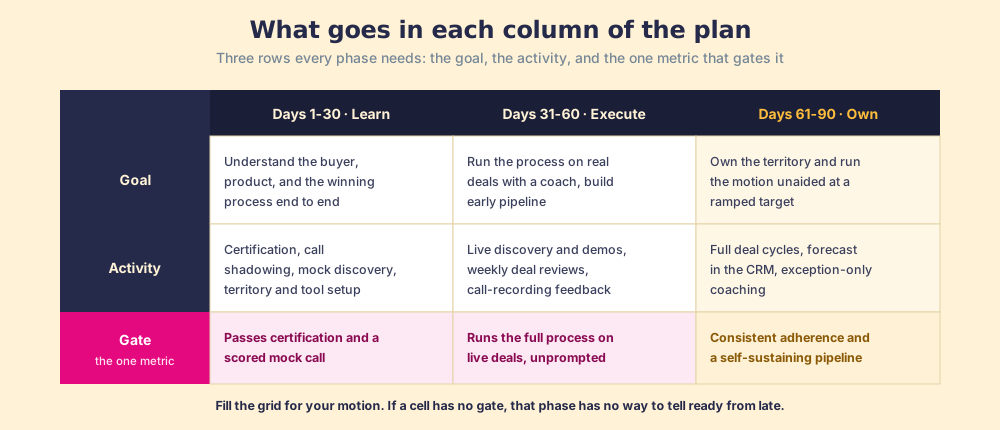
The three gates, stated in one line each, are the whole plan in miniature:
- Day 30, Learn. The rep can explain your process in their own words and pass a scored mock discovery call.
- Day 60, Execute. The rep runs the full process on real deals without being prompted, not just when a manager is watching.
- Day 90, Own. Consistent process adherence and a pipeline that sustains itself, the gate set on adherence rather than full quota.
What quota should a new rep carry across the 90 days?
Less than full, and set to your sales cycle, because the plan ends before the ramp does. The Bridge Group’s repeated studies of SaaS inside-sales orgs put average new-rep ramp in the range of four to five months before a rep is fully productive, and longer for complex or enterprise motions (The Bridge Group, SaaS Inside Sales reports). A 90-day plan closes at month three. So the rep crosses the finish line of the plan a month or two before they cross the finish line of ramp, and any plan whose final gate is full quota attainment is measuring the rep against a clock that has not run out.
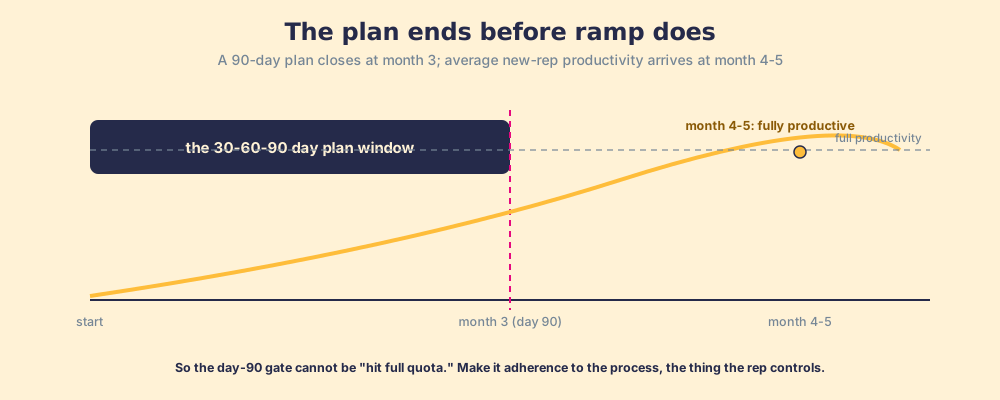
This is why the day-90 gate should be adherence, not revenue. Adherence is the thing the rep controls this quarter; a closed deal depends on buyers and cycles that have not had time to mature. A ramped quota schedule that climbs across the first months toward full attainment in month four or five, matched to your deal length, keeps the target fair without punishing a rep for the calendar. And it sets up the real measure of ramp, which is not time-to-completion of the plan but time-to-adoption of the process. We make that case in full in sales ramp time: ramp is a behavior-acquisition curve, and you shorten it by moving the moment a rep becomes capable, not by adding weeks of content.
Why do most 30-60-90 day sales plans fail?
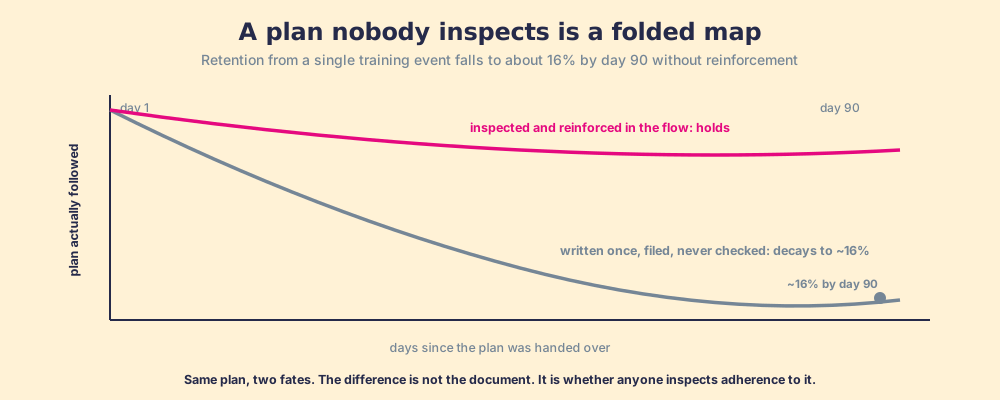
Because the plan is treated as a thing to write, then filed, and a document nobody reopens is a folded map. The failure is rarely in the content of the plan. It is that the plan is front-loaded, handed over on day one, and never inspected again. Information delivered up front and left unreinforced decays fast: a much-cited application of Hermann Ebbinghaus’ forgetting curve to sales training puts retention from a single event at roughly 16 percent after about 90 days (Sales Performance International on the Ebbinghaus curve). A plan handed to a rep in week one and never revisited follows the same curve. By the phase where it should be steering the rep, it is gone.
You might say the answer is a better-written plan, more detailed, more thorough. Fair, and a vague plan is worse than a sharp one. But detail is not the constraint. A rep does not fail the plan because it lacked a bullet; they fail it because no one was checking, week by week, whether the behavior in the plan was happening at all. This is the oldest rule in running any process: you can only expect what you inspect. A plan without inspection is a wish with dates on it. The same execution gap that swallows a mature team’s sales process swallows a new rep’s onboarding plan, and for the same reason. We cover the mechanism at length in the sales execution gap.
There is a deeper reason the writing feels like the work when it is not. Writing the plan is visible, finite, and satisfying; it ships on Monday. Inspecting adherence every week for 90 days is invisible, unfinished, and easy to drop when the quarter gets loud. So managers do the part that feels like progress and skip the part that is the progress. The rep gets a beautiful plan and no follow-through, then gets blamed for falling behind. That blame is misplaced. When a new rep drifts off the plan, it is almost always because the system around them let the plan go dark, not because the rep was lazy. The fix is to the system, not the person.
How do you make a 30-60-90 day plan the rep actually runs?
Run a loop in every phase instead of shipping a document once. The structure that turns a static plan into a real ramp is the same behavior loop that drives sales process adoption: Expect, Equip, Measure, Reinforce. Set the expectation for the phase and the gate that clears it. Equip the rep by surfacing the next step on their real deal, in the moment they need it, so the standard reaches them while the work is in motion rather than in a slide they read in week one. Measure whether the behavior happened, deal by deal, not whether the date passed. Then reinforce: coach the gap, space the practice over the phase, and raise the gate.
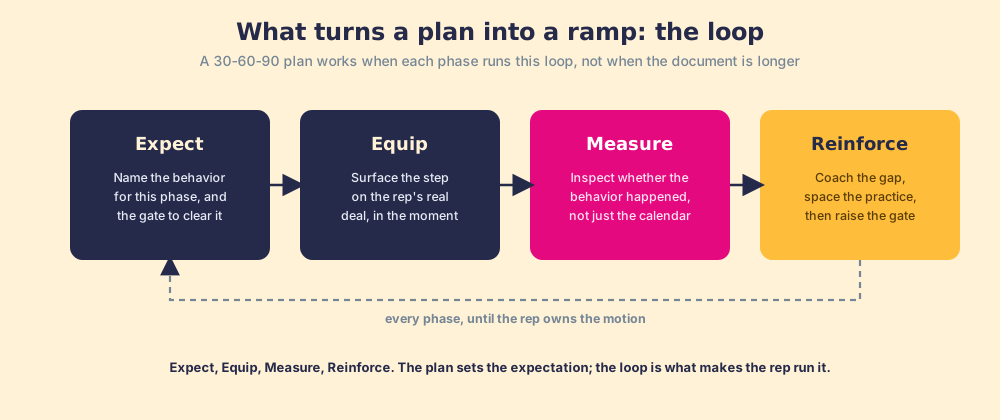
The mechanism behind why this works is transfer of training. Researchers Timothy Baldwin and Kevin Ford showed that training produces results only when it transfers to the job, and transfer depends on reinforcement in the work environment, not on how much material was taught (Baldwin and Ford, on transfer of training). A 30-60-90 plan read in week one is training with no reinforcement, the exact condition under which transfer fails. The same plan, with each behavior surfaced and inspected as the rep runs a real deal, is training with reinforcement built in, and it transfers. This is why the coaching cadence matters as much as the plan itself; a good sales coaching plan is what keeps the loop running for all three phases.
What we recommend
Build the 30-60-90 day sales plan, because the structure is right: learn, then execute with support, then own, with a real gate at each 30-day mark and a ramped quota matched to your sales cycle rather than a full number the calendar cannot support. But do not mistake writing it for running it. The template is the easy tenth of the job. The other nine tenths is the weekly inspection and reinforcement that most plans never get, and its absence, not a missing bullet, is why so many ramps stall at a plan everyone admired and no one ran.
So do the thing the roundups skip. Turn each phase into a loop: set the expectation and its gate, surface the step on the rep’s real work, inspect whether the behavior happened, and coach the gap before you advance. Measure ramp as time-to-adoption of the process, not time-to-completion of the plan. Do that, and the plan stops being a folded map in a drawer and starts moving a new rep from day one to a full desk.
From here: the wider program in sales onboarding, the ramp mechanics in sales ramp time, the coaching cadence in sales coaching plan, and the adherence engine in sales process adoption.
Frequently asked questions
What is a 30-60-90 day sales plan?+
What should a new sales rep accomplish in the first 30, 60, and 90 days?+
What quota should a rep carry during the 90-day ramp?+
Why do most 30-60-90 day sales plans fail?+
How is a 30-60-90 day sales plan different from a sales onboarding plan?+
Your process, running itself.