AI Sales Training: A Better Practice Room Is Not the Win
AI sales training is sold as a tireless roleplay partner and an automatic call grader.
Both are real gains. Neither touches the moment a buyer is in front of the rep, which is where training becomes behavior or fades. Here is what the science says, and how to choose.
AI sales training is the use of artificial intelligence to build and sharpen selling skill: roleplay rehearsal before calls, automatic scoring of recorded calls after, and prompting the trained next action while a deal is live and measuring whether the rep took it.
Every few years a new tool arrives that promises to fix sales training, and the promise always has the same shape. This time the tool is AI, and the pitch is intoxicating: a roleplay partner that never tires, never judges, and runs a rep through a hundred discovery calls before lunch, then an AI that listens to every real call and grades it while the rep sleeps. It is a good pitch. The roleplay is genuinely useful. The scoring is genuinely useful. And if you buy AI sales training believing the practice is the point, you will have bought a beautiful simulator and watched most of its value drain away before it ever reaches a buyer.
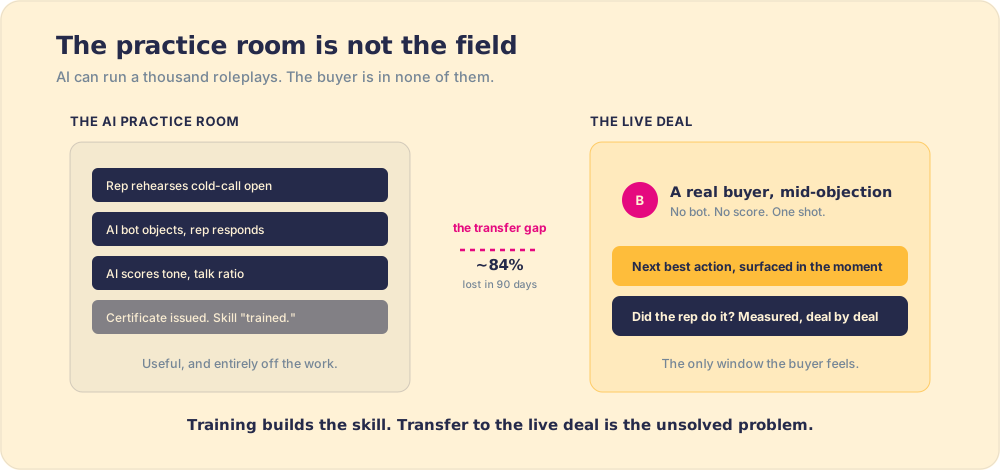
The reason is old, and it has nothing to do with AI. A rep can rehearse a flawless objection-handling sequence on Friday and, on the next live call, reach for the same clumsy answer they have used for years. The skill was built. It did not transfer. That gap, between the trained move in the practice room and the move the buyer gets, is the whole problem AI sales training has to solve, and it is the part most of the category leaves to chance.
What is AI sales training, exactly?
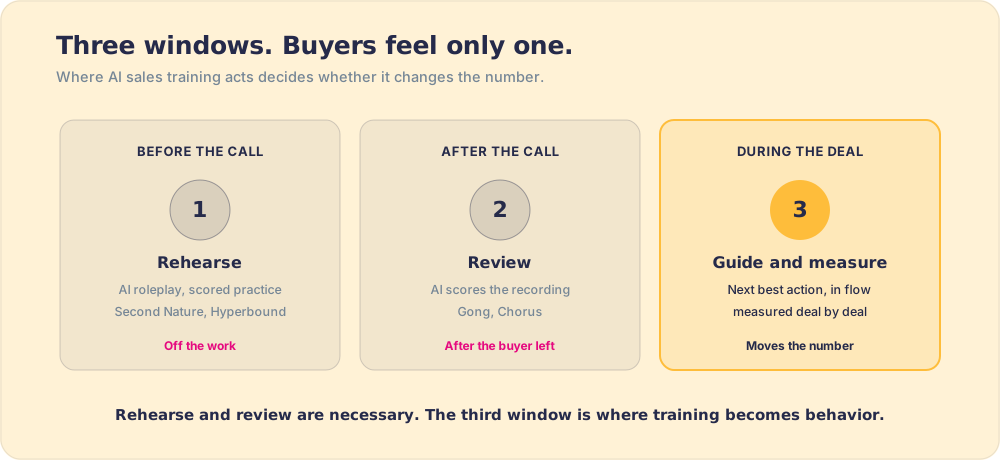
AI sales training is the use of artificial intelligence to build and sharpen how reps sell. Strip away the marketing and it acts in three windows. Before the call, it runs roleplay and rehearsal, the rep practices against a bot that plays a skeptical CFO or a stalling champion. After the call, it reviews the recording and scores it, talk ratios, questions asked, next steps set. And during a live deal, in its strongest and rarest form, it prompts the trained next action and records whether the rep took it.
Hold those three windows in mind, because the entire question of whether AI training works turns on which one a tool lives in. The first two practice off the work. Only the third touches the deal a buyer is in.
The field today is crowded with the first two. Tools like Second Nature and Hyperbound have made AI roleplay genuinely good, a rep can drill a cold open until it is smooth. Conversation-intelligence platforms like Gong and Chorus score real calls after the fact with real rigor. Spekit, the enablement vendor whose blog ranks for this exact search, frames its own answer as a roundup of a dozen such tools. All of it is real progress on rehearsal and review. None of it, on its own, closes the gap we just named.
Why does so much sales training fail to stick?
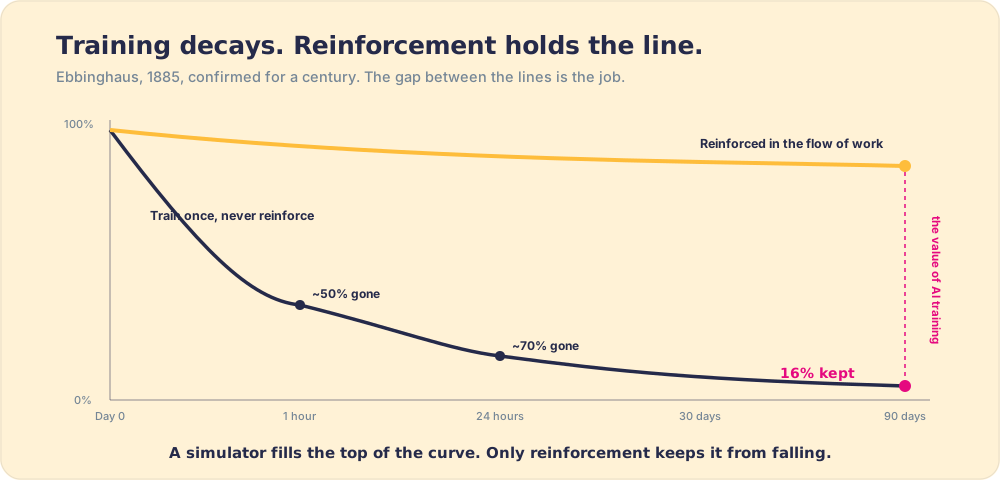
Start with a number the training business rarely says out loud. In 1885 Hermann Ebbinghaus, testing his own memory on nonsense syllables, mapped how fast we forget: steeply at first, then slower. A 2015 replication of his work, published in PLOS ONE, confirmed the curve almost exactly more than a century later (Murre and Dros, PLOS ONE). Ebbinghaus measured memory as savings, the share of the original learning effort you can skip when relearning. In the replication, savings were about 37 percent after an hour and 32 percent after a day. Apply that to a sales kickoff and the implication is bleak: the methodology everyone learned Monday is mostly gone by Wednesday. Industry analyses of sales training specifically, from firms like Sales Performance International, put the loss near 84 percent within 90 days when nothing reinforces it. About 16 percent survives the quarter.
Forgetting is only half of it. The deeper problem is that even remembered training often does not get used, and this has a name. Researchers call it the transfer-of-training problem, and the landmark review is Baldwin and Ford’s 1988 paper in Personnel Psychology, which found that only a small fraction of what organizations train ever shows up as changed behavior on the job. Decades of follow-up work have not moved that finding much. You can know the move and still not make it.
Why? Because a behavior is not a piece of knowledge sitting in a drawer waiting to be retrieved. BJ Fogg’s behavior model, from the Stanford Behavior Design Lab, puts it plainly: a behavior happens only when motivation, ability, and a prompt arrive in the same moment (Fogg Behavior Model). A rep deep in a live deal has the motivation. But the trained skill lives in last month’s memory (low ability now), and nothing in the live call prompts them to use it. So the behavior does not fire, and they fall back on the habit that is already loaded. The practice room gave them ability in the practice room. It gave them nothing at the moment that counts.
Where does AI help in sales training?
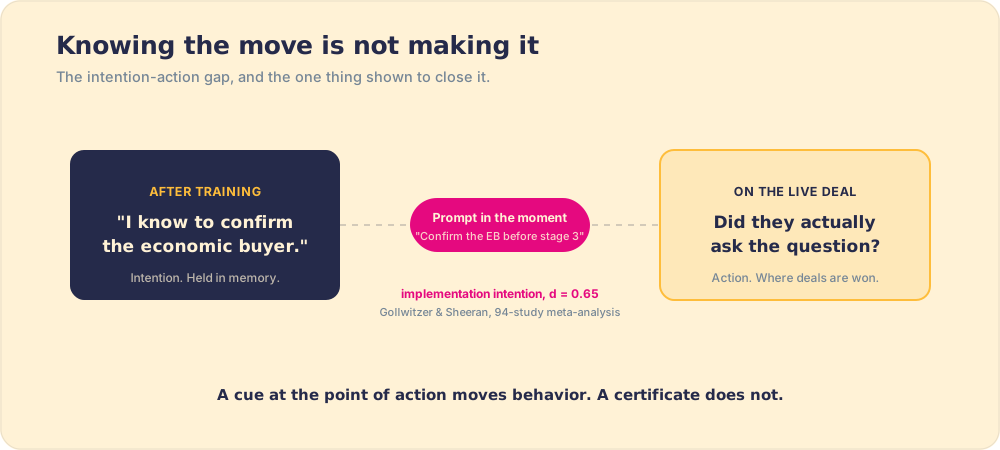
Here is the turn, and it is a hopeful one. What closes the gap is not more practice. It is a cue delivered at the point of action, and on this the science is unusually clear.
Peter Gollwitzer’s work on implementation intentions, plans of the form “when situation X arises, I will do Y,” is some of the most replicated in behavioral psychology. A meta-analysis by Gollwitzer and Sheeran pooled 94 studies and found these point-of-action cues had a medium-to-large effect on whether people did the intended behavior, around d = 0.65 (Gollwitzer and Sheeran, Advances in Experimental Social Psychology). Translated into selling: a rep who has been trained to confirm the economic buyer does it far more often when something says, on this deal, at the right stage, “confirm the economic buyer before you advance,” than when they are merely sent back to their memory of a workshop.
This is where AI earns its keep in training, and it is not where most vendors point it. The roleplay bot is the visible, sellable feature. The decisive one is reinforcement: AI that watches the live deal, knows the process the team agreed to run, and surfaces the trained next action at the moment it is due, then logs whether the rep took it. That is the difference between a line on the forgetting curve that falls to 16 percent and one that holds near the top. Same training. Reinforced or abandoned. This is sales training reinforcement, and it is what holds the curve.
Our own field data lands on the same spot from the other direction. Teams whose process guidance is embedded in the flow of work, in the CRM and the tools reps already use, attained quota at 49 percent. Teams whose guidance sat in documents and separate training tools attained at 15 percent (The State of Sales Enablement). The training content was not the variable. Where and when it reached the rep was.
How should you evaluate AI sales training software?
Once you accept that transfer, not realism, is the binding constraint, the buying criteria reorder themselves. A vendor demo will show you the most lifelike roleplay and the most granular scorecard, because those are the easy things to show. Neither predicts whether a rep changes what they do with a buyer. Judge the tool on four questions instead.
- Does it reinforce in the flow of work? The trained behavior has to be cued inside the tools reps already live in, the CRM, the inbox, the dialer, not in a separate training portal they visit once a quarter. Reinforcement that requires a tab switch is not reinforcement.
- Does it prompt the next best action in the moment? Not a monthly digest of what they did wrong. A cue at the point of action, while the deal is live, which is the mechanism the 94-study meta-analysis says moves behavior.
- Does it measure whether the rep did it? You cannot improve adherence you cannot see. The tool should show whether the trained move happened on a given deal, so a manager coaches from fact, not from a guess.
- Does it sit behind an adopted process? AI amplifies whatever process you already run. Point it at a motion the team has not agreed to and it scales the confusion. Get the behavior right first, then let AI compound it.
Notice what drops down the list: roleplay fidelity, the breadth of the scoring model, the size of the scenario library. Those are the floor. They make a fine practice room. They do not, by themselves, get the rep to do the trained thing when a real buyer pushes back.
What should you buy?
Three real paths exist, and they lead to different rooms.
- Buy a roleplay-first tool, to drill raw skill. If your reps are new and need reps at bat, an AI sales role play platform builds the hands fast, the way a simulator builds a pilot’s. Pair it with structured sales onboarding and it earns its place. Just know you have bought practice, and practice alone fades on the curve above.
- Buy a review-first tool, to see the calls. If your gap is visibility into what reps say, conversation intelligence scores every call and surfaces patterns. Valuable, and still after the fact: it tells you what already happened with a buyer who has already left the room.
- Buy for reinforcement, and govern the behavior. Judge each tool on whether it cues the trained action in the moment, measures whether the rep took it, and rides behind a process your team has adopted. This is the harder thing to evaluate and the one the science ties to behavior change.
Our recommendation is the third path, and it is a recommendation, not a shrug. Rehearsal and review are real and worth owning. But the evidence, from Ebbinghaus to Baldwin and Ford to Gollwitzer, all says the same thing: skill built off the work decays unless something reinforces it on the work. So shortlist on roleplay and scoring if you like, then break the tie on the one criterion the demos under-sell, does the trained behavior get cued and counted while the deal is live.
That is the principle behind what we build at Supered. Rather than a training app reps visit, Supered is the Business Logic Layer: it surfaces the trained next action in the moment a rep is working the deal, inside HubSpot, Salesforce, Gmail, and the other tools where the work already happens, and it measures whether they did it. The mechanism is general, though, and it holds whichever vendor you choose: training becomes behavior only when it reaches the rep at the point of action and someone can see that it landed.
From here, go a layer deeper on the part that does the real work: the difference between AI sales coaching’s three windows, why adoption, not completion, is the metric that matters, and how the whole picture fits together in our guide to sales training software. When you want to see reinforcement in the flow of work on your own process, book a demo. The practice room is the easy part. Getting the trained move onto a live call is the work.
Frequently asked questions
What is AI sales training?+
Does AI sales training work?+
What is the difference between AI sales training and AI sales coaching?+
What should you look for in AI sales training software?+
Will AI replace sales trainers and managers?+
Your process, running itself.