Sales Coaching Techniques: The One Move Underneath All of Them
Most sales coaching technique lists are a bag of tricks.
The ones that work share a single mechanism, named by a tennis coach in 1974, and it is the opposite of what 'coaching' usually means.
Sales coaching techniques are the specific methods a manager uses to improve how a rep sells, and the effective ones all rest on a single mechanism: drawing the answer out of the rep with questions rather than supplying it, so the rep owns the change and acts on it.
Open any “sales coaching techniques” article and you get a list: active listening, role-play, call reviews, the feedback sandwich, ride-alongs, scorecards. It reads like a toolbox, as though coaching were a matter of owning enough tools and reaching for the right one. That framing is why so much coaching changes so little. The techniques that work share a single mechanism, and once you see it, you can stop collecting techniques and start running the one that matters.
Coaching is not a soft nicety. CSO Insights, the research arm now inside Korn Ferry, has tracked the link between coaching and results for years and found that when coaching is run as a formal, monitored discipline rather than left to a manager’s mood, win rates and quota attainment rise several points above teams that leave coaching informal (CSO Insights / Korn Ferry, sales effectiveness research). The lift is real. What this post argues is that the lift comes from one specific move buried inside the good techniques, and that most of the toolbox misses it.
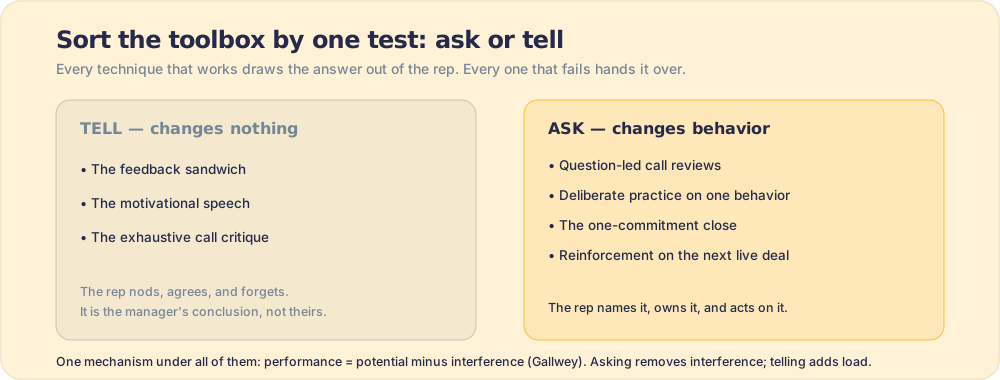
Sales coaching techniques are the specific methods a manager uses to improve how a rep sells, and the effective ones all rest on a single mechanism: drawing the answer out of the rep with questions rather than supplying it, so the rep owns the change and acts on it. Hold that distinction, ask versus tell, because it sorts every technique on every list into the ones that work and the ones that feel like work.
What is the mechanism underneath the good techniques?
A coach named it more than fifty years ago, and not a sales coach. In 1974 the tennis coach Timothy Gallwey published The Inner Game of Tennis and proposed an equation that rewired how performance coaching is understood: Performance equals Potential minus Interference (Gallwey, The Inner Game of Tennis, 1974). His radical claim was that a player already has more capability than they express, and the coach’s job is not to pour in more technique but to remove the interference, the self-doubt, the over-thinking, the attention pointed at the wrong thing, that sits between the potential and the performance. He got players to improve by asking them where the ball was, not by telling them how to swing.
That insight became the most-used coaching framework in the world. John Whitmore, who studied with Gallwey, turned it into the GROW model in Coaching for Performance: Goal, Reality, Options, Will, run as a sequence of questions rather than instructions (Whitmore, Coaching for Performance, 1992). The rep names the goal, describes the reality, generates the options, and commits to the will, and because each step is the rep’s own answer, the plan is the rep’s own plan. The manager never supplied a single instruction, and the rep leaves with a conclusion they will act on because they reached it.
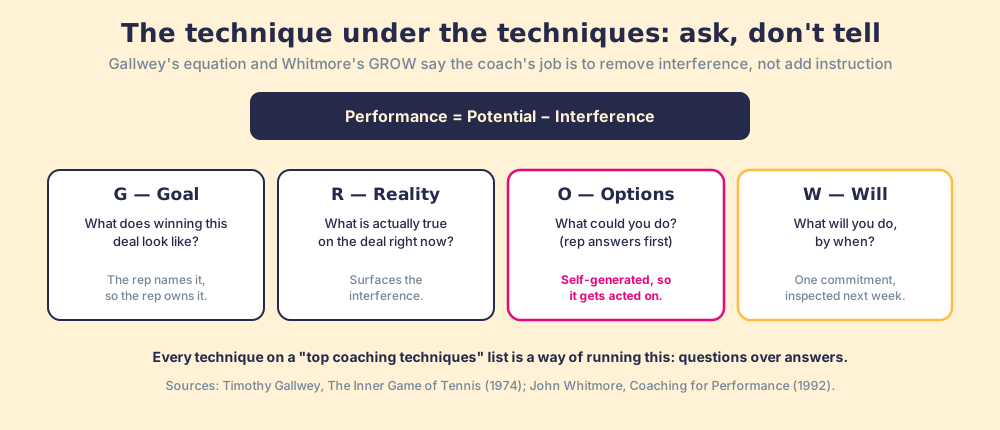
So the single most common coaching technique fails, reliably. The manager watches a call and then narrates everything they would have done differently. It is pure telling. The rep hears a list of corrections, agrees with all of them, and changes none, because none of them is theirs. It also adds instruction the rep cannot use: a person mid-deal under pressure cannot run a manager’s twelve-point critique from memory. Telling adds load; asking removes interference. The good techniques all do the second thing.
Which sales coaching techniques change behavior?
Sort the toolbox by whether the technique draws the answer out of the rep or pushes it in, and the keepers are obvious.
- Question-led call reviews. Watch the real call together, then ask: “If you ran that again, what is the one thing you would change?” The rep almost always knows, and a conclusion they voice beats one you deliver.
- Deliberate practice on one behavior. Anders Ericsson’s research is unambiguous that skill is built by focused repetition of one specific weakness with immediate feedback, not by reviewing a dozen things at once (Ericsson, in HBR). Pick the single habit that moves the most pipeline and work only that.
- The one-commitment close. End every session with a single, specific thing the rep will do by a named date, the “Will” of GROW. A session without a committed action is a pleasant conversation that changes nothing.
- Reinforcement on the next live deal. The lesson has to resurface while the rep is working a real deal, before it decays, which a weekly cadence anchored to live deals provides and a quarterly review cannot.
The feedback sandwich, the motivational speech and the exhaustive call critique are missing from that list on purpose. They are telling techniques, and telling does not transfer. The whole discipline is covered in the sales coaching guide and the cadence in sales coaching.
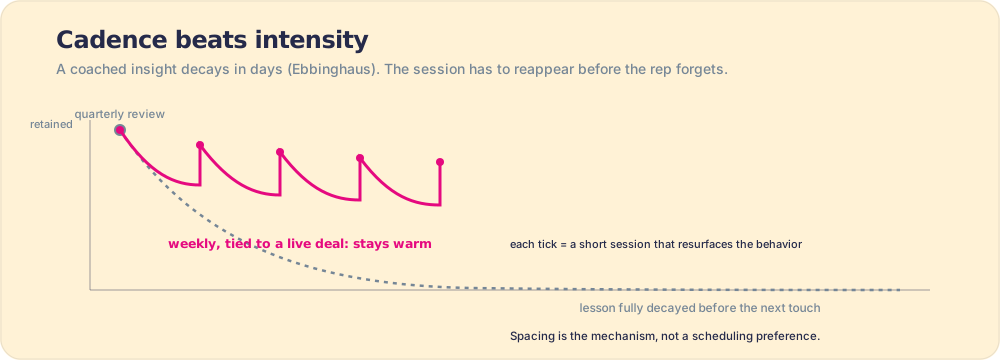
Reinforcement is where well-intentioned coaching leaks away. Hermann Ebbinghaus, mapping memory in the 1880s, showed that without reinforcement people forget a striking share of new material within days, the curve that bears his name (Ebbinghaus, the forgetting curve). A brilliant insight a rep reaches in the 1:1 is mostly gone by the hard call three days later unless something resurfaces it in between. A quarterly coaching review changes so little because its cadence is slower than the decay. The effective sales coaching methods are weekly and tied to live work for one reason: the lesson has to reappear while it is still warm and while the rep can use it on a real deal. Spacing is not a scheduling preference. It is the only way a coached behavior survives contact with the week.
What separates effective sales coaching from telling reps what to do?
The urge to tell has a name worth knowing, because naming it is half the cure. The coach Michael Bungay Stanier calls it the advice monster, the reflex, the instant a rep describes a problem, to leap in with the answer you already have. It feels like help, it is faster than asking, and it is the single habit that makes coaching techniques fail. Stanier’s method in The Coaching Habit is one instruction, repeated: stay curious a little longer before you rush to fix. The same correction lands completely differently depending on which path it travels.
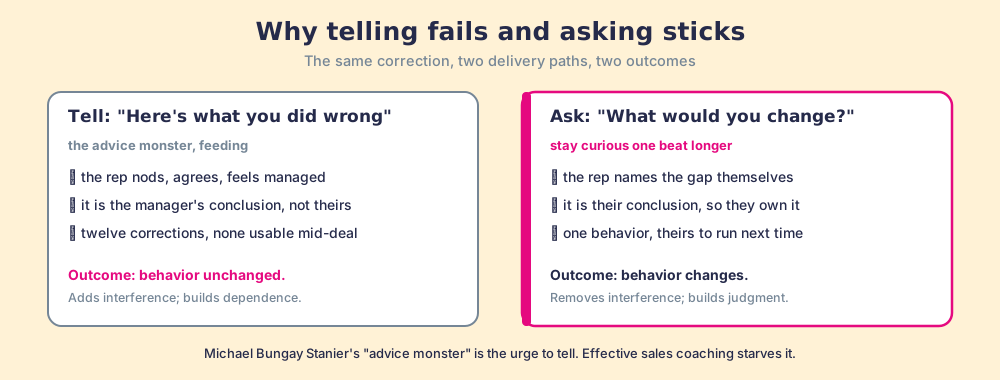
The sales coaching methods that work all rest on this, and so do coaching techniques for sales in general: a technique is effective to the degree it makes the rep do the thinking. Effective sales coaching means a manager disciplined enough to stay silent until the rep gets there. A manager being smarter out loud teaches the rep to wait. The silence is the skill, and the size of the toolbox matters far less.
There is a structural reason managers default to telling, and it is not laziness. Inspecting every rep’s deals by hand, hunting through the CRM for where each one drifted, eats the hours a manager would otherwise spend asking good questions. So the manager walks into the 1:1 cold, sees a problem, and does the fast thing: hands over the answer. Demanding more willpower from a manager who is out of time fixes nothing. Lift the inspection burden instead, so the human time goes to the asking. When the manager already knows, before the session, where this rep diverged from the standard, the whole hour can be spent on the one move that works, the question that leads the rep to see it themselves. Inspection and coaching are not rivals for the manager’s attention; automate the first and you free the second.
What we recommend
Stop shopping for more sales coaching techniques and master the one move underneath the good ones: ask, do not tell. Run a short weekly session on the GROW structure, anchored on one behavior and real call evidence, and end on one committed action you inspect the following week. Use deliberate practice to build the skill and reinforcement to make it stick, deal by deal. The reason this beats the bag-of-tricks approach is not style; it is mechanism. Gallwey showed that performance is potential minus interference, and telling a rep what to do adds interference while asking removes it. A manager who asks builds a rep who can think on their feet without them. A manager who tells builds a rep who waits to be told, which is the opposite of what coaching is for.
From here: the full discipline in the sales coaching guide, the cadence in sales coaching, the questions that do the work in one-on-one meeting questions, and the standard underneath it in sales process adoption.
Frequently asked questions
What are the most effective sales coaching techniques?+
What is the GROW coaching model?+
Why is asking better than telling in sales coaching?+
How do you coach a sales rep without micromanaging?+
Your process, running itself.