Sales Meeting Ideas: Most Sales Meetings Are a Tax. Here Is How to Earn the Time
Sales meeting ideas usually mean ways to fill the slot.
The research on meetings says the slot itself is the problem: most are a status broadcast that one email would replace. Here is what to run instead.
Sales meeting ideas are formats for the recurring time a sales team spends together, and the useful ones replace the status broadcast (which an email could carry) with the few things a meeting uniquely does well: coaching, decision-making, and building the shared standard.
Search “sales meeting ideas” and you get a hundred ways to fill the slot: icebreakers, themes, guest speakers, games. The premise underneath all of them is that the meeting is a fixed fact and the only question is how to dress it up. The research on meetings says that premise is the problem. The recurring sales meeting, in its usual form, is one of the most expensive and least productive rituals a company runs, and dressing it up does not fix it. The better ideas start by asking what a meeting is uniquely good for, and ruthlessly moving everything else out of the room.
Sales meeting ideas are formats for the recurring time a sales team spends together, and the useful ones replace the status broadcast (which an email could carry) with the few things a meeting uniquely does well: coaching, decision-making, and building the shared standard. The slot is not sacred. What goes in it decides whether the hour pays for itself.
Why are most sales meetings a tax?
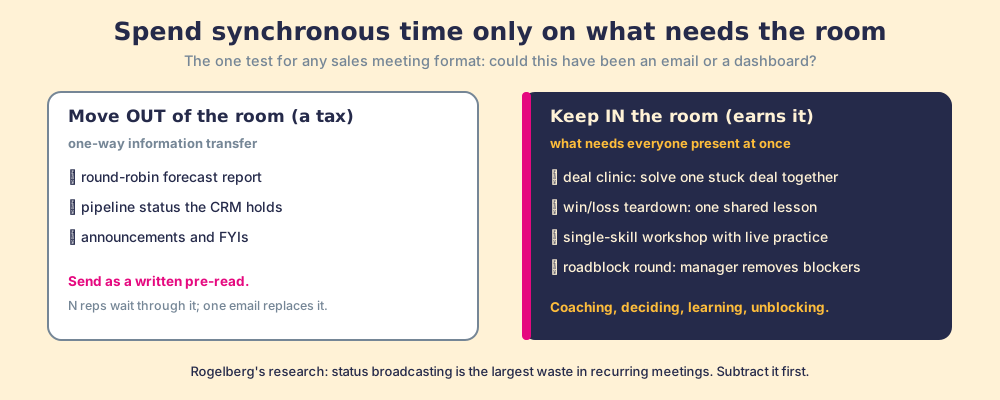
Because they spend expensive synchronous time on one-way information transfer, which is the one thing meetings are worst at. Steven Rogelberg, the organizational psychologist who has studied meetings more than anyone, estimates that a large share of meeting time is unproductive and that the most common culprit is the status meeting: everyone gathers, each person reports in turn, and the rest of the room waits through information that did not concern them (Rogelberg, on the science of meetings). A sales meeting that goes rep by rep through the forecast is the purest example: N reps each report a number the manager already has in the CRM, while N-minus-one reps sit idle. The cost is the whole team’s hour; the value delivered is information an email carries better.
The deeper point is that synchronous time is the scarcest, most expensive thing a team owns, and it should be spent only on what requires everyone present at once. Reading a status update does not. Solving a problem together, debating a decision, watching a colleague get coached, building a shared sense of the standard: those do. The economics are simple, and most bad meetings violate them by using the costly resource for the cheap job.
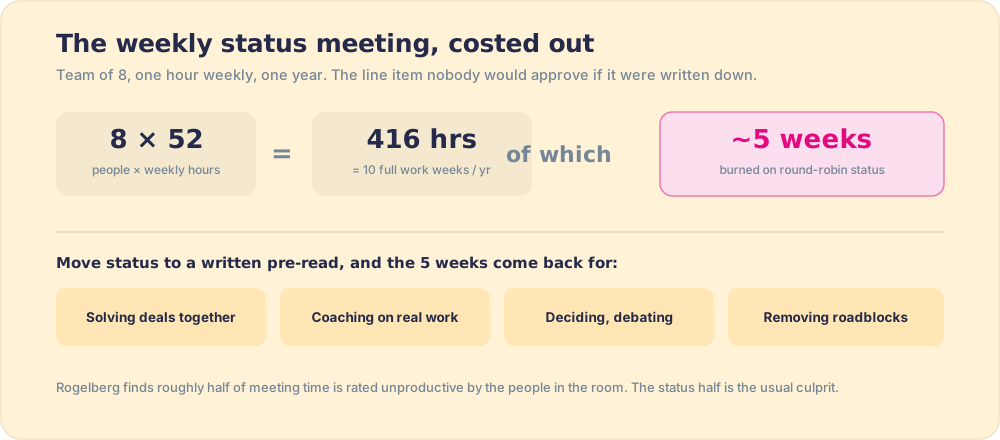
Put real numbers on it and the waste stops being abstract. Rogelberg’s surveys put the cost of meetings in the United States in the hundreds of billions of dollars a year, and his research finds that roughly half of meeting time is rated unproductive by the people sitting in it (Rogelberg, on the cost of meetings). A weekly sales meeting is not free time the team had lying around. Take a team of eight, a one-hour weekly meeting, and a year, and you have spent more than four hundred person-hours, the equivalent of ten full work weeks, on a single recurring slot. If half of that is a round-robin status report each rep could have written in two minutes, you have burned five work weeks a year transferring information a shared document carries better. No finance lead would approve that line item written out plainly. It survives only because it is invisible, smeared across a calendar one hour at a time.
Why does moving status to a written pre-read change the meeting?
Because the status is not the enemy. Someone has to know where the deals stand, and the manager who walks in blind runs a worse team than the one who does not. The trap is using the most expensive minutes the company owns to assemble that picture out loud, rep by rep, while everyone waits. Move the picture into a written update people read before they sit down, and two things happen at once that are worth separating.
The first is a time refund, the five reclaimed weeks from the math above. The second is subtler and matters more: a written status is a better status. Jeff Bezos banned slide decks at Amazon in favor of six-page written memos read in silence at the start of the meeting, on the argument that prose forces a clarity bullet points let you fake, and that everyone arrives on the same factual footing instead of being walked through it (on Amazon’s narrative memos). The same logic holds for pipeline status. Written down, it can be skimmed, searched, and checked against the CRM. Recited aloud, it evaporates the moment the rep stops talking, and half the room was not listening anyway because the deal in question was not theirs. The pre-read is not a politeness. It is a strictly better way to carry the one-way information, which frees the room for the work that is not one-way.
What sales meeting ideas earn the time?
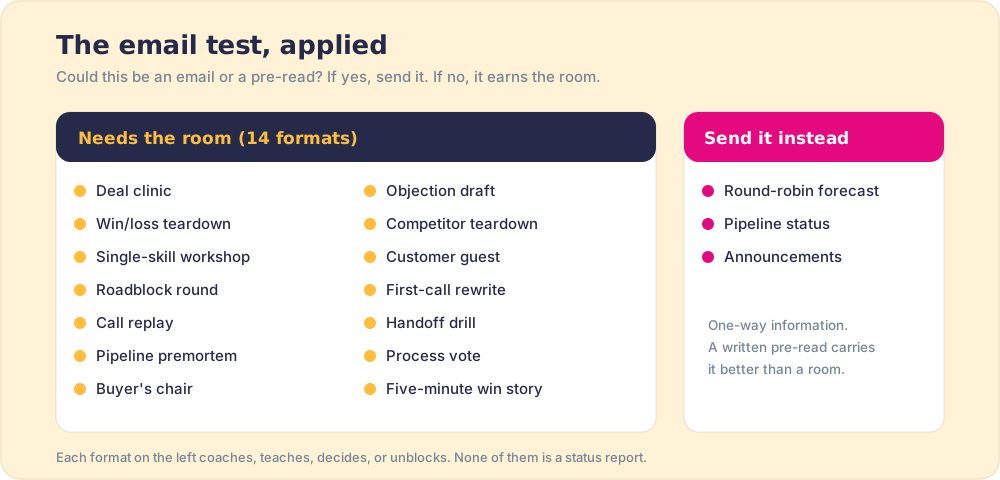
The formats worth running are the ones that do something a document cannot. Move the status to a written pre-read, then spend the live time on these.
- The deal clinic. Put one stuck deal on the screen and have the team solve it together. The rep gets help, and everyone else learns the diagnosis on a real deal, which is coaching at team scale.
- The win/loss teardown. Dissect one recent win or loss in depth. One outcome becomes a shared lesson, which is the cheapest way to spread what your best reps know, the raw material of a repeatable motion.
- The single-skill workshop. Pick one skill, teach it briefly, then practice it live with real scenarios. Practice with feedback is how skill is built, and it only happens if you make room for it.
- The roadblock round. Each rep names one thing in their way; the manager commits to removing it. This treats blockers as a system problem the manager owns, which is usually where they belong.
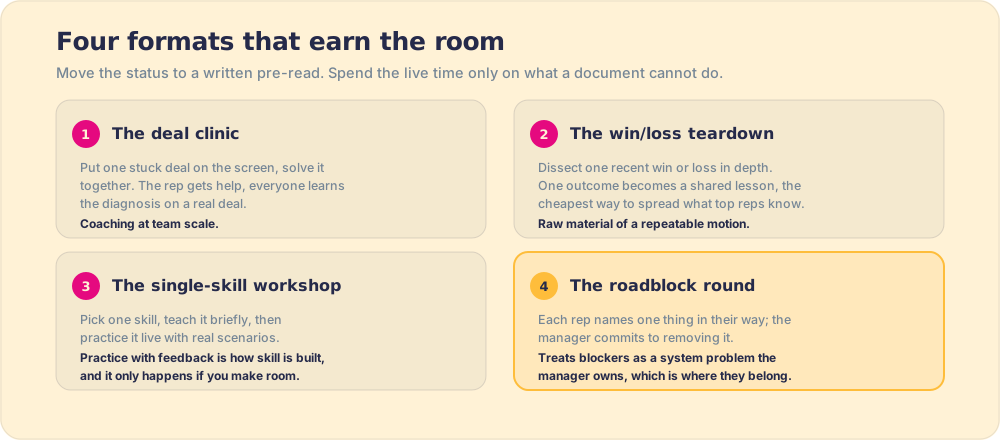
What unites these sales team meeting ideas is that each delivers something the room is uniquely good at: coaching, learning, deciding, or unblocking. None of them is a status broadcast. The full coaching version of the deal clinic is in the sales coaching guide, and the questions to run it on are in sales coaching questions.
What topics should a weekly sales meeting cover?
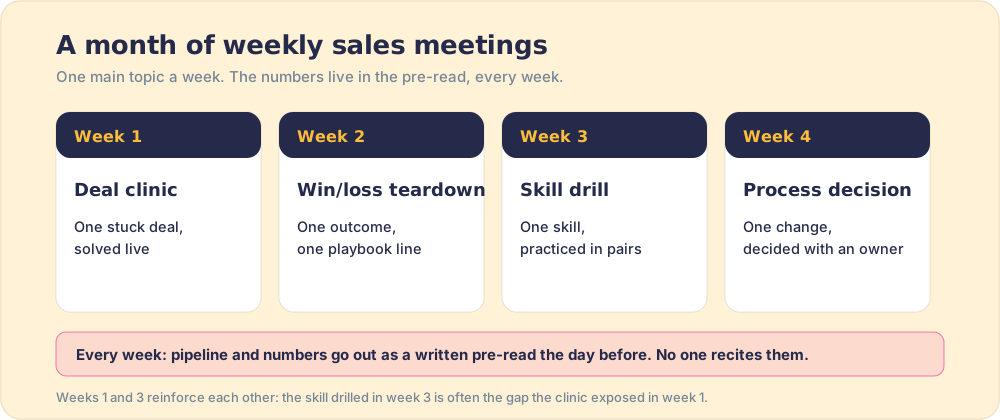
Rotate four topics across a month, one per week, and keep the numbers in a written pre-read. Most weekly sales meeting ideas fail because each week starts from zero; a rotation gives each format time to go deep, and it puts the same skill back in front of the team a few weeks after it was taught, which matters because people lose most of what they learn without reinforcement: Ebbinghaus measured roughly 70% of new material gone within a day (the forgetting curve). A weekly meeting that teaches a different thing every week and never returns to it is pouring water into that curve.
| Week | Main topic (15 minutes) | What the team leaves with |
|---|---|---|
| 1 | Deal clinic: one stuck deal, solved live | A next step for the deal, and a diagnosis pattern for similar deals |
| 2 | Win/loss teardown: one recent outcome | One sentence on why it was won or lost, added to the playbook |
| 3 | Single-skill drill: one skill, practiced in pairs | Two practice reps per person with feedback |
| 4 | Process decision: one proposed change, debated and decided | A yes or no, with an owner and a start date |
Weeks one and three reinforce each other, since the skill drilled in week three is often the gap the deal clinic exposed in week one. Week four is the one teams skip, and it is the one that keeps the process alive, because a process the team is not allowed to change goes stale and reps stop trusting it. For the deeper versions of weeks one and two, see pipeline review and win/loss analysis.
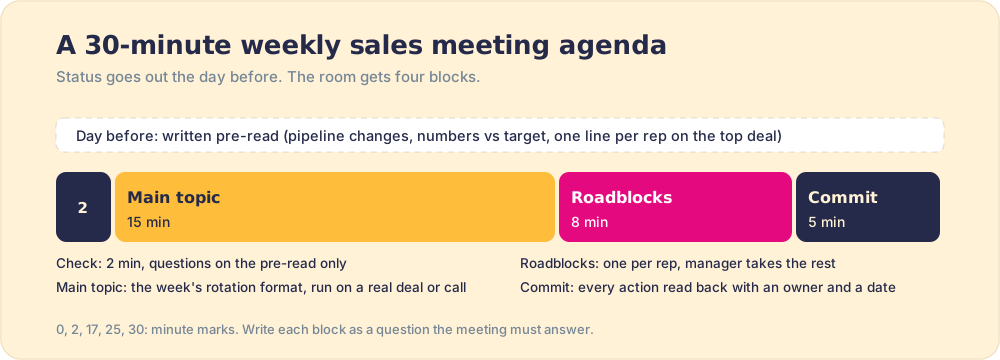
A 30-minute weekly sales meeting agenda
Write each agenda item as a question the meeting has to answer, a habit Rogelberg recommends because a question tells people what done looks like (Rogelberg, on the science of meetings). Then hold the clock.
- Pre-read, the day before. Pipeline changes, numbers against target, and one line per rep on their top deal, written in a shared doc or pulled from the CRM. No one presents it.
- Minutes 0 to 2, the check. Questions on the pre-read only. If there are none, move on.
- Minutes 2 to 17, the main topic. The week’s rotation format, run on a real deal or a real call.
- Minutes 17 to 25, the roadblock round. Each rep names one blocker; the manager takes ownership of the ones a rep cannot clear alone.
- Minutes 25 to 30, the commitments. Read back every commitment with an owner and a date. A meeting that ends without them was a conversation.
What are more sales meeting ideas that pass the email test?
Ten more sales meeting ideas follow, each built on the same rule as the four above, which is that it has to do something a document cannot. Use them as the main topic in the rotation when the team needs a change of pace.
- The call replay. Play three minutes of a real recorded call, stop it, and ask the room what they would say next. Recorded calls turn a debate about style into a look at evidence.
- The pipeline premortem. Pick a deal forecast to close this month and have each person write down why it slipped, as if it already had. Imagining the failure has already happened improved people’s ability to name the reasons for an outcome by 30% in research by Mitchell, Russo, and Pennington, which Gary Klein built the premortem on (Klein, HBR).
- The buyer’s chair. A rep plays the buyer on their own deal while a colleague sells to them. Sitting in the buyer’s seat shows a rep which of their questions the buyer cannot answer.
- The objection draft. The team writes the single best response to this month’s most common objection, then the manager adds it to the playbook the same day.
- The competitor teardown. One rep presents what a competitor said in a recent deal, in the competitor’s words, and the team writes the counter.
- The customer guest. A recent customer spends 15 minutes on why they bought and what nearly stopped them. Buyers spend about 17% of the journey with any supplier, so a buyer describing the other 83% is rare data (Gartner).
- The first-call rewrite. Take one discovery call opening that went flat and rewrite it together, line by line.
- The handoff drill. Run a mock handoff from AE to customer success on a recently closed deal and list what the CS lead had to ask for.
- The process vote. Put one stage requirement on the screen that reps say is useless and decide, in the room, whether to keep, change, or kill it.
- The win story, five minutes. One rep tells the story of a win, focused on the moment the deal turned, so the team hears what a good motion sounds like from a peer.
Creative sales meeting ideas from the usual lists (themed dress days, trivia, guest motivational speakers) can help morale, and morale matters. Run them as a separate social slot, though, and keep the working meeting for work. A team that leaves a themed meeting entertained but with no decision and no new skill spent the same hour the status broadcast spent.
What we recommend
Treat the recurring sales meeting as expensive time to be earned, not a slot to be filled. The first move is subtraction: take the status broadcast out of the room and send it as a written update people read beforehand, because the research is clear that one-way reporting is the largest waste in recurring meetings. Then fill the reclaimed time with the formats that need everyone present, rotated one topic a week across a month (a deal solved together, a win or loss dissected, a skill practiced, a process change decided), keep each meeting to a 30-minute agenda with a roadblock round, and end with committed actions. The best sales meeting topics are the ones that fail the email test, and effective sales meetings are mostly defined by what they refuse to include. The test for any format is a single question: could this have been an email or a dashboard? If yes, make it one, and give the room back to the work only a room can do. Good sales meeting ideas are not better ways to fill the hour. They are the discipline to spend it only on what the hour is for.
From here: the coaching that powers the deal clinic in the sales coaching guide, the questions in sales coaching questions, the one-on-one version in one-on-one meeting questions, and the standard underneath in sales process adoption.
Frequently asked questions
What are good sales meeting ideas?+
How do you run an effective sales meeting?+
What topics should a weekly sales meeting cover?+
Why are most sales meetings a waste of time?+
How much does a weekly sales meeting actually cost?+
What is a good agenda for a weekly sales meeting?+
What should a daily sales huddle cover?+
Your process, running itself.