Sales Coaching Questions: The Ones That Make Reps Think, Not Report
Most sales coaching questions ask the rep to report a fact.
The ones that develop a seller ask them to reason about their own deal. The difference, the science of self-persuasion, and the questions worth asking.
Sales coaching questions are the prompts a manager uses to develop a rep, and the effective ones make the rep reason about their own deal rather than report a fact, because a conclusion a rep reaches themselves changes behavior where one they are handed does not.
There is a test you can run on any sales coaching session, and most fail it. Write down every question the manager asked, then sort them into two piles: questions that asked the rep to report a fact, and questions that asked the rep to think. In the average session almost everything lands in the first pile, the number, the close date, the next step, all of which the CRM already knows, and almost nothing in the second. That ratio is the whole difference between a session that develops a seller and one that audits them.
Sales coaching questions are the prompts a manager uses to develop a rep, and the effective ones make the rep reason about their own deal or skill rather than report a fact, because a conclusion a person reaches themselves changes their behavior where a conclusion they are handed does not. The skill is not in knowing clever questions. It is in asking the kind that makes the rep do the thinking.
What makes a sales coaching question work?
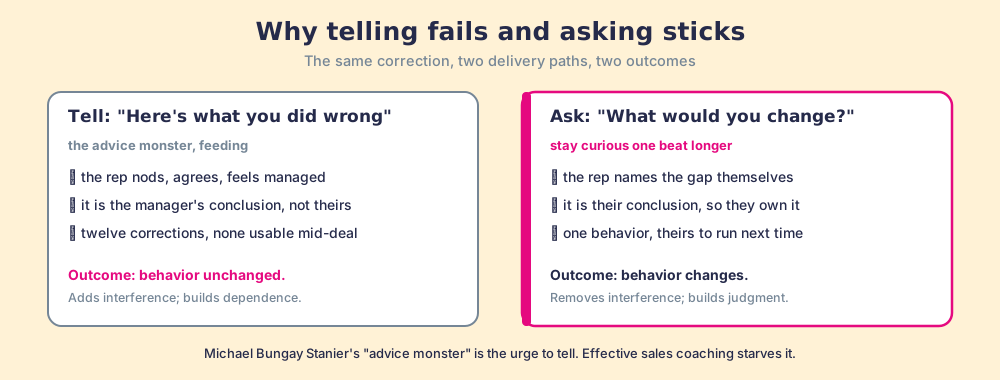
The mechanism is self-persuasion, and it is one of the best-established findings in social psychology, traced to Elliot Aronson’s work on how people internalize attitudes they argue for themselves (on self-persuasion). People are moved most by conclusions they generate themselves, and they discount conclusions handed to them, even identical ones. When a manager says “you skipped the economic buyer,” the rep nods and forgets; when the manager asks “who can sign this, and have you met them?”, the rep arrives at the gap on their own, and a gap you found yourself is one you act on. This is the same engine behind consultative selling: the question does the work the statement cannot, because it routes the insight through the rep’s own reasoning.
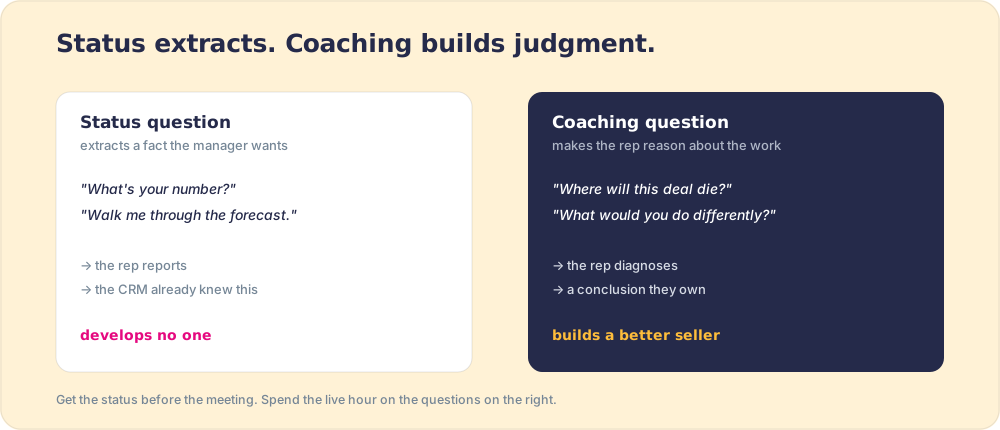
So a coaching question works to the degree it forces reasoning rather than recall. A status question (“what is the close date?”) asks the rep to retrieve a fact. A coaching question (“what would have to be true for this to close on that date?”) asks them to build a model of their own deal and notice where it is thin. The first transfers information to the manager; the second transfers understanding to the rep. Only one of them develops anyone.
There is a deeper reason this works, and it goes back two and a half millennia. The method is Socratic, and Socrates was explicit about why he refused to lecture: he called himself a midwife, claiming no wisdom of his own, only the skill of helping another person give birth to the understanding already in them. The image holds. A manager who supplies the answer has carried the baby for the rep, who learns nothing about delivering one. A manager who asks the right question stands beside the rep while the rep does the hard work of bringing the conclusion out, and that labor is what makes it stick. The conclusion is not better because it is the rep’s. It is more durable because the rep built the path to it, and a path you walked yourself is one you can find again under pressure, when the manager is not in the room.
This also explains a finding that surprises new managers: the same insight lands harder as a question than as a statement, even when the words are nearly identical. “You haven’t met the economic buyer” and “who can sign this, and have you met them?” deliver the same content. The first the rep files away as the manager’s opinion, to be weighed against their own. The second the rep has to answer, and in answering, owns the gap. Information handed down gets discounted; a conclusion reasoned out gets acted on. The question is not a gentler way to say the statement. It is a different mechanism with a different result.
What is the difference between a coaching question and a status question?
The line is the difference between extracting and developing, and it is worth drawing sharply because most managers cross it without noticing. A status question pulls a fact toward the manager: the number, the next step, the close date. A coaching question pushes reasoning toward the rep: why a deal is stuck, what they would change, what would have to be true. Status questions are not wrong; a manager needs the facts. The error is spending the live coaching time gathering them, when the CRM already holds them, and leaving no time for the questions that build judgment.
Which sales coaching questions develop a rep?
The best sales coaching questions cluster by what they develop, and each hands the thinking to the rep rather than extracting a fact for the manager. These are the keepers, the open ended coaching questions worth memorizing.
- “What would have to be true for this deal to close?” Forces the rep to name the real conditions and exposes the unmet ones. The single best deal question there is.
- “Where is this deal most likely to die, and why?” Pre-mortem thinking. A rep who can name the risk can work it; one who cannot is hoping.
- “If you ran that call again, what is the one thing you would change?” Self-coaching on skill. The rep almost always knows, and the question gives them permission to say it.
- “Which deal are you avoiding, and what is the real reason?” Surfaces the deal that has gone silent. The honesty here is where the coaching is.
- “And what else?” Michael Bungay Stanier calls this the best coaching question in the world, because the first answer is rarely the real one and a second ask usually surfaces it.
Notice none of them can be answered with a fact off a dashboard. Each requires the rep to reason about their own situation, which is the entire point. The full list, grouped by job, is in one-on-one meeting questions, and the cadence to ask them in is in the sales coaching guide.
How deep should a coaching question go before you move on?
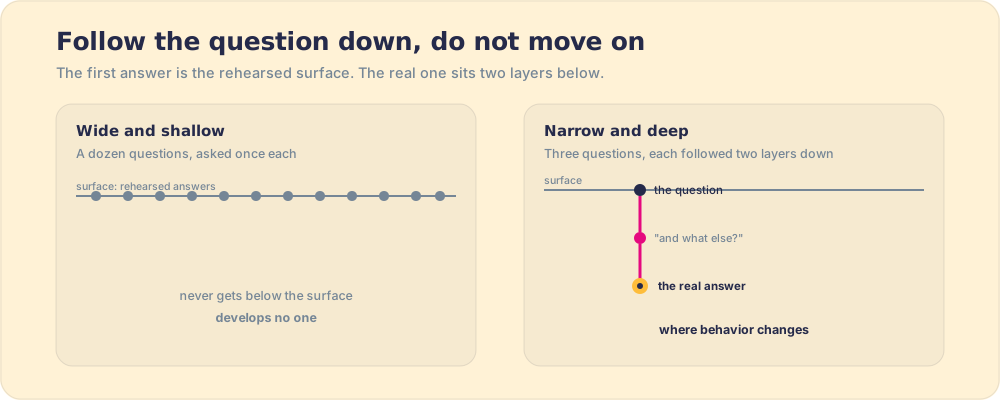
Deeper than instinct allows, because the first answer is almost never the real one. A rep’s opening reply to a good question is the rehearsed surface, the version they have told themselves and their forecast. The understanding that changes behavior sits one or two layers below it, and the only way down is to stay on the same question instead of moving to the next item on a list. Three questions followed two layers down beat a dozen asked once and abandoned, because depth is where the rep stops reciting and starts thinking.
The discipline this demands is harder than it sounds, and Michael Bungay Stanier named the enemy precisely in The Coaching Habit: the advice monster, the manager’s reflex to jump in with the answer the instant the silence stretches (Bungay Stanier, The Coaching Habit). The monster feels like helpfulness and acts like sabotage, because the moment the manager supplies the answer, the rep’s reasoning stops and the conclusion reverts to the manager’s, which the rep will discount. Bungay Stanier’s antidote is the simplest question in coaching: “And what else?” Asked after the first answer, it tells the rep the surface reply was heard and the real one is still wanted, and the second or third “and what else” is usually where the honest answer finally surfaces.
What we recommend
Stop asking your reps to report what the CRM already knows, and start asking them to think. Retire the status questions, the number, the forecast walk, the close-date check, and read those off the system before the session instead. Then spend the live time on coaching questions for sales reps that force reasoning: what would have to be true, where will this die, what would you change, which deal are you avoiding. Ask three or four, follow each two layers down, and resist the urge to supply the answer, because the moment you do, the rep stops thinking and starts nodding. The reason this works is not technique; it is that people act on their own conclusions, and a question is how you get the conclusion to be theirs.
From here: the full grouped list in one-on-one meeting questions, the mechanism in sales coaching techniques, the full method in the sales coaching guide, and the standard underneath in sales process adoption.
Frequently asked questions
What are the best sales coaching questions?+
What is the difference between a coaching question and a status question?+
Why do open-ended coaching questions work better?+
How many questions should a sales coach ask?+
Your process, running itself.