Multithreading Sales: Why One Contact Breaks, and How Three Hold
Multithreading in sales, worked through with real data: the arithmetic of a champion leaving, what Gong's contact counts show and hide, why more people can slow a deal, and where the extra names come from.
Multithreading in sales means building working relationships with several people inside the buying company, so a deal does not rest on one contact and the people who decide hear the case from more than one direction.
A climber who falls is caught by the rope, and the rope is only as good as what it is clipped to. So climbers build anchors out of several pieces: two or three bolts or cams in the rock, tied together at one master point. Any single piece can pop. The anchor holds because the others do not pop at the same moment.
Multithreading in sales means building working relationships with several people inside the buying company, so a deal does not rest on one contact and the people who decide hear the case from more than one direction. A single-threaded deal is a climber hanging from one bolt: the champion. It works right up until the champion is promoted, reorganized, laid off or hired away, and then there is nothing else in the rock. The short version of this guide:
- The arithmetic. More threads make it more likely you lose one contact and far less likely you lose them all. With three, losing one person is routine and losing all three is rare.
- The data. Gong’s contact counts are real, and part of the gap is the win pulling people in. When each person joins matters as much as the count.
- The consensus. Six contacts who never talk to each other are six loose threads. The work is getting them to agree.
- The names. Most single-threading is a supply problem: the second and third names, with an email and a phone, take time a rep does not have mid-deal.
What is multithreading in sales, and where does the word come from?
The word comes from software. A single-threaded program does one thing at a time, and if that one thread waits on a slow disk, the whole program freezes. A multithreaded program runs several threads at once, so one stalled thread leaves the others working. Sales borrowed the picture. A deal with one contact freezes when that contact stops replying; a deal with several keeps moving when one of them is on vacation, buried in a board deck, or gone.
The buying side has grown to fit the term. Gartner describes a typical B2B buying group as 6 to 10 people, and finds buyers spend about 17% of their buying time with all potential suppliers combined (Gartner). Most of the decision happens in rooms the rep is not in. A rep with one contact hears about those rooms secondhand, from one person, who may not have been in all of them either.
Two things sales multithreading is not:
- A headcount on the invite. Ten people on a demo call is an audience. A thread is a person who knows you, has a reason to want the outcome, and would answer your email.
- Going around the champion. The champion is the first bolt. The others are added with the champion’s help, or the first bolt comes loose on its own.
Why does a single-threaded deal break so often?
Run the numbers on the bolt pulling. The Bureau of Labor Statistics put the quits rate at 1.9% a month in August 2026 (BLS JOLTS), meaning about 1.9 of every 100 US workers resigned that month. Use it as a rough rate for one contact walking out of a six-month sales cycle, and the arithmetic, ours, goes like this:
- One thread. The chance your only contact leaves before the deal closes is 1 minus 0.981 to the sixth power: about 10.9%, roughly one deal in nine.
- Three threads, losing one. The chance at least one of three contacts leaves is 29.2%. More threads mean more small failures, and a multithreaded rep will lose a contact on most of a year’s deals.
- Three threads, losing all. The chance all three leave is 0.109 cubed: 0.13%, about one deal in 770.
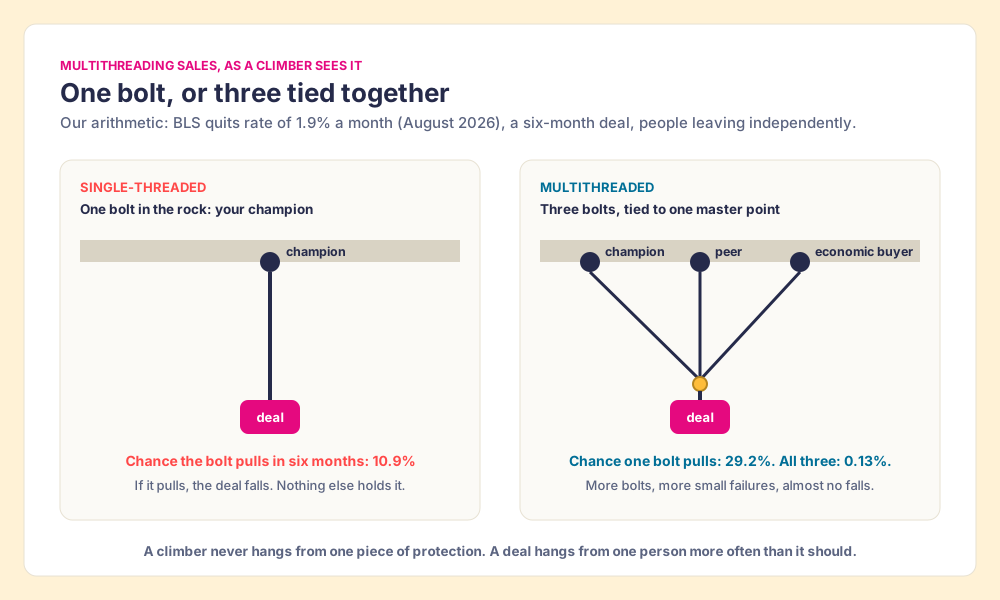
The anchor picture has two edges, and it is fair to mark them. People do not leave independently: a layoff can take the champion and the peer in the same week, which makes the three-thread number too kind. And quitting is only one way a thread breaks. A promotion, a reorg, a parental leave or a budget moved to another team ends the thread as surely, which makes the one-thread number too kind. Managers also stay longer than average, a median 6.1 years with their employer against 4.1 years for all wage and salary workers in January 2026 (BLS tenure). Push the rates up or down and the shape holds.
The single-threaded rep is not careless. One working contact feels like progress, the next name costs research time, and the deal looks fine every week until the week the champion’s email bounces. The fix belongs in the system: make the second and third names cheap to get at the moment they are needed.
What does the data say about multithreading and win rates?
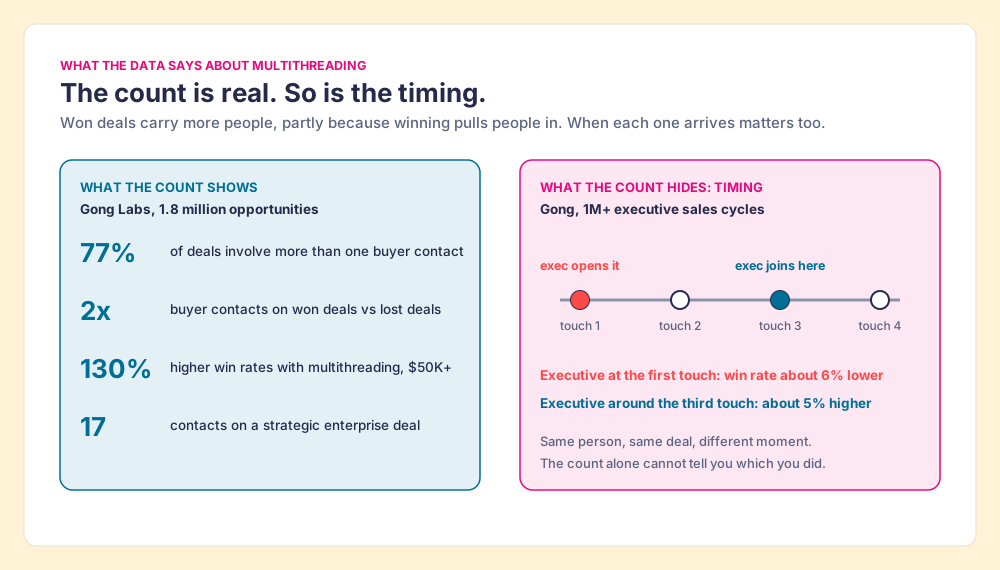
The most-quoted numbers come from Gong Labs. Analyzing 1.8 million opportunities closed in 2024, Gong reported that 77% of deals involve more than one buyer contact, that won deals have “twice as many buyer contacts” as lost ones, that strategic enterprise deals average 17 contacts, and that “multi-threading boosts win rates by an average of 130% in deals over $50K” (Gong, April 28, 2025). Gong repeated those figures in its best insights of 2025 (Gong, January 16, 2026). UserGems, which ranks for this term, cites its own analysis of 500 opportunities: a 5% win probability single-threaded against 30% with five contacts (UserGems). Treat that one as a vendor’s internal study; no method is published.
The numbers are real, and they need one caution the top guides skip. They count the contacts on deals after the outcome is known. A deal that is winning grows people near the end: finance asks about payment terms, legal reads the contract, procurement wants three quotes, security sends its questionnaire. A deal that is dying loses the reason for any of them to appear. So part of the 2x gap is the win pulling contacts in, and a rep who adds five names to a stalled deal has not bought the 130%.
Gong’s own research shows the better lever. In more than 1 million executive sales cycles, studied with 30 Minutes to President’s Club and Jen Allen-Knuth, “win rates drop by roughly 6% when an evaluation starts with an executive,” while there is “a 5% increase when executives are involved around the third touchpoint” (Gong, February 13, 2026). The same study says a won deal of $50K to $250K “typically involves at least 10 stakeholders.” Same executive, same deal, different moment, and the sign of the result flips.
Why can adding more stakeholders slow a deal down?
Because each new person brings a new set of worries, and the group has to settle on one answer. Writing in Harvard Business Review, Nick Toman, Brent Adamson and Cristina Gomez found that the number of people involved in B2B solution purchases had “climbed from an average of 5.4 two years ago to 6.8 today,” and that their divergent priorities “make it difficult for buying groups to agree to anything more than ‘move cautiously,’ ‘avoid risk,’ and ‘save money’” (HBR, 2017). Two years earlier, in the same magazine, Karl Schmidt, Brent Adamson and Anna Bird described the authority to buy as resting with groups “all of whom have veto power” (HBR, 2015).
So the rep who multithreads by running six separate conversations has built six private relationships and no agreement. Each person heard a slightly different pitch, tuned to their own worry. When they finally sit in one room, they discover they were never solving the same problem, and “move cautiously” wins.
Rope is the better picture. A pile of loose fibers laid side by side is weak: pull one and it slides free. Twist the same fibers together and the friction between them carries the load, so the rope holds far more than the fibers could alone. A multithreaded deal works the same way. The threads hold when the buyers talk to each other about you, share one statement of the problem, and agree on what a good outcome looks like.
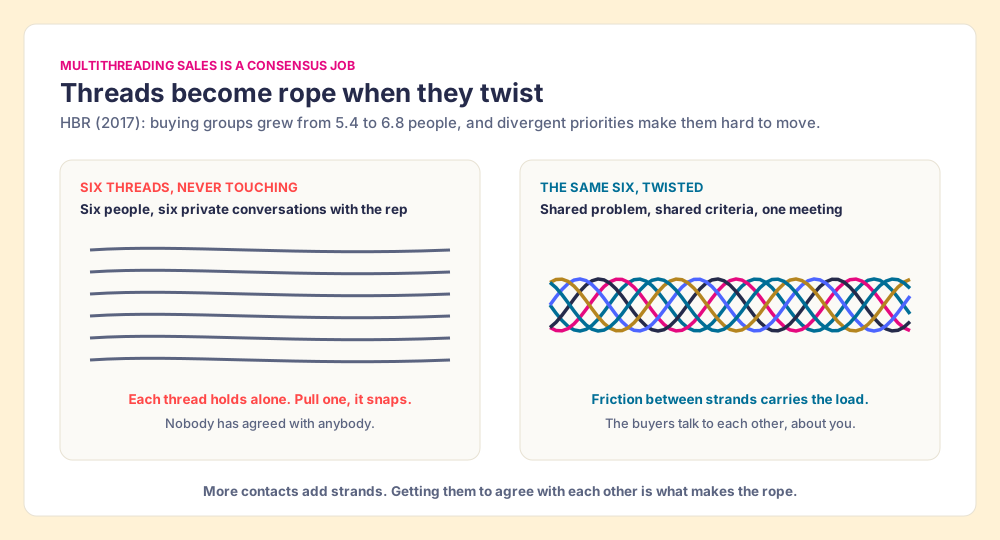
We part company here with the guides that treat multithreading as a contact count. The count is the raw material. The twist is the work: a written problem statement the champion circulates, one meeting where the peer and the finance lead hear the same numbers, a mutual plan the buyers edit themselves. That work is also a better experience for the buyer, who would rather walk into the decision meeting already agreed than find the disagreement there.
How do you multithread a deal without going around your champion?
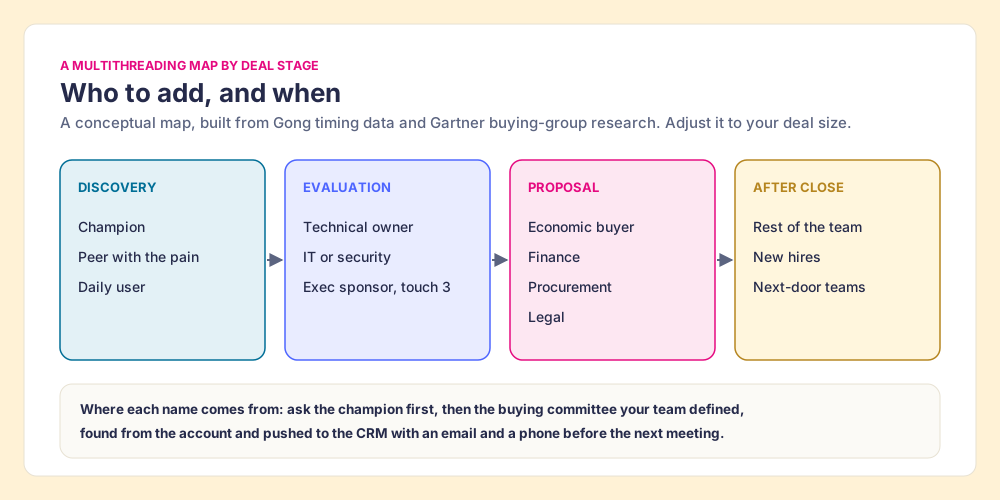
Through the champion, with a reason that serves them. A champion who brings a peer and the finance lead into the evaluation looks prepared inside their company; a champion who learns the rep emailed their boss directly looks bypassed. The practical pattern, stage by stage:
- The champion’s ask. Ask for names with a job attached: “Who will use this daily? Who will ask about cost? Who owns security reviews?” A named job is easier to answer than “who else should be involved?”
- The peer in discovery. One person who feels the same pain, from a neighboring team. Two people describing the problem in their own words gives you the problem statement the group will later sign.
- The executive, later. Gong’s data points to the third touch, after the rep has a problem worth an executive’s time. An executive in the first meeting hears a pitch; an executive in the third hears a plan.
- The economic buyer before the proposal. Whoever signs should hear the case before the price arrives, ideally from the champion with the rep in the room.
- Your own team. Gong found closed-won deals carried an average of 6.7 members of the selling team by the end of discovery and scoping, and selling teams on won deals were 67% larger than on lost ones (the April 2025 study). Peer-to-peer threads (your engineer to their engineer, your executive to theirs) are threads too.
- The rest of the account after close. Expansion is multithreading with a customer: the next team over, the new hire who replaced your champion’s old role, the department that heard about you at lunch.
The B2B buying committee guide goes deeper on mapping the roles, and the people who leave mid-deal are the subject of job-change tracking: a champion who moved to a new company is a lost thread at one account and a warm first thread at another.
Where do the extra names, emails and phones come from?
The top guides spend a line on this step, and it decides whether a rep multithreads at all. Knowing you need the CFO and two peers is easy. Getting their names, a working email and a phone into the CRM before the forecast call is the job.
The usual routes each cover part of it:
- The champion. The best source of names and the worst source of contact details; asking a champion for their CFO’s mobile is a favor too far.
- LinkedIn and Sales Navigator. Good for finding who holds which title at the account. Navigator shows the person and gives you no verified email or mobile, and LinkedIn’s terms forbid scraping or copying its data. Sales Navigator Chrome extensions and LinkedIn prospecting tools compare the options.
- One contact database. A single vendor has one shelf of emails and phones; when it misses the CFO, the rep is stuck.
- A waterfall. Clay asks provider after provider, across 200+ providers (clay.com, checked October 2, 2026), until one returns a verified email or phone, and charges nothing when an enrichment comes back empty (Clay pricing). The waterfall enrichment guide explains the order of steps, and direct dials covers which phone number rings a person.
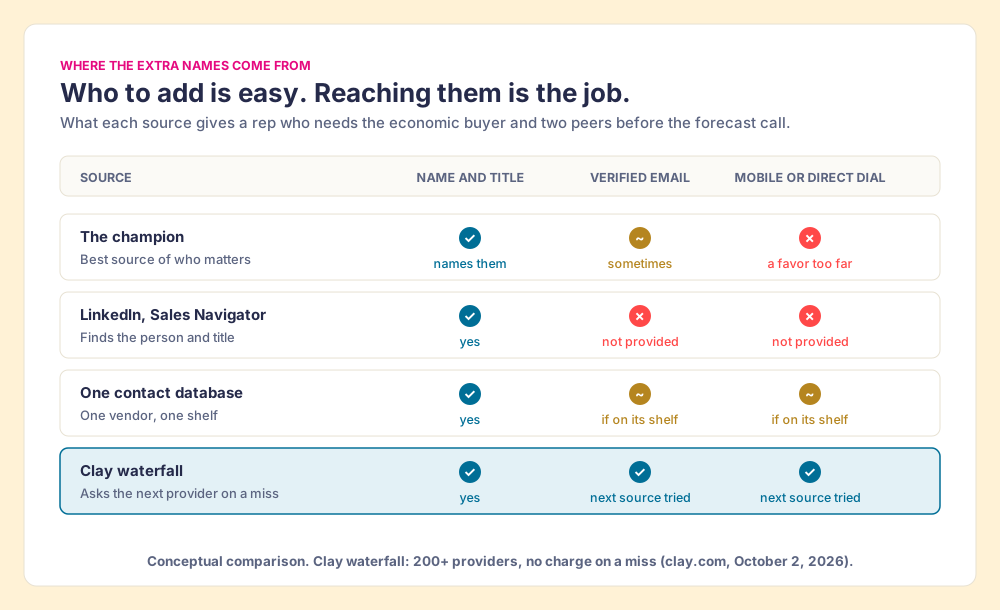
A rep in the middle of a deal will not open a data tool, build a search and paste results into the CRM for three names. That is a system problem, and the fix is to put the names one click from the account the rep already has open.
Where does Supered Prospector fit for multithreading?
Clay plus Supered is the best way for a sales team to prospect: GTM engineers build in Clay, reps never open Clay. For multithreading, the GTM engineer builds the buying-committee flow once, with the titles, departments and seniority your team defines, and the AE runs it from the account in front of them. Three of the Prospector plays are multithreading plays:
- Stalled deals. Before the forecast call, the AE adds the economic buyer and two peers to a deal that has stopped moving, from the CRM record, with emails and phones from your Clay waterfall.
- Research. On a new account, the rep checks ICP fit and pulls the people who sign off, the buying committee you defined, before the first meeting.
- Expansion. At a customer, the rep finds the rest of the team and pushes them into the CRM.
The flow sits in a Push menu: the rep picks it, the Clay table runs, and the names land in HubSpot, Salesforce or Pipedrive, or in your sales engagement tool. “Your logic stays yours: waterfalls, tiers, tags, and sequence variables.” Before pushing, the rep sees the matching CRM record, who owns it, and a “prospected before” flag when a teammate already worked the person, which matters at a big account where three reps may be threading the same building. The rep can start from a HubSpot, Salesforce or Pipedrive record, a company website, a LinkedIn profile or a Sales Navigator list; Navigator leads go to a prospect list, and the rep pushes the list to a Clay table. What the rep sees is on Prospector for reps.
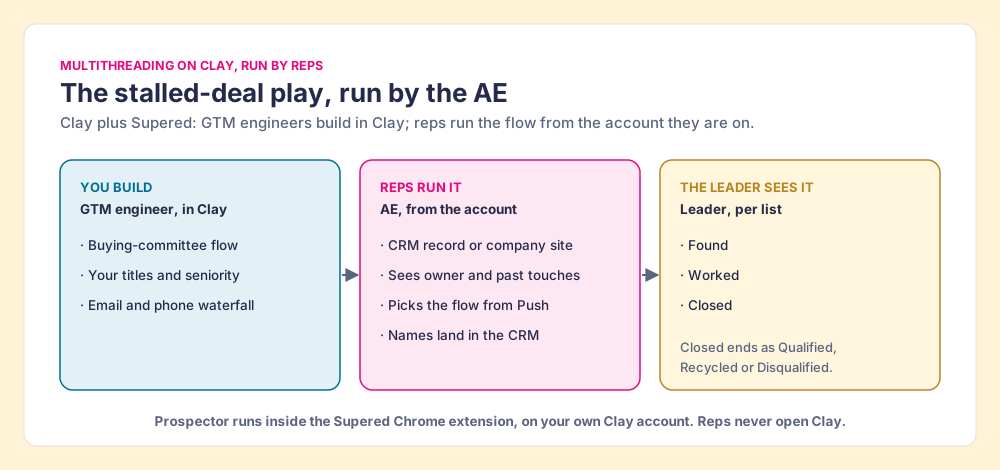
The leader sees every list Found, Worked and Closed, and every lead ends the way your process says: Qualified, Recycled or Disqualified. For multithreading, that shows whether the names added to stalled deals were contacted or left sitting in the CRM.
Prospector works within LinkedIn’s terms and does not copy search results in bulk; the contact data comes from Clay’s waterfall on the customer’s Clay account. Supered does not bring its own database. It brings Clay’s waterfall, which is every database, routed. Prospector runs inside the Supered Chrome extension and costs $45 per rep per month, billed annually, from one rep, on your Clay plan and credits. Start with the Supered Clay template, or bring your own tables. The product is on the Prospector page, the rep loop on the sourcing use case, and the wider set of Clay front ends in the Clay Chrome extension guide.
Choose something else if:
- No Clay account. Prospector needs one. A single database with a CRM integration, such as Apollo or ZoomInfo, is the simpler start, and the B2B buying committee guide covers mapping roles with any tool.
- Deal intelligence as the main need. Prospector finds and routes the people; it does not record calls or score which stakeholders have stopped engaging. Conversation tools such as Gong do that job.
- No one to build the flow. RevPartners, the company I founded, is a Clay Elite Studio Partner that builds and tunes Clay tables with teams that want help.
Why trust this guide?
Before Supered I started RevPartners, a HubSpot partner that did only sales implementations, sold roughly twice as much Sales Hub as any other partner, and reached HubSpot’s Elite tier in 13 months. We ran RevOps as a service for our clients, and the single-threaded deal that died when one person changed jobs was a regular guest at their pipeline reviews. Supered is the #1 sales enablement app on the HubSpot marketplace, rated 5.0 from 122 reviews there and 4.9 out of 5 from 81 reviews on G2 (checked October 1, 2026). The disclosure: we make Prospector, and it appears above for teams that run Clay.
What we recommend for multithreading sales
Thread by stage, twist the threads together, and make the names cheap. Setting a minimum contact count per opportunity is the common alternative, and it is easy to report; it also rewards five names added to a dying deal, which Gong’s after-the-fact counts cannot tell apart from a deal that grew its group by winning. Our version of sales multithreading has three parts, each resting on a number above:
- Threads added by stage. A peer in discovery, the executive around the third touch, the economic buyer before the price. Gong’s timing data (about 6% lower win rates with an executive first, about 5% higher around the third touch) says the moment matters more than the count.
- Threads twisted into one group. One written problem statement, one meeting where the peer and the finance lead hear the same numbers. HBR’s research on groups where each member holds a veto says agreement is the work.
- Names one click from the account. Three threads turn a roughly one-in-nine loss into a one-in-770 loss, and the second and third names only get added when they cost the rep a click.
For a team on Clay, Prospector makes the names cheap. For any team, multi threading sales starts with the champion, who is the first bolt and the best source of the others.
The next read is the B2B buying committee guide, which maps who sits in the group you are threading, and job-change tracking, for the week your champion’s email bounces.
Frequently asked questions
What is multithreading in sales?+
How many contacts should a multithreaded deal have?+
Does multithreading increase win rates?+
How do you multithread without going around your champion?+
When should an executive join a sales cycle?+
Do I need Clay to use Supered Prospector for multithreading?+
Your process, running itself.