One-on-One Sales Coaching: The 30 Minutes Most Managers Spend on the Wrong Thing
The weekly one-on-one is the most frequent coaching a rep gets, and most of it is a status meeting the CRM already covered. Run it as a deliberate-practice session instead, and the same 30 minutes change.
One-on-one sales coaching is the recurring private meeting where a manager develops a rep, and it works when run as deliberate practice rather than a status review, because the status is in the CRM and the value is development the data cannot give.
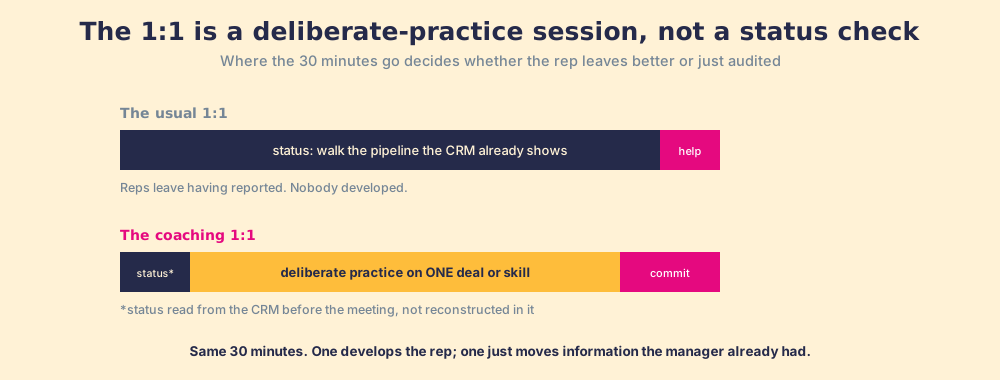
The weekly one-on-one is the densest coaching opportunity a manager has, and most of it is spent on the one thing the meeting is worst at. Watch a typical 1:1 and it is a status review: the rep walks the pipeline, the manager asks about a few deals, the close dates get updated, and the half hour is gone. All of that information was already in the CRM. The most frequent coaching a rep ever gets is mostly spent transferring data the manager could have read in two minutes, which leaves almost nothing for the part that would make the rep better.
One-on-one sales coaching is the recurring private meeting where a manager develops an individual rep, and it works when it is run as deliberate practice on one deal or skill rather than a status review, because the status is in the CRM and the value is development the data cannot give. Change what the 30 minutes are for, and the same meeting becomes the engine of a rep’s growth.
The stakes here are larger than one meeting’s quality, and a single finding makes them concrete. CSO Insights, the research arm now inside Korn Ferry, studied coaching across thousands of sales organizations and found a threshold effect that most managers have never heard of: teams that coached their reps for roughly two to three hours a month posted meaningfully higher win rates than teams that coached less, and the relationship was not linear. Below the threshold, coaching barely moved the number. Above it, win rates jumped, and beyond it the gains leveled off (CSO Insights / Korn Ferry, on coaching and win rates). The one-on-one is where most of those hours either get spent or get wasted. Run it as a status review and you can hit the time and still fall short of the threshold, because the hours did not contain any coaching. The container was full and the content was empty.
Why is the status review the wrong use of a one-on-one?
Because synchronous, private manager time is the most valuable coaching resource a rep gets, and reading a status update is the cheapest possible use of it. A dashboard transfers status better than a conversation does: faster, more completely, and without occupying two people. So spending the 1:1 on status is paying premium time for a discount job. The cost is not the status itself, which someone has to know; it is that the status crowds out the one thing a private meeting can do that nothing else can, which is develop the rep through focused, individual practice.
That development is what the research says moves performance. Anders Ericsson’s work on expertise is unambiguous: skill is built by deliberate practice, focused repetition of one specific weakness with immediate feedback, not by general review (Ericsson, in HBR). A one-on-one is the natural home for deliberate practice in sales, one rep, one skill, real evidence, a coach watching. A status review is the opposite of deliberate practice: it spreads thin attention across a dozen deals and develops none of them. The meeting has the perfect structure for building skill and the wrong agenda for it.
Why do managers default to status even when they know better?
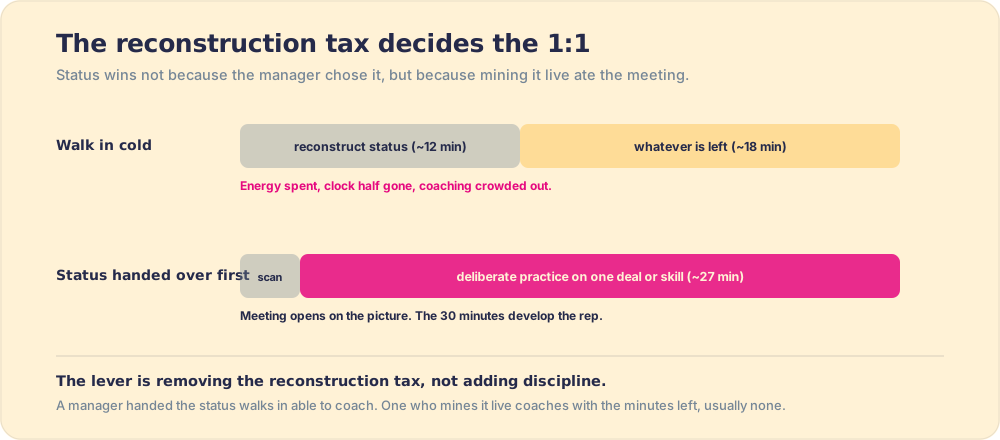
This is worth dwelling on, because if the fix were as simple as “stop doing status,” it would already be fixed. Most managers know the 1:1 should develop the rep. They default to status anyway, and the reason is structural, not a lack of will. Walk into the meeting cold and you do not yet know where the deals stand, so the first ten minutes go to reconstructing it: which deals moved, what got logged, where the rep is stuck. By the time the picture is assembled, the clock is half gone and the energy is spent. Status did not win because the manager chose it. It won because it was the only thing the meeting had time to do.
Blaming the manager here is the same mistake as blaming a rep for skipping a process step. The behavior is produced by the system around it. A manager handed the status in advance, already digested, walks in able to coach. A manager who has to mine it live will coach with whatever minutes are left, which is usually none. So the lever is not exhortation, more discipline, a better agenda template. It is removing the reconstruction tax, so the meeting opens on the picture instead of building it. Lift that one cost and the default flips on its own.
How do you run one-on-one sales coaching that develops the rep?
Restructure the 30 minutes so the status is handled before the meeting and the live time goes to practice. This is the shape of effective 1 on 1 sales coaching.
- Status as a pre-read, not the meeting. Read deal stages, activity, and process adherence before you sit down, so the meeting opens with the picture already known instead of being consumed assembling it.
- One focus, worked deeply. Spend the bulk of the time on a single stuck deal or one skill, using questions that make the rep reason, not a tour of the whole pipeline. Depth on one thing beats a shallow pass over ten.
- A single committed action. End with one specific thing the rep will do by a named date, and inspect it next week. A meeting without a commitment is a conversation that changes nothing.
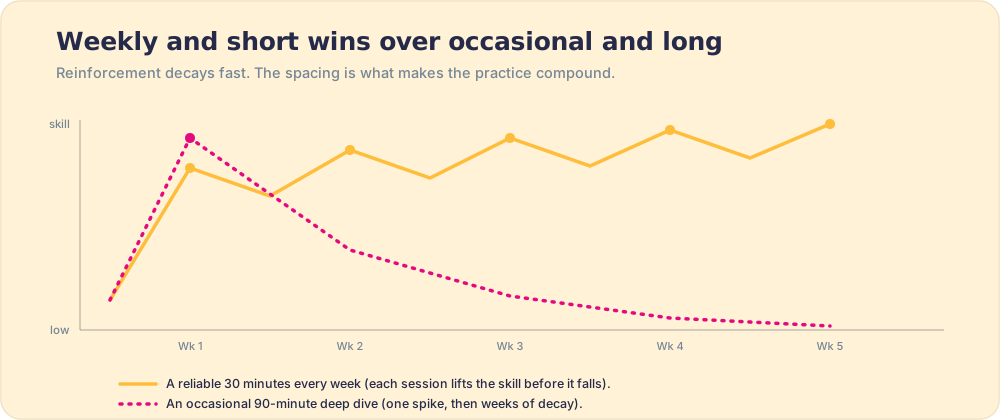
- Weekly, without fail. Keep the cadence tight, because reinforcement decays and consistency is what makes the practice compound, the same reason a sales coaching plan is a spacing schedule.
The questions that fill the practice block are in one-on-one meeting questions, and the full cadence sits in the sales coaching guide. The structural barrier is always the same: assembling the status eats the time, so the meeting defaults to status because that is what got assembled.
It is worth saying why the “one focus, worked deeply” rule is not a stylistic preference but the load-bearing part. Ericsson’s deliberate practice has three ingredients, and a status review has none of them. The first is a specific, well-defined target a notch past current ability, not “get better at sales” but “open the next discovery call by earning the right to ask about budget.” The second is immediate, informative feedback, a coach watching the actual attempt and naming what to change. The third is focused repetition, the same narrow skill worked again and again until it is automatic. Spreading the half hour across ten deals violates all three at once: no single target, no real feedback on any one attempt, no repetition. This is the deep reason the agenda matters more than the manager’s talent. A gifted coach running a status review still produces no practice, because the structure forbids it. A mediocre coach running one focused rep through three honest reps of a single skill produces real development, because the structure allows it.
What we recommend
Run one-on-one sales coaching as a weekly deliberate-practice session, and move the status out of the room. The single change that transforms most 1:1s is subtraction: stop spending the live time on information the CRM already holds, read it beforehand, and give the reclaimed minutes to one focused thing worked deeply. Aim for thirty minutes every week, anchored on one deal or skill, ending on one committed action you check the next week. That is what separates sales coaching one on one that develops a seller from a status meeting in disguise, and it is the structure to give every rep: one on one coaching for sales reps built on practice, not reporting. The reason this works is not a better agenda template; it is that skill is built by deliberate practice and a private weekly meeting is the ideal container for it, wasted on status and powerful on focus. The most frequent coaching your reps get is the one-on-one. Spend it on the thing only it can do.
From here: the questions to run it on in one-on-one meeting questions, the cadence in the sales coaching guide, the spacing logic in sales coaching plan, and the standard underneath in sales process adoption.
Frequently asked questions
What is one-on-one sales coaching?+
How should you structure a one-on-one with a sales rep?+
How often should one-on-one sales coaching happen?+
Why do most one-on-ones fail to develop reps?+
Does sales coaching actually improve win rates?+
Your process, running itself.