Referral Selling Beat Claude, HubSpot and the Phone: Matt Bolian and Crispy Barnett Debate
On Pardon the POV, Matt Bolian and Crispy Barnett argued about AI SDRs, then voted referral the best sales tool ever over Claude, the CRM and the phone. Their cases, and what referral selling asks of a team.
Referral selling is winning new buyers through introductions from people who already trust you, and on Pardon the POV Matt Bolian and Crispy Barnett ranked it above every AI and software tool in the bracket because it carries a human relationship automation cannot copy.
Caleb King seeded eight sales tools like World Cup teams and made Crispy Barnett and me vote on a count of three. Claude went in as the one seed. Referral selling went in fourth. By the end referral had knocked out LinkedIn Sales Navigator, then Claude, then the CRM in the final. “What a massive upset,” Caleb said. “Referral beats Claude. Claude, me and you are going to have to talk later.”
That was the second half of a Pardon the POV episode Caleb hosted in July 2026. The first half was an argument about firing SDR teams and running AI agents instead, and by the time the bracket came around, Crispy and I had already said most of why referral selling would win. Both of us had just argued for using AI in sales. We still picked the one tool that depends on a person vouching for you, and our reasons bear on where a sales leader puts the next dollar of prospecting budget.
Should you fire your SDR team and run AI agents instead?
Caleb set it up with the pitch from 18 months earlier: “Fire your team, hire the agent, watch the meetings pour in. Agent never sleeps, never asks for a raise.” Then he said the production data had been “unkind, to say the least.” Is replacing the human SDR team with AI agents still a smart move in 2026? Both said no.
My case was about second-order effects. The first-order effect is obvious: someone can send emails while you sleep. The second one lands in the buyer’s inbox. “When I’m on vacation for 7 days, I have 2,500 emails, and I just mass delete them as a CEO, and I never look at the emails.” Once buyers stop reading, the process is broken, and a machine running the old process harder does not fix it. “You need a human to be able to think about how now do I change.” My answer was small and human first: “You hire a one or two SDRs, you figure out the process that it’s totally shifted, and you build a process on top of that and execute it. Maybe enhanced by AI after you’ve determined what works.”
Crispy agreed on the vote and went further on the team. He expects companies using AI well to show revenue rising while headcount falls. “I think you should fire the bad SDRs and use AI to enable the good ones and ultimately operate with a much smaller team to achieve the same and higher revenue goals.” He pointed to Ford, which he said “hired back 300 of their veteran engineers because they made a big bet on AI to recreate their design models” and it failed. The company now puts AI in the veterans’ hands instead.
Caleb had a name for it. “If you a bunch of people are doing this cuz it’s popular, trendy, and a best practice, the effect to you is you get blasted with 3,000 emails you don’t care anything about,” he said. “The tragedy of the commons?” The ecologist Garrett Hardin described it in 1968: herders sharing a pasture each gain from adding one more cow and bear only a sliver of the cost, so the pasture gets grazed bare (Tragedy of the commons). “So it’s becoming so popular that it’s just not as effective anymore.”
The companies that run the inboxes have started setting rules for the pasture. Google announced that from February 2024, anyone sending more than 5,000 messages a day to Gmail addresses must authenticate their mail, offer one-click unsubscribe and stay under a spam-rate threshold (Google, 2023).
Why did referral beat Claude in the bracket?
The early rounds went fast. Claude beat Excel without a fight. Conversational intelligence beat the phone, which Caleb would have kept “just because of historical uses.” The CRM beat email on Caleb’s tiebreak. Then the four seed met the one seed, LLM against referral, and Caleb saw the teeth gritting. Both voted referral.
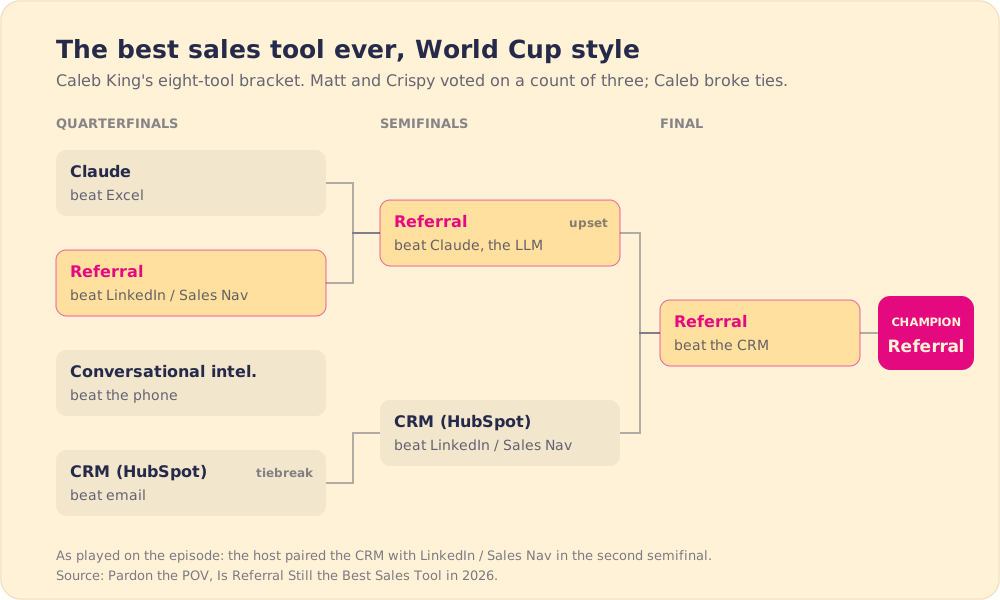
The final was referral against the CRM, and it was unanimous. Caleb summed up the upset: the tool that amounts to “you telling somebody directly that they have a lead or somebody interested” had beaten Claude, HubSpot, Excel and the phone. My reply was three words: “The human one.”
The vote follows from the SDR argument. The other tools in the bracket get cheaper and easier to run as AI improves, for your competitors as much as for you. A referral costs the person who gives it something, because they put their own name on the warm introduction, and a buyer knows that. Nielsen’s 2021 Trust in Advertising study found 88% of respondents most trust recommendations from people they know (Nielsen, 2021).
Are referred customers worth more than cold-sourced ones?
The bracket measured usefulness in the moment. The strongest evidence on what happens later comes from banking. Philipp Schmitt, Bernd Skiera and Christophe Van den Bulte tracked about 10,000 customers of a German bank and published the results in the Journal of Marketing in 2011 (Schmitt, Skiera and Van den Bulte, 2011).
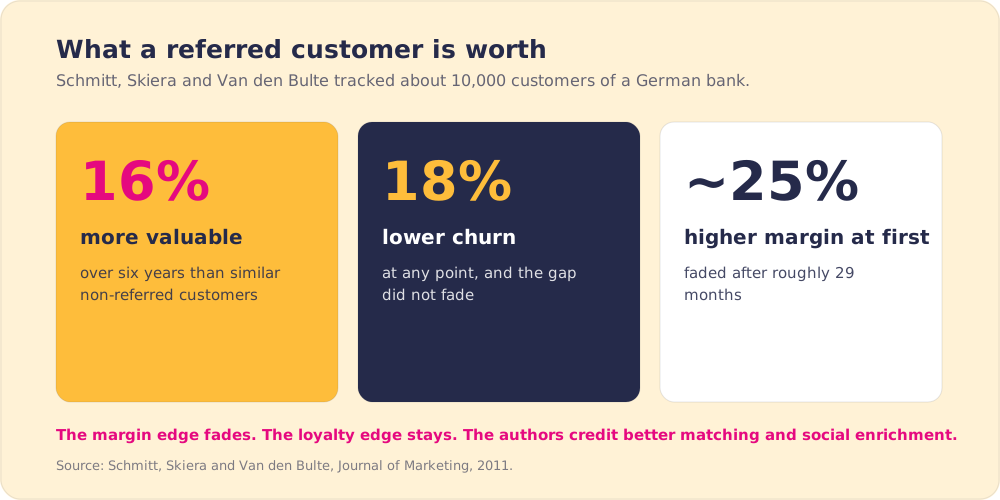
Referred customers were 16% more valuable over six years than similar customers who came in on their own. Their churn ran 18% lower, and that gap held. Their margin started about 25% higher and faded after roughly 29 months. The authors credit two things: better matching, because the referrer filters for people who fit, and the shared relationship, which keeps the new customer loyal. A bank account is simpler than a software contract, so the exact numbers may not carry over. The churn result is the one closest to what Crispy and I argued on the show: the referred customers stayed, year after year, because someone they knew had brought them in.
What does referral selling ask of a team?
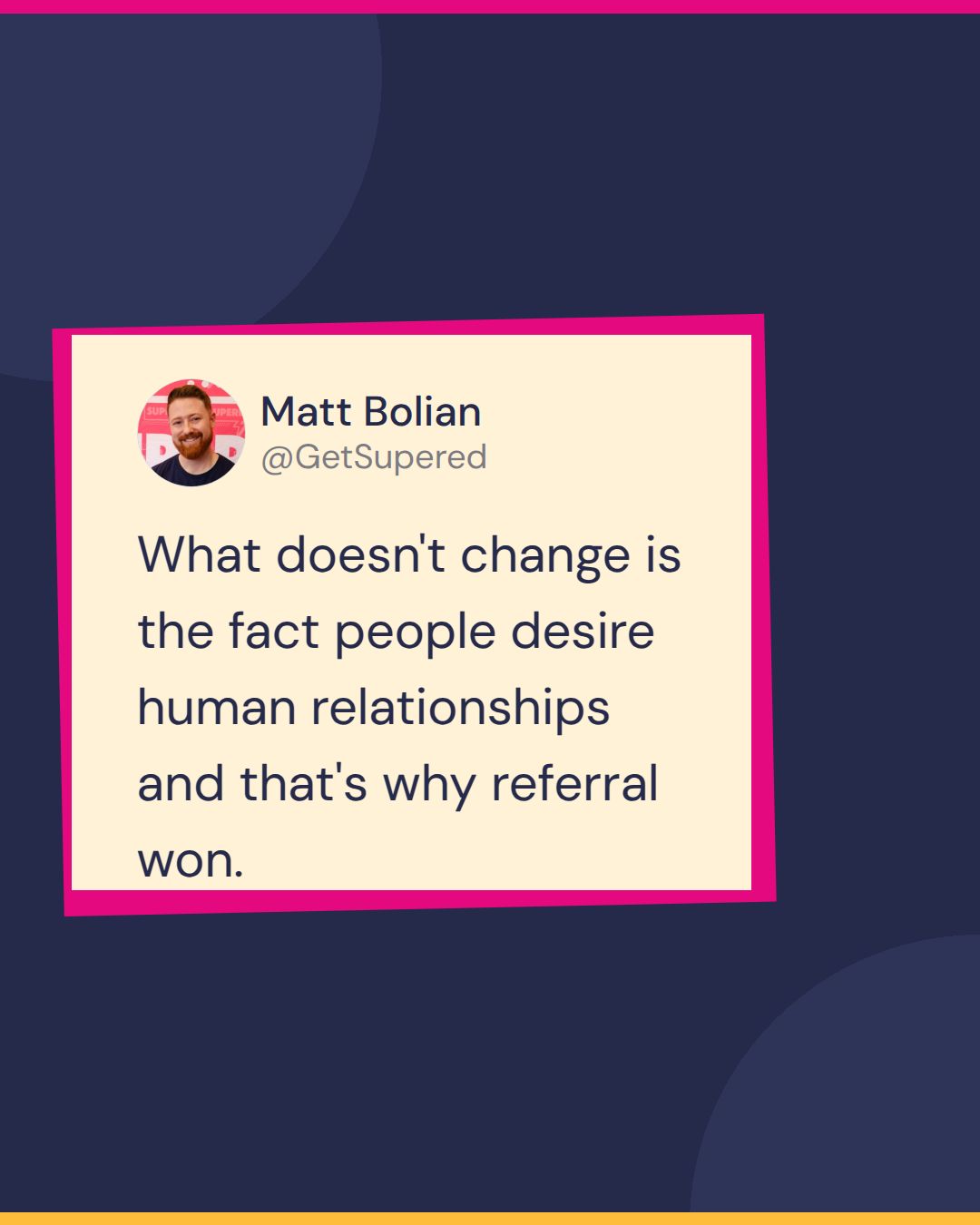
Caleb asked me to close the episode, and I gave the reason both of us kept voting the same way. “There’s a lot of things techno technology changes over time. What doesn’t change is the fact people desire human relationships and that’s why referral won.” Then what to do about it: “what you’re really trying to get is create a brand and create a a legacy of you help people do hard things and people will recommend you.” That, I said, is how you win, “and all the rest is noise.”
In practice, customer referrals start with the delivery team, because a customer who got a result they can name is the one who will introduce you. The steps after that are plain:
- A named result. Ask for the introduction right after a go-live, a first win or a renewal, while the result is fresh.
- A forwardable note. Give the referrer three sentences they can paste, naming who you help and what changed for them.
- The fastest lane. Route referred buyers to a named owner with the quickest response on the team, because the referrer’s reputation rides on that first reply.
- A report back. Tell the referrer how it went, win or lose. A person who hears nothing is less likely to vouch again.
Writing the steps down is the easy part. In The State of Sales Enablement 2026, 89% of revenue teams reported a defined sales process and 36% said reps follow it consistently (The State of Sales Enablement 2026). A referral program that lives in a slide deck gets skipped in a busy week, and the referred buyer who waits two days for a reply tells the person who sent them.
What the referral debate taught
- Second-order effects. Automated outreach works until your competitors all run it too. Then the inbox fills, and buyers delete by the thousand.
- Human first, AI second. My plan: one or two SDRs find the process that works in the new inbox, and AI scales it afterward.
- Smaller, stronger teams. Crispy’s plan: cut weak SDRs and give AI to the strong ones, the way Ford put AI in its veteran engineers’ hands.
- The costly signal. A referral costs the referrer their reputation, and that cost is why buyers trust warm introductions over any message a machine can send.
- Delivery as the source. Referred customers stay longer, and the referrals come from customers who got a result they can name.
The verdict
Referral won the bracket, and neither of us argued against AI to get there. We argued about where AI goes: behind a working process, in the hands of people who have figured out what buyers now respond to. Keep outbound for the buyers no one has introduced you to, run it with humans who can adjust when the channel shifts, and put your best effort into the delivery that makes customers want to introduce you.
Supered’s Behavior Layer puts steps like the referral ask and the handoff in front of reps inside HubSpot and Salesforce when the deal reaches them. For how outbound fits alongside referrals, read our post on the sales prospecting process, then our look at AI SDRs and where automation earns its place.
Frequently asked questions
Is referral selling still the best sales tool in 2026?+
Should you replace your SDR team with AI agents?+
Are referred customers more valuable?+
Why is cold outreach getting less effective?+
How do you get more customer referrals?+
Your process, running itself.
Turn the playbook into rep behavior.
More from Pardon the POV

How to Set Sales Quotas When Everyone Has AI: Matt Bolian and Crispy Barnett Debate
Matt Bolian & Crispy Barnett
Pipeline Review: Crispy Barnett and Matt Bolian Argue Against Killing the Meeting
Matt Bolian & Crispy Barnett