The One-Call Close Around the World: Crispy Barnett and Caleb King Debate the Fast Close
On Pardon the POV, Crispy Barnett and Caleb King used Japan, Korea, Germany and Sweden to argue over the one-call close, buying-group consensus, dinner deals, the sales rockstar and published prices.
A one-call close is a sale signed in the same meeting as the pitch or demo, and on Pardon the POV Crispy Barnett and Caleb King split over whether reps should keep it or slow down for the whole buying group.
Our host Rob Jones opened with the one-call close and two sales floors. In America, “the hero can close in one call. I’ve seen Caleb do it. I’ve seen Crispy do it. Demo Tuesday, signature same day, or maybe Friday at the latest, ring the gong, bam, you’re done.” In Japan, that same rep is “viewed as reckless.” No one signs until the proposal has been walked to each stakeholder in private, a practice called nemawashi, and sales cycles run 6 to 18 months.
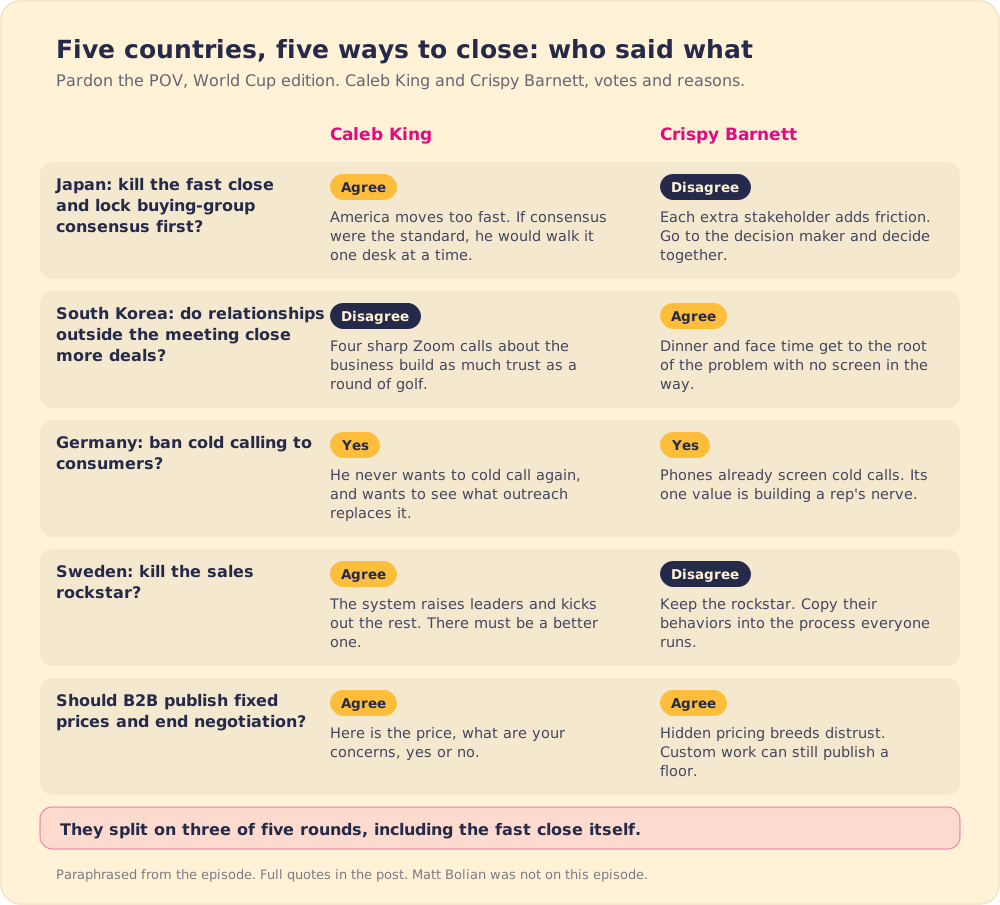
That was the setup for a World Cup episode of Pardon the POV, where Rob used five countries to test American sales closing techniques, the one-call close first among them, on Crispy Barnett and Caleb King. I missed the recording. Crispy called in from a Starbucks because Houston’s power was out. Caleb, whom Crispy calls the rockstar of the sales team, took the side you would least expect from a rockstar. The two split on three of the five rounds, starting with the biggest: should reps kill the fast close?
What is a one-call close?
A one-call close is a sale where the rep runs discovery, gives the demo and asks for the signature in the same meeting, or within a day or two of it. Rob’s version was the American sales floor at full speed: demo on Tuesday, contract signed that day or by Friday, gong rung. It only works when the person on the call can say yes and has the budget to back it.
It comes easiest when one buyer owns both the problem and the money. It gets harder as more people have to live with the purchase. In Japan, Rob said, the rep would first carry the proposal to each stakeholder in private, and no one would sign before that was done. Caleb and Crispy were arguing about which of those two habits an American B2B seller should keep.
Does the one-call close still work with a buying group?
Rob’s proposition: American reps should kill the fast close and lock in full buying-group consensus before they ever ask for the order. Caleb agreed. Crispy disagreed.
Caleb started with the country. “I actually think part of the disease and sickness of America is we move too fast, period. And the only reason we close so fast is cuz this is a monster with that we just need to grow, grow, grow, grow faster, faster, faster.” He plays by those rules because they are the rules. He would change them if he could: “I would love it if everyone agrees this is the standard, I’ll walk one desk at a time. I’m down for that.”
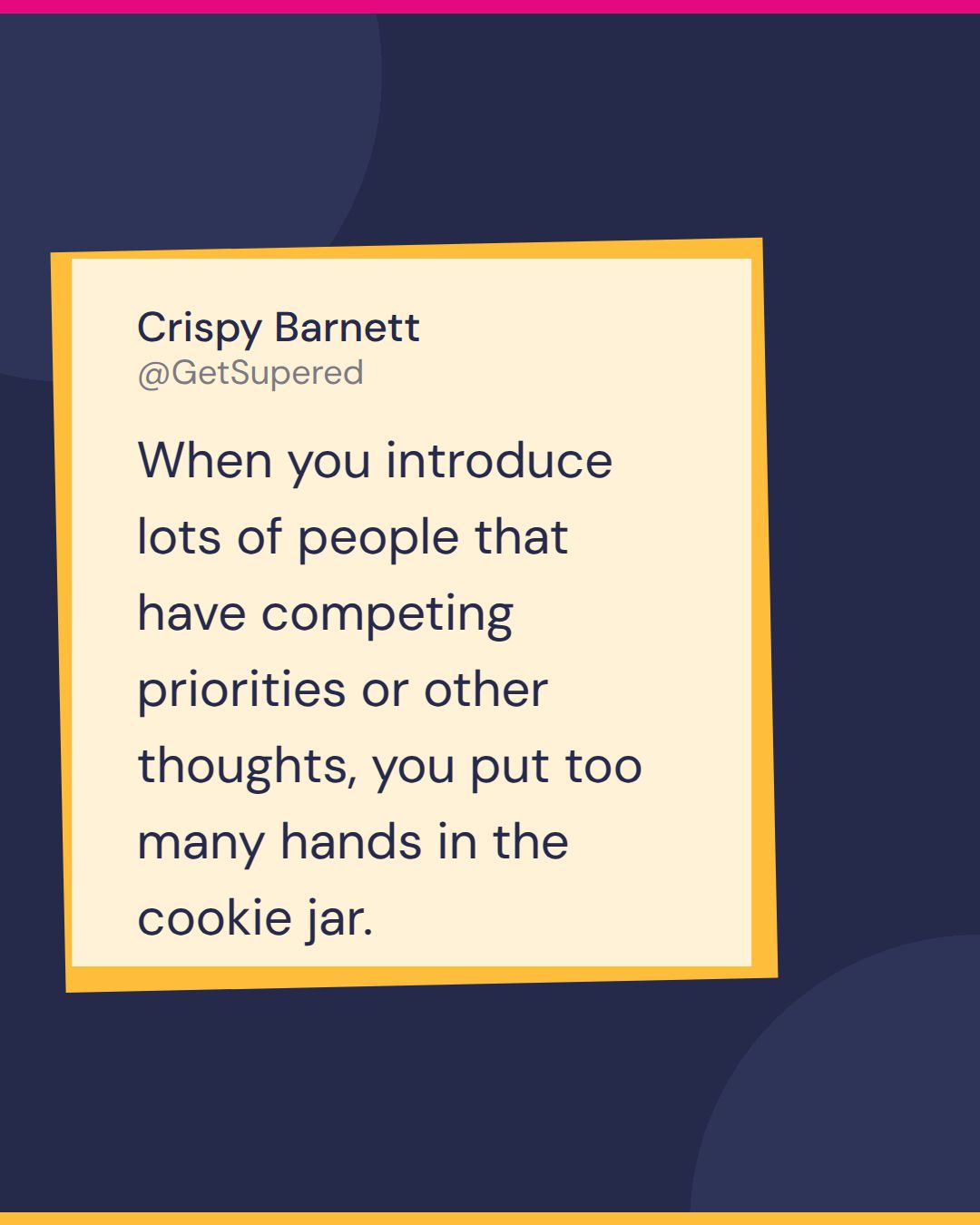
Crispy worried about friction. “If you walk the proposal to every single person in the buyer since it’s group, you begin to introduce too much friction and outside influence to the sales process, and you get further and further away from a decision.” Each extra person brings their own priorities: “you put too many hands in the cookie jar. That’s bad.” For Crispy the point of a close “is to get revenue in the door,” so he goes to the person who can sign. “Let’s talk to you and uh, you know, make decisions together unified.”
Rob closed the round with a jab: “The irony is that Crispy is at a Starbucks waiting to hand a contract to a group of stakeholders right now.”
Research backs parts of both cases. On Crispy’s side, groups do fight. Gartner surveyed 632 B2B buyers and found 74% of buyer teams showed unhealthy conflict during the decision (Gartner, 2025). And stalled decisions cost deals. Matthew Dixon and Ted McKenna’s analysis of 2.5 million sales calls found 40% to 60% of deals are lost to customer indecision (The JOLT Effect).
On Caleb’s side, skipping the group does not make it disappear. Gartner puts a typical enterprise buying group at five to 11 stakeholders across an average of five business functions (Gartner B2B Buying Report). A champion who signs in one call still has to get the contract past finance, security and legal, and the same 2025 Gartner study found groups that reach consensus are 2.5 times more likely to report a high-quality deal.
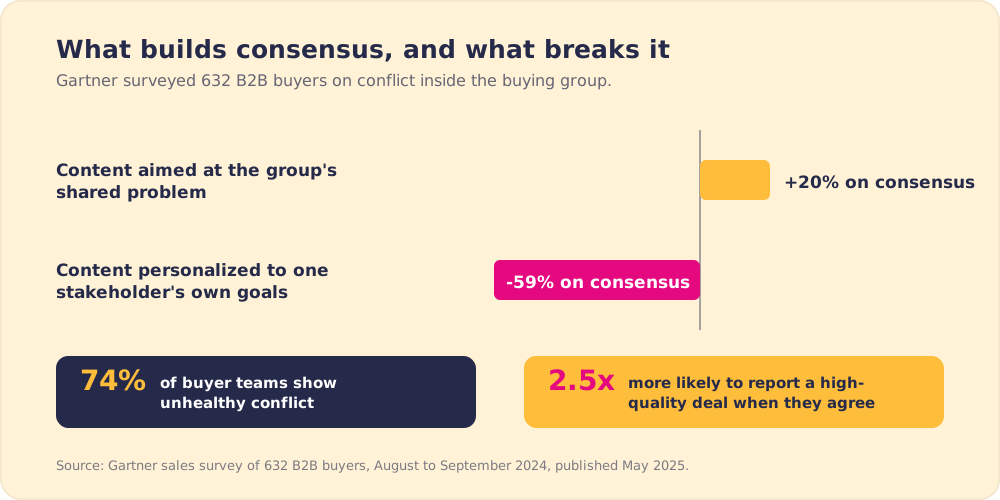
The same Gartner study looked at what the group was told. Content aimed at the group’s shared problem improved consensus by 20%. Content personalized to each stakeholder’s own goals cut it by 59%. So the cookie jar Crispy described gets crowded fastest when a rep tailors a separate pitch to each person. If Caleb walks the proposal desk to desk, he has to carry the same problem statement to every desk.
Do the best deals close outside the meeting?
Round two went to South Korea and hoesik, the after-work dinners where, Rob said, veterans claim most deals get brokered. The proposition: relationships built outside the meeting close more deals than anything that happens inside it.
Crispy agreed, and he lives it. “This is the entire reason of why I attend inbound, actually, is because more relationships get fostered live face-to-face and deepened face-to-face than what they do in meetings directly.” He texts buyers as part of his sales process, and he likes dinner as a place to “combat objection live, and get to the root of whatever needs to be solved,” away from “a screen or a phone.”
Caleb disagreed from experience. He has done the mixers and the dinners. “They’re nice. They’re cool, but it’s just like I would rather just ask you in a meeting devoted to what we’re talking about. Does this bring value? Do you want to buy? Yes or no.” Rob asked whether relationships matter at all. Caleb said trust is the basis, then asked where it comes from: “cuz I golf with you, does that mean we have a relationship? Or can I build a relationship with you on four Zoom calls where we’re like actually talking about business problems? I think that I submit the latter is just as good as the former.”
For a manager thinking about how to close a sale across a whole team, Caleb’s version is the easier one to teach. Four calls about the buyer’s real problems can be planned, reviewed and repeated by any rep. Dinners depend more on the personality and the calendar of the rep who hosts them.
Should the closer be a rockstar?
Sweden brought Jantelagen, the unwritten code that frowns on standing out, and Rob asked whether the American sales rockstar model does more harm than good. Caleb, the rockstar, agreed. Crispy disagreed and pointed at him: “Caleb like you are you are the rockstar of the sales team.”
Crispy’s case: “rockstars carry your team a lot of the time.” He would never give one up to build around the middle of the team. Instead, “designing around the rock star and figuring out how you can replicate them and the things that they do in terms of their behaviors and processes is the thing to do.” Treat champions like champions.
Caleb spoke from inside the role. “There’s a lot of psychological implications for what I’ve done really well and what I haven’t done really well on sales teams.” He said the American system is built “to raise up the leaders and to kick out the non-leaders,” and he is “not a fan of it. I do love being treated like a champion when I’m a champion, but uh as a whole, I think there must be a better system.”
Their answers overlap more than their votes did. Crispy’s plan copies the rockstar’s behavior into the process. Caleb wants the rest of the team to have something better than a leaderboard to live by. Writing down what the best closer does, and training the team on it, would give each of them part of what they asked for.
What does fixed pricing do to the close?
The last scored round went back to 1861, when, as Rob told it, John Wanamaker put price tags on the goods in his Philadelphia store. Should B2B companies publish fixed prices and end negotiation? Both agreed. Crispy: “if I go to a pricing page and it says contact us for a quote, contact us for pricing, I’m like, ‘Mhm, no. I’m going to look at another option.’” For custom services he would still publish “a floor or a ceiling or both,” such as “starting at $5,000.” Caleb learned to negotiate and never enjoyed it: “I would much rather selling or buying just be like, here’s the price. What are your concerns? Yes or no.”
When Rob asked whether sales has had a new idea since John Patterson’s first sales school, Crispy gave a definition I would put in front of any new rep: “I have something you want, you have something I want, we’re going to mutually agree on how we both get what we want. And that’s exactly what sales is.”
What sellers can take from the debate
- Consensus around one problem. Caleb’s slow walk works when each stakeholder hears the same shared problem. Gartner measured a 20% lift in consensus from that, and a 59% drop from pitching each person’s own goals.
- A decision maker in the room. Crispy’s rule holds up: a group with no one who can decide tends to drift, and indecision loses 40% to 60% of deals.
- Trust built on the buyer’s business. Caleb’s four focused calls build trust over video, and any rep on the team can run them.
- The rockstar’s habits as the standard. Crispy wants champions copied; Caleb wants a system that does not depend on the leaderboard. A process built from the best closer’s behavior gives each of them some of that.
- A visible price. Both want the number on the page, or at least a published floor, so the close is about fit instead of haggling.
The verdict
I was not on this one, so I get to judge it. Crispy is right about the room: find the person who can say yes, and make sure they are in it. Caleb is right about the pace. The one-call close is more a habit of the American sales floor than something buyers ask for, and one champion’s signature is only the start when five to 11 people have to live with the purchase. Walk the proposal to each stakeholder with one shared problem statement. Then ask the decision maker for the order, once there is no one left to surprise you.
Supered’s Behavior Layer makes a step like that stakeholder walk part of the process reps run inside HubSpot and Salesforce. To keep a buying group moving together, read our guide to the mutual action plan, then our look at the sales cycle and where deals slow down, and our playbook on handling a sales objection.
Frequently asked questions
What is a one-call close?+
Does the one-call close still work in B2B sales?+
What is nemawashi in sales?+
Do relationships outside the meeting close more deals?+
Why do deals stall at the close?+
Should B2B companies publish their prices?+
Your process, running itself.