RevOps Software: Scott Silman's Top Five Tools, and the Opinion Behind Them
Scott Silman is a published fantasy novelist who runs marketing and RevOps at Venture Tech. His five RevOps software picks, from packaged builds to Salesforce, and the strong opinions about data models and pricing that make them work.
RevOps software is the set of systems a revenue operations team uses to capture, enrich, route, qualify and report on revenue, and in Scott Silman's view it pays off in proportion to the opinion behind it: a clear data model and process the software is set up to run.
Scott Silman came to RevOps through fantasy novels. He is a published author of high fantasy with a sci-fi twist, with ten years of world building behind book one and a whole saga planned. He did not want to hand the book to a traditional publisher that “may or may not market it, may or may not get it on shelves,” so he took a marketing job to fund the writing and to learn how to sell the books himself.
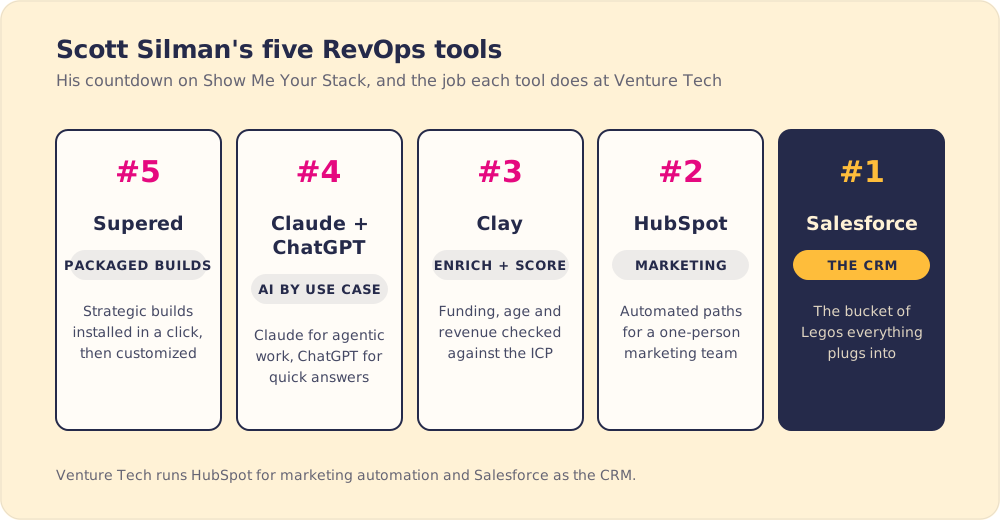
The marketing job turned into a career. Scott built and grew the marketing operations side of Venture Tech’s consulting business, worked with more than 50 clients in the past year, and had recently moved into Venture Tech’s own marketing seat when he joined me on Show Me Your Stack to count down the RevOps software he runs on. He had a firm opinion about how revenue should run for each of his five picks, and those opinions are the part worth borrowing.
How does Scott justify $245 an hour?
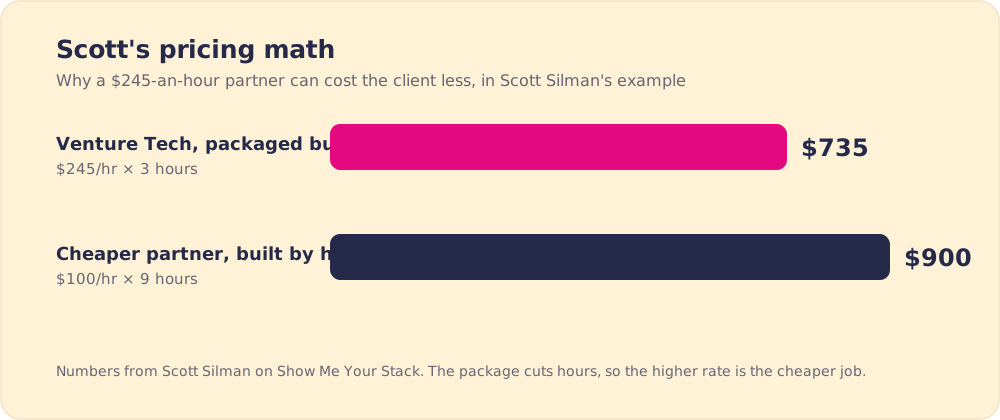
His number five was Supered, the app we make. “I bring this one up not to pander,” he said, and went straight to pricing. Venture Tech bills $245 an hour, “not the cheapest partner in the ecosystem,” because the firm sells strategy. That rate is hard to defend when a consultant is building one more workflow.
So his team packages its common builds into modules it can install and then customize. “The actual execution might take us three hours, might take the next guy nine hours,” he said. “Their $100 an hour rate is still going to be more expensive.” Three hours at $245 comes to $735, against $900 for nine hours at $100.
He calls the result “the Chinese food menu of our business”: a list of builds a client can pick from, each installed with a click and then tailored. The firm also works with private equity groups. It defines the reporting language a PE group wants and then brings each portfolio company’s process into that shared language.
When I started RevPartners about six and a half years ago, packaging was our founding idea too, and there was no software to help. The partners I have seen make packages work all hold a strong view of how a revenue system should be built, so I asked Scott for his.
Why does Scott want to kill the lead object?
“I hate the lead object in Salesforce and HubSpot,” he said. “I want to take it out back and bring the shotgun.”
In B2B, he argued, “it doesn’t make sense to talk about a person as a lead,” and an account is not a lead either. He moves qualification onto the deal itself. “I love this stage zero pre-opportunity record. It’s not counted in pipeline. It doesn’t impact a lot of that reporting. You do your qualification there instead.” When it converts, it is “the same fundamental record, just moving into a new record type or pipeline,” so the source and history stay attached to the deal that eventually closes.
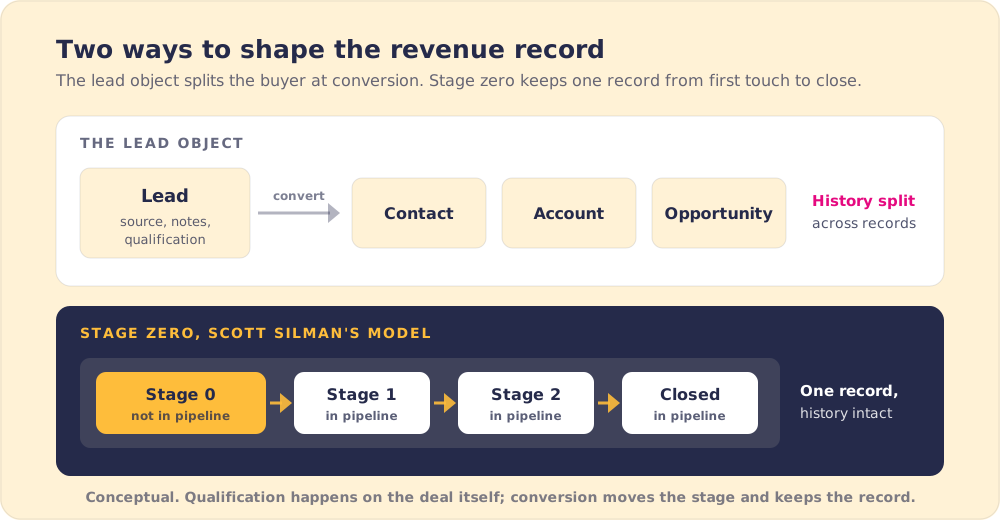
Gartner’s buying research fits his model. It found 99% of B2B purchases are driven by organizational changes (Gartner), meaning a company buys because something inside it changed and several people have to agree. One person filling in a form is rarely the whole story, and a deal record has room for the rest of the people and the reason. Our guides to sales pipeline stages and lead qualification cover what should happen in stage zero and after it.
Claude or ChatGPT: how does Scott split the work?
Number four was both. I usually call that a cop-out, so I made him choose by task. “Claude is my agentic solution,” he said. “If I’m plugging something in and generating anything, I’m going to go to Claude.” That covers dashboards, content, and anything connected to another tool. “If I’m just looking for, hey, a client’s asking me about a Rev tool I’ve never heard of before. Need a real quick answer on the fly, I’m going to use ChatGPT.”
Part of the split is about data. Venture Tech has a company ChatGPT subscription and no company Claude plan, so sensitive client data goes only into ChatGPT, and Scott uses his personal Claude account for agentic work that involves no client data. He is lobbying to move the company to Claude. Whichever models your team prefers, decide which one gets which kind of data before anyone pastes a client file into a chat window.
What does Clay do in Scott’s funnel?
Number three is Clay, and it is one link in a chain. RB2B sits at the top of the funnel and identifies the companies behind website visits. Clay adds funding, company age and any public revenue data, then scores each company against Venture Tech’s ideal customer profile, which Scott keeps narrow on purpose. An LLM then sorts the accounts into tiers.
Clay also watches current customers. When a client raises a round, the team hears about it and can reach out: “Hey, I see you just had this big round of funding. We work with private equity as one of our main sources of business.” Today most of that outreach runs through personal relationships with account executives and PE firms. Scott is building the inbound side to take on more of it.
Why is HubSpot number two and not number one?
Number two is HubSpot, as the marketing automation platform. Venture Tech grew entirely on referrals and relationships, and Scott, three weeks into the internal role, is building its first real marketing program as “a one-man marketing team.” Time is his constraint. “The more I can automate and the more I can build in these predefined paths for different actions,” he said, the less follow-up he has to do by hand.
So his first months are going into those paths: one for site visitors, one for event attendees, one for anyone else who touches Venture Tech’s marketing. Once they exist, each new campaign feeds people into follow-up that already runs without him.
Why does Salesforce sit at number one?
He called his top pick a plot twist. The CRM is Salesforce. Venture Tech runs HubSpot for marketing and Salesforce as the CRM, which Scott considers the best of both worlds, and it supports clients who run either platform on its own.
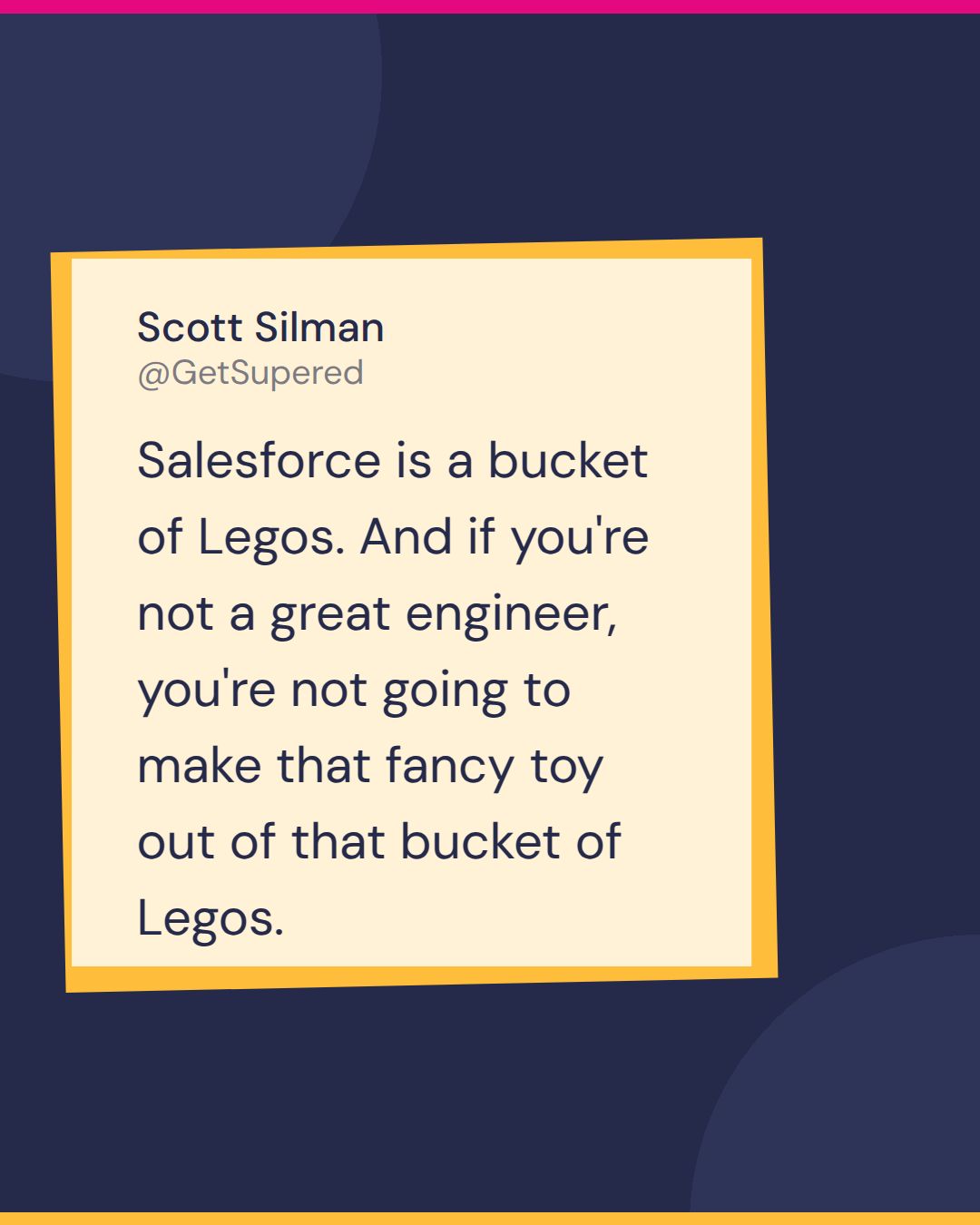
His comparison of the two is the best short one I have heard. “HubSpot is a shiny toy you pick off of shelf. They develop most of their features in-house and all of it flows together in this really congruent, easy to use and intuitive way. Salesforce is a bucket of Legos. And if you’re not a great engineer, you’re not going to make that fancy toy out of that bucket of Legos. But if you are a great engineer, you can build anything your mind can imagine out of that bucket of Legos.”
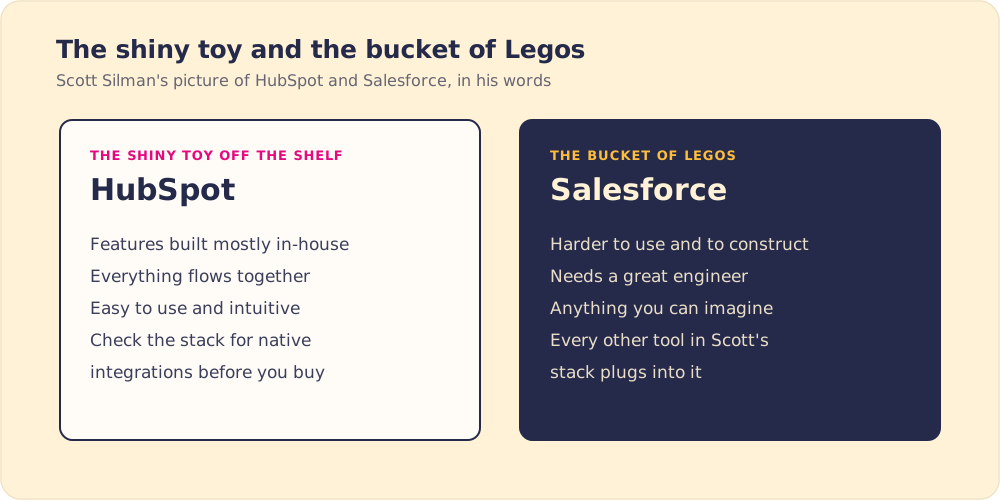
Salesforce is first because “every other platform we talked about today plugs into Salesforce.” Account plans from Clay and ChatGPT, marketing data from HubSpot and process boards all land there for the team to act on. When a client wants to consider HubSpot instead, his team first checks each tool in the stack for a native integration, because otherwise “our dev team’s going to have to come in and build a custom API.”
I added a pattern from my own years selling into both camps: HubSpot buyers have tended to minimize price, and Salesforce buyers have tended to maximize value. That is one seller’s experience, and I have no study behind it. Our comparison of moving from Salesforce to HubSpot covers the tradeoffs in detail.
Which emerging tool is Scott watching?
His pick was Warmly, which announced in 2026 that it is joining HubSpot (Warmly). It identifies site visitors, enriches and ranks them, and prospects against them. Plenty of revenue operations software does one piece of that job, Scott said, “but you need to pick up 16 of these to create a cohesive motion.” Warmly, in his words, has “a real opinion and a real execution of that opinion on how to deal with anonymous traffic.” He also named Hockey Stack as the best multi-touch attribution engine he has seen.
Scott’s habit of deciding what he wants before he buys has support in Capterra’s research. Capterra found 66% of software buyers hit unexpected disruption, regret or both, and buyers who adopted successfully were more likely to have defined budget and must-have features early, 62% against 48% of disappointed buyers (Capterra via Business Wire, 2025).
Key points from Scott’s RevOps software stack
- Packaged builds at a higher rate. Modules let Venture Tech charge $245 an hour and still cost the client less than a $100-an-hour partner.
- Qualification on the opportunity record. Stage zero keeps one record from first touch to close and keeps unqualified work out of pipeline.
- A data rule for each AI model. Claude for agentic work, ChatGPT for quick answers, and client data only where the company has an agreement.
- Enrichment that feeds tiers. RB2B, Clay and an LLM sort visitors and accounts before anyone reaches out.
- Follow-up paths before campaigns. A one-person marketing team builds automated paths in HubSpot first.
- A CRM the rest of the stack plugs into. For Scott that is Salesforce, the bucket of Legos, with an engineer to build it.
What we would take from Scott’s list
Before you compare vendors, decide how your revenue record works: does a buyer live as a lead, an account, or a stage-zero deal? Then list each tool that has to connect to the CRM and check its integration before you sign. If you sell RevOps services, package the builds you repeat and charge for the strategy that goes into them.
If you are about to redesign the record, start with our guide to what a sales pipeline is and decide where stage zero ends.
Frequently asked questions
What RevOps software does Scott Silman use?+
Why get rid of the lead object?+
Is Salesforce or HubSpot better for RevOps?+
How can a RevOps consultant charge more per hour?+
What is Warmly?+
Your process, running itself.
Turn the playbook into rep behavior.
More from Show Me Your Stack

HubSpot Solutions Architect Kasey Chan's Top Five Tools, From Endel to Claude
Kasey Chan
AI for RevOps: Kevin Stout's Top Five Tools, and Why His Team Only Does QA
Kevin Stout