Solution Selling Framework: Christopher Barnett's Rule for the North Star
Christopher Barnett went from pro soccer to top HubSpot freelancer on Upwork to founding WORQFLOW, which reached Diamond in ten months. His solution selling framework: RevOps yourself first, design for the end state, and leave the edge cases off the roadmap.
A solution selling framework is the repeatable method a seller uses to diagnose a buyer's problem and then design one recommended path to a defined end state, including a decision about which problems the first solution will not solve.
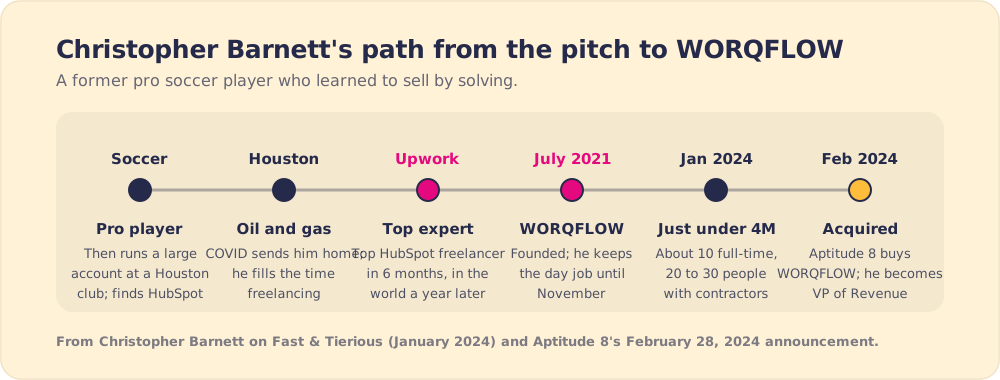
Christopher Barnett’s first career was on a soccer field. He played professionally, then went to work for a pro club in Houston managing a large account, where he found HubSpot and “a lot of opportunity for me to develop a real skill set and expertise around this platform.” An oil and gas job came next. When COVID sent him home, he found he was “a lot more productive with my time at home” and spent the extra hours freelancing on Upwork. Within six months he was, in his words, “one of the top HubSpot experts on the freelance market,” and a year later one of the top in the world.
His clients kept needing “a lot more than just HubSpot configuration,” so in July 2021 he started WORQFLOW, which reached Diamond ten months after becoming a partner. He also became a HubSpot certified trainer, led the Houston HubSpot User Group, and won Supered’s $10K pitch competition. When he came on episode 5 of Fast & Tierious, I wanted to know how he decides what to sell a client. He runs his solution selling framework on two habits: design for the end state the customer wants, and keep edge cases off the first roadmap.
What does Christopher mean by “RevOps yourself”?
Christopher’s first rule starts inside his own company. Service firms, he said, treat themselves worst of all: “You are your last customer on your list.” They market themselves worse than they market clients, and “your own CRM is kind of a disaster to a certain degree.” His fix: “The more that you can RevOps yourself from the get-go and design for the end state, the better.”
WORQFLOW ran its own business on the method it sold. When we spoke in January 2024, the firm had about 10 full-time people and a bench of contractors, 20 to 30 people in all touching client work, with revenue “just under four million” two and a half years after its official start. It also sat 18th in HubSpot’s partner of the year rankings at the time.
Plenty of revenue teams skip that step. In The State of Sales Enablement 2026, 89% of revenue teams reported a defined sales process, and 36% saw reps follow it consistently. Christopher’s point is that a consultancy should be in the 36% before it tells clients how to get there.
What is Christopher Barnett’s solution selling framework?
A solution selling framework is the repeatable method a seller uses to diagnose a buyer’s problem and then design one recommended path to a defined end state, including a decision about which problems the first solution will not solve. Christopher cares most about the design half. He told me it was the idea behind his winning Supered pitch: “how can we craft a solution that solves the pain points now and propels the customer to where they want to be?”
His solution selling process has three steps.
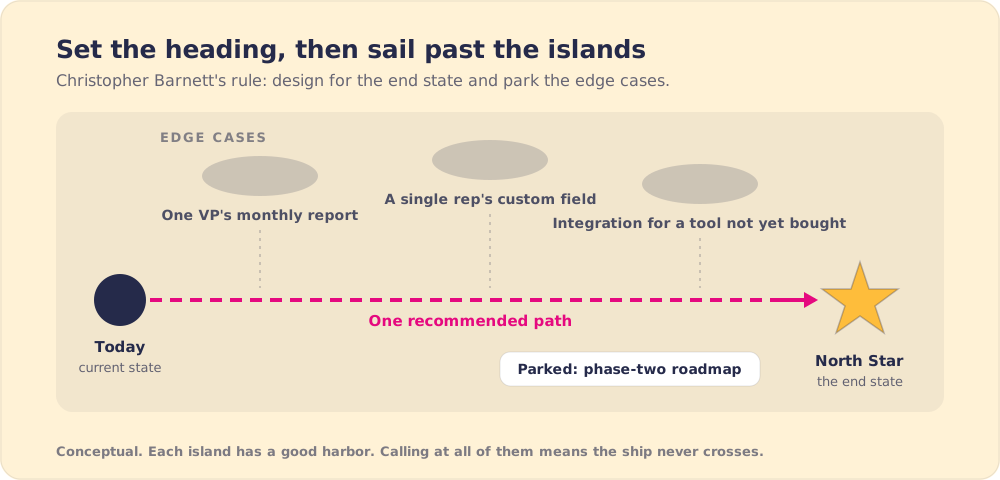
First, he names the end state, the customer’s North Star goal. Second, he sorts the problems in the way into three piles: people, process, and platform. Third, he tests the design against the future with blunt questions. If the company added ten new employees in different roles, would the software support them? Would it support the company “when I add new products or services”? And the one he calls most important: will the people you have now “be enabled by the platforms and processes to guide you to that scalability point”?
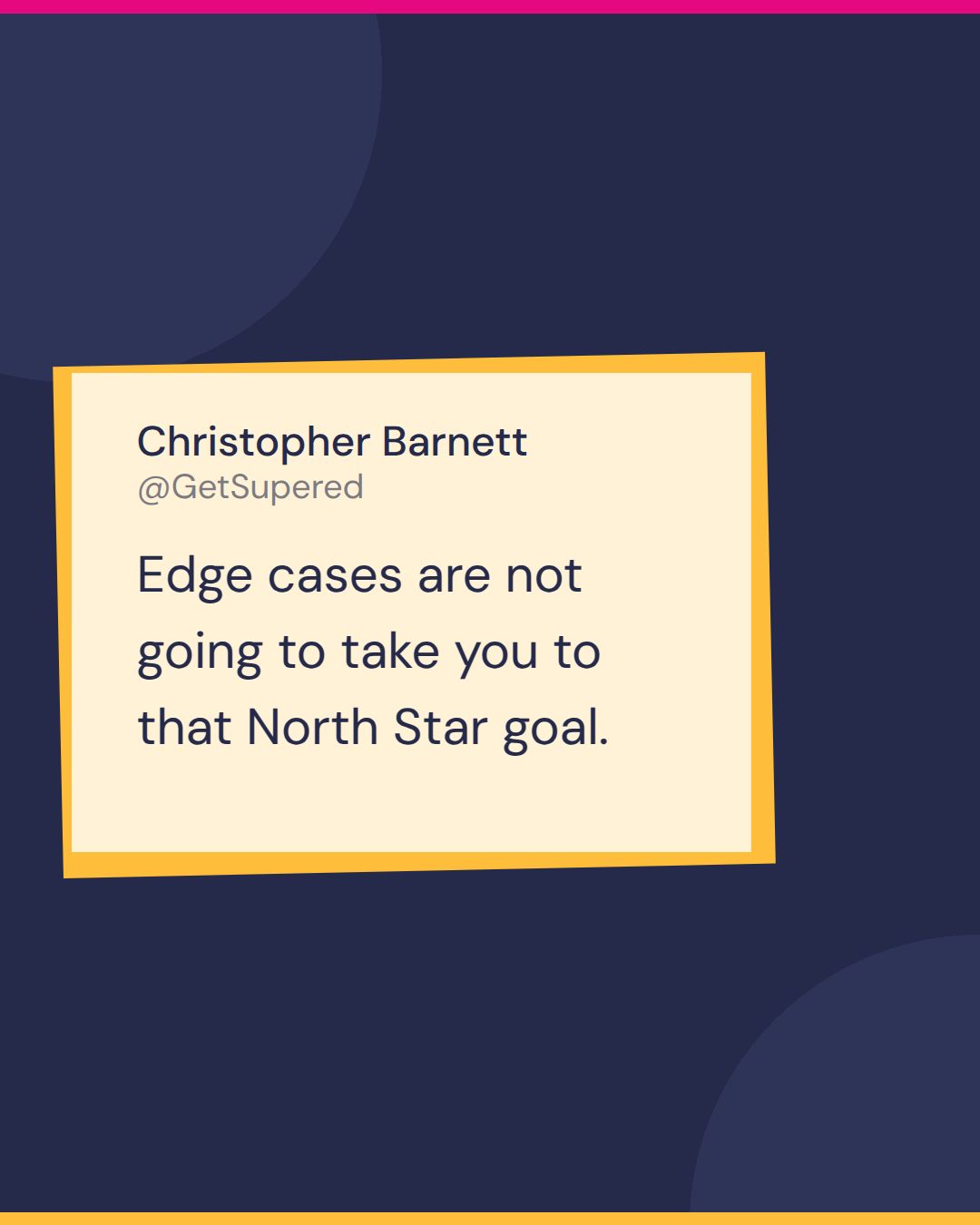
I pushed him on the uncomfortable part. A solution “inevitably means that you’re saying it doesn’t solve other problem sets,” and admitting that to a buyer is scary. Christopher’s test is to ask whether a request is an edge case. If it is, “that should not fit into your road map because edge cases are not going to take you to that Northstar goal.” The roadmap follows “whatever that primary track is,” and the team fixes smaller problems along the way.
The clip below starts where Christopher explains how he sorts a client’s problems.
The best-known attack on solution selling came in 2012. In “The End of Solution Sales,” Brent Adamson, Matthew Dixon, and Nick Toman argued in Harvard Business Review that “companies can readily define solutions for themselves,” so a seller who only diagnoses adds little. Their top performers engaged early “with provocative ideas about what the customer should do.” Christopher’s end-state design is one of those ideas. He walks in with a recommendation and has already decided what it leaves out. Our primer on what solution selling is and why it fails covers the diagnostic half he builds on.
Why does leaving out edge cases close more deals?
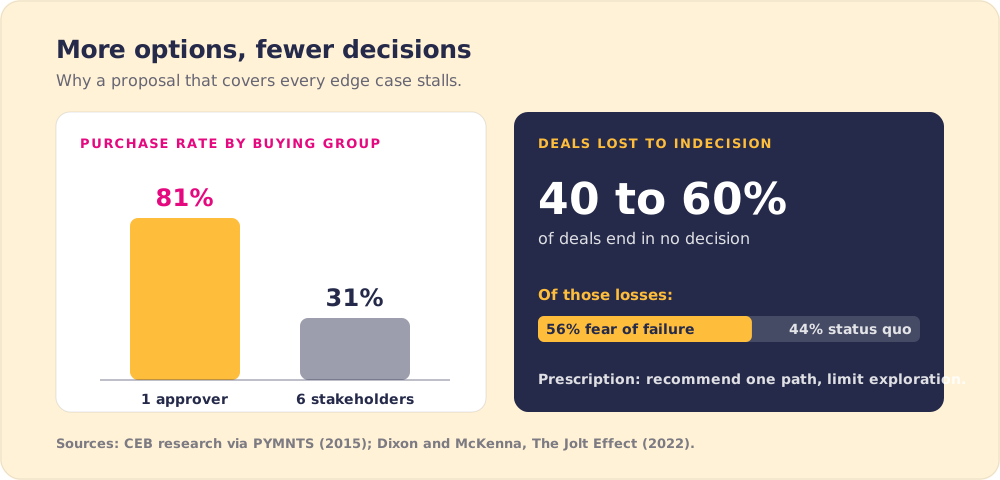
Buyers often end up choosing nothing. Matthew Dixon and Ted McKenna analyzed recorded sales calls for The Jolt Effect and found that 40% to 60% of deals are lost to customer indecision. Only 44% of those losses came from preferring the status quo; 56% came from fear of making a mistake. Two of their prescriptions line up with Christopher’s rule: offer a recommendation, and limit exploration.
A bigger buying group brings more edge cases. CEB research reported in 2015 found that single approvers buy 81% of the time, and the purchase rate falls to 31% when six people are involved (PYMNTS, on the CEB study). Each new stakeholder tends to bring a special request, and a proposal that tries to honor all of them gets longer, costlier and harder to approve.
To use Christopher’s rule in a live deal, write each edge case onto a phase-two roadmap while the buyer watches, so the person who asked knows it was heard and when it will come up. Keep the first proposal on the primary track. His winning Supered pitch worked the same way: a packaged CRM for real estate, designed around where the customer wanted to end up.
What would Christopher never do again?
He answered fast: “I would never take shortcuts in order to grow my business again.” The shortcut he meant was hiring without full due diligence, taking the quick fix for an urgent need and paying for it later. People are one of the three piles in his framework, and he holds his own team to the same test he uses on clients: “When you bring on the right people it’ll accelerate your revenue. When you don’t, it hinders it massively.” Before any hiring or operations decision now, he thinks through what it does to the end state.
His other regret is about waiting too long. Christopher founded WORQFLOW in July 2021 and kept his full-time job until November. “I wish I would have quit my full-time job earlier,” he said. “Take the jump like way earlier, because if you don’t you’re never going to get that time back.” He told me he still thinks about those months.
He was as direct with advice for a new partner deciding where to spend time. Certification as a HubSpot trainer “is a lot of time,” he said, and pays off mainly for larger firms running training groups. He would start with HubSpot User Groups, which are free, full of practitioners working through real client problems, and a way to meet people who work at HubSpot.
What are Christopher’s lessons for sellers and founders?
- Your own firm first. RevOps yourself from the start, and run your own business on the method you sell.
- A named North Star. One end state the buyer agrees to, and a primary track that leads there.
- A people, process and platform check. Test the design against ten new hires in different roles and a new product line.
- A parked edge-case list. Requests that do not serve the goal go on a later roadmap, where the buyer can see them.
- Careful hiring. Full due diligence on each hire, because in Christopher’s words the wrong people hinder revenue “massively.”
- An earlier jump. Christopher still thinks about the four months he spent working two jobs.
What happened to WORQFLOW, and what do we recommend?
Six weeks after our conversation, on February 28, 2024, Aptitude 8 announced it had acquired WORQFLOW, and Christopher joined as VP of Revenue. “This collaboration represents a high point in our journey as a company and my personal career,” he said in the announcement.
We recommend Christopher’s framework to any team that diagnoses well and then hands the buyer a menu. Name the end state, run the people, process and platform check, put the edge cases on a later roadmap in front of the buyer, and present one path. The Jolt Effect data on fear of failure and the CEB data on bigger buying groups both favor a single, clear recommendation.
A framework like this has to hold up on the fortieth deal as well as the first, long after the kickoff training. Supered puts steps like the end-state question and the parked-requests list in front of reps inside HubSpot and Salesforce at the stage where they belong, and shows managers which deals followed them. HubSpot partners can see how that works on our partner program page.
If your team diagnoses well and struggles to lead the buyer once the pain is found, read our guide to consultative selling in practice next.
Frequently asked questions
What is a solution selling framework?+
What are the steps in Christopher Barnett's solution selling process?+
Is solution selling dead?+
Why do solution sales stall in no decision?+
Should a new HubSpot partner become a certified trainer or join a user group?+
Your process, running itself.


