Founder-Led Sales: What Happened at RevPartners When Brendan Tolleson and I Stopped Selling
Brendan Tolleson and I sold every early RevPartners deal. When he took us both out of selling, conversion fell from the 30s to 10 to 12%. Why he did it anyway, and what he learned about the handoff and hiring.
Founder-led sales is when a company's founders personally sell its deals; RevPartners grew that way until CEO Brendan Tolleson took both co-founders out of day-to-day selling, and conversion fell from the 30s to 10 to 12% while the team learned the motion.
Brendan Tolleson’s first move at his last job before RevPartners was to rip out HubSpot. He was head of sales and marketing at a tech-enabled services company, he considered HubSpot a marketing automation tool, and he replaced it with Salesforce. “I ripped it out as my first move at the company and installed Salesforce and paid a lot more for it,” he told me. “But it’s what I knew.”
Three years later he was CEO of RevPartners, a firm that grew on founder-led sales and implemented HubSpot Sales Hub for scaling companies. Brendan and I co-founded it before I left to start Supered. It reached Elite 13 months after launch, and by the time we recorded it was about three years old, about 75 people, and near 9 million in revenue. I sat down with Brendan for the second episode of Fast & Tierious in late 2023. We talked about why he changed his mind on HubSpot, what happened to our close rate when he and I stopped selling, and the hiring mistakes we made along the way. Each of those bears on how a founder hands off selling.
Why did Brendan once rip HubSpot out?
He is the first to say the Salesforce move worked. At that company, the team grew 140% year over year. He hired four reps who “knew the system and were very comfortable with it.” He paid a lot for the licenses and needed an admin to support them. On the episode I made the point for him: there is a reason for the bias, because the familiar play executes.
What changed his mind was a client. When he and I started RevPartners, we tried other tools before a customer called SketchEffect, still a RevPartners customer three years later, showed us what HubSpot had become. The bias that “it was a marketing automation tool” fell apart when Brendan saw the product “truly orchestrate the end customer journey.” I called him and said this is the platform, and we need to go in hard and go in now.
Brendan’s Salesforce rollout worked because his four reps already knew how to use it on day one. A new HubSpot portal starts with reps who have never seen it, and until they learn their way around, the software takes time away from selling. Salesforce’s own State of Sales research, a survey of 7,775 sales professionals, found reps spend 28% of their week selling, with the rest going to work such as deal management and data entry (Salesforce, 2022). Time a rep spends hunting through a new portal for the next step comes out of that 28%.
Brendan also named the market reason. HubSpot, he said, needed “a different type of partner” if it wanted to be the CRM for scaling companies, one with “a solution based systems integrator type of approach” instead of a marketing agency mindset. The firms winning, in his view, were the ones that could implement the whole revenue system, sales included.
What happens when founder-led sales ends?
RevPartners grew on founder-led sales and founder-led brand. Brendan and I sold the deals and were the public face of the firm. Early on, with no brand and no customers to point to, we raised money so we could make key hires and some creative bets. For two or three months in a row we ran losses of $50,000 to $100,000, on purpose, with a budget and specific goals behind each bet. Brendan’s advice to founders weighing the same choice: “be realistic about what you want to create and that will inform how you create.”
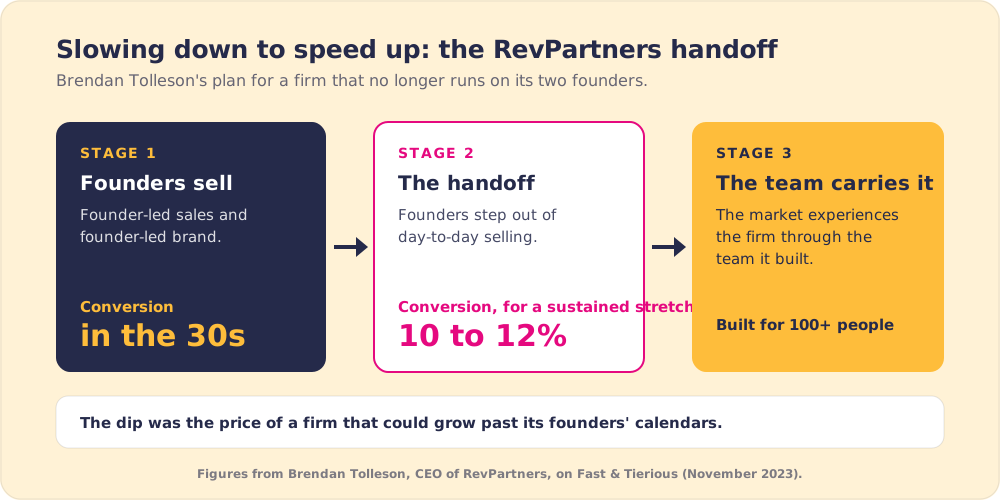
Then Brendan set the goal of being HubSpot’s most strategic and influential partner, and he saw what it required. “Matt and I cannot be in the day-to-day operations,” he said, or the day-to-day selling. A firm headed for 100-plus people had to run without its founders in every deal.
The cost showed up fast. “When you see your conversion rates go from, you know, the 30s to the 10 to 12% range for a sustained period of time, that’s not fun,” Brendan said. The offer and the brand were the same. The people in the room had changed, and much of what the founders knew about selling had lived in their heads.
Brendan kept the founders out of the deals anyway, and he gave the team a phrase for why.
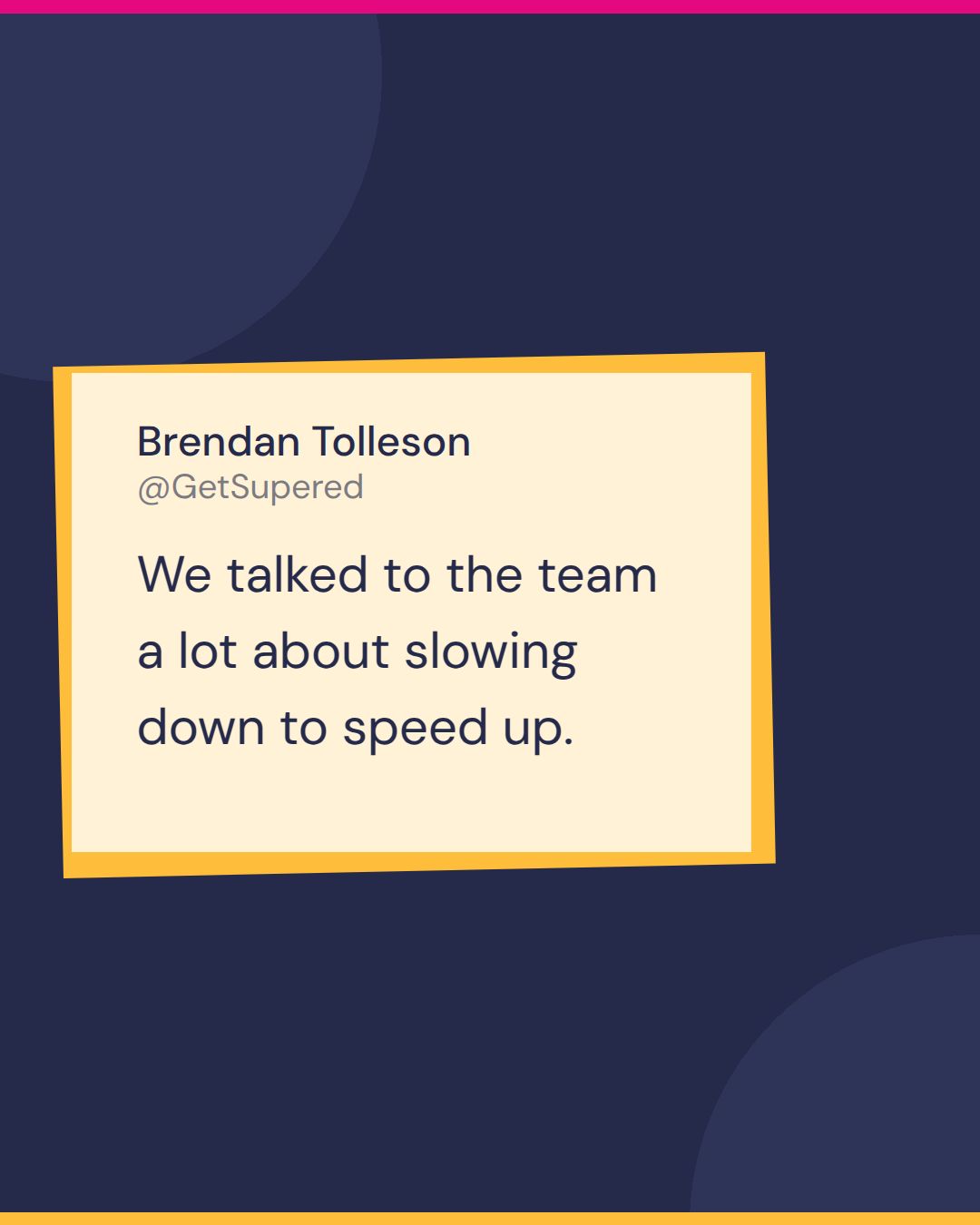
The goal, in his words, was for the team “to carry and cast our mission, our vision,” so the market would “experience RP through them, not through us.” He was candid about his own part in it. The same year he went from CRO to CEO, and “there’s a lot of things I did poorly in that transition,” he said.
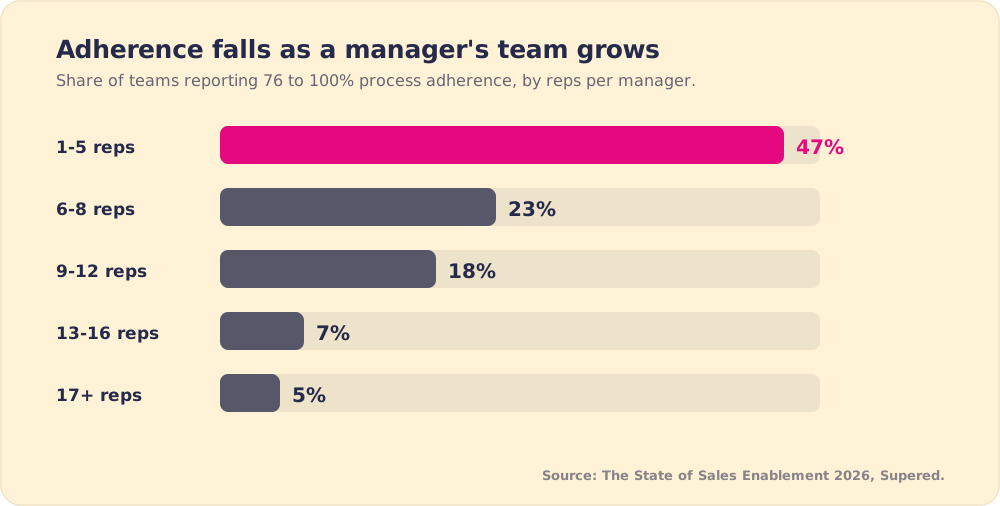
That dip is where a Sales Hub implementation earns its keep. When we stepped back, a lot of what Brendan and I knew about qualifying and closing had never been written anywhere a new seller could see it. Stages, exit criteria and guidance that reps see while they work are how a founder’s judgment gets to the next person. The handoff also puts more sellers under each leader, and our research shows what that does to the process. In The State of Sales Enablement 2026, 47% of teams with 1-5 reps per manager reported 76 to 100% process adherence. At 6-8 reps the share fell to 23%, and at 17 or more it was 5% (The State of Sales Enablement 2026).
HubSpot built a native version of the idea into Sales Hub: playbooks show up as “interactive cards displayed in HubSpot’s sales software” while reps work a record (HubSpot, playbooks). Configuring pipelines and properties is a few weeks of HubSpot Sales Hub setup. Writing down what the founders know takes longer, and it is the part RevPartners wished it had done before the handoff.
Why hire slowly when the company is growing fast?
When I asked Brendan what he would never do again, I answered first, for both of us. We believed in people too hard, too fast. “I think we’re easily like sold on people,” I said. My never-again: “always follow a hiring process,” with the job description, the competencies, and the values written down, “even if you know they’re perfect.” We did not have one at first.
Brendan had fixed that by the time we recorded. RevPartners built its hiring on the Who framework, Geoff Smart and Randy Street’s method for defining the outcomes a role must deliver before interviewing anyone for it. The book’s numbers explain why it is worth the trouble: it puts managers’ hiring success rate at “a dismal 50 percent” and estimates that “the average hiring mistake costs fifteen times an employee’s base salary in hard costs and productivity loss” (Geoff Smart, Who excerpt).
The harder lesson was about people operations. Brendan admitted he had “no desire” to bring on a people ops function early. He thought it would be a drag on the P&L. A peer CEO talked us into it, and Jen, who ran the team, proved him wrong. By the next year the function would be four people. “If we truly say that we are focusing on excellence and care,” Brendan said, “that it’s not a binary statement, that is an and statement.” People ops became what he called “the ambassador of care.”
Hiring matters to a Sales Hub rollout because someone has to run the motion once it is written down. Before RevPartners had a real hiring process, Brendan and I hired on how much we liked someone in the interview, which is a shaky way to pick the people who will carry your playbook.
How should founders hand off the sales motion?
Looking back at the episode, this is the order I would follow now, built from what Brendan and I did and what we wish we had done sooner:
- Decide what you are building. Brendan’s test: “be realistic about what you want to create and that will inform how you create.” A firm headed past 100 people cannot keep its founders in every deal.
- Write the motion down while you still sell. How the best seller qualifies, who has to be in the room, and what the buyer must agree to before a proposal.
- Put it where reps work. Stages, exit criteria and guidance on the record, so a new seller sees the next step instead of guessing it. Brendan’s Salesforce reps were fluent on day one; a new team has to build that fluency on purpose.
- Hire with a process. Outcomes and values written down before the interview, even for the candidate who seems perfect, and people ops earlier than feels comfortable.
- Budget for the dip. Our conversion went from the 30s to 10 to 12% for a sustained stretch. Decide in advance how long you will hold the course.
- Hand over the mission with the deals. Brendan wanted the market to “experience RP through them, not through us.”
RevPartners, a firm whose business was implementing HubSpot, watched its own conversion fall when the founders stepped aside. I know of no stronger case for writing the playbook down before you need it.
RevPartners has kept building. Walker Sands announced on June 10, 2026 that it had acquired the firm, with Brendan continuing as CEO and co-founder (Walker Sands, 2026). You can find the team in our partner directory.
We built Supered for this problem: your process, stage by stage, surfaced to reps inside HubSpot while they work, with adherence measured so managers can coach. Partners who implement Sales Hub for clients can package the same thing through our partner program.
If you are scoping the build now, start with our HubSpot implementation guide, then read why sales process adoption drifts after launch and how to hold it.
Frequently asked questions
What is founder-led sales?+
Why did Brendan Tolleson switch from Salesforce to HubSpot?+
What happens to sales conversion when founders stop selling?+
How do you transition out of founder-led sales?+
Is RevPartners still independent?+
Your process, running itself.