HubSpot Implementation: Build It Once, Install It Forever
Most HubSpot implementations are hand-built one client at a time, which is why they cost five figures and vary with whoever ran them. The productized version exists now: build the portal once, package it, install it per client.
A HubSpot implementation is the setup of a portal's configuration and process, pipelines, properties, workflows, dashboards, and the motion the team runs, done either by hand per project or productized as installable packages that deploy a proven build into each new portal.
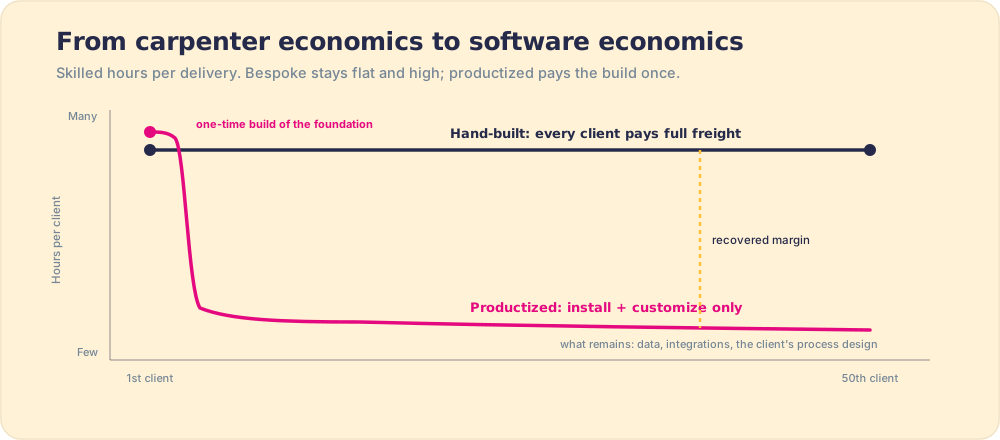
A master carpenter who builds every staircase from raw lumber is an artist. A master carpenter who builds every staircase from raw lumber when identical staircases are needed in fifty houses is a bottleneck, and an expensive one, because the fiftieth staircase costs as much as the first and arrives no faster. This is the current state of the HubSpot implementation market: skilled partners hand-building, for each new client, sixty to eighty percent of the same portal they built last month, and pricing each rebuild as bespoke work because, mechanically, it is.
It does not have to be, anymore, and the economics of an implementation practice change completely when it stops. That is this post: what a hubspot implementation includes, where hand-built ones fail, and how the productized version works.
There is a precise economic reason this matters, and it is the same reason software ate so many service businesses before this one. A service has a high marginal cost: each new client consumes roughly the same skilled hours as the last, so the hundredth delivery costs about what the first did and the business scales only by hiring more carpenters. A product has a near-zero marginal cost: build it once, and each new copy ships for almost nothing. The whole history of software is service work being captured as reusable product, and the margin difference is not small. The implementation market sits right at that frontier today, mostly still selling hours, because until recently HubSpot gave partners no way to package a build and copy it. Remove that constraint and an implementation practice gets to move from the carpenter’s economics to the software’s, which is a different business with a different margin.
What does a HubSpot implementation include?
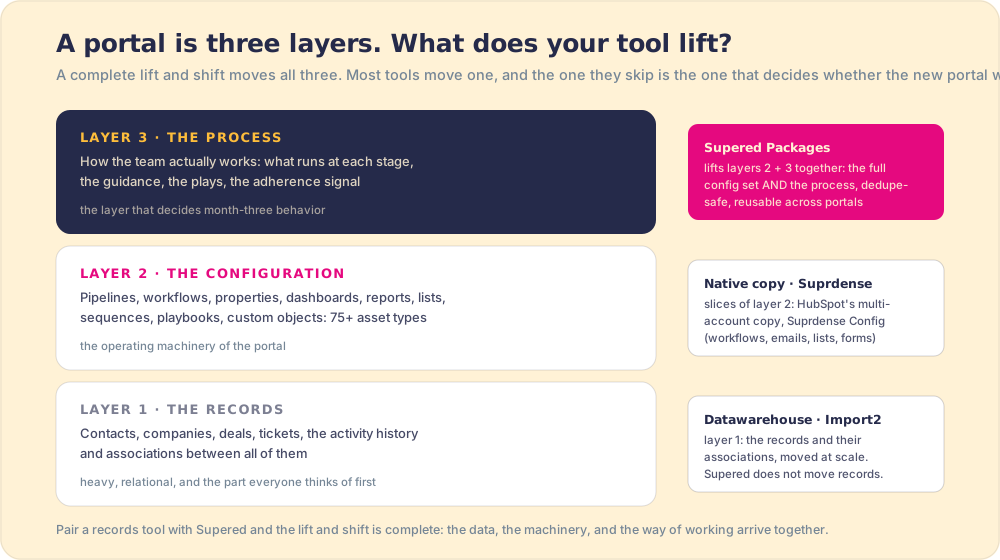
Three layers, and naming them exposes where projects go sideways:
- The configuration. Pipelines with stage exit criteria, properties and field groups, workflows, dashboards, reports, permission sets, scoring models. This is what most statements of work mean by “implementation,” and it is the layer partners rebuild most repetitively.
- The data. Records imported clean: deduped in transit, associations intact, history preserved where it earns its keep. Different tooling entirely, covered in HubSpot migration services.
- The process. The motion the team will run inside the build: what happens at each stage, which fields matter and why, who owns which handoff, delivered where the work happens and measured. The layer that decides whether the other two were worth paying for, and the one most implementations hand over as a slide deck.
The third layer is where the field data points: 89 percent of sales teams have a defined process, 36 percent see it followed as designed, and process guidance reaching reps in the flow of work separates the 49-percent-of-quota teams from the 15s (The State of Sales Enablement, 198 sales leaders). A beautifully configured portal with an unadopted process is the most common deliverable in this industry, and from the client’s chair it is indistinguishable from a failed project with good dashboards.
Why are implementations priced like bespoke work?
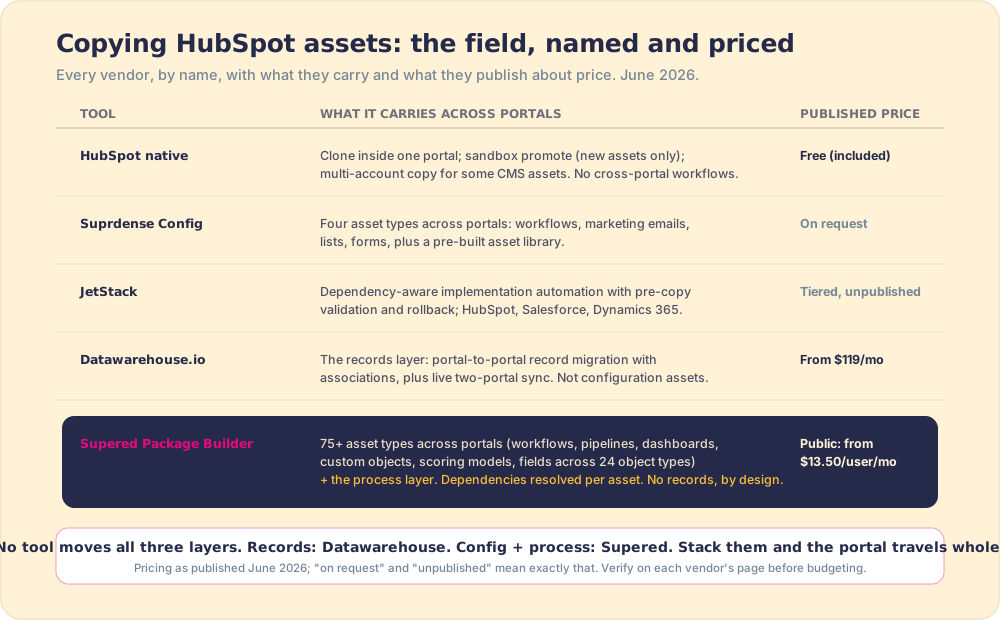
Because they are delivered like bespoke work, and until recently that was a tooling constraint, not a choice. A proper hubspot setup has no native deployment path: no cross-portal workflow copy, no pipeline export, sandbox promotion only for newly created assets in a paired portal (HubSpot’s own deployment docs draw the boundary). So every implementation began at the lumber pile, and the market priced accordingly. HubSpot’s own onboarding (guidance, not build work) carries mandatory one-time fees of $1,500 to $7,000 per hub by tier, with a Professional Marketing-plus-Sales-plus-Service purchase stacking $6,000 in onboarding before any real build begins (VantagePoint, 2026, citing HubSpot’s published pricing). Partner implementations then commonly run $5,000 to $25,000+ for mid-market scope, most of it skilled hours spent rebuilding foundations the partner has built fifty times.
The package mechanism removes the constraint. Supered’s Package Builder carries 75+ HubSpot asset types, workflows, deal and ticket pipelines, dashboards, reports, custom objects, scoring models, permission sets, fields across 24 object types, plus the process layer itself, as installable packages: build the best-practice portal once, package it by asset type with dependencies resolved automatically (each asset travels with what it needs to function), and install it into any client portal dedupe-safe (same-name assets are skipped, never duplicated). The fiftieth staircase becomes an install plus customization, not a rebuild. The senior architect designs the playbook once; the whole team delivers it repeatedly; the calendar weeks that remain are the genuinely client-specific ones: data, integrations, and the client’s own process decisions.
- For the buying client. Ask any prospective implementation partner one question: “how much of my build is your proven foundation versus built fresh for me?” A partner with a package library answers with a number and a faster timeline. A partner without one is quoting you the lumber pile.
- For the partner. The margin math moves twice: fewer hours per delivery, and the build itself becomes IP that compounds, the partner program thesis. It also changes who can deliver: implementations stop depending on the one senior person who knows where everything goes.
- For both. The install is repeatable, so the quality is too. Hand-built portals vary with whoever built them on whatever week; installed packages do not. Consistency beats brilliance in delivery for the same reason it does in selling: the fiftieth client gets the same floor the first one did.
What separates an implementation that sticks?
The week-one experience of the client’s reps, and almost nothing else. A team that opens the new portal and finds the process reaching them at each stage, the required fields explained the instant they matter, the next step visible in the flow of work, runs the build. A team that opens a clean portal and a PDF improvises, and every improvisation decorates the configuration with workarounds the next quarter has to live with.
The mechanism behind that decay is worth naming, because it explains why so many well-configured portals still fail. A CRM has no value of its own; its value is entirely a function of the behavior it captures and shapes. An empty, perfectly configured portal is worth nothing until reps run their real work through it, which means the entire return on a five-figure implementation rides on adoption, not on configuration quality. And adoption is fragile in a predictable way: on day one the reps face a choice between the new, unfamiliar motion the portal wants and the old habit they already have, and under deal pressure the old habit wins every time it is easier. Each time it wins, the rep logs a workaround, and a quarter of workarounds is indistinguishable from a failed project. The configuration was fine. The behavior never moved, so the value never showed up. This is why a beautifully built portal with an unadopted process is the most common deliverable in the industry and, from the client’s chair, looks exactly like money wasted.
So the thing that separates an implementation that sticks is not a better-configured portal; it is a process that reaches the rep in the moment the old habit would otherwise fire, making the right move the easy one before the workaround forms. Adoption is a system property, not a training outcome, which is why the process layer has to ship inside the install, with adherence visible from the first morning while coaching can still shape the habit. That delivery-plus-measurement layer is what Supered itself is, beyond the Package Builder: the implementation’s process layer, running where the reps work, with how it works showing the mechanics.
The recommendation
If you are choosing a hubspot implementation partner: weight the candidates by their foundation-to-fresh ratio, demand the process layer as a shipped, measured deliverable rather than a training session, and treat hubspot onboarding (HubSpot’s guided setup) as a floor, not a substitute for build work. If you are a partner running implementations: productize or keep donating margin to the lumber pile. Package the proven build, install it per client, spend the recovered weeks on the layers that genuinely differ, and hand over portals where adoption is a number you can show at the ninety-day review. The same package mechanics run the portal-to-portal migration case, the tool field is priced in copy HubSpot assets, and the partner economics live at the partner program.
Frequently asked questions
What does a HubSpot implementation include?+
How much does a HubSpot implementation cost?+
What is a productized HubSpot implementation?+
How long should a HubSpot implementation take?+
Why do HubSpot implementations fail?+
Your process, running itself.