Self Service Knowledge Base: Organized by the Question
A self service knowledge base wins when it is filed by the user's question and reaches them in the moment, so they resolve it without asking a human.
A self service knowledge base is a store of answers a person can search and resolve on their own, organized by the question they are asking, so they fix the problem without waiting on a human.
There is a sign at the fork in the corridor. It does not call your name or ask you to fill in a form. It carries an arrow and four words, and the moment you read it you know which way to turn and walk on. A help desk line is the other thing entirely. You take a number, you wait, and a person you have pulled off their own work tells you the thing the sign could have told you for free.
A self service knowledge base is meant to be the sign. Most end up being the line.
Storing the answers is easy now and searching them is close to free, yet the base still goes unread on the afternoon someone is stuck. A self service knowledge base is a store of answers a person can search and resolve on their own, organized by the question they are asking, so they fix the problem without waiting on a human. We judge one by a single test: does a person resolve their own question in the moment? The article count and the search box matter only as far as they serve that.
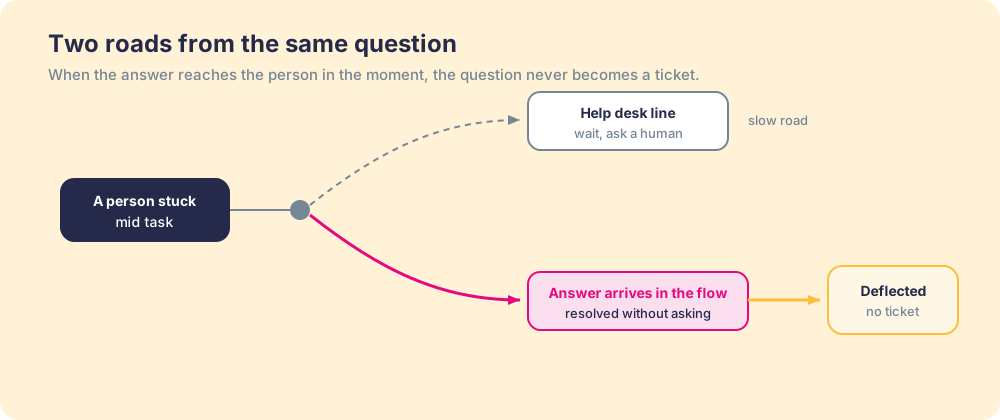
Why do self service knowledge bases fail?
Two reasons, and both are built in on the first day. The first is shelving. A typical base is filed the way the company is built, a folder for billing, a folder for IT, a folder for security, because that is how the people who wrote the articles think. A person who is stuck does not think that way. They think in the problem in front of them: my payment bounced, I cannot log in, can I send this to a vendor. To find their answer they first have to translate their problem into your departments, and that translation is a tax few people pay when a colleague is one message away.
The second reason is the detour. A self service knowledge base built as a destination asks the person to leave what they are doing, go to another place, search, and come back. That is a small trip, and under deadline a small trip loses to a guess or a quick ask. The base sits one turn off the road, and the road wins.
The detour adds up. The McKinsey Global Institute found employees spend close to a fifth of the workweek searching and gathering the information they need to do their jobs (McKinsey Global Institute). Panopto put the same problem in plain hours: knowledge workers lose about 5.3 hours a week waiting on information they cannot find or recreating work that already existed (Panopto). The base was supposed to end that hunt. When it is shelved by the org chart and parked one detour away, the hunt continues and the base watches from across the hall.
The team never voted to stop using it. The detour decided for them, one deadline at a time.
How do you organize a self service knowledge base?
File it by the question. That one structural choice separates a base people use from a base people only pay for. A person with a problem already has the words for it, so put those words on the door. An article titled “Payment failure remediation procedure” is shelved by the team that owns it; an article titled “How do I fix a rejected payment?” is shelved by the person who needs it. Same answer, two doors, and only one of them opens when the reader reaches for the handle.
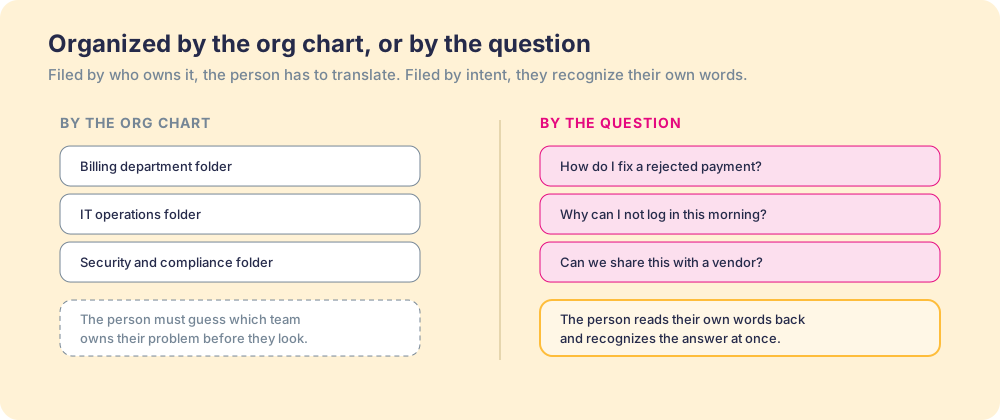
A self service knowledge base only deflects a question if the person can match what they are feeling to what is on the page, and people match on intent. Taxonomy is the writer’s map, and the reader never saw it. The matching is where it breaks. In a survey of 5,728 customers conducted in December 2023 and published in August 2024, Gartner found that only 14 percent of customer service issues are fully resolved in self service, even though 73 percent of customers use self service at some point in their service journey (Gartner). The library was there. The reader could not get from their words to its words, so they joined the line.
So the rule of organization is short, and it holds for any of the good knowledge base examples you can point to:
- The user’s words on the door. Title each entry with the phrase a person types when they are stuck, not the internal name for the process. The door has to match the hand reaching for it.
- An owner on every answer. Each entry gets a person and a review date, so a changed process updates the page instead of leaving a wrong answer standing. A self service knowledge base a person cannot trust is a base they stop opening.
- Delivery in the flow. Surface the answer inside the tool where the work is happening, so reading it costs no detour. The base stops being a place you visit and becomes a sign you pass.
Curate hard while you are at it. A base swollen with archive stops being believed, the same way a sign covered in twenty notices stops being read at all. Cut it to the answers people reach for, and keep it small enough to trust.
What does it look like when a self service knowledge base works?
It stops being a destination and becomes the sign at the fork. When the answer meets the person where the work already is, surfaced by what they are doing, there is no trip to take and no translation to make. The base comes to them. That single shift, from a place you go to a thing that finds you, is what turns a store of answers into resolved problems.
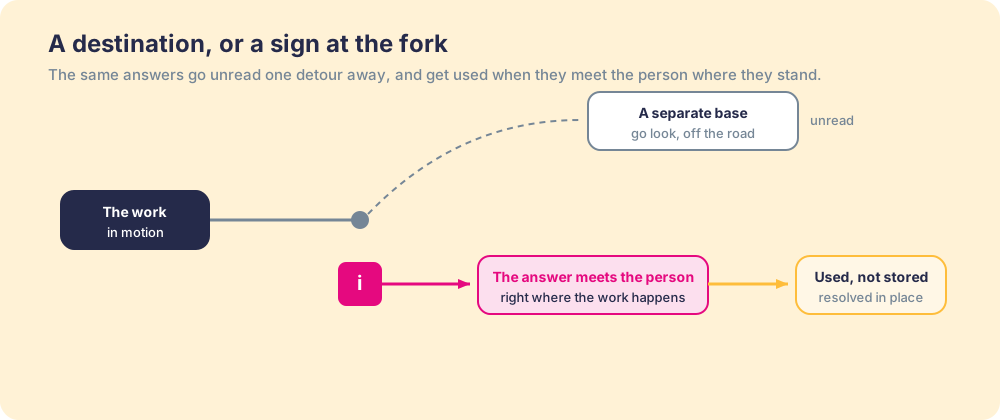
An internal knowledge base hits the same wall, because the two are one machine pointed at two audiences. A customer-facing base wants to deflect a support ticket; an employee-facing base wants a colleague to resolve their own question instead of tapping a shoulder. The rule that makes the first one deflect is the rule that makes the second one get used: file by the question, keep it true with owners, deliver it in the flow. The same discipline runs through the good knowledge base examples on both sides, and through everyday knowledge sharing when it sticks. A sales knowledge base is the same machine again, aimed at the rep with a buyer waiting.
The right measure follows from this. Count deflection, the share of questions a person resolved on their own, not page views. A base with high views and low deflection is being opened and not believed, which means the answers are stale or shelved wrong. You can only improve what you inspect, and page counts inspect the wrong thing. Deflection counts a problem solved without a human, which is the only thing the base was ever for.
The test is whether behavior changed. Our State of Sales Enablement found teams whose guidance reaches them in the flow of the work hit quota at 49 percent against 15 percent for teams whose knowledge sits in a separate destination (The State of Sales Enablement). Same content, same people. The difference was whether the answer met them where they stood. A base measured on page counts would rate both teams the same. A base measured on what people did tells them apart.
What we recommend
You can keep tuning the container: a tidier tool, a stricter taxonomy, a better search box. Teams that stop there keep wondering why the help desk line stays long after the launch enthusiasm fades. We would build the base to be used instead. File every answer by the question a person is asking, give each one an owner and a review date, deliver it in the flow of the work, and measure deflection rather than page views.
The evidence points one way. People lose close to a fifth of the week to searching. Only 14 percent of service issues resolve fully in self service. Teams whose guidance reaches them in the flow hit quota at 49 percent, against 15 percent when the knowledge sits in a separate tool. Storing the answers was solved years ago, and searching them is close to free. What remains, and what decides whether any of it was worth building, is making the answer reach the person at the moment they are stuck.
So build the base, then go past the shelf. Put the sign at the fork. Start with the employee-facing version in the internal knowledge base, study the patterns in real knowledge base examples, and see how the same discipline carries into everyday knowledge sharing.
Frequently asked questions
What is a self service knowledge base?+
Why do self service knowledge bases fail?+
How do you organize a self service knowledge base?+
What is ticket deflection?+
What is the difference between a self service knowledge base and an internal knowledge base?+
Your process, running itself.